Dell Computers: Michael Dell. The College Dropout Who Took on IBM (2018)
47 min
Listen through the publisher, then discuss the episode here or arrange an in-person Roundtable. Your city determines where to meet.
Roundtables are designed for groups of four, with a shared subject and room for everyone to speak. Come for discussion, with no dating expectation.
Michael Dell was building a tech business in his dorm room long before it became a familiar startup story. In 1983, the UT Austin student began selling PC upgrade kits. Within months, he left college to devote himself to the business. When Dell entered the Fortune 500 in 1992, Michael was just 27—the youngest CEO on the list. In this episode, Michael explains how a teenage job selling newspaper subscriptions taught him to find customers, why he abandoned plans to become a doctor, and how Dell became a global powerhouse in computing technology. He also shares what he learned from the mistakes that came with building a business so quickly. What You'll Learn How Dell sold computers for half the price of IBM's and still made a profit Why a customer visit led Michael to rethink his entire business How Michael scaled his startup to $66 million in annual sales by age 21 Why he returned as Dell's CEO in 2007—and how he navigated a changing PC industry What Michael learned from Dell's early missteps, and why he prioritized customers over competitors Production Credits Follow How I Built This: YouTube →@HowIBuiltThis (https://www.youtube.com/@howibuiltthis) X →@HowIBuiltThis (https://x.com/howibuiltthis) Follow Guy Raz: Instagram →@guy.raz (https://www.instagram.com/guy.raz/) X →@guyraz (https://x.com/guyraz) Substack →guyraz.substack.com (https://guyraz.substack.com/) Website →guyraz.com (https://guyraz.com/)
Episode information is provided by the publisher. Listening takes place on the publisher’s service.
This episode was sponsored by Cardiff LightSpeed VT: https://www.lightspeedvt.com/ Dropping Bombs Podcast: https://www.droppingbombs.com/ Today's Dropping Bombs episode features Ran Grushkowsky, the Berkeley dropout who sold his first company at 16, exited fintech, and lasted two and a half weeks in retirement. Now he runs MassPay, a profitable, bootstrapped payments company on track to move $1 billion a month. Ran breaks down why prepaid cards and paper checks are losing to instant payouts, how AI routes every payment through the best bank in real time, and how paying people faster can turn a cost center into a profit center. Most companies treat paying people like a chore. Ran says that mistake gets expensive within two or three years. If your payout system hasn't changed lately, press play before it costs you. Connect with Ran LinkedIn: https://www.linkedin.com/in/rangrushkowsky X: https://x.com/egblue Additional Resources MassPay: https://masspay.io (https://masspay.io/) MassPay on
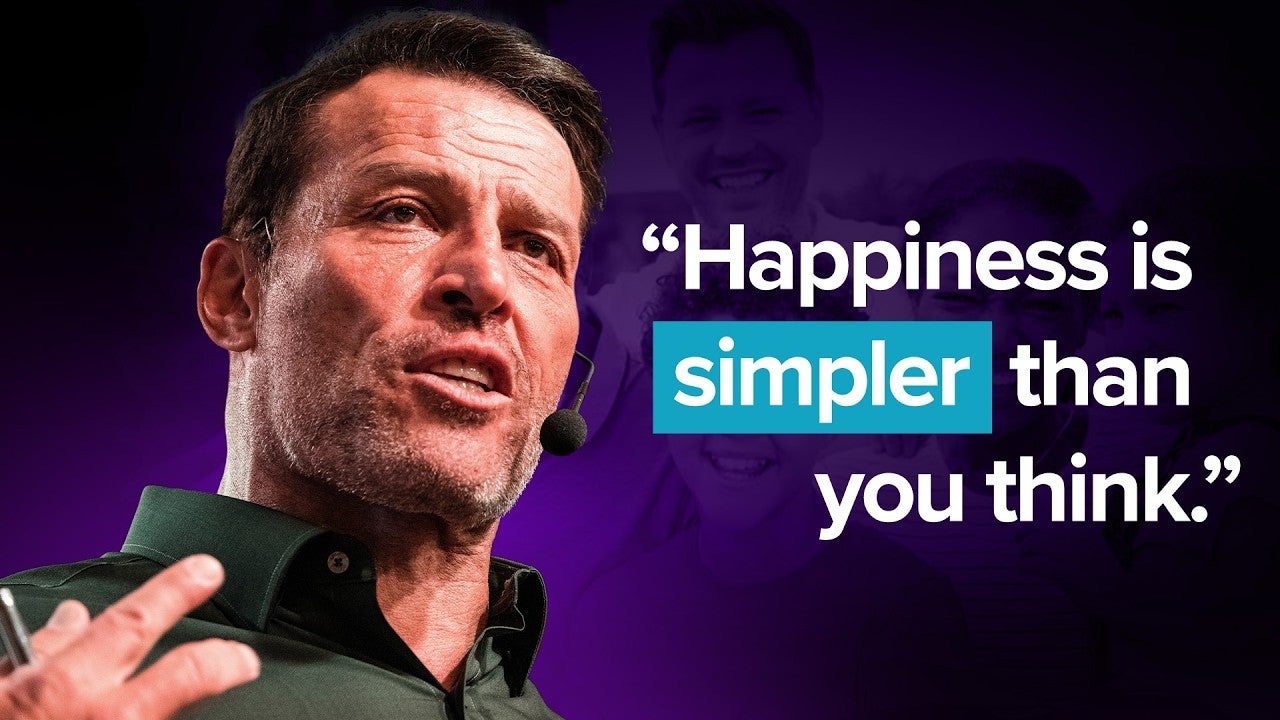
Struggling to find happiness in life? Tony Robbins shares his best secrets for how to be happy in any situation plus how you can remove negative thoughts to find deeper happiness and fulfillment in life, regardless of your current circumstances. Uploaded 04-08-24 Watch more videos like this Prime Your Brain to STOP Stress, Anxiety and Fear INSTANTLY: https://youtu.be/60ROjGMqXUQ 2 KEY SKILLS To Master If You Want An EXTRAORDINARY Life: https://youtu.be/CMF7H9OX5NQ #1 Best SIMPLE Technique to Overcome Fear and Anxiety Quickly: https://youtu.be/Q2sixA1vPKk The Tony Robbins Podcast: https://www.youtube.com/playlist?list=PLYTXvUDQT5pWkFiK1Yal1WtPcMrVbmjzA Follow Tony Robbins: Facebook: https://www.facebook.com/TonyRobbins Instagram: https://instagram.com/tonyrobbins/ TikTok: https://www.tiktok.com/@UC-12kRMQjK1LiQKRrT2zXcQ Twitter: https://twitter.com/tonyrobbins LinkedIn: https://www.linkedin.com/in/officialtonyrobbins Website: https://www.tonyrobbins.com/ Tony Robbins is a #1 New York Ti
Welcome to Impact Theory. In today’s episode, the team tackles three big stories. First, they react to Jubilee’s viral debate pitting Shark Tank’s Kevin O’Leary against a group of Gen Z workers over whether anyone in America can still become wealthy through hard work. Tom calls it the K-shaped economy personified and says the young debaters are sharp, but argues the path forward is still getting so good you can’t be stopped: managing up, interviewing well, and being willing to move. He acknowledges the game has gotten harder, blaming inflation, NIMBYism, and offshoring, and pushes back on rent control and top-down fixes. The conversation then turns to a debater’s call for profit-sharing at companies like Starbucks, and a sharp debate over what actually gives workers leverage, from changing jobs to unions. Next, the team dives into the online clash between Elon Musk and anti-monopoly writer Matt Stoller, who argued that Musk isn’t a genius but simply someone who can raise capital from W
The task took less effort because you got better at it. Why does the result suddenly feel less earned? Improvement is allowed to make your life easier. In this episode of The Level Up Podcast, Paul Alex breaks down how to accept the benefit of becoming more capable without lowering your standard. When exhaustion becomes the main proof of a worthwhile day, easier work can feel suspicious. Paul asks listeners to recognize the skill, understanding, or better method that created the improvement. Earlier effort still matters even when it does not need repeating today. Greater control over his time was part of Paul’s reason for building income outside a paycheck. That goal supports a practical distinction: protect quality and responsibility, then question extra difficulty added only to feel busy or deserving. The room you gain can become a thoughtful choice. In this episode, you’ll learn: • Why exhaustion alone is an incomplete measure of worthwhile effort. • How to identify the learning tha
Computers and code might not seem like blockbuster material. But Hollywood has often been fascinated by tech — from the 2010 film "The Social Network (https://youtu.be/lB95KLmpLR4?si=znRJDAt0SPPK_NAB)" to a slew of new releases this year. There's a darker update to the Mark Zuckerberg story with "The Social Reckoning (https://youtu.be/MfHEZw7Xw_c?si=JHGh3EbvFGcSQApn);" then “Artificial,” a biopic of OpenAI’s CEO Sam Altman (https://youtu.be/ufeJbTNq-BI?si=HmLfrjp3lWcFl1Qe); and of course, “You Can See Everything,” a documentary about Theranos founder Elizabeth Holmes (https://youtu.be/GGJSRFWALTI?si=_6NxWCOI7hn2nqmi). Joe Street, a historian and author of “Silicon Valley Cinema (https://www.cambridge.org/core/books/silicon-valley-cinema/C2F413D59CBF2EA73432692D06A5C838),” helps us dissect this tech movie moment. More on this: “Hollywood takes on Zuckerberg, Musk and Altman amid widespread anxiety over AI (https://www.cnbc.com/2026/10/10/ai-movies-tech-ceos-hollywood.html)” from CNBC
Anthropic is hitting the share market at a staggering $1.7 trillion valuation, Nvidia has lost its CEO despite delivering monster earnings, and GTA 6 is reminding investors just how enormous the gaming industry has become. Meanwhile, markets are sliding, Australian unemployment is rising, and a potential Tesla–SpaceX merger could create one of the world's most valuable companies. Bryce & Ren unpack the biggest stories moving markets and where the opportunities might be hiding… In this episode: 00:00 Anthropic's $1.7 trillion IPO: Is the hype justified? 06:59 Nvidia's CEO scandal, record earnings & a 37% share price fall 14:51 Gold, Bitcoin & tech stocks tumble as markets turn cautious 18:40 Australia's jobs crisis, rising inflation & global investing 24:49 GTA 6: The staggering economics of the gaming industry 28:28 Tesla + SpaceX: A $3.45 trillion mega-merger? 31:04 Oil prices, Iran & geopolitical risks 32:54 Theranos 2.0? The blood-testing startup making bold promises Stocks & ETFs M
Guy shares what’s next for How I Built This, including a brand-new YouTube channel and a bigger weekly lineup ahead: Rest of 2026: A new episode every Monday (in audio and video) and an archive favorite every Thursday. Starting January: Three episodes a week: two new founder interviews (in audio and video) plus never-before-seen video versions of classic episodes on Fridays. Listen wherever you get your podcasts, or subscribe to our all-new YouTube channel: https://www.youtube.com/@howibuiltthis
Jesse Merrill wanted to make movies. Instead, he made cottage cheese cool—and built a business with more than $200 million in annual sales. Jesse got his start fetching coffee on the set of Jackass and handing out product samples for extra cash. After helping build Moby’s tea brand and grow Honest Tea, he teamed up with cofounder Anders Eisner to reinvent cottage cheese. But Good Culture got off to a rocky start. The first batch came out soupy. Shoppers mistook it for yogurt. And Jesse had just 30 days to sell his inventory at Whole Foods or risk paying for what didn't sell. Then a cottage cheese ice cream recipe went viral on TikTok, introducing millions of people to a food they'd long overlooked. What You’ll Learn How Jesse's early marketing gigs prepared him to build a consumer brand Why he bet on a category with aging customers and declining sales How Good Culture's early packaging confused shoppers How Jesse tackled a manufacturing crisis as demand soared What he looked for in an
In the early 1980s, Ron Shaich took over Au Bon Pain, a struggling group of Boston bakeries, and helped grow it into a national chain with 250 locations. But Ron saw an even bigger opportunity in a small bakery chain in St. Louis. So he made a remarkable gamble: he sold Au Bon Pain to focus entirely on what would become Panera Bread. That bet helped transform the way Americans eat—and turned Panera into a multibillion-dollar business. What You’ll Learn How customers asking for sliced baguettes helped Ron discover a bigger business in sandwiches What he saw in a 19-store bakery chain with surprisingly low real estate costs Why Ron sold Au Bon Pain after building it into a national chain to concentrate on Panera How Panera used falling real estate and construction costs to expand during the Great Recession Why Ron believed staying on Wall Street could threaten the long-term bets that made Panera successful Production Credits Follow How I Built This: YouTube →@HowIBuiltThis (https://www.y
Essential community services should not depend mainly on unpaid volunteers.
Share your view, then see how readers voted. No sign-in required. This poll is shared across stories.
Do you agree or disagree?
Common Quandary
A Common Quandary to discuss
Another conversation to explore, separate from this news story.
The mayor is excellent at the job—and secretly cheating on a spouse. Is that news?
A local official is effective, honest in office, and privately having an affair. A journalist can verify it but finds no misuse of public resources or direct connection to official duties.
Does private dishonesty reveal something citizens are entitled to judge?