Listen through the publisher, then discuss the episode here or arrange an in-person Roundtable. Your city determines where to meet.
Roundtables are designed for groups of four, with a shared subject and room for everyone to speak. Come for discussion, with no dating expectation.
All year on Complexified, we’ve been asking who gets to claim Christianity in American politics. Tonight, that question has some new answers. Did these candidates win because of how they talked about faith? What brought voters to the polls? And how much of what happened tonight will last beyond this election? Jack Jenkins (https://religionnews.com/author/jackjenkins/), national reporter for RNS and author of American Prophets: The Religious Roots of Progressive Politics and the Ongoing Fight for the Soul of the Country (https://www.jackjenkins.me/american-prophets.html), is joining us to unpack the results and what they mean for religion and political power.
Episode information is provided by the publisher. Listening takes place on the publisher’s service.
Read Online (https://catholic-daily-reflections.com/2026/11/21/christ-the-universal-king/) Christ the Universal King “Then he will say to those on his left, ‘Depart from me, you accursed, into the eternal fire prepared for the devil and his angels. For I was hungry and you gave me no food, I was thirsty and you gave me no drink, a stranger and you gave me no welcome, naked and you gave me no clothing, ill and in prison, and you did not care for me.’” Matthew 25:41–43 On June 11, 1899, Pope Leo XIII solemnly consecrated the entire human race to the Sacred Heart of Jesus, a moment he regarded as the “great act” of his pontificate. This consecration was rooted in the sacred truth that, “[Christ’s] empire includes not only Catholic nations, not only baptized persons… but also all those who are outside the Christian faith; so that truly the whole of mankind is subject to the power of Jesus Christ” (Annum Sacrum, 3). This prophetic act of entrustment was followed by decades of growing unrest
Thanksgiving is here, and some of your aunts and uncles may have softened their stances since last year. So, should you engage when politics comes up? And if so, how? Jessica Tarlov, co-host of Raging Moderates and Fox News’s The Five returns to the show to offer some tips for handling Thanksgiving (and the rest of the year), discusses her new book, and she and Sarah listen to some voters talk about how political divisions have affected their lives…and what those voters think of people who think differently. Show links: Raging Moderates with Scott Galloway and Jessica Tarlov (https://www.youtube.com/@RagingModerates) Jessica’s book, I Disagree: Winning Arguments Without Losing Friends (https://www.penguinrandomhouse.com/books/803493/i-disagree-by-jessica-tarlov/) Feeling frustrated by the state of American democracy? The Context, a podcast from the Charles F. Kettering Foundation, explores the challenges facing democracy, how to fix what’s broken, and what we can do to make it work bet
November 21, 2026; 12pm: In almost every presidency, there comes a time when the president turns their attention overseas – usually after some sort of political defeat. President Trump’s attention is definitely overseas, but for personal reasons. Ruth Ben-Ghiat points out the red flags of Trump cozying up to notorious Strongmen; Democrats have never held this much power before and it’s not just in Congress, it’s at the state level too. State Rep.-elect Allie Phillips (D-TN) and State Senator-elect Robyn Vining (D-WI) explain how they will set their most important agenda items into action; MS NOW’s Rachel Maddow continues her discussion with Jacob Soboroff about her brand new book “The Department of Fate,” Stephen Miller’s rise, and much more. Hosted by Simplecast, an AdsWizz company.
Before House Democrats voted on Hakeem Jeffries for Speaker, nobody was running against him, but a group of new progressive members, known as "The Bloc," wouldn't commit to backing him without guarantees. Asked about the holdouts, Jeffries told reporters: "You'll have to ask, you know, those individuals." In the Senate, Chris Van Hollen was challenging Chuck Schumer for leader, and Schumer was bristling. Meanwhile, John Fetterman was hinting he could leave the party if Van Hollen won. Don was joined by Mehdi Hasan, founder and editor-in-chief of Zeteo, to talk about who should lead the Democrats and whether the party was already blowing its big win. GUEST: Mehdi Hasan, founder and editor-in-chief of Zeteo FIND THE DON LEMON SHOW: Youtube: https://www.youtube.com/@TheDonLemonShow Substack: https://substack.com/@donlemon Facebook: facebook.com/donlemon Instagram: instagram.com/donlemonofficial Tik Tok: tiktok.com/@donlemonofficial LEMON NATION: Website: donlemon.com Buy Merch: https://do
The great message of Christianity is that Christians are not only saved from their sin and made right before a holy God, but they are made new creatures as the first fruits of the new creation in Christ. In this sermon on Ephesians 5:3–5 titled “Distinct Roles of Church and State,” Dr. Martyn Lloyd-Jones demonstrates how Scripture undercuts all doctrines of antinomianism, because by the power of the Holy Spirit all who are true believers are renewed and transformed daily through God’s grace. For it is the gospel that truly transforms fallen men and women; it alone can overcome the depravity of fallen human nature and make them new in Christ. This is why all attempts to make people moral without the gospel fail to address the deepest need of humanity. When the church becomes more concerned with moralism than the gospel, it loses the focus of its mission. This has often happened throughout the history of the church, and today many are repeating this error. The remedy to this is to see th
We call Leo the American pope. But as he travels through South America, people there have their own claim on him—and their own expectations. In Argentina, he’s stepping into the homecoming Pope Francis never made (https://religionnews.com/2026/11/10/in-argentina-francis-legacy-hovers-over-leo/). In Peru, where Leo spent years as a priest and bishop and became a citizen, he’s coming back to communities that helped shape him (https://religionnews.com/2026/11/10/chiclayo-peru-prepares-for-pope-leo-xiv-return/). People want to celebrate him. They also want him to speak to the problems dividing their countries. So why should audiences here care? These visits offer a chance to see how he handles something Americans know well: deep political division (https://religionnews.com/2026/11/08/in-argentina-milei-embraces-pope-leo-xiv-who-pushes-him-on-austerity/), including inside the church (https://religionnews.com/2026/11/11/during-leos-visit-protest-messages-on-the-streets-reveal-argentine-churc
What does this election tell us about the changing role of religion in American public life? A record number of Muslims are headed to Congress. (https://religionnews.com/2026/11/04/at-least-7-muslims-were-elected-to-congress-a-record/) Christian pastors won races campaigning on economic justice. (https://religionnews.com/2026/11/05/frederick-haynes-congress-texas-election-2026/) Voters with no religious affiliation helped elect candidates who put faith at the center of their campaigns. (https://religionnews.com/2026/11/04/catholics-and-nones-played-key-role-in-democrats-historic-victory-exit-polls-show/) There are unexpected and encouraging new alliances here, also… deep divisions. (https://religionnews.com/2026/11/04/michigan-jews-voted-for-el-sayed-but-the-community-divisions-remain/) Tom Gjelten (https://berkleycenter.georgetown.edu/people/tom-gjelten) is an award-winning journalist who spent nearly four decades at NPR, covering international affairs, national security, and, most re
A tradition can remain authentic while changing with the community that practices it.
Share your view, then see how readers voted. No sign-in required. This poll is shared across stories.
Do you agree or disagree?
Common Quandary
A Common Quandary to discuss
Another conversation to explore, separate from this news story.
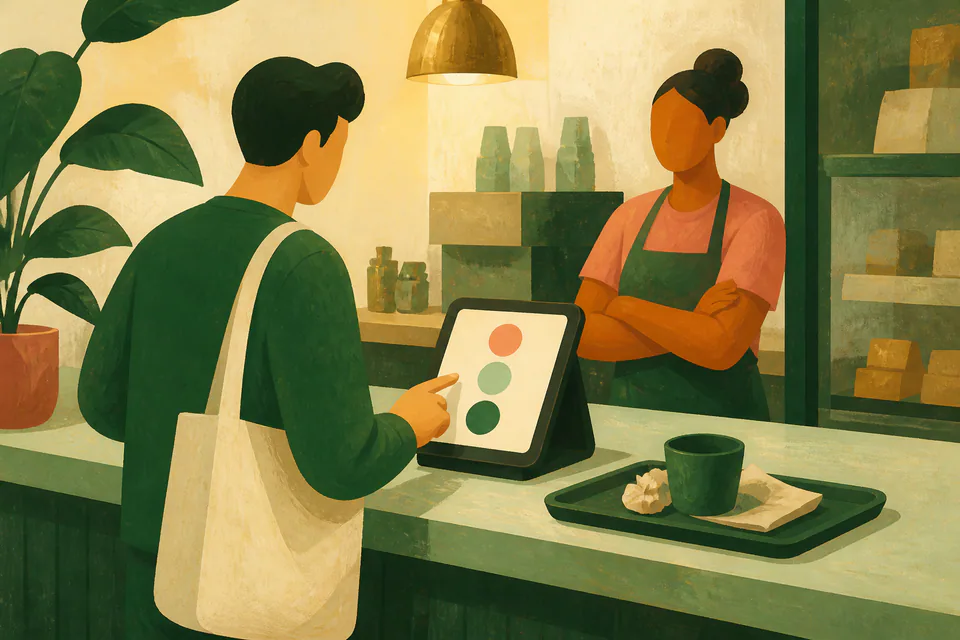
The touchscreen asks for a 25% tip while the cashier watches. What do you press?
At a counter-service shop, you place your own order, collect it, and clear the table. The payment screen suggests a twenty-five percent tip while an employee watches you choose.
When does a voluntary custom become an unfair social demand?