Listen through the publisher, then discuss the episode here or arrange an in-person Roundtable. Your city determines where to meet.
Roundtables are designed for groups of four, with a shared subject and room for everyone to speak. Come for discussion, with no dating expectation.
The great message of Christianity is that Christians are not only saved from their sin and made right before a holy God, but they are made new creatures as the first fruits of the new creation in Christ. In this sermon on Ephesians 5:3–5 titled “Distinct Roles of Church and State,” Dr. Martyn Lloyd-Jones demonstrates how Scripture undercuts all doctrines of antinomianism, because by the power of the Holy Spirit all who are true believers are renewed and transformed daily through God’s grace. For it is the gospel that truly transforms fallen men and women; it alone can overcome the depravity of fallen human nature and make them new in Christ. This is why all attempts to make people moral without the gospel fail to address the deepest need of humanity. When the church becomes more concerned with moralism than the gospel, it loses the focus of its mission. This has often happened throughout the history of the church, and today many are repeating this error. The remedy to this is to see the distinction between the church and the state. It is the church that has been given the gospel and it is the state that is to rule and bring justice. As Dr. Lloyd-Jones powerfully proclaims, the church must never stray away from its main goal in proclaiming the gospel of God’s grace.
Episode information is provided by the publisher. Listening takes place on the publisher’s service.
Alto from Ascension, the new daily prayer companion with the Mass readings, Morning and Night Prayer, daily reflections, a monthly novena, and liturgical living ideas from Kendra Tierney Norton, all in one screen-free monthly volume. Introduction to Devout Life, Saint Francis DeSales: https://link.amazon/B0avdp2zq We’re here for such a short time, and I truly believe you can’t orient your life toward what matters most unless you’re thinking about eternity. Every Catholic hopes to die in a state of grace, but most of us couldn’t explain what that really means. In this video we cover what a state of grace actually is and the three conditions for a mortal sin, the little-known teaching on perfect contrition (and what to do if you sin and can’t get to confession), why attachment to sin is the thing so many Catholics overlook even after confession, and the beautiful graces the Church has prepared for the moment of death, including the Apostolic Pardon and the plenary indulgence granted even
Matthew 25: 31-46 - 'I was naked and you clothed me; sick, and you visited me.' Catechism of the Catholic Church Paragraphs: - 544 (In 'The Kingdom of God is at hand') - Jesus identifies himself with the poor of every kind and makes active love toward them the condition for entering his kingdom (abbreviated) - 1033-1034 (in 'I Believe in Life Everlasting') - Our Lord warns us that we shall be separated from him if we fail to meet the serious needs of the poor and the little ones who are his brethren...Jesus often speaks of "Gehenna" of "the unquenchable fire" reserved for those who to the end of their lives refuse to believe and be converted, where both soul and body can be lost. Jesus solemnly proclaims that he "will send his angels, and they will gather . . . all evil doers, and throw them into the furnace of fire," and that he will pronounce the condemnation: "Depart from me, you cursed, into the eternal fire!" - 2447 (in 'Love for the Poor') - The works of mercy are charitable acti
Life is too short to waste on things that don't last. In this powerful message, Dr. Michael Youssef challenges believers to stop living without purpose and start living fully for Jesus Christ. Drawing from 1 Peter 4, Dr. Youssef points to Jesus, who remained focused on the Father's will even as He faced the Cross. His example shows us what it means to live with spiritual purpose, resist temptation, and remain faithful when life gets difficult. A transformed identity in Christ changes your priorities. Instead of chasing comfort, approval, or worldly success, God calls you to live for what matters eternally. This episode challenges you to: Discover your purpose through Jesus Christ, Stop wasting time on temporary pursuits, Resist sin and pursue Biblical holiness, Follow Christ's example of unwavering obedience, Repent of distractions and misplaced priorities, Pray for the Church and those who don't know Christ. You were created for more than just getting through life. When Christ becomes
The debate over Christian nationalism raises some uncomfortable questions about faith, politics, and the role of government. Al, Zach, John Luke, and Christian examine how Christianity transformed the Roman Empire and why the early church flourished despite intense persecution. The guys also revisit the Garden of Eden, questioning whether Adam's failure to protect Eve was the first sin and what his actions reveal about responsibility and obedience. They consider what history teaches us about the dangers of unchecked power and why Christians must put their allegiance to God's kingdom above any earthly government. In this episode: Genesis 2, verses 15–17; Genesis 3, verses 1–7; Daniel 2; John 1, verses 4–5; Matthew 5, verses 27–30; Matthew 28, verses 18–20; John 11, verses 49–52; Luke 23, verses 6–12; Galatians 3, verse 28; 1 Timothy 2, verses 11–14; Romans 13, verses 1–7 Today’s conversation is about Lesson 6 of Western Heritage: From the Book of Genesis to John Locke taught by various
Friday Rosary - SPOKEN MALE VOICE with AMBIENT MUSIC by artist: Alan Ellis - Song Title: A Rising Sun Bonus Track - by artist: Trevor Kowalski - Song Title: Lost Again This rosary contains the sorrowful mysteries, recited on Fridays and Tuesdays. These mysteries focus on Christ's Passion and death, with fruits like sorrow for sin and patience. Be a part of the communion of saints in praying the rosary, as it connects you with the communal prayer of the universal Church and the saints throughout history, fostering a profound sense of spiritual solidarity. The spoken daily prayer is about 2 minutes, while the recited rosary is about 17 minutes, with extended music for additional meditation. Additional prayer tools at www.rosarywristband.com 30 MINUTE TRADITIONAL ROSARY - SORROWFUL FRIDAY - SPOKEN ONLY https://youtu.be/fZE1UwFbRE0 ROSARY - SPOKEN ONLY VERSION: Friday - SPOKEN ONLY https://youtu.be/KyCey-qH-lA MOST VIEWED FRIDAY ROSARY: Calm Music https://youtu.be/tcryvk5IlmY Listen before
What happens when you pray Fajr, and why is this beautiful prayer so important in Islam? Fajr is more than the first prayer of the day. It is an opportunity to strengthen your connection with Allah, begin your morning with remembrance, and seek His blessings before the distractions of daily life begin. The Prophet Muhammad ﷺ taught us that the two Sunnah rak'ahs before Fajr are better than the world and everything in it. Imagine the immense value of a prayer that takes only a few minutes but carries such an extraordinary reward. In this powerful Islamic reminder, Sheikh Samih Jad explains the importance of Fajr Salah, the incredible rewards of its Sunnah and obligatory prayers, and why every Muslim should make protecting Fajr a priority. Discover the spiritual benefits of waking up for Fajr, how this daily act of worship can transform your relationship with Allah, and practical ways to overcome laziness, build consistency, and stop missing this precious prayer. Whether you struggle to
Christians often talk about the atoning death of Christ when in conversation about spiritual things. It is often mentioned regarding its relation to salvation. However, is it possible that it could mean even more? What is the impact it is supposed to have on the rest of one’s life? In this sermon on Ephesians 5:2 titled “The Atoning Work of Christ,” Dr. Martyn Lloyd-Jones instructs on how this verse and Christ’s atonement apply to the lives of believers even after they are saved. The Scriptures are never satisfied with a mere general statement about the love of God— as this verse demonstrates, God’s love is specifically written about in the Bible because the specific acts of God demonstrate His love. A person’s conduct is determined by their doctrine. Dr. Lloyd-Jones reminds that “as a man thinks, so is he.” Thus, one’s view of the doctrine of Christ’s atonement will have consequences for the Christian walk. In Christ’s atonement, one gains a clear example of the love of God. Dr. Lloyd
With so much input on how Christians are supposed to live their lives, how can they discern which way is correct? In this sermon on Ephesians 5:1–2 titled “Imitators of God,” Dr. Martyn Lloyd-Jones explains from Scripture how Christians are supposed to live and why they are to follow these guidelines. Paul says “we are to be imitators of God.” Christianity, Dr. Lloyd-Jones says, is more than just a moral code. Believers are never to obey simply because it is the normal “Christian” thing to do. Rather, they are to obey because they know what God has done for them and why God tells them to avoid certain things. In His graciousness, the Lord did not leave His people without reasons for obedience— instead, He tells often in Scripture the reasons why people are better off obeying His instructions. Just as children are representatives of their families, God’s children act as representatives of Him to the world. People should be able to look at them and see the Father because Christians shoul
What does it mean to “grieve the Holy Spirit”? In this sermon on grieving the Holy Spirit from Ephesians 4:30, Dr. Martyn Lloyd-Jones speaks of Paul’s statement that encompasses all the particulars that he had been talking about in the preceding verses. Importantly, it also serves to differentiate Christian ethics from any other ethical tradition. If a Christian’s morality is not rooted in this purpose and understanding of sinning against God, then it is not Christian at all. Paul’s point is this: any wrong living grieves the Holy Spirit because the Holy Spirit is the seal of the Christian’s inheritance and indwells those who are saved. All sin runs counter to the character of God and grieves Him greatly. Dr. Lloyd-Jones says that when one becomes a Christian, their relationship to God becomes one of love instead of one as a lawbreaker. Thus, when one sins, they must not be grieved because they have broken His law, but rather because they have sinned against His great love for them. Un
Courts should protect careful consideration even when this slows case processing.
Share your view, then see how readers voted. No sign-in required. This poll is shared across stories.
Do you agree or disagree?
Common Quandary
A Common Quandary to discuss
Another conversation to explore, separate from this news story.
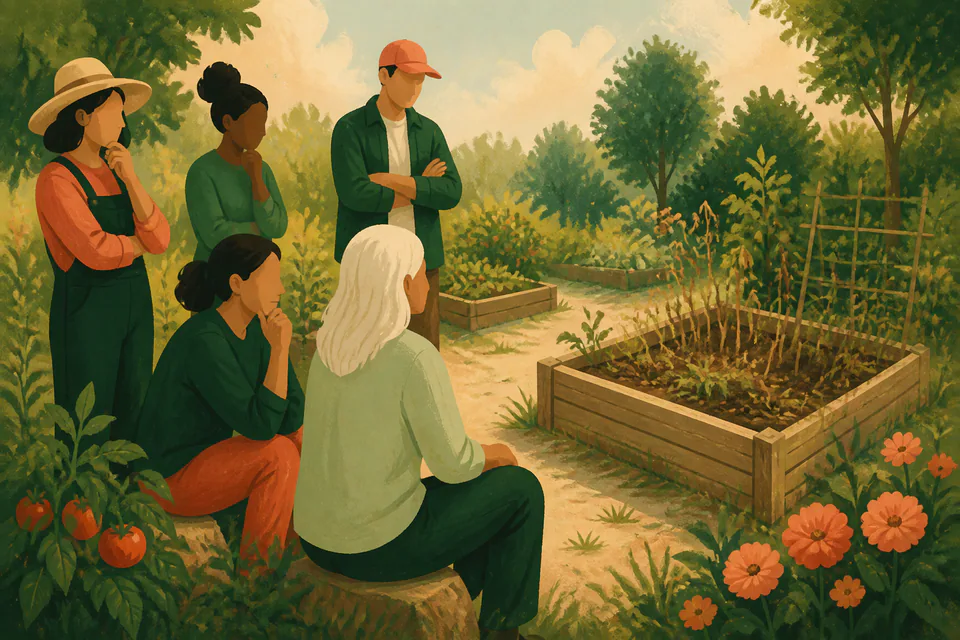
The best garden plot has been abandoned for months. Who gets to take it?
Garden plots have a three-year waiting list. One member's plot has gone untended for months and messages go unanswered, but other gardeners know they recently faced serious health problems.
How long should a shared resource remain reserved out of compassion?