Listen through the publisher, then discuss the episode here or arrange an in-person Roundtable. Your city determines where to meet.
Roundtables are designed for groups of four, with a shared subject and room for everyone to speak. Come for discussion, with no dating expectation.
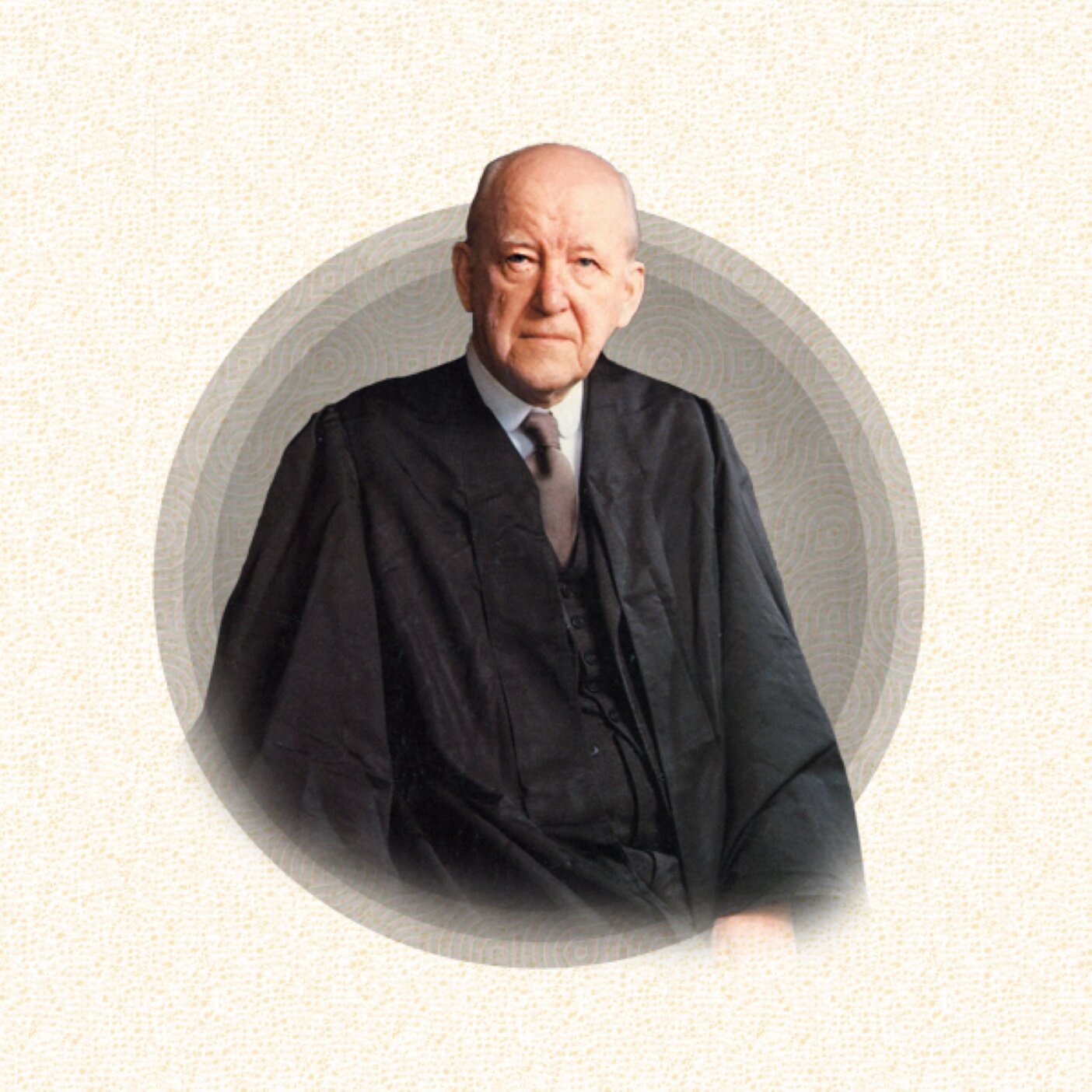
What does it mean to “grieve the Holy Spirit”? In this sermon on grieving the Holy Spirit from Ephesians 4:30, Dr. Martyn Lloyd-Jones speaks of Paul’s statement that encompasses all the particulars that he had been talking about in the preceding verses. Importantly, it also serves to differentiate Christian ethics from any other ethical tradition. If a Christian’s morality is not rooted in this purpose and understanding of sinning against God, then it is not Christian at all. Paul’s point is this: any wrong living grieves the Holy Spirit because the Holy Spirit is the seal of the Christian’s inheritance and indwells those who are saved. All sin runs counter to the character of God and grieves Him greatly. Dr. Lloyd-Jones says that when one becomes a Christian, their relationship to God becomes one of love instead of one as a lawbreaker. Thus, when one sins, they must not be grieved because they have broken His law, but rather because they have sinned against His great love for them. Understanding this, it is easy to see why it is such a serious thing to sin and grieve the Holy Spirit. How can this be countered? Dr. Lloyd-Jones says that the Christian must constantly be aware of the Lord’s presence. As people are reverent around royalty, Christians must remember that God is constantly with them and act accordingly. This will drive them to a desire to honor and please Him with their lives.
Episode information is provided by the publisher. Listening takes place on the publisher’s service.
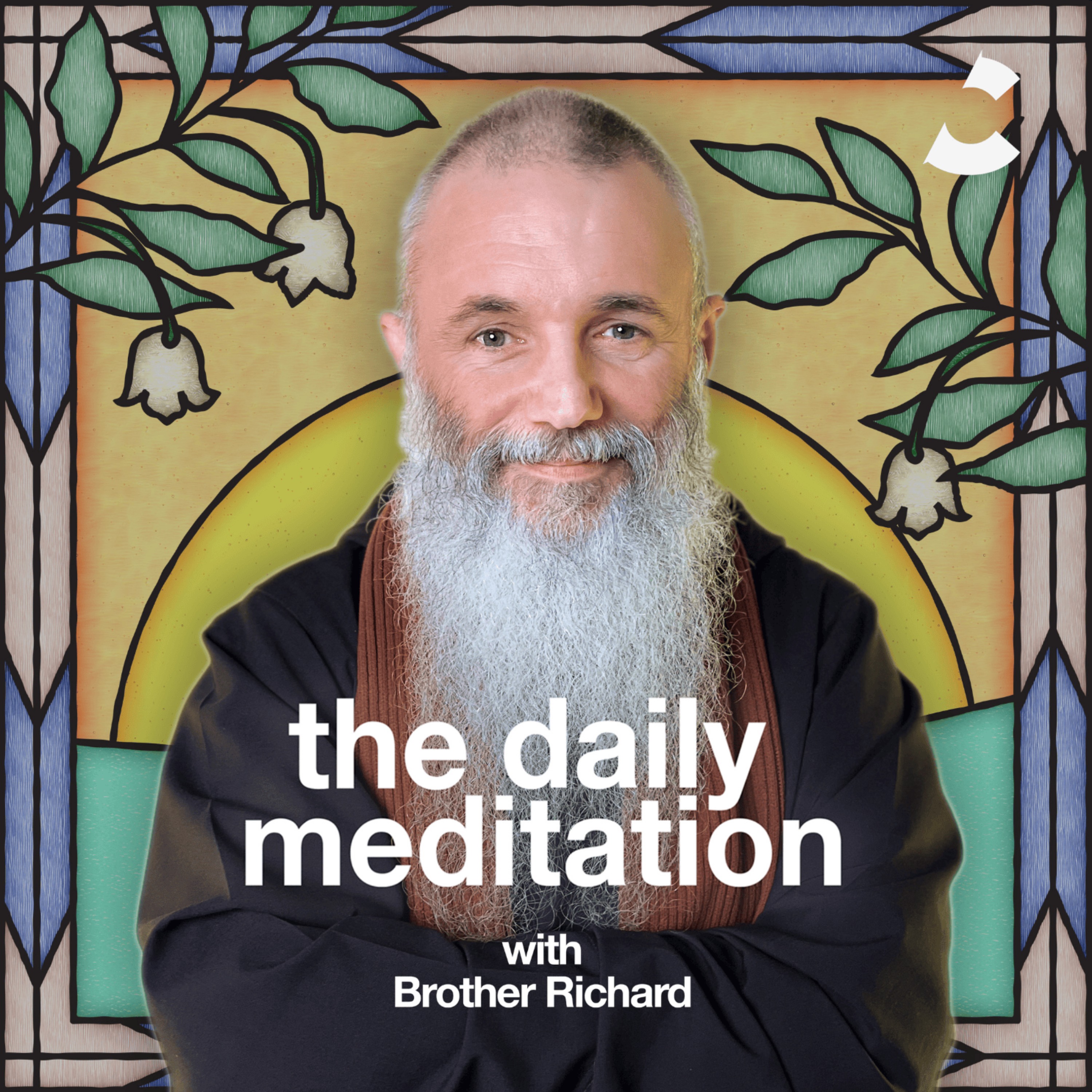
In this meditation, I invite you to reflect on the little joys that make up so much of our everyday lives. We are often encouraged to seek great experiences, extraordinary achievements and moments of intense happiness. Yet much of human life is made up of smaller, quieter experiences that can be just as meaningful. A good meal, a beautiful scene, a favourite piece of music, a conversation with a friend or a peaceful cup of coffee can all become moments of genuine joy. Within our contemplative tradition, joy is understood as a fruit of the Holy Spirit, an experience that can reveal the presence and action of divine love. Through meditation, we explore how cultivating kindness, compassion, gratitude and openness can create more opportunities for these small joys to arise. We also recognise that life will not always be joyful. Yet by learning to notice and appreciate the ordinary gifts around us, we may discover sources of strength and comfort during difficult times. Beginning with the si
We take a pilgrimage walk into Jerusalem that ends with a centuries-old tattoo stamp and a sudden realization on the Mount of Olives. From Mark 13, we focus on Jesus’ clear warnings about deception and persecution and ask whether we’re ready to endure when faith in Christ costs us something. • Pilgrimage through Israel and arrival in the Old City of Jerusalem • Visit to Razouk, the oldest tattoo parlor in the world, and why Christians mark pilgrimage • Meaning of the Jerusalem cross, Trinity crowns, branch, and the Sword of the Spirit • Setting and purpose of the Olivet Discourse as a private warning to the apostles • Reading Mark 13 on false messiahs, wars, earthquakes, famine, and betrayal • Two urgent themes to prepare for: deception that undermines faith and persecution that tests it • A direct challenge to men to prepare their families and churches for rising pressure Want to connect? Email [email protected]
If meditation never worked for you, Amy Strauss has some good news: nothing is wrong with you. Your intuition just speaks a different language. Amy is a practicing psychic, the creator of Your Resident Intuitive, and the author of The Six Intuitive Archetypes. She grew up in Hinsdale, Illinois, found her way to Washington, D.C., and recently stepped back from client readings to focus on teaching. The archetypes came to her, fully formed, on a day she was sitting around incredibly bored. We walk through all six: the Mystic, the Black Cat, the Butterfly, the House Witch, the Healer and the Emperor, and why the daily practice for each one looks completely different. For one person it's silent meditation. For another it's channeling into a voice memo. For a House Witch, it might be baking cookies. Amy explains why forcing yourself to sit for 20 minutes can make things worse, why the biggest block to intuition is the voice in your head that says "who do you think you are?", and the rule she
2027 KICKSTARTER https://nla.to/KS (http://nla.to/KS) What if the chart you consult is not a verdict but a mirror—and what if the most honest thing it reflects is your own relationship with fear and desire? ———— 2027 KICKSTARTER Tools for a deeper astrological practice await. Support Our 2027 Campaign: In this podcast episode, Adam Elenbaas takes a final look at the Sun in Scorpio squaring the Leo stellium of Mars, Jupiter, and the South Node. But rather than a conventional forecast, he offers something more personal: ten provocative truths learned over seventeen years and more than thirteen thousand charts. You may notice a familiar ache here—the quiet hope that astrology will finally deliver certainty about the future. Perhaps you recognize the pattern of consuming the craft out of dread rather than devotion. The invitation of this transit is not to predict but to reflect. This episode asks what happens when the oracle becomes a mirror for the soul rather than a machine for outcomes.
Saturday 21 November 2026 Welcome to the Saturday Examen. On Saturdays, we like to reflect back on the week just passed. This isn’t a memory test but instead a simple invitation to notice what we do remember with the help of the Holy Spirit, and under the loving gaze of God. We call this an examen prayer. Here’s a suggestion of an examen with pen and paper. Use your journal or a sheet of paper. You can pause to find them. Now draw two vertical lines to create three equal columns. Head the first column: ‘Life-giving’ and the last column: ‘Life-sapping’. The middle column doesn’t need a heading though you might want to invent one. Ask for God’s light as you review your week... Look back at your week starting exactly seven days ago. Consider work, leisure, people, places, activities, times of prayer and anything else that comes to mind. Note whatever comes and place it in one of the three columns... Some things may fit into more than one. When you’ve done this, look back at the page. Eith
AI, Human Dignity, and the Temptation to Surrender Our Thinking AI agents can now work for hours on their own—but what happens to us when they do? AI entrepreneur Karl Wirth joins Curtis Chang to explore artificial intelligence, human agency, loneliness, workaholism, cognitive surrender, Big Tech, and the ethical choices hidden inside product design. They also confront AI doomsday fears and ask what Christian hope and human dignity look like in a world increasingly shaped by intelligent machines. 00:47 - AI engineer Karl Wirth and his faith journey 10:03 - AI agents, human agency, and learning 14:24 - Does AI have theological and relational limits?\ 16:52 - Character, discipline, and working with AI 18:44 - AI as a force multiplier for human flaws 20:16 - Cognitive surrender and the workplace 24:01 - AI's catastrophic risks and potential benefits 28:23 - Can AI startups be redemptive? 32:50 - Designing AI to keep humans involved 39:20 - Forming Christians to engage technology 43:33 - H
The great message of Christianity is that Christians are not only saved from their sin and made right before a holy God, but they are made new creatures as the first fruits of the new creation in Christ. In this sermon on Ephesians 5:3–5 titled “Distinct Roles of Church and State,” Dr. Martyn Lloyd-Jones demonstrates how Scripture undercuts all doctrines of antinomianism, because by the power of the Holy Spirit all who are true believers are renewed and transformed daily through God’s grace. For it is the gospel that truly transforms fallen men and women; it alone can overcome the depravity of fallen human nature and make them new in Christ. This is why all attempts to make people moral without the gospel fail to address the deepest need of humanity. When the church becomes more concerned with moralism than the gospel, it loses the focus of its mission. This has often happened throughout the history of the church, and today many are repeating this error. The remedy to this is to see th
Christians often talk about the atoning death of Christ when in conversation about spiritual things. It is often mentioned regarding its relation to salvation. However, is it possible that it could mean even more? What is the impact it is supposed to have on the rest of one’s life? In this sermon on Ephesians 5:2 titled “The Atoning Work of Christ,” Dr. Martyn Lloyd-Jones instructs on how this verse and Christ’s atonement apply to the lives of believers even after they are saved. The Scriptures are never satisfied with a mere general statement about the love of God— as this verse demonstrates, God’s love is specifically written about in the Bible because the specific acts of God demonstrate His love. A person’s conduct is determined by their doctrine. Dr. Lloyd-Jones reminds that “as a man thinks, so is he.” Thus, one’s view of the doctrine of Christ’s atonement will have consequences for the Christian walk. In Christ’s atonement, one gains a clear example of the love of God. Dr. Lloyd
With so much input on how Christians are supposed to live their lives, how can they discern which way is correct? In this sermon on Ephesians 5:1–2 titled “Imitators of God,” Dr. Martyn Lloyd-Jones explains from Scripture how Christians are supposed to live and why they are to follow these guidelines. Paul says “we are to be imitators of God.” Christianity, Dr. Lloyd-Jones says, is more than just a moral code. Believers are never to obey simply because it is the normal “Christian” thing to do. Rather, they are to obey because they know what God has done for them and why God tells them to avoid certain things. In His graciousness, the Lord did not leave His people without reasons for obedience— instead, He tells often in Scripture the reasons why people are better off obeying His instructions. Just as children are representatives of their families, God’s children act as representatives of Him to the world. People should be able to look at them and see the Father because Christians shoul
Governments should remove practical barriers to voting, even when doing so costs more.
Share your view, then see how readers voted. No sign-in required. This poll is shared across stories.
Do you agree or disagree?
Common Quandary
A Common Quandary to discuss
Another conversation to explore, separate from this news story.
A reserved meeting room has been empty for twenty minutes. Can your group take it?
Every library study room is occupied except one marked reserved. Its booking began twenty minutes ago and nobody has appeared. Your group has an urgent presentation to prepare, while library rules say reservations remain valid for half an hour.