English-language podcasts

TED Tech

Do you trust me? | from Corner Piece

53 min

Listen through the publisher, then discuss the episode here or arrange an in-person Roundtable. Your city determines where to meet.

Roundtables are designed for groups of four, with a shared subject and room for everyone to speak. Come for discussion, with no dating expectation.

There’s no doubt internet culture has changed the way we trust others in modern life. In this special episode from TED’s new podcast, Corner Piece, host Taha interrogates his own suspicion of others and sets out on a mission to uncover what it really means to trust the people in your life. He interviews Rachel Botsman (https://www.rachelbotsman.com/), an expert who’s been studying trust for years, to understand why trust is such a difficult thing to define, why it’s so important, and how cultural narratives about trust can, ironically, push people towards mistrust. He further explores the trust he has with his own co-creators and co-hosts, Sabrina and Melissa. Corner Piece is hosted by the creators of the YouTube channel, Answer in Progress. In this new podcast, Taha, Melissa and Sabrina follow their curiosities down rabbit holes with insights from expert guests to help themselves, and you, understand how modern life changes answers to age-old questions. Find more episodes of Corner Piece here: https://link.mgln.ai/T6DqsF Hosted on Acast.

Episode information is provided by the publisher. Listening takes place on the publisher’s service.

Listen at the source ↗

Featured places to meet in Palo Alto, CA

Explore these places and arrange a conversation through ThinkMatch.

City guide for Palo Alto, CA

More from TED Tech

TED Tech

Future of Food and Agriculture (1/5): The plant-based coating that is eliminating food spoilage | Jenny Du

22 min

If food waste were a country, it’d be the third highest emitter of greenhouse gas emissions after China and the US, says Apeel Senior VP of Operations Jenny Du. Following her talk at TED2025, Du sits down for a conversation with host Sherrell Dorsey on how her lab is creating plant-based coating that can help reduce food spoilage. From combating food deserts to extending shelf life, Jenny and Sherrell discuss how Apeel is using science and sustainability to revolutionize the global food system. Hosted on Acast.

Discuss this episode

TED Tech

Future of Food and Agriculture (2/5): The sweet future of vertical farming | Hiroki Koga

15 min

Can strawberries grown inside a building taste sweeter than those grown in a field? Farming entrepreneur Hiroki Koga explores how his team is combining solar-powered vertical farms with AI, robotics and indoor bee colonies to grow delicious strawberries year-round — and how this practice, if widely adopted, could deliver a harvest of benefits for the future of food. After the talk, Sherrell dives deeper into the impact of vertical farming. Hosted on Acast.

Discuss this episode

TED Tech

Future of Food and Agriculture (3/5): Can nanoparticles help fight hunger? | Christy L. Haynes

16 min

A game-changing solution to the global food crisis could come from something so tiny you can't see it with the naked eye. Nanomaterials chemist Christy Haynes describes her team's work designing nanoparticles that could protect plants from disease and crop loss, helping farmers reap abundant harvests and grow food that will make its way to markets and dinner tables. After the talk, Sherrell shares thoughts on the possibilities of precision agriculture. Hosted on Acast.

Discuss this episode

Community Poll

Vocational training should receive the same respect as university education.

Share your view, then see how readers voted. No sign-in required. This poll is shared across stories.

Do you agree or disagree?

Choose one answer

Common Quandary

A Common Quandary to discuss

Another conversation to explore, separate from this news story.

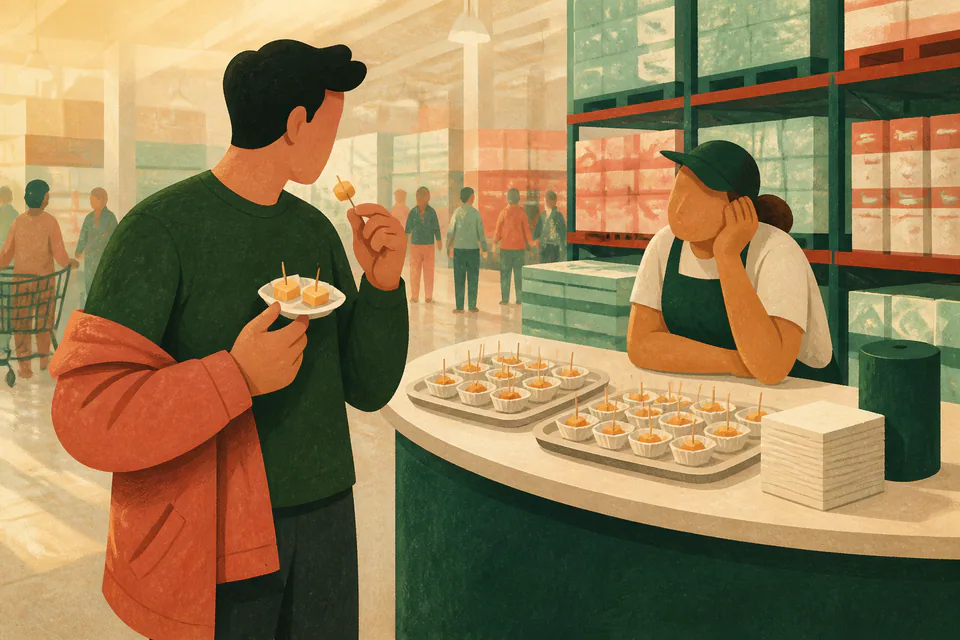
You love the free sample but will never buy it. How many times may you circle back?

A warehouse store is offering delicious samples. You have no intention of purchasing the product, but the employee seems bored and has trays to spare. After taking two, you consider removing your jacket and returning for a third.

Is exploiting generosity wrong when the giver appears not to care?

Explore this quandary