Listen through the publisher, then discuss the episode here or arrange an in-person Roundtable. Your city determines where to meet.
Roundtables are designed for groups of four, with a shared subject and room for everyone to speak. Come for discussion, with no dating expectation.
“I almost don’t want to know” That’s Hamish after Cameron Munro walks us through what a few cheap sensors can tell you about your home. We’re talking about data in construction with Cam today: what’s worth measuring, what isn’t, and what to do with the numbers once you’ve got them. If you’re a builder, designer or homeowner who’s curious about moisture in your walls and roof, or the air you’re breathing at home, start here. Cameron’s first rule is to work out what you want to know before you buy a sensor. Matt shares the sensors he’s put in his own roof, and Cameron shows us the easiest comfort test going: a temperature sensor in a ping-pong ball sprayed matte black, which shows how cold the walls and windows really are. We also get into the treated pine batten debate, what the roof cavity numbers do and don’t prove, and why Cameron is careful about the word “proof”. Then we cover the three things you can monitor: comfort, air quality and energy use. Cameron explains why a meter on your heat pump doesn’t tell you how much heat you’re getting, why a carbon monoxide alarm is a must if you burn anything at home, and why he reckons PM2.5 matters more than CO2. We also talk about wood fires, frying dumplings and why Matt wishes he’d ducted his range hood outside. We finish with the sensors worth buying and what we still need to test. They now cost under $100, and you’re better off with a good app and history than lab-grade accuracy. Cameron also tells us what he’d like to see monitored next, like what’s going on inside wall and roof build-ups where you can’t see. CHAPTER MARKERS 00:00 Introduction 02:24 Smart Membrane Sensors 04:07 What Should We Monitor 05:22 Black Bulb Thermal Comfort 13:11 Do We Need Treated Pine Battens 15:15 Roof And Wall Cavity Moisture 18:55 Heat Pumps And COP 22:00 Carbon Monoxide Alarms 25:12 CO2 Levels And Sensor Limits 31:54 PM2.5 Measure What Matters 39:26 Cooking Fumes And Range Hoods 41:27 Cheap Sensors Worth Buying 45:43 Benchmarking Buildings 46:43 What We Need To Test Next Connect with Cam: https://passiveanalytics.com.au/ Our Sponsors: Pro Clima - https://mindful-builder.captivate.fm/proclima Wunderbuild - https://www.wunderbuild.com/ Biz Tech Guru: https://www.biztechguru.com.au/ Connect with us on Instagram: @themindfulbuilderpod (https://www.instagram.com/themindfulbuilderpod/) Connect with Hamish: Instagram: @sanctumhomes (https://www.instagram.com/sanctumhomes/) Website: https://www.yoursanctum.com.au/ Connect with Matt: Instagram: @carlandconstructions (https://www.instagram.com/carlandconstructions/) Website: https://www.carlandconstructions.com/
Episode information is provided by the publisher. Listening takes place on the publisher’s service.
So what are you willing to pay for the life you say you want? Because everything has a price. Every single thing worth having in this life carries a cost, and that cost is real, and that cost is non-negotiable. The sooner you make peace with that, the sooner you stop being surprised by a world that was never going to be free. Uploaded 14-10-26 Most people understand this in theory. They'll nod along. Of course there's a price, they say. But there's a difference between knowing something as a slogan and knowing it in your bones — and the difference shows up at exactly the moment the bill actually arrives. Here is the truth: the price of any life is paid in advance. Not at the end. Not along the way. In advance. The people who get the life they want settle the account before they ever begin. The people who don't are the ones who thought they could enjoy the purchase first and figure out the payment later. This seminar unpacks the single mechanic behind why some people finish what they st
Instant Access to your FREE training course: https://nci.university (https://nci.university/) Uploaded 27-07-25 This is the simulation you already live inside of—and you’ve been breathing it like oxygen since the day you were born. In this video, we expose the invisible machinery beneath modern life—how symbols have replaced truth, how marketing has replaced meaning, and how our desires are manufactured by the very system that feeds on them. Drawing from the work of Jean Baudrillard and the hidden mechanisms of simulacra, we walk you through 10 real-life “glitches” that reveal the truth: • Why your food is rendered, not real • How social media replaced memory • Why you take photos of things you never actually see • And why even your “rebellion” is likely pre-approved This isn’t a conspiracy. It’s a mirror. And once you see it, you can’t unsee it. simulation theory, simulated reality, Baudrillard simulation, are we in a simulation, hyperreality explained, social media illusion, digital
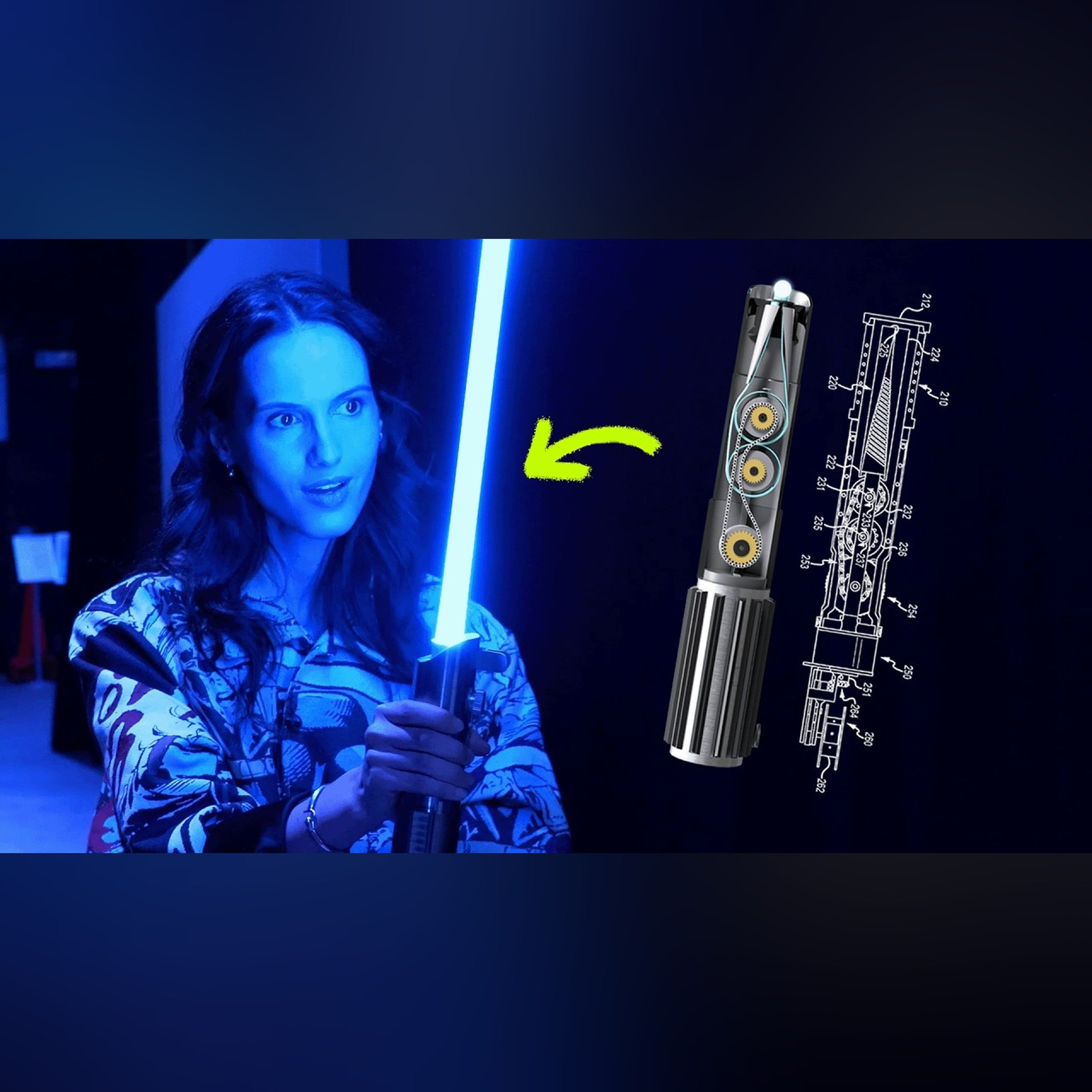
I tested Disney’s coolest new tech… Go to https://surfshark.com/cleo for 4 extra months of Surfshark Today I’ve been invited behind the scenes at Walt Disney Imagineering, the place where Disney brings their craziest ideas to life - from STUNT ROBOTS to a real life version of The Force, to adorable little droids! On this show Huge If True, we explore how tech can improve people’s lives - by living longer, going farther, doing more. But the reason I’ve loved Disney since I was a kid is they use tech to improve lives another way… by making people happy. And that means they end up pushing forward tech in some crazy, unexpected ways. So let me take you inside the magic, to show you the cutting edge tech they’re building… how it works… and what happens when we put it to the test! Chapters: 0:00 What is Disney building next? 1:11 What does Walt Disney Imagineering do? 1:52 What are Disney’s new droids really like? 2:47 How do Disney’s new droids work? 5:08 What’s the world’s most realistic l
Until a little under two weeks ago, Silicon Valley Bank was the sixteenth largest bank in the United States, the favoured choice of tech startups due to the tailored services it provided. But by 10th March 2023, American authorities were taking control of SVB following its collapse. It had assets of over $200bn, making for the second biggest bank failure in US history. There were a number of factors behind the collapse, and it’s causing concern as it’s common for one bank collapse to be followed by another, due to what’s called financial contagion. Indeed, just a few days later it was the turn of New York-based Signature Bank to collapse. And over in Europe, Switzerland’s second largest bank Crédit Suisse had to take out a $54bn to stay afloat, before then being bought out by the country’s largest bank UBS, in a bid to halt the crisis. Why did Silicon Valley Bank collapse? How do stock market crashes happen? In under 3 minutes, we answer your questions! To listen to the last episodes,
What if everything you've been chasing was already inside you? It took me 40 years to understand that happiness isn't somewhere in the future, it's here, in this moment. As a younger woman, I avoided pain, resisted it, distracted myself from it. What I know now is that pain doesn't break us. It rearranges us. And on the other side of it is something I wouldn't trade for anything, lived wisdom, inner comfort, and a clarity that simply cannot be rushed. Uploaded 04-03-26 In this conversation with @lewishowes, I share what I wish I had known decades sooner: about fulfillment, presence, the gift hidden inside our most difficult moments, and why it might just be the simplest things that wake us up the most. Watch more videos like this How To End Self Sabotage with 1 Simple Choice: https://youtu.be/-0Ln4-h4LQQ Do This When You Feel Triggered and Your Life Will Transform: https://youtu.be/h7YylJ3nuok Creating Moments of Stillness in the Chaos: https://youtu.be/eR6e50AmeRY Turning Towards Fear
A.I. for Building Self-esteem: Seeing Yourself More Clearly and Kindly, a practical, beginner-friendly look at how artificial intelligence can help you see yourself a little more clearly and kindly. Building Self-esteem? Press play on Episode 427 of A.I. for Beginners and learn exactly how artificial intelligence, especially ChatGPT, alongside a journaling app, can help you see yourself a little more clearly and kindly. WHAT YOU WILL LEARN IN THIS EPISODE - Why building self-esteem is so hard to handle alone, and what is actually going on underneath it - A specific way to use a journaling app to work through it, step by step - An example prompt you can copy word for word: "Help me notice when I'm judging myself far harsher than I'd judge a friend" - A second practical technique, with another ready-to-use prompt: "Help me write down three qualities I actually like about myself, beyond achievements" WHO THIS EPISODE IS FOR - Anyone currently working on building self-esteem - Anyone curio
“Being busy does not mean you’re making money.” This week we're joined by Duayne Pearce, a Brisbane builder of 20 years and the man behind the mentoring business Live Life Build and the Level Up podcast. Duayne shares how he went from running a crew of nearly 50 chippies to turning over $8 million in his first 18 months as a builder, and why that nearly sank him. We get into a conversation about knowing your numbers, what an apprentice really costs, and why the jump from tradie to builder is so much bigger than people think. We're also pondering whether building actually needs to get more expensive to get cheaper. Could we build a house with five trades? Who wears the risk when something goes wrong? Duayne gave us his thoughts on where the industry is heading in the next five years, how to make learning fun again, why AI won’t fix a business that doesn’t have the basics right, and why you shouldn’t believe everything you see on social media. CHAPTER MARKERS 00:00 Meet Duayne Pearce 01:
Conservation policies should include practical support for affected local livelihoods.
Share your view, then see how readers voted. No sign-in required. This poll is shared across stories.
Do you agree or disagree?
Common Quandary
A Common Quandary to discuss
Another conversation to explore, separate from this news story.
You are vegetarian, but the leftover steak is headed for the trash. Do you eat it?
A vegetarian avoids buying meat because of animal welfare concerns. At work events, untouched meat is routinely thrown away, and eating it would neither increase demand nor cause another animal to be harmed.
Should a moral practice be judged by its consequences or its consistency?