Donna Ashworth: Why being “too much” is a gift and the art of being easily pleased
46 min
Listen through the publisher, then discuss the episode here or arrange an in-person Roundtable. Your city determines where to meet.
Roundtables are designed for groups of four, with a shared subject and room for everyone to speak. Come for discussion, with no dating expectation.
My guest on this episode is Sunday Times bestselling poet Donna Ashworth, who Dawn French (gorgeously) once called "a human disco ball". Her poems are shared by millions of women online, and they put into words what so many of us feel but can’t quite say. During our chat, Donna talks about why touring makes her feel like a robot Hoover, and why she needs “staring at a wall time” to recharge. We also talk about being a mum to teenage boys, what happened when she asked them to describe her (a brave move!) and why she tells her sons they can take mental health days off school, no questions asked. Donna also tells me: How a blog called Ladies Pass It On, started in 2018 to find internet friends, turned into a poetry career with no business plan Her rule of one spiritual step and one practical step to move towards something you want What Vinnie Jones taught her about why life’s bags get heavier to carry Soul flu, and treating a bad mental health day the way you’d treat a virus What she’d say to every woman who’s been told she’s “too much” Why beginning has never been her problem, but finishing used to be The best way to read her new book, and her free journaling group You can find Donna on Instagram: @donnaashworthwords (https://www.instagram.com/donnaashworthwords/), and on Facebook in her group Journaling with Donna Ashworth (https://www.facebook.com/groups/959974109512139). Buy her new book The Art Of Being Easily Pleased: https://link.amazon/B09olbhkH If you enjoyed this episode, please leave a rating and review — it really helps other people find the podcast. And you can follow the podcast to ensure you don’t miss future episodes. Thank you! Not Another Mummy Podcast is brought to you by me, journalist and author Alison Perry. I’m a mum of three and I love interviewing people about parenthood and confidence on the podcast. You can check out my other episodes and you can come chat to me on Instagram: @iamalisonperry (http://www.instagram.com/iamalisonperry) or on Threads: @iamalisonperry. (https://www.threads.com/@iamalisonperry) You can buy my book OMG It’s Twins (https://www.amazon.co.uk/OMG-Its-Twins-Birthday-Without/dp/1785043137) now. Music: Epidemic Sound Artwork: Eleanor Bowmer Hosted on Acast. See acast.com/privacy (https://acast.com/privacy) for more information.
Episode information is provided by the publisher. Listening takes place on the publisher’s service.
It takes a village to raise a child. But what happens when the village starts telling you how to parent? Today, Dale is joined by returning guest Ali Knowles, emotional therapist and founder of the Ollie Model, to discuss why it takes a village to help raise a child (https://thesendcast.com/why-it-takes-a-village-to-help-a-child), and what that support should really look like. Together, they explore: - Why the village has changed, and why so many parents now feel isolated. - The difference between offering support and giving advice, and why wisdom helps where instructions don't. - How social media and well-meaning opinions can wear down parents' confidence. - Why a parent's own school experiences can quietly shape how they respond to their child. - What 'safe' means to a child, and why feeling safe is not the same as being told you are. When parents ask her what they should do, Ali's answer is always the same: "I can't tell you, because there isn't a book. You haven't written it. This
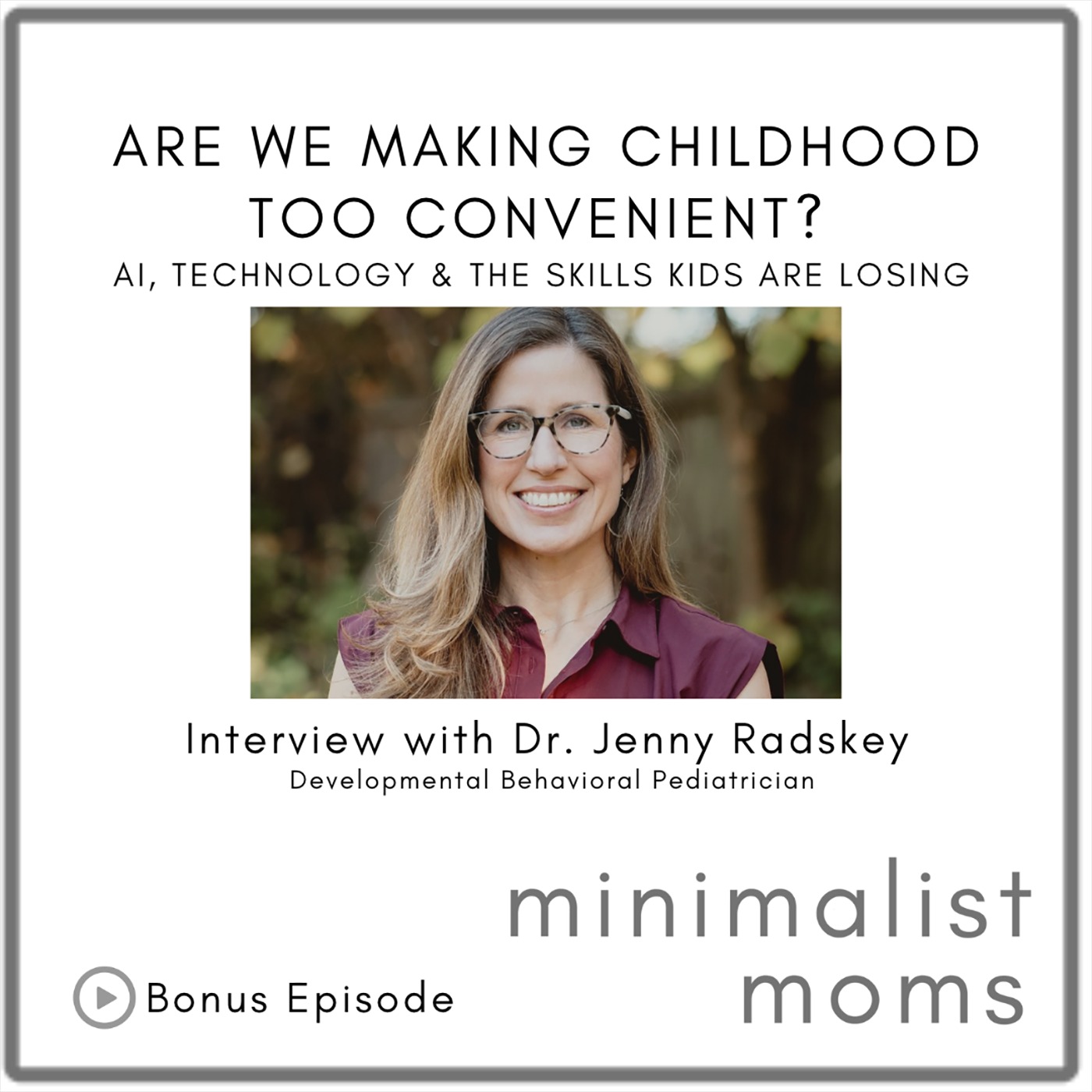
Are we making childhood easier at the expense of the very skills our kids need to thrive? We've talked about screen time and technology on the podcast before, but today's conversation takes us into territory we haven't really explored on the show yet: artificial intelligence and its potential impact on our children's development. As AI becomes more integrated into everyday life, I think it's worth asking some important questions about what our kids might be gaining - and what they could be missing along the way. I'm joined by pediatrician and researcher Dr. Jenny Radesky to explore how technology is reshaping childhood in ways we may not even recognize. From handing over a device to calm a difficult emotion to turning to AI for instant answers, are we unintentionally removing the everyday opportunities our children need to develop patience, persistence, creativity, and critical thinking? Just because something makes life easier doesn't necessarily mean it's making life better. Links Di
What do you do when you want to pray but don't know what to say? And what about your kids? You want to teach them how to talk to Jesus, but maybe you struggle to do it yourself. In this episode, Scarlet Hiltibidal gets honest about how she used to struggle with prayer, from feeling inconsistent to overcomplicating it and sometimes worrying more about how her prayers sounded than simply talking to God. Through Jesus' teaching in the Lord's Prayer in Matthew 6, Scarlet walks through a beautiful, practical model for prayer that helps us remember who God is, bring Him our everyday needs, confess our sins, and ask for His help. Rather than treating the Lord's Prayer as empty repetition, we can use it as a guide for honest, personal conversations with our Father. She also encourages moms to turn to the Psalms when they struggle to find the words, reminding us that we can pray Scripture, remember God's faithfulness, and talk to Him honestly in every season. In this episode, we talk about: Why
Hey Carpool Crew! You've asked God for the same thing every night since October, and this morning it looks exactly the same. Today we read Luke 18:1, hear about a woman who kept knocking on a judge's door, and learn one sentence you can say out loud tonight. About 5 minutes, made for the car. Today's One Thing: Keep asking. Do not quit early. Scripture: Luke 18:1 (CSB) SAVE A SEAT FOR THE NEXT FAMILY Carpooling with Jesus is a nonprofit. Give here: https://carpoolingwithjesus.com/give FOR YOUR KIDS Book a Shout Out (https://carpoolingwithjesus.com/shoutout) CARPOOLING WITH JESUS+ Everything is on our website (https://carpoolingwithjesus.com/) FOLLOW ALONG • Instagram (https://bit.ly/carpooling-insta) • TikTok (https://www.tiktok.com/@carpoolingwithjesus) • YouTube (https://bit.ly/YoutubeCPWJ) • Facebook Group (https://bit.ly/CPWJFB) Download the ROAD TRIP game (https://apple.co/4xFb21N) ABOUT THE SHOW
This episode is part of Beyond the Budget: Getting Ahead Before the New Year, brought to you in partnership with Pearler, an online investing platform helping everyday Aussies build long-term wealth. Find out more at pearler.com (http://pearler.com/) and get your first three trades free atwww.pearler.com/lp/start (http://www.pearler.com/lp/start). We’re so excited to welcome money psychology expert, author and mum Emma Edwards to talk about all things money! Emma teaches the softer skills of money, helping people understand the role their emotions play in their financial confidence. This kicks off our money mini series with a chat that’s honest, emotional and leaves you with real homework. We discuss… Dropping the shame: why “I’m just bad with money” is a story we tell ourselves, and where to start if you’re clueless How the way you grew up with money shapes what feels possible now Why short-term wants feel cheaper than long term needs, and how to bring micro moments of your dream life
The answer to too much screen time might not begin with taking screens away. It might begin with giving children more of what they're missing. Dr. Shefali, psychologist and bestselling author of The Conscious Parent, (https://link.amazon/B0djb36aF)joins Ginny Yurich to discuss her newest books, Raising Conscious Sons (https://link.amazon/B0j9zlZlb)and Raising Conscious Daughters (https://link.amazon/B097nQwGT)and what children need to thrive in a world that looks radically different from the one their parents knew. From boys seeking adventure and brotherhood to girls carrying the exhausting pressure to be everything, Dr. Shefali offers a refreshing perspective on raising children with confidence and connection. She explains why boredom builds creativity, why movement can be a powerful pathway to emotional regulation, and why parents may need to loosen their grip on achievement to give children room to discover who they are. It's an encouraging reminder that parents still have tremendou
My guest on this episode is Stacey Duguid - former ELLE fashion editor, author of In Pursuit of Happiness and now founder of Encore, a community for midlife women who can’t get back into work. Stacey tells me how despite her glittering career in fashion, last year she sent out CV after CV and didn’t get so much as an auto reply. By March this year she was signing on for Universal Credit and then she uncovered a big reason for what was happening: AI. Stacey explains how AI recruitment tools are filtering out women over 40 before a human ever sees their application and how - when she posted about it on her Instagram Stories - thousands of women told her it was happening to them too. We also talk about: The legislative changes Stacey wants to campaign for, starting with better rules for the recruitment industry ATS - what an applicant tracking system is and why your CV might never reach a human Botoxing your CV - the advice she was given to hide her age and experience, and why she refused
Representatives should revise campaign promises when strong new evidence shows a better course.
Share your view, then see how readers voted. No sign-in required. This poll is shared across stories.
Do you agree or disagree?
Common Quandary
A Common Quandary to discuss
Another conversation to explore, separate from this news story.
Your partner checks your location whenever you reply slowly. Is that caring or creepy?
A couple shares live phone locations for convenience and safety. One partner begins checking the map whenever a message goes unanswered, even though they have never agreed on when checking is appropriate.
Does granting access also grant permission to monitor?