English-language podcasts

Stronger Bolder Wiser

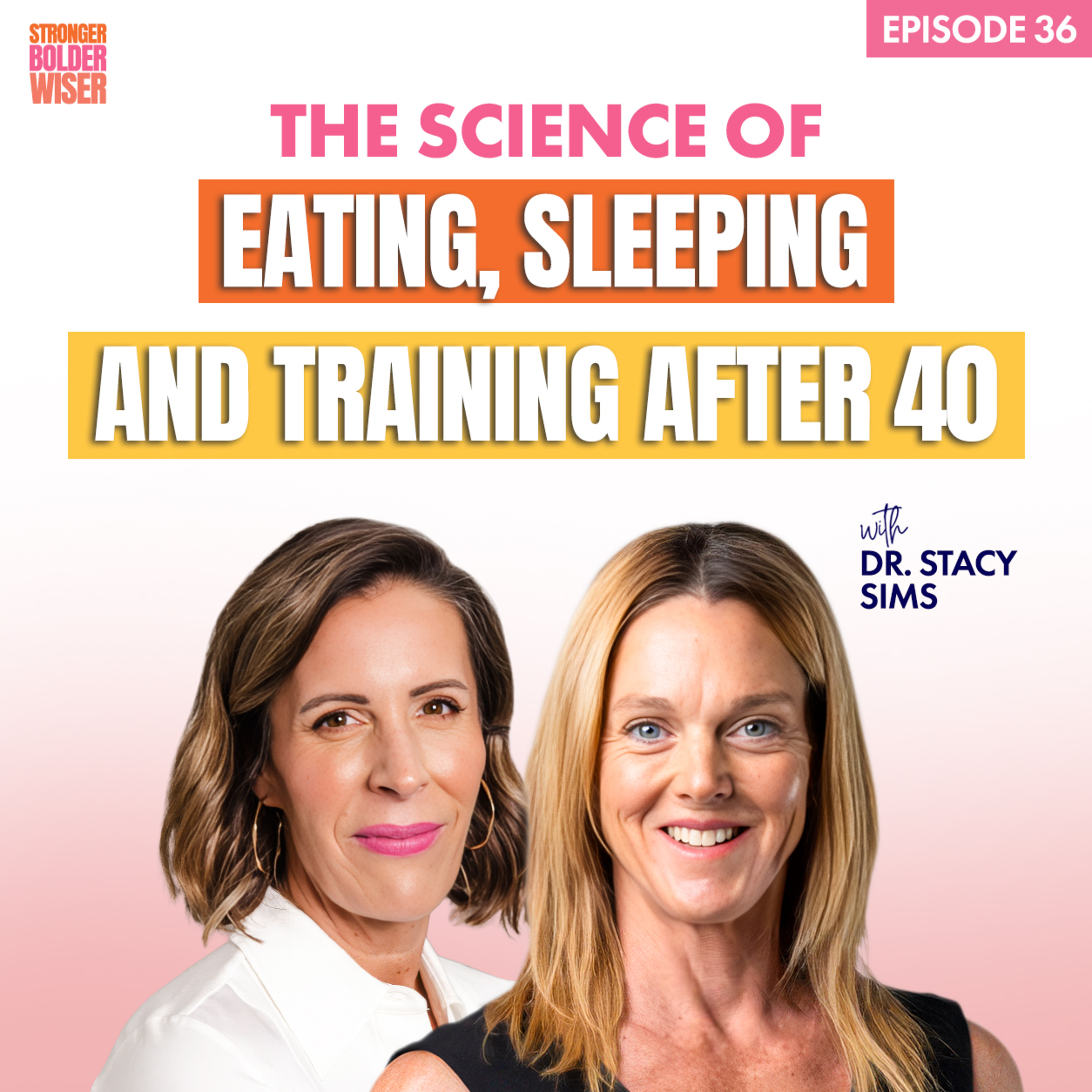
Dr. Stacy Sims: The Science of Changing How Women Should Eat & Exercise After 40
95 min

Listen through the publisher, then discuss the episode here or arrange an in-person Roundtable. Your city determines where to meet.

Roundtables are designed for groups of four, with a shared subject and room for everyone to speak. Come for discussion, with no dating expectation.

Doing everything right but still exhausted, waking at 3 am and gaining weight after 40? Dr. Stacy Sims explains what is really going on. In this episode, I sit down with someone whose work has changed how I fuel, train, and protect my body for the decades ahead: the incredible Dr Stacy Sims. I asked the questions my community sent in, and Stacy went deeper than ever on why so many midlife women feel like they’re failing when their bodies simply need something different. We talk about why skipping breakfast can throw out your circadian rhythm and wreck your sleep, why alcohol hits a woman’s sleep harder than a man’s, and why your wearable might be telling you the wrong story. Stacy also shares exactly how she’d structure a training week for a woman in her 40s or 50s, why marathon and zone 2 training can add belly fat, how much protein we really need after 40, and why so many of us are under eating without realising it. Key Takeaways: -Why a small amount of food soon after waking can help steady your energy, cravings and sleep -How strength training supports your brain, bones, muscle and gut as you age -Why under fuelling can stall muscle gain and affect your metabolic health in perimenopause -How to read your wearable data as a woman, and why trends matter more than daily scores About the Guest: Dr Stacy Sims, PhD, is an exercise physiologist and nutrition scientist who has spent her career researching female physiology, and she is the author of ROAR and Next Level. Her work challenges the idea that women should train and eat like small men. She has worked on the Women’s Health Initiative at Stanford and is now building Collective X, a platform that brings vetted female health research into wearables and AI. Website: https://www.drstacysims.com (https://www.drstacysims.com/)Collective X: https://collectivex.health (https://collectivex.health/)Instagram: https://www.instagram.com/drstacysims Timestamps Introduction (00:00) Why You’re Exhausted and Waking at 3 am (01:07) How to Sleep Better in Perimenopause (14:12) Why Alcohol Hits Women’s Sleep Harder (24:09) Melatonin, ADHD and Sleep (27:43) Stacy’s Mission for Women’s Health (36:21) Cycle Syncing and HRT: What Changed (46:32) Strength Training for Women Who Aren’t Athletes (50:07) A Weekly Training Plan for Women Over 40 (1:01:16) How Much Protein You Need After 40 (1:13:49) Low Energy Availability: Are You Eating Enough? (1:18:05) Supplements for Women Over 40 (1:22:31) Join Thrive after 40, starting 9th November. Learn the protein and nutrition requirements your body needs in perimenopause and post menopause, and how to build a plate that keeps you full for hours. Grab your place → https://bit.ly/4hxbWHA Ready to change your relationship with alcohol? Discover what life can look like beyond alcohol in Sarah Rusbatch’s book, Beyond Booze: https://sarahrusbatch.com/beyond-booze#section-MYMeuV_Nbb (https://sarahrusbatch.com/beyond-booze) If you want to join a space where women feel safe to be seen, ask the questions they don't always say out loud and connect with others going through the same, join my free Facebook group, Women's Wellbeing Collective here: / 342319476897067 (https://www.youtube.com/redirect?event=video_description&q=https%3A%2F%2Fwww.facebook.com%2Fgroups%2F342319476897067&redir_token=QUlxb01IWkk2dVZYdW9lRGZITHJVZDJOaWU2MHxBSTVJdTVzTHNZZ2dZYzhDSUluV3EwZ3I4cTI3OXBXR2xLTVJ2QWdRV3QyemdnWmpCZjRHREV3akpPSlkxR1NKU0Q1UjBfVDdST2xEdWtJeG1lb2J2eldoX1N5TWRyNGh2d21n&v=1fQJdvDSur4)

Episode information is provided by the publisher. Listening takes place on the publisher’s service.

Listen at the source ↗

Featured places to meet in Palo Alto, CA

Explore these places and arrange a conversation through ThinkMatch.

City guide for Palo Alto, CA

More from Stronger Bolder Wiser

Stronger Bolder Wiser

Promised Yourself No Wine This Week? 7 Questions to Ask When the Craving Hits

10 min

Promised yourself on Monday you wouldn’t drink this week, but by Wednesday the wine is back in the fridge? Here are 7 questions to ask yourself when the craving hits. In this video I share the seven questions I use with the women I coach to create a pause before reaching for a drink: am I hungry, angry, lonely, tired, bored, stressed or hormonal? Each one is a real driver of evening wine cravings, and each one has a simple fix that has nothing to do with willpower. Timestamps: Why You Drink by Wednesday Even After Promising Not To (00:00) Hungry and Angry: The 3pm Snack and Suppressed Anger (00:37) Lonely and Tired: Connection and Micro Breaks (02:50) Stressed and Hormonal: Calming Stress and Tracking Your Cycle (04:10) Bored: Why a Goal Beats Just Cutting Out Alcohol (06:05) And if you haven’t already, subscribe so you never miss an episode, and leave a review to help more women find this community.Find out more about my other programs here: https://sarahrusbatch.com/ Ready to change

Discuss this episode

Stronger Bolder Wiser

Was It Really Emotional Abuse or Am I Being Dramatic? | Beverly Engel

75 min

Was it really emotional abuse, or are you just being dramatic? Psychotherapist Beverly Engel shares the signs of an emotionally abusive family, even when nobody ever hit you. In this episode, I sit down with Beverly Engel, psychotherapist and author of more than 20 books, to talk about something so many of us grew up with but never had the words for. We talk about gaslighting and invalidation, the difference between a busy home and an unsafe one, and why so many women in their 40s, 50s and 60s are only now realising they’ve never felt emotionally safe. We also get into nice girl syndrome, people-pleasing, the silent treatment and why we so often end up repeating our parents’ patterns. Then we talk about what healing actually looks like. I also share some of my own story, from being told “don’t be silly” as a little girl to learning to repair with my own kids. Key Takeaways Emotional abuse often looks like chaos, confusion and conflict. Gaslighting and invalidation teach you to stop tru

Discuss this episode

Stronger Bolder Wiser

How to Stop Feeling Resentful and Start Feeling Happier in Midlife

74 min

On paper you have everything, so why do you feel flat and empty in midlife? You might have simply outgrown your pot. In this episode I sit down with Lisa O'Neill, author and founder of the Repotted retreats in New Zealand, to talk about re-mattering. We talk about the life script so many of us followed without question, why so many women don't know what they want, and how to tell when you're a simmering pot about to blow. Key Topics Covered - Why you can feel empty in midlife when you have everything, and why it's not ungrateful to want more. - Repotting your life: Lisa's notice, nourish and nurture framework, and the gap between how many people you care for and who actually cares for you. - The curse of capable: why women find it so hard to ask for help, and how to hand jobs back to your family. - The signs your needs aren't being met, and how to speak up calmly before you blow. Lisa O'Neill is a New Zealand author, mentor and retreat host, and a former fashion stylist and fashion edi

Discuss this episode

Community Poll

People should receive clear risk information before buying property in hard-to-insure areas.

Share your view, then see how readers voted. No sign-in required. This poll is shared across stories.

Do you agree or disagree?

Choose one answer

Common Quandary

A Common Quandary to discuss

Another conversation to explore, separate from this news story.

Your best friend is an AI that profits when you stay lonely. Is the friendship real?

A lonely adult considers an AI companion their closest confidant. The service is always patient and supportive, but the company profits when users spend more time engaged with it.

Does a comforting system have a duty to make itself less necessary?

Explore this quandary