What helps us move beyond loneliness and separation to experience a deeper sense of belonging—with ourselves, with each other, and with the living world? In Part 2 of Medicine for the Lonely Heart, Tara Brach continues exploring how we can awaken our hearts to the love and connection that are always possible. While our deepest longing is to feel close to others, familiar habits of judgment, wanting, and fear can keep us from truly seeing those around us. When we become caught in our own needs and expectations, we lose touch with the humanity and goodness of others. Yet through mindful presence and loving-kindness, we can begin to look beyond these patterns, recognize the tenderness and vulnerability we share, and rediscover the possibility of genuine soul-connection. Through personal stories, reflections, and guided heart practices, Tara invites us to see others with fresh eyes, appreciate their goodness, and express our care. As we extend this loving attention beyond our familiar rela
The debate over Christian nationalism raises some uncomfortable questions about faith, politics, and the role of government. Al, Zach, John Luke, and Christian examine how Christianity transformed the Roman Empire and why the early church flourished despite intense persecution. The guys also revisit the Garden of Eden, questioning whether Adam's failure to protect Eve was the first sin and what his actions reveal about responsibility and obedience. They consider what history teaches us about the dangers of unchecked power and why Christians must put their allegiance to God's kingdom above any earthly government. In this episode: Genesis 2, verses 15–17; Genesis 3, verses 1–7; Daniel 2; John 1, verses 4–5; Matthew 5, verses 27–30; Matthew 28, verses 18–20; John 11, verses 49–52; Luke 23, verses 6–12; Galatians 3, verse 28; 1 Timothy 2, verses 11–14; Romans 13, verses 1–7 Today’s conversation is about Lesson 6 of Western Heritage: From the Book of Genesis to John Locke taught by various
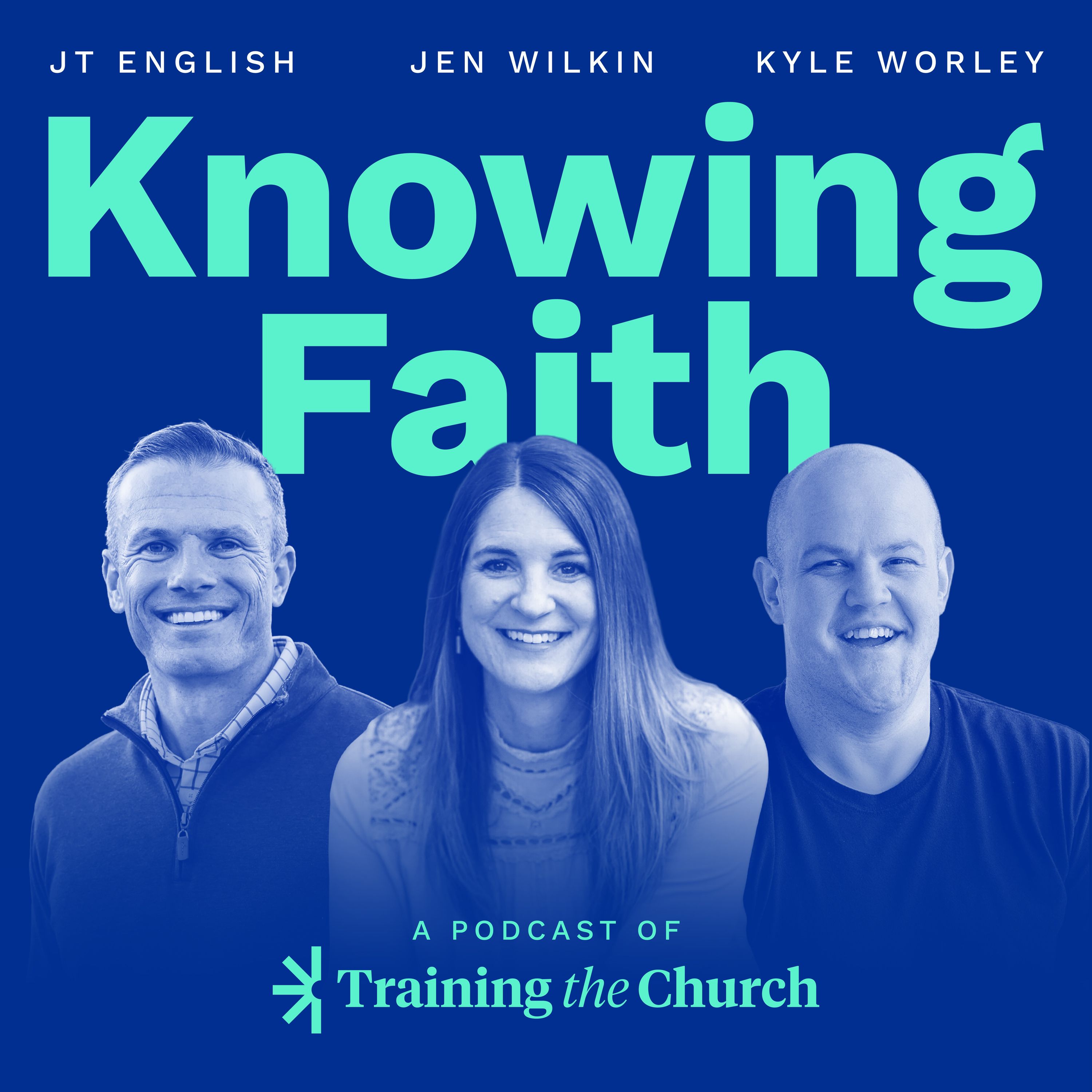
Jen Wilkin, JT English, and Kyle Worley discuss a theological approach to purity culture. Questions Covered in This Episode: What is purity culture? What is your personal experience with purity culture? Does purity culture go far enough? Why did purity culture happen? Why is a theologically driven approach to purity? How should parents talk about this? Resources Mentioned in this Episode: Matthew 5-7 Knowing Faith: Are Our Clothes Theological? With Caroline Saunders (https://open.spotify.com/episode/3ipHO7YV6r1HDm9O6W9A79?si=af2cc4bcd5ed4042) Amazon affiliate links are used where appropriate. As an Amazon Associate, we earn from qualifying purchases. Thank you for supporting Knowing Faith. Support Training the Church and Become a Patron: Hosted by Simplecast, an AdsWizz company.
How Do You Know It's God's Voice? The I Am and Sacred Echoes | Daily Devotional and Bible Study How do you know it's God's voice? He told me "I am," and the Word said the same thing, from Exodus 3:14 to John 8:58. It's Friday, so instead of a Bible study episode I'm sharing something that happened in my own life. I asked the Lord how He could be everywhere at once and with every generation after me, and He answered with two words, I am. Then I heard it again in my church's sermon. We walk through the seven I am statements in John, what each one reveals, and Jesus' claim in John 8:58, and we talk about how to recognize a word from God: it echoes, and it agrees with Scripture. Join me on an immersive Bible Study Experience. Learn more at BibleStudyLive.org (https://biblestudylive.org/) Have a question about the series or a prayer request? Ad-free episodes and the full library of past series: Patreon (https://www.patreon.com/c/HearingJesus) Questions we answer today How do you know it's G
Does your relationship feel like home, or does it feel like standing on the edge of something you might lose? In Part 3 of our Relationship Anxiety series, clinical hypnotherapist and former paramedic Martin Hewlett guides you through the process of teaching your nervous system that love doesn't have to hurt to be real. We explore the physical manifestations of anxiety—the tight chest, the 2:00 AM racing mind, and the "stomach drop" when a text takes too long—and provide the tools to "turn down the alarm" of your internal survival response. If you are ready to stop "cherry-picking" evidence of disaster and start building a foundation of trust, this session is for you. In This Episode, We Cover: The Science of Safety: Understanding how your nervous system confuses love with danger. Guided Visualization: A journey into your own "safe room" where you are already enough. Rewiring the Brain: Moving from worst-case disaster reels to the reality of small, daily kindnesses. Breaking the Cycle:
When someone you trust betrays you, the pain can feel insurmountable, leaving you wondering where God is. Rather than turning to bitterness, learn why bowing your knee and talking to the Father is your passport to divine perspective. Discover how to invite Christ to rule every room of your heart. Resources Message Notes (https://message-notes.s3.us-east-1.amazonaws.com/Hearts-On-Fire-08-Pray-This-When-You-Suffer-A-Broken-Relationship.pdf?referral=PODCAST&source=WEBPODDON) Connect 888-333-6003 Website (https://livingontheedge.org/) Chip Ingram App (https://livingontheedge.org/chip-ingram-app) Facebook (https://www.facebook.com/LOTEcommunity) Partner With Us 888-333-6003 Resources Mentioned in Teaching BOOK - Precious in His Sight by Theresa Ingram BOOK - My Heart-Christ's Home by Robert B. Munger
In the second half of this conversation, John Mark Comer draws on the wisdom of the contemplative tradition and spiritual practices from the earliest centuries of the church to invite us into the quiet. Discover how to step out of the chronic noise and learn to live just a little slower and a little softer before God. Show Notes: John Mark Comer's new book, Into the Quiet, is available at bookstores everywhere. Discover more about his offerings at PracticingtheWay.org (http://practicingtheway.org/) — including a pathway to formation for the modern era with numerous free resources to help communities be with Jesus, become like him, and do as he did. Keywords: Into The Quiet, Book, Author, Christianity, Contemplative, Silence _______________________________________________ There is more. Got a question you want answered on the podcast? Ask us at [email protected] Support the mission or find more on our website: Watch more of the podcast here:
John Eldredge and John Mark Comer have a free-flowing conversation about the ways friendship and community shape us, why human transformation doesn't happen accidentally, the essentials of following Jesus, John Mark's three threshold moments, the need for modern-day desert fathers and mothers, and more in this first episode of a two-part series. Show Notes: John Mark Comer's new book, Into the Quiet (https://johnmarkcomer.com/into-the-quiet), is available at bookstores everywhere. The A. W. Tozer book referenced is The Pursuit of God (https://a.co/d/05Rg47xu). Discover more about John Mark Comer's offerings at PracticingtheWay.org (http://practicingtheway.org/)—including a pathway to formation for the modern era with numerous free resources to help communities be with Jesus, become like him, and do as he did. Keywords: Author, Practicing the Way, Contemplative, Christian _______________________________________________ There is more. Got a question you want answered on the podcast? Ask
Access to effective legal representation should not depend mainly on personal wealth.
Share your view, then see how readers voted. No sign-in required. This poll is shared across stories.
Do you agree or disagree?
Common Quandary
A Common Quandary to discuss
Another conversation to explore, separate from this news story.
You lecture everyone about climate change—then get invited on a dream flight. Do you go?
A close friend living overseas invites you to an important celebration. Flying is affordable but carbon-intensive. Your individual decision will not determine whether the flight operates, yet it conflicts with commitments you publicly encourage others to make.
When is a small personal contribution to a large harm morally significant?