Listen through the publisher, then discuss the episode here or arrange an in-person Roundtable. Your city determines where to meet.
Roundtables are designed for groups of four, with a shared subject and room for everyone to speak. Come for discussion, with no dating expectation.
Jen Wilkin, JT English, and Kyle Worley discuss a theological approach to purity culture. Questions Covered in This Episode: What is purity culture? What is your personal experience with purity culture? Does purity culture go far enough? Why did purity culture happen? Why is a theologically driven approach to purity? How should parents talk about this? Resources Mentioned in this Episode: Matthew 5-7 Knowing Faith: Are Our Clothes Theological? With Caroline Saunders (https://open.spotify.com/episode/3ipHO7YV6r1HDm9O6W9A79?si=af2cc4bcd5ed4042) Amazon affiliate links are used where appropriate. As an Amazon Associate, we earn from qualifying purchases. Thank you for supporting Knowing Faith. Support Training the Church and Become a Patron: Hosted by Simplecast, an AdsWizz company.
Episode information is provided by the publisher. Listening takes place on the publisher’s service.
Yonit and Jonathan discuss the way a cornered, caretaker prime minister is having his hand stayed by two key Israeli officials, as they no to fresh air strikes on Iran and new steps towards settlement building in the West Bank's E1 corridor, even as the UK announces a raft of sanctions. They unpack the bombshell Israeli media reports that a member of Benjamin Netanyahu’s inner circle planted fake evidence to trigger the election-day arrest of activists from one of Israel's Arab-led parties. Meanwhile, Naftali Bennett’s surprise meeting with Benjamin Netanyahu tests Gadi Eisenkot's drive to swear in a new government as soon as he possibly can. Plus: Yonit shares big Hollywood news about her pre-teen novel Don't Feed the Lion, our Chutzpah award goes to media coverage of the Nvidia divorce - and former President Reuven Rivlin is named Mensch of the Week for making an essential phone call. Our website: https://unholy-podcast.com Become a friend of the pod: FOLLOW UNHOLY Instagram: https:/
Enjoy the extended members’ edition of my conversation with historian of religions and author Dr Jeffrey Kripal, including the additional listener Q&A. Nearly three years after our last discussion, Jeff returns to explore UFOs, consciousness and what extraordinary experiences might tell us about being human. We discuss how his thinking about abduction experiences has changed, how culture shapes our interpretations, and whether the UFO “threat” narrative limits the questions we ask. We also get into Archive X: Unexplained Phenomena and his work completing John Mack’s unfinished book, When Worldviews Collide. This premium edition includes the extended listener question section, with questions and discussion beyond the free-feed release. Thank you for supporting That UFO Podcast. Spotify: https://open.spotify.com/show/7wnXUAQ3vwdsX1BoyaEvjZ Buy Me a Coffee: https://www.buymeacoffee.com/ThatUFOPodcast Connect with the show: Twitter: @UFOUAPAM Facebook, Instagram & YouTube: That UFO Podcast
Why does our culture make it so easy to walk away from commitment? What did Jesus reveal about God's original design for marriage? And what does marriage show us about the way God loves his people? In today's episode, Jeff explores Matthew 19:1–12 and explains why marriage is more than a commitment between two people; it's a picture of the faithful love of Jesus. Want to become a more consistent Bible reader? Read the Bible with us! We're almost done exploring the Gospels—Matthew, Mark, Luke, and John—but it's never too late to jump in! Your support makes TMBT possible. Ten Minute Bible Talks is a crowd-funded project. Join the TMBTeam to reach more people with the Bible. Give now (https://info.tenminutebibletalks.com/support). Like this content? We'd love to hear from you! Passage: Matthew 19:1–12 (https://www.biblegateway.com/passage/?search=Matthew+19%3A1%E2%80%9312&version=NIV)
Dr. Emily King, a school psychologist and mom of two neurodivergent sons, explains that neurodivergent kids often have uneven skills, so it falls to the adults, not the child, to adapt. For autistic kids, she says to start with their strengths and clear barriers until they can advocate for themselves. For kids with ADHD, she says to treat their struggles as regulation differences rather than a lack of intelligence, and to protect their creativity. She encourages parents and teachers to look for patterns, ask “When is this not happening?”, and believe each other when a child does fine in one setting and struggles in the other. Resources mentioned: The Neurodivergent Learner (https://link.amazon/B02b7SKLg) by Dr. Emily King Learn with Dr. Emily: learnwithdremily.com (https://www.learnwithdremily.com/) Dr. Emily King on Substack (https://learnwithdremily.substack.com/), where her workshops are hosted The Neurodiverse Classroom (https://www.learnwithdremily.com/teachers), her professional
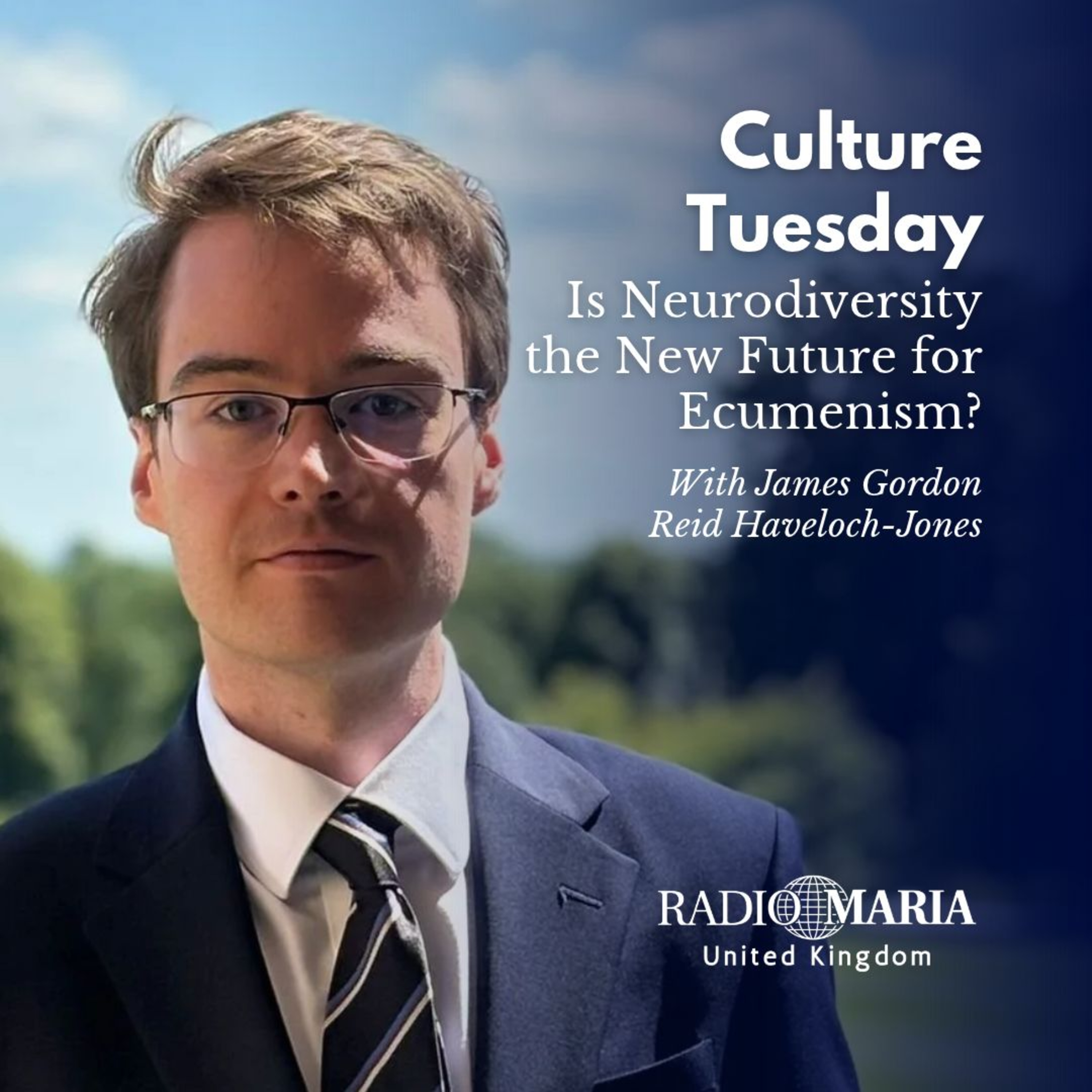
Autism rates, special needs schools and workplace inclusion have been in the news for years. A major study published in March 2026 has now prompted Church leaders across the denominations to act. Join Helena Judd as she asks whether neurodiversity could be a new meeting point for Christians of every tradition. Her guest, James Gordon Reid, will explain what neurodiversity means in everyday life and look at examples in Scripture, including Jeremiah and Paul. He will also share how parishes and the Anglican Church are responding. Tune in for an honest, hopeful conversation about the Church’s welcome for everyone, who is “fearfully and wonderfully made”. James Gordon Reid Haveloch-Jones is an educational consultant, public theologian, and author of the Amazon Top 50 study skills bestseller 'The Gold Standard: Coaching for Excellence'. He is a contracted contributing writer for the Catholic Bishops' Conference of England and Wales and a guest writer for The Tablet and the National Catholic
Join David Bayer's FREE Mindset Month: You can know exactly where a limiting belief came from and still organize your whole life around it. Knowing the origin has never been the same as changing it. In this episode, I break down the power of decision. Walking on the beach in Sarasota with my wife, I realized that beliefs are just decisions, ones you made unconsciously before you were seven and have been collecting evidence for ever since. Which means you can make a new one. I share the friend who never showed up at the drinking fountain in first grade, the belief it created, and the Harvard piano study that explains why the decision has to come first and the how comes second. Then I walk you through the Decision Matrix, three columns on a sheet of paper, and the one question that does most of the work. Discover why you have been living inside a choice you do not remember making, and how fast it changes once you make a new one. What We Explored This Episode 01:45 Neville Goddard and Liv
Questions Covered in This Episode: How do I become a deep disciple? What is the response when you ask people, “What is a disciple”? What is a disciple? How do you define a disciple at your local church? What is ground zero for moving towards meaningful discipleship? “The heart cannot love what the mind does not know.” How can you extend that to include behavior? How does our evangelism model “full surrender” compare to our discipleship model “give what you can”? Is that accurate? What’s the difference between a disciple and a deep disciple? What must a disciple know? What does the current data say about biblical literacy? Why do we keep talking about this? Helpful Definitions: Pistis (πίστις): Faith Resources Mentioned in this Episode: Habakkuk 2:14 “Deep Discipleship” by JT English Your Church May Know Less Bible Than You Think (And What to Do About It) (https://www.thegospelcoalition.org/article/church-know-less-bible-think/) 2 in 3 Churchgoers Fail Bible Literacy Quiz (https://resea
Kyle Worley is joined by Nancy Guthrie to answer the question, “Why is it wonderful to behold Christ?” Questions Covered in This Episode: Where does beholding Christ come from? Are the beatitudes a signpost for this assurance? Why would it be good for us to see God? Guest Bio: Nancy Guthrie (MATS, Reformed Theological Seminary) teaches the Bible at her home church, Cornerstone Presbyterian Church (https://www.cornerstonepresfranklin.org/), in Franklin, Tennessee, as well as at conferences around the country and internationally, including through her Biblical Theology Workshop for Women (https://www.nancyguthrie.com/biblical-theology-workshop). She is the author of numerous books and the host of the Help Me Teach the Bible (https://www.thegospelcoalition.org/podcasts/help-me-teach-the-bible/) podcast from The Gospel Coalition. She and her husband founded Respite Retreats (https://www.nancyguthrie.com/respite-retreat) for couples who have faced the death of a child, and they’re cohosts o
Jen Wilkin, JT English, and Kyle Worley are joined by Joe Worley to discuss “The First Five: Beating the Odds and Thriving as a Ministry Leader,” co-written by Kyle and his dad, Joe. Questions Covered in This Episode: Why did we write this book? Does it seem like more and more we are hearing about ministry leaders failing out? What are the core ingredients of trustworthiness as a ministry leader? What do you value in leaders now more than when you first started in ministry? What do you young guys want to talk about? What is the intersection between pastoral and professional? How do you build credibility and trust as a ministry leader? How did you build credibility with each other? How will this book help the church navigate current church leaders leaving the church or retiring? Guest Bio: Dr. Joe Worley is the pastor at First Baptist Church of Groves, TX, where he is concluding over 31 years of faithful pastoral ministry. He has been in ministry leadership for over 45 years, and he is
A study's methods should be available before its findings influence public policy.
Share your view, then see how readers voted. No sign-in required. This poll is shared across stories.
Do you agree or disagree?
Common Quandary
A Common Quandary to discuss
Another conversation to explore, separate from this news story.
Your neighbor keeps playing music at midnight. How many friendly warnings do they get?
A neighbor regularly plays music late enough to disturb your sleep. Friendly requests help briefly, but a formal complaint could threaten their lease in a building with few affordable options.
How far should empathy extend when someone repeatedly ignores your needs?