Ep. 126: I'm Talking to YOU, Overachievers! The Health Benefits of Doing Absolutely Nothing
14 min
Listen through the publisher, then discuss the episode here or arrange an in-person Roundtable. Your city determines where to meet.
Roundtables are designed for groups of four, with a shared subject and room for everyone to speak. Come for discussion, with no dating expectation.
Question or comment? Send a one-way text to Age Like a Badass Mother. I'm talking to YOU, overachievers! We've become so accustomed to being busy that doing nothing can make us feel guilty. But giving your brain and body a break isn't laziness. It's an important part of recovery. In this mini-episode, I'm exploring the science of downtime, including the Default Mode Network, memory consolidation, creativity, and how intentional rest helps regulate your nervous system. I'll also explain why constantly consuming information and jumping from one task to another may be keeping us from thinking clearly, recovering from stress, and reconnecting with ourselves. I'll share a story about why I refused to put screens in the back of our SUV when my kids were little, what my mother taught me about studying and rest, and why I've learned that sometimes walking away from work makes me more productive. We're not talking about giving up exercise or spending the day on the couch. We're talking about making room for boredom, daydreaming, quiet, and guilt-free downtime. Your challenge: Take 30 minutes this week to do absolutely nothing. No phone, no television, no podcast, no errands, and no productivity goals. Just be. Because you don't have to earn your right to rest. Listen in, and then let me know what you did with your 30 minutes of nothing! This episode is sponsored by Grand Teton Ancient Grains Grand Teton Ancient Grains (ancientgrains.com) (https://www.ancientgrains.com/?a_aid=agelikeBAmom&a_bid=4130b16b) Websites, Cookbook, and Merch Email: [email protected] Facebook: @WellElephant (https://www.facebook.com/WellElephant) Instagram: @agelikeabadassmother (https://www.instagram.com/agelikeabadassmother/)
Episode information is provided by the publisher. Listening takes place on the publisher’s service.
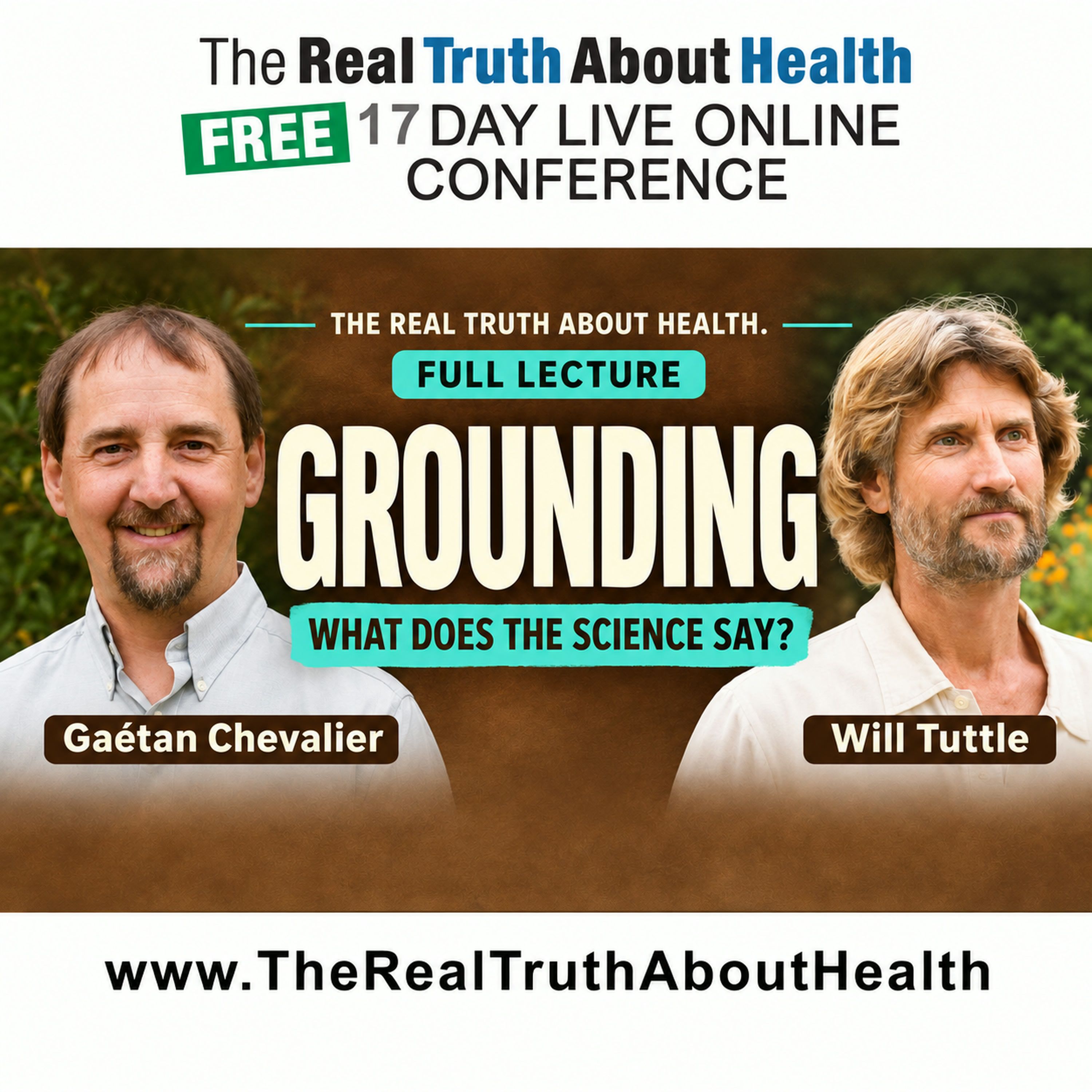
Grounding: What Does the Science Say About Potential Health Benefits? Gaétan Chevalier Ph.D. and Will Tuttle, Ph.D., explore the science and philosophy of grounding, including its potential effects on inflammation, stress, sleep, and overall wellbeing. Learn what current evidence suggests and how reconnecting with the earth may support health. #Grounding #Wellness #NaturalHealth
Here is something that has always fascinated me. The easiest people to lead are almost always other people. You can fire an employee who won't perform. You can end a partnership. You can walk away from anyone who consistently lets you down. Uploaded 15-09-26 But there is one person you can never fire, never replace, never walk away from — and that person is the one you have to depend on for every single thing you will ever accomplish. You are stuck with yourself. The one who resists you most, who makes promises and breaks them, who knows every excuse before you finish making it, is the one wearing your clothes. Here is the truth: we keep the promises we make to strangers and break the ones we make to ourselves, and until we fix that, nothing else holds. This seminar walks through the things you must understand about leading the hardest person you will ever command — you. CHAPTERS 0:00 Intro — the one person you can never fire 1:31 The way you'd never lead anyone else 2:54 What self-lea
Today, Mel is taking 58 years of hard-earned life lessons and is packing them into under an hour, to save you some of the time, frustration, and worry it took her to learn them the hard way. In this episode, Mel is fielding real questions from listeners around the world. From making friends and bouncing back from rejection to feeling stuck in life and wondering if it's all going to work out, Mel is sharing the advice she wishes she'd known sooner. And she's not holding back. You'll hear Mel get personal about her own setbacks, and what she's learned about starting over, going after what you want, and trusting yourself when life doesn't go according to plan. You'll learn: -How to stop worrying about the future when nothing feels certain -How to make big life decisions, including whether or not to have kids -How to make new friends as an adult -What to do when you get rejected from your dream job -What to do when a friend ghosts you -How to stop procrastinating and finally follow through
This week, I'm talking about a particular kind of person: someone who's always doing things for everybody else, who never seems to have a moment for themselves, and who is absolutely determined that you should know about it. We're probably all guilty of a bit of martyrdom from time to time. I certainly am. The theatrical sigh as you empty the dishwasher for the third time; the "I'll just have a piece of toast"; the "no, no, you sit down, I'll do it" when what you really mean is "I can't believe you're sitting down while I'm doing this." But when martyrdom becomes someone's habitual way of relating to others, it can leave you feeling grateful and resentful at exactly the same time. Today's dilemma comes from a listener whose mum does everything for everyone, and then complains about how much she has to do. She'll spend the morning cooking a family lunch, refuse every offer of help, only to spend the afternoon telling everyone how tired she is. Now, our listener is finding herself snappi
This week on The Necessary Conversation, it's Chad, Haley, and Mary Lou. Bob is still recovering but sent in a video message about Trump calling Putin his friend that we watch together. 🇷🇺 Trump held the first-ever three-way talks with Putin and Xi, called it a "12 out of 10," and produced nothing. Then at a press conference he called Putin his friend — and when asked if Putin is a friend to America, the president of the United States said, "I can't speak to America." That same day, Trump's friend Putin launched massive strikes into Ukraine, hit Poland with two missiles — an act of war against a NATO ally — then struck near a Ukrainian restaurant and drone-bombed the first responders, killing a 7-year-old child and a 20-year-old paramedic. We watch Bob's video and ask Mary Lou: is Russia our friend? 🇨🇳 The House Foreign Affairs Committee revealed Trump's Commerce Department approved nearly 880,000 advanced AI chips for Chinese military-linked companies including Alibaba, Tencent, a
Happy Sunday! Welcome to Heal Squad’s The Sunday Set Up. Life lessons to help you start the week. How much of success comes down to simply showing up? This week, we talk keeping an open mind, taking chances, and recognizing the doors that open along the way. From Olympic athletes appearing on national television alongside Mercedes Moné to performers who keep showing up week after week hoping for their big break, we explore why success isn't always about talent or luck. Sometimes it's about making connections, putting in the effort, and being willing to try without knowing what we'll get in return. We talk knowing when to stop investing time in people who aren't willing to help themselves, and why even experiences that don't work out can teach us something valuable. The takeaway: don't wait for the perfect moment or expect someone else to make things happen. Be willing to take a chance, walk through the doors that open, and remember that half of life is just showing up. Plus, a little b
Question or comment? Send a one-way text to Age Like a Badass Mother. What’s Her Secret? 73, Plant-Based & Hiking 500 Miles a Year | Ruth Morley What does a 73-year-old woman who hikes and backpacks roughly 500 miles a year know about aging well? Quite a lot. Ruth Morley has spent decades challenging herself physically, and nearly seven years ago she switched to a whole-food, plant-based diet after stress fractures and other aches and pains forced her to rethink how she was fueling her body. She says the change made a remarkable difference in how she felt, and she hasn't looked back. But Ruth's secret isn't just what she eats. It's how she lives. She stays active, gets outside, prioritizes sleep, maintains close relationships, has a strong sense of purpose, and keeps challenging herself. At 73, she's still tackling long-distance trails, sometimes for weeks at a time, and she sees getting older not as something to fear, but as a privilege. Her goal is to make the decades ahead as enjoya
Question or comment? Send a one-way text to Age Like a Badass Mother. What should women eat during menopause to protect their heart, maintain strong bones, and build muscle as they age? Registered dietitian and Cooking for Peanuts creator Nisha Melvani joins Lauren Bernick to share practical, plant-based nutrition strategies that make healthy eating delicious, affordable, and easier to maintain. With more than 1.3 million Instagram followers, Nisha is known for her creative vegan recipes, nutrient-packed sauces, and simple ways to get more nutrition into everyday meals. In this episode, she explains how foods like oats, barley, legumes, and psyllium can help lower LDL cholesterol, why cholesterol and ApoB deserve attention during menopause, and how to build meals that support bone health and muscle maintenance. Nisha also shares her approach to getting enough protein from plants, the greens and other foods she prioritizes for bone health, why she eats prunes, and how broccoli sprouts c
New owners should honor commitments to people who already depend on a business or property.
Share your view, then see how readers voted. No sign-in required. This poll is shared across stories.
Do you agree or disagree?
Common Quandary
A Common Quandary to discuss
Another conversation to explore, separate from this news story.
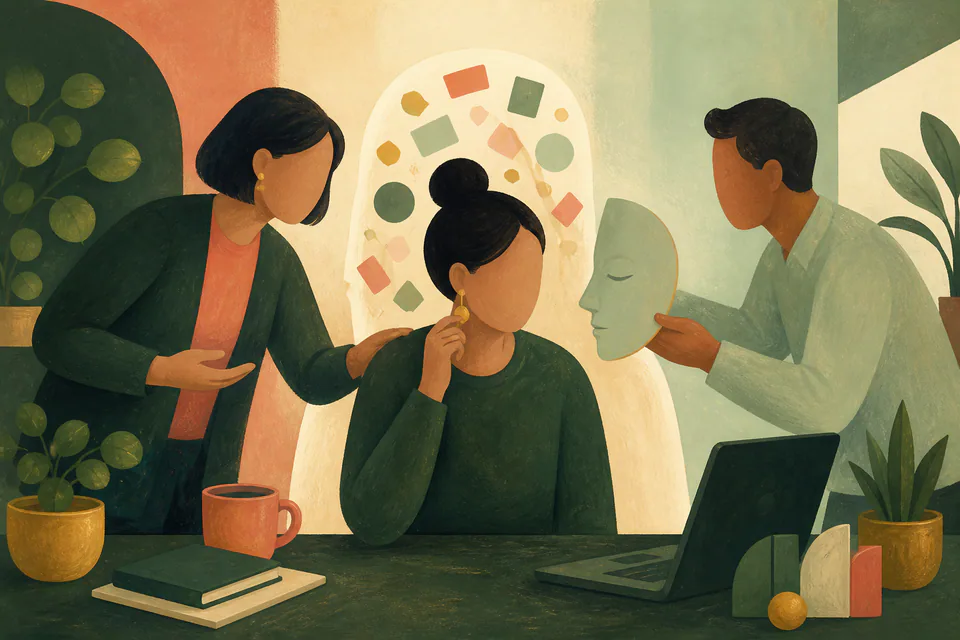
Your boss offers lessons to make you sound “more professional.” Do you take them?
Clients sometimes ask an employee to repeat themselves during calls. Their manager offers company-paid speech coaching framed as clearer communication, but the employee experiences the request as pressure to hide part of their identity.
When does improving communication become demanding conformity?