Ep. 53 - I'm Back: Stop Fixing the State, Start Building a Nation
29 min
Listen through the publisher, then discuss the episode here or arrange an in-person Roundtable. Your city determines where to meet.
Roundtables are designed for groups of four, with a shared subject and room for everyone to speak. Come for discussion, with no dating expectation.
Tim returns after a two-and-a-half-year break, two of them spent as a union executive's VP of political action, "banging my head against the wall." Fresh off a US blue wave and the defeat of Alberta separatism, he asks why political action always seems to fail, and proposes an exit: building voluntary nations. - (02:22) Why the best the right ever does is slow the state's growth ("progressives driving the speed limit," per Michael Malice) - (05:28) Why even a 75% Alberta independence vote likely wouldn't produce a nation: Clarity Act, stakeholders, monkey wrenches - (06:43) Nation states are born from conquest and plunder, not referendums - (08:45) Democracy as a suggestion box on a plantation, and why the slaves end up fighting each other - (13:06) "Upgrading the pen": why political action matters for your kids but doesn't fix the system - (15:40) Conspiracy theorists, corrupt vs. "noble" slave owners, and the original sin - (19:03) Albert Jay Nock's "Isaiah's Job" and preaching to the remnant - (20:14) Voluntary nations: identity, safety, cooperation without coercion - (22:13) Balaji Srinivasan's The Network State and network archipelagos - (25:05) Appreciative inquiry: build what's alive instead of fixating on problems - (27:04) What would it take for you to pledge allegiance to a nation you chose? Mentioned: Michael Malice; Balaji Srinivasan, *The Network State*; Albert Jay Nock, "Isaiah's Job"; the Clarity Act; appreciative inquiry. Get new episodes and essays by email: https://timmoen.substack.com/subscribe Hosted on Acast. See acast.com/privacy (https://acast.com/privacy) for more information.
Episode information is provided by the publisher. Listening takes place on the publisher’s service.
Before House Democrats voted on Hakeem Jeffries for Speaker, nobody was running against him, but a group of new progressive members, known as "The Bloc," wouldn't commit to backing him without guarantees. Asked about the holdouts, Jeffries told reporters: "You'll have to ask, you know, those individuals." In the Senate, Chris Van Hollen was challenging Chuck Schumer for leader, and Schumer was bristling. Meanwhile, John Fetterman was hinting he could leave the party if Van Hollen won. Don was joined by Mehdi Hasan, founder and editor-in-chief of Zeteo, to talk about who should lead the Democrats and whether the party was already blowing its big win. GUEST: Mehdi Hasan, founder and editor-in-chief of Zeteo FIND THE DON LEMON SHOW: Youtube: https://www.youtube.com/@TheDonLemonShow Substack: https://substack.com/@donlemon Facebook: facebook.com/donlemon Instagram: instagram.com/donlemonofficial Tik Tok: tiktok.com/@donlemonofficial LEMON NATION: Website: donlemon.com Buy Merch: https://do
Today, Mel is doing something she's never done before on The Mel Robbins Podcast. She's bringing members of her team into the studio for live coaching with world-renowned communications expert Vinh Giang. Vinh is known for teaching millions of people online how to stop sounding insecure, speak more clearly, and get people to listen when you talk. And when you hear him coaching today, it will be like he’s coaching you. One person freezes when they're put on the spot. Another can't stop interrupting people. Someone else has great ideas but stays quiet because they're afraid of being judged. Does any of that sound familiar? And Vinh isn't just giving advice. He's coaching real people through practical exercises, right there in the studio, so you can hear the difference and start making those same changes in your own life. As Mel says, put yourself in their shoes. As Vinh works with each person, you'll recognize things you struggle with, too. You'll learn: -What to do when your mind goes b
In January 1897, blacksmith Edward Shue washed and dressed his bride of three months for burial before the coroner ever reached their log house in Greenbrier County, West Virginia, and at her funeral he kept fussing with her head and neck, propping it on a pillow and wrapping a scarf around her high collar. Her mother, Mary Jane Heaster, had never liked him, and for weeks afterward she prayed every evening for her daughter to come back and tell her what had really happened. FEATURED STORIES IN THIS EPISODE: This Weird Darkness episode runs from the Greenbrier Ghost, the 1897 West Virginia murder victim whose mother said she came back to name her killer, to a bottomless pit in Washington, a wave of Mothman sightings over Chicago, and a London tomb rumored to be a time machine. Elva Heaster was dead – but that didn’t stop her ghost from solving the murder. *** In Stephen King’s “Pet Semetery”, beloved family pets could come back from the dead. *** In Washington there is a hole that some
Access the masterclass instantly for free: https://nci.university/learn Uploaded 10-01-26 Your goals don’t fail because you lack discipline — they fail because they were aimed at the wrong system. Optimizing behavior without fixing brain chemistry is like issuing commands to a damaged machine. Until the chemical environment is right, effort just increases friction and burnout. All goals live in the conscious mind — but control does not. Real behavior is governed by the mammalian brain, the ancient systems that decide safety, threat, and energy allocation. Every resolution collapses when those lower systems detect risk, even if you consciously “want” the outcome. Goal-setting ignores this hierarchy — and that’s why it keeps failing. Once you target the parts of the brain actually in charge, change stops feeling like force. Discipline becomes unnecessary when the system itself is aligned. Please note that the content provided in this broadcast is for informational and educational purpose
Thanksgiving is here, and some of your aunts and uncles may have softened their stances since last year. So, should you engage when politics comes up? And if so, how? Jessica Tarlov, co-host of Raging Moderates and Fox News’s The Five returns to the show to offer some tips for handling Thanksgiving (and the rest of the year), discusses her new book, and she and Sarah listen to some voters talk about how political divisions have affected their lives…and what those voters think of people who think differently. Show links: Raging Moderates with Scott Galloway and Jessica Tarlov (https://www.youtube.com/@RagingModerates) Jessica’s book, I Disagree: Winning Arguments Without Losing Friends (https://www.penguinrandomhouse.com/books/803493/i-disagree-by-jessica-tarlov/) Feeling frustrated by the state of American democracy? The Context, a podcast from the Charles F. Kettering Foundation, explores the challenges facing democracy, how to fix what’s broken, and what we can do to make it work bet
The Ninth Circuit considers Michael Ho's contract dispute with Marathon, a Bitcoin-mining company. Ho claimed that he brought Marathon an opportunity involving an energy supplier, shared commercially sensitive information under a nondisclosure agreement, and then was cut out of the deal without compensation. Marathon denied improperly using his information. A jury found for Ho on a breach-of-contract claim, and the company is challenging the judgment. The business context matters: Marathon's mining project needed a source of electricity. So this is not just a dispute about keeping a secret. It is about whether their agreement protected Ho's opportunity to earn a fee when Marathon dealt with a contact he supplied. Marathon's lawyer will argue that information the company already knew, or rightfully obtained elsewhere, was outside the agreement's restrictions. Ho's lawyer will defend protection against deliberately cutting him out. Listen also for a separate question about damages: when
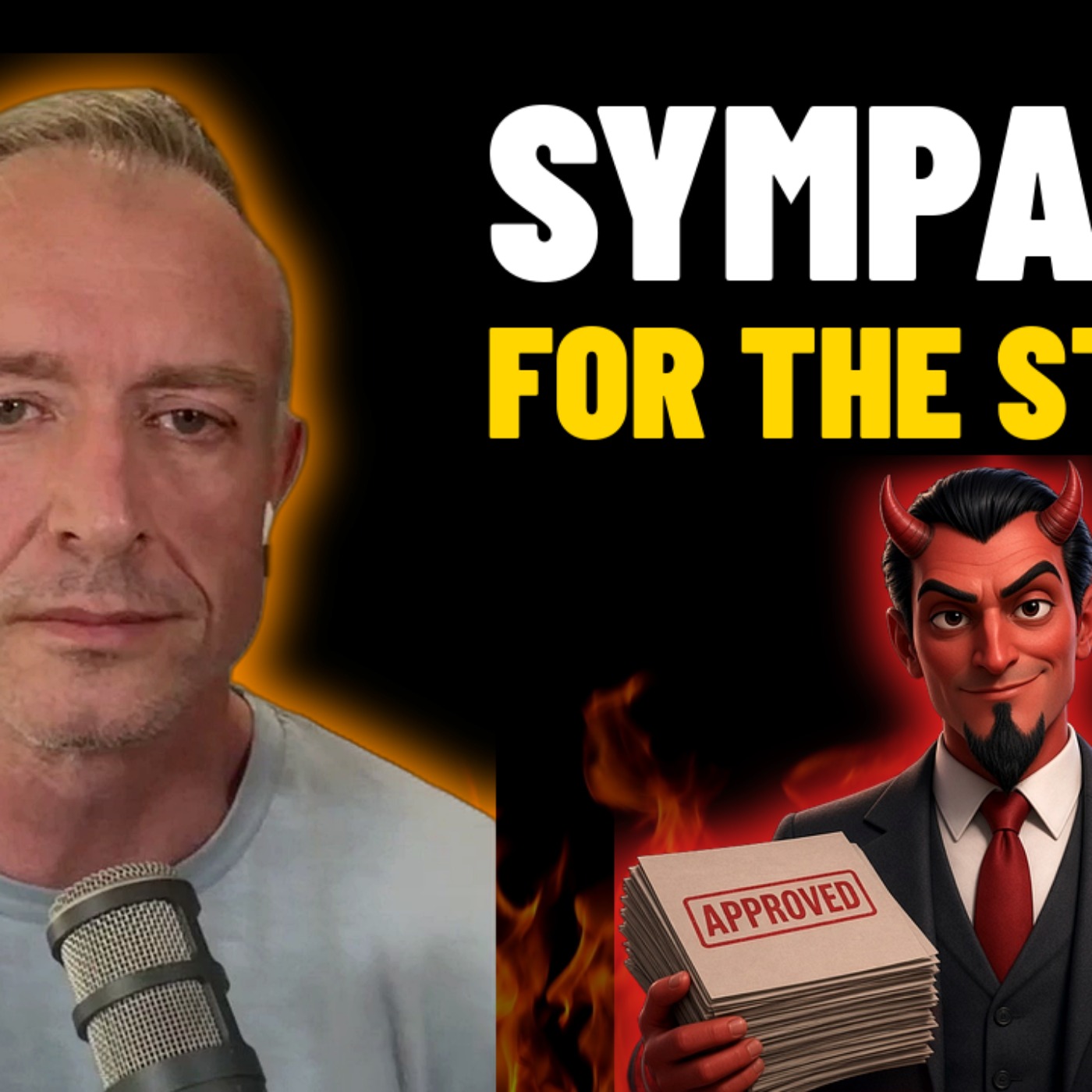
Meet Statan the Statist, the new AI cohost on The Tim Moen Show. He's a silver-tongued devil-bureaucrat who believes every problem in history comes from too little government. Statan brings eight of the strongest arguments for the state, and I take them on one at a time: the tragedy of the commons, pollution, emergencies, the monopoly on violence, enforcing rights, big research, democracy, and the paperwork that holds society together. He lands a few punches. Who won? Tell me in the comments. 0:00 Intro 0:16 Buy the dip & the blue wave 1:15 Meet Statan the Statist 2:02 Point 1: The tragedy of the commons 4:00 Point 2: Externalities & the Cuyahoga River 5:42 Point 3: Coordination problems, emergencies & insurance fire brigades 9:02 Point 4: The monopoly on violence ("in the absence of a state... a state") 11:15 Point 5: Rights need an enforcer 12:49 Point 6: Basic research, GPS & SpaceX vs NASA 17:15 Point 7: Democracy as error correction vs revealed preference 22:45 Point 8: Is the lib
Schools should evaluate new teaching approaches by actual improvements in learning.
Share your view, then see how readers voted. No sign-in required. This poll is shared across stories.
Do you agree or disagree?
Common Quandary
A Common Quandary to discuss
Another conversation to explore, separate from this news story.
Scientists can edit mosquitoes until a deadly disease disappears. Who gets to say yes?
Scientists can potentially release modified mosquitoes whose genes would spread through wild populations and sharply reduce a deadly disease. The ecological effects could cross borders and may be impossible to reverse.
Who may authorize an irreversible change intended to save lives?