Ep 552: Thinking About Going Freelance? Start Here.
38 min
Listen through the publisher, then discuss the episode here or arrange an in-person Roundtable. Your city determines where to meet.
Roundtables are designed for groups of four, with a shared subject and room for everyone to speak. Come for discussion, with no dating expectation.
The entire American retirement system was built for people with a steady employer, a predictable paycheck, and benefits that are easy to opt in to. But that’s just not how a huge number of people make money anymore. Freelancers, consultants, gig workers, seasonal workers, and side-hustlers are building their financial lives without a 401(k) match or a biweekly deposit, and “just save more” won’t cut it. Jean talks with AJ Ayers, CFP®, co-founder of Brooklyn Fi (https://www.ajayers.com/)and author of Creative Money (https://www.penguinrandomhouse.com/books/808718/creative-money-by-aj-ayers/). AJ shares practical, realistic advice for artists, freelancers, and solopreneurs, whether you chose self-employment or the job market chose it for you. In this episode: How to set up your finances when you go out on your own How self-employment differs in your 50s versus your 30s How much to keep in an emergency fund when your income is unpredictable Jean is hosting a free Forever Paycheck book club November 17th at 7 ET.
Episode information is provided by the publisher. Listening takes place on the publisher’s service.
A kiss can be wonderful. It can create an instant connection, spark romance, or make you feel closer to someone. But a kiss can also have the opposite effect — and sometimes ruin everything. So what makes kissing so powerful, and why can one kiss make such a difference? There's some fascinating science behind it. https://www.scientificamerican.com/article/why-we-kiss/ We spend an enormous amount of time worrying about what's going to change. What's next? What's coming? How do we prepare? But what if we're paying attention to the wrong things? Some of the most important forces shaping our lives never change, and understanding them may be far more valuable than trying to predict the future — something humans are notoriously bad at. Morgan Housel, partner at The Collaborative Fund and author of Same as Ever: A Guide to What Never Changes (https://amzn.to/3SwWn6u) (https://amzn.to/3SwWn6u)), joins me to explain why the things that stay the same may be the most important things to understan
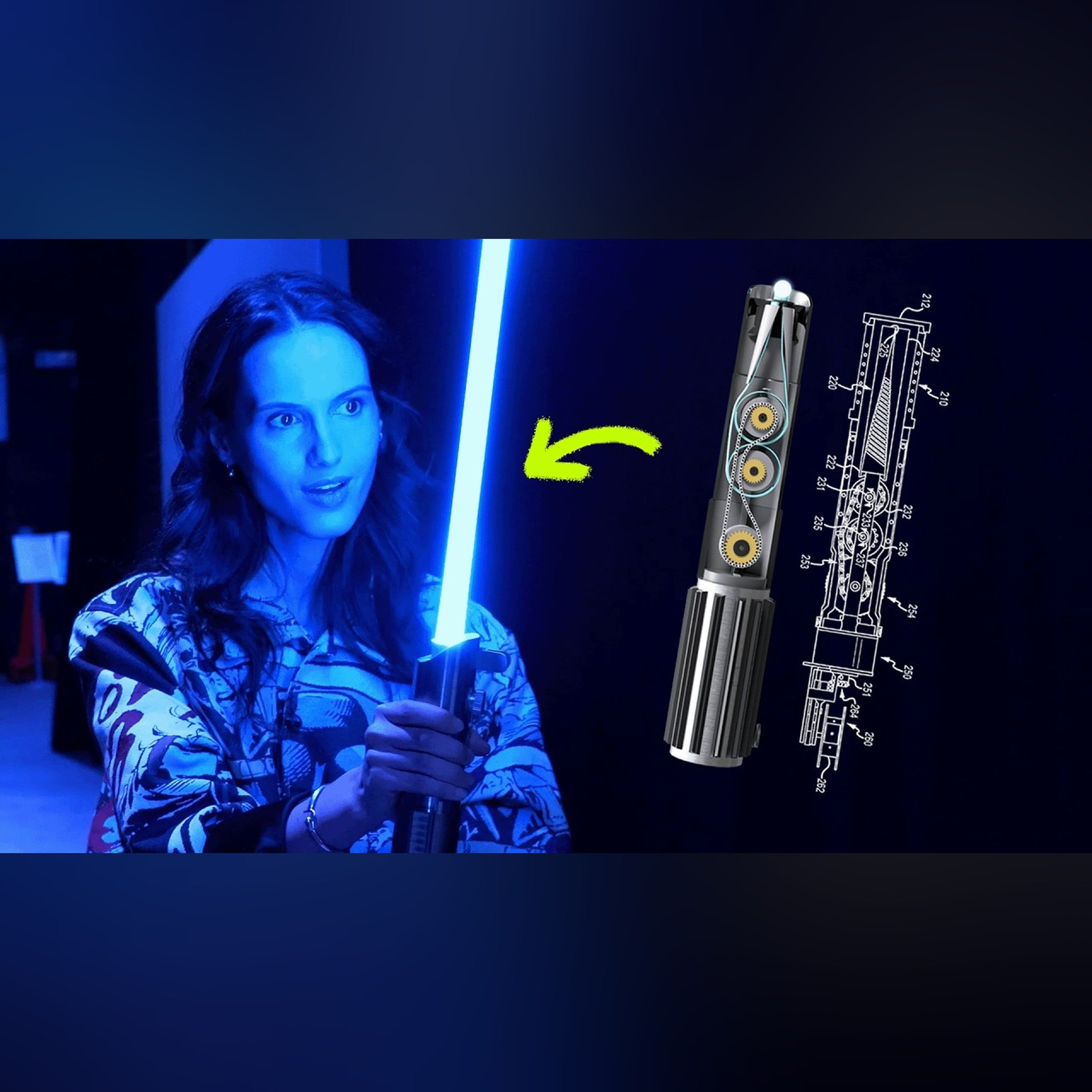
I tested Disney’s coolest new tech… Go to https://surfshark.com/cleo for 4 extra months of Surfshark Today I’ve been invited behind the scenes at Walt Disney Imagineering, the place where Disney brings their craziest ideas to life - from STUNT ROBOTS to a real life version of The Force, to adorable little droids! On this show Huge If True, we explore how tech can improve people’s lives - by living longer, going farther, doing more. But the reason I’ve loved Disney since I was a kid is they use tech to improve lives another way… by making people happy. And that means they end up pushing forward tech in some crazy, unexpected ways. So let me take you inside the magic, to show you the cutting edge tech they’re building… how it works… and what happens when we put it to the test! Chapters: 0:00 What is Disney building next? 1:11 What does Walt Disney Imagineering do? 1:52 What are Disney’s new droids really like? 2:47 How do Disney’s new droids work? 5:08 What’s the world’s most realistic l
Master the skills that change lives — enroll in your free human behavior course today: https://nci.university/learn Uploaded 10-04-26 The Cheat Code for Controlling Conflict Every argument, meltdown, or power struggle follows a pattern. Most people miss it—and that’s why they lose control in the moment. This video breaks down the exact psychological system behind conflict escalation, including why people suddenly become defensive, aggressive, manipulative, or unpredictable. Once you see it, you’ll recognize the moment before things spiral—and you’ll know how to respond without escalating, backing down, or losing your frame. This isn’t about winning arguments. It’s about understanding what actually triggers human behavior under pressure. Inside this breakdown: • Why people suddenly “flip” in conversations • The hidden triggers behind anger, defensiveness, and power plays • How ego threat drives conflict escalation • Why logic fails when emotions take over • How to read the exact moment
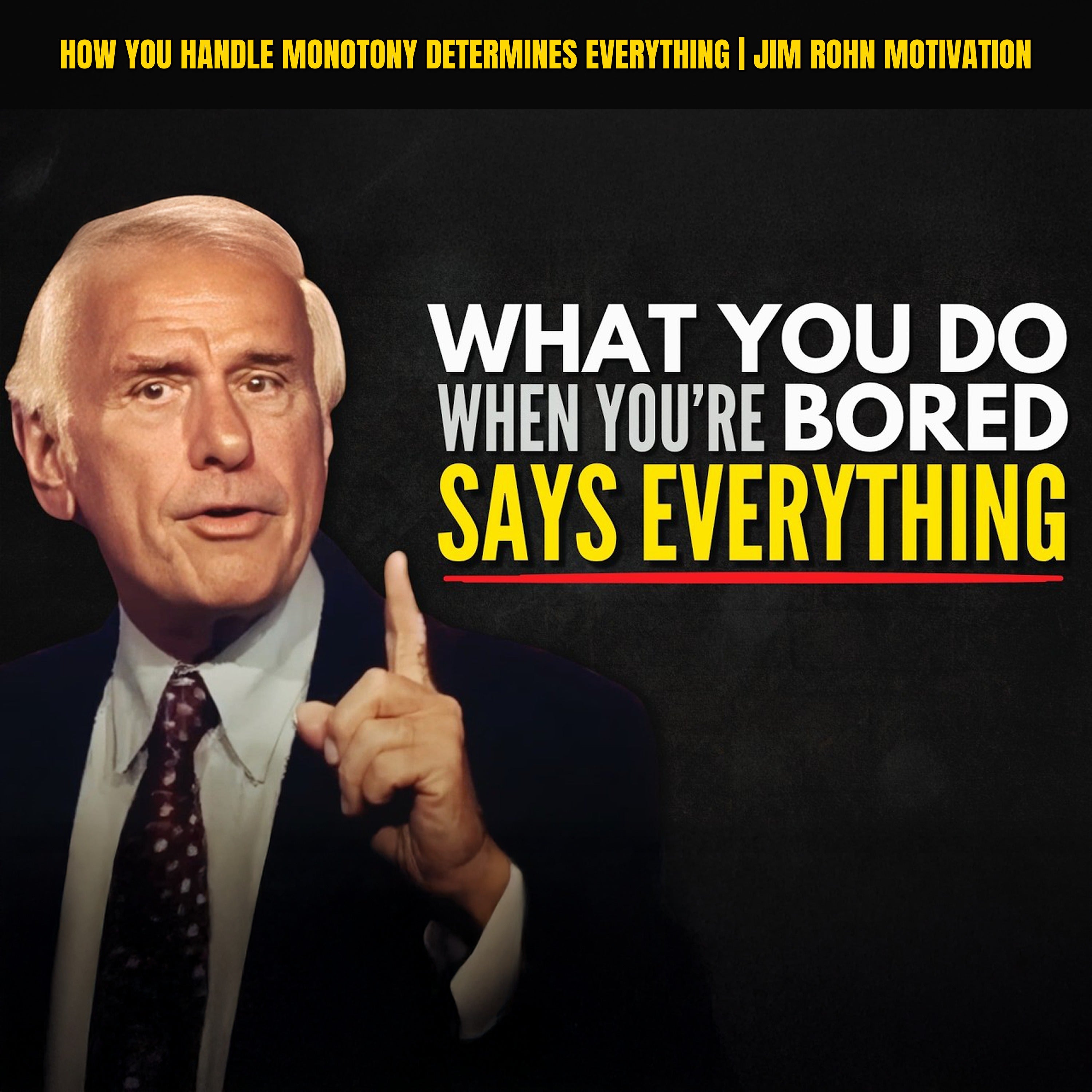
In this Jim Rohn Motivation video, learn the hidden reason most people fail—and it’s not burnout or crisis. It’s boredom. Success isn’t built through excitement or emotion; it’s built through disciplined repetition, long after the thrill is gone. Key Topics From This Motivational Video: Why boredom—not burnout—is the real threat to success How repetition is the foundation of mastery and confidence The secret to staying consistent when motivation disappears Why most people mistake boredom for failure How to build systems that survive the quiet days This powerful message reminds us that the real test isn’t how you perform on Day 1—it’s how you respond on Day 37, when no one’s watching, and the process feels repetitive. That’s where identity is forged. This isn’t about chasing hype—it’s about becoming someone whose discipline doesn't depend on how they feel. You don’t need more motivation—you need rhythm, commitment, and structure. This Jim Rohn Motivational Video Is Perfect For: Anyone w
Obsessions, Addictions, and Compulsions | The Dangers of Your Smartphone Addiction | Tony Robbins Podcast Uploaded 30-05-19 Did you know that the average American checks email within 6 seconds of arriving at work? Or that 75% of adults say they spend the entire day within an arm’s reach of their phones? Whether we want to admit it or not, the smartphone has become a critical extension of our lives. And it’s easy to understand why. Smartphone technology allows us a number of communication options including voice calls, text messages, video chat and instant messenger. We have immediate access to the information and are constantly connected to the web. And with the advancement of mobile technology, we can do our banking, shop online, check movie times, check our heart rates, edit photos, publish blog posts – anytime, anywhere. But what is this convenience really costing us? In this episode of the Tony Robbins Podcast, we’re talking with renowned social psychologist, Adam Alter. Adam is an
A.I. for Building Self-esteem: Seeing Yourself More Clearly and Kindly, a practical, beginner-friendly look at how artificial intelligence can help you see yourself a little more clearly and kindly. Building Self-esteem? Press play on Episode 427 of A.I. for Beginners and learn exactly how artificial intelligence, especially ChatGPT, alongside a journaling app, can help you see yourself a little more clearly and kindly. WHAT YOU WILL LEARN IN THIS EPISODE - Why building self-esteem is so hard to handle alone, and what is actually going on underneath it - A specific way to use a journaling app to work through it, step by step - An example prompt you can copy word for word: "Help me notice when I'm judging myself far harsher than I'd judge a friend" - A second practical technique, with another ready-to-use prompt: "Help me write down three qualities I actually like about myself, beyond achievements" WHO THIS EPISODE IS FOR - Anyone currently working on building self-esteem - Anyone curio
We like to assume someone will be there when we need care: a spouse, a child, a sibling. But that plan has more holes than we’d like to admit. Maybe you never had kids. Maybe they live across the country. Maybe your partner will pass away before you do. Or maybe your closest family simply can’t be the caregivers you imagined. The truth is, even with a big family, you could end up aging alone. The good news? When you plan for that possibility, you get to design your future support system on your own terms. On a special episode of the HerMoney Podcast, sponsored by LIMRA (https://www.limraconsumer.com/), Jean sat down with Joy Loverde, author of Who Will Take Care of Me When I’m Old? (https://www.amazon.com/dp/0738219630?plpRedirect=mhFallback&ref=clp_hp_h_pc) Loverde has spent decades helping people build care networks, make smart money and housing decisions, and put the right legal protections in place so they can age with confidence. In this episode, Jean and Joy cover: When you shoul
Everyone dreams of the day they can stop saving for retirement. And a growing number of people say they can get there early by hitting their Coast FIRE number: the moment you’ve invested enough that you can stop contributing to your retirement savings and let compound growth do the work. But is it as simple as hitting a number? Jean sat down with Erin Moriarity, creator of the YouTube channel Erin Talks Money (https://www.youtube.com/@ErinTalksMoney), about when you can really ease off saving, what can derail the plan, and how to spend with confidence once you get there. In this episode: How Coast FIRE works, and the crossover point when your portfolio grows by more in a year than you add to it What to do if you’re playing catch-up in your 50s and 60s How Erin plans to build her own Forever Paycheck Jean is hosting a free Forever Paycheck book club November 16th at 8ET.
AI was supposed to make life easier. So why do so many of us feel busier and more overwhelmed than ever? Axios co-founder Roy Schwartz joins Jean Chatzky to talk about his new book Simplify: Do 50% More with 50% Less (https://www.amazon.com/dp/B0GPBQXD4M). They dig into why AI is adding complexity instead of removing it, and how to push back at work, with your money, and in how you structure your days. In this episode: Why you should treat AI like “the smartest intern ever,” but on day one How to use AI as an executive coach to audit your meetings How to brief an AI chatbot when talking to it about your money goals The four things that drive health, happiness, and longevity Jean is hosting a free Forever Paycheck book club November 16th at 7 ET.
Local communities should share directly in the benefits of large energy projects.
Share your view, then see how readers voted. No sign-in required. This poll is shared across stories.
Do you agree or disagree?
Common Quandary
A Common Quandary to discuss
Another conversation to explore, separate from this news story.
Your friend did the right thing for the wrong reason—and needs an alibi. Do you lie?
A friend skipped an important family obligation to help someone in crisis. They ask you to confirm a harmless false story because telling the truth would expose another person's private emergency and cause a lasting family rupture.
Can loyalty make participating in a lie the most caring choice?