Ep192 The Six-Figure Cover Band: How Kory Brunson Built a Full-Time Music Career
78 min
Listen through the publisher, then discuss the episode here or arrange an in-person Roundtable. Your city determines where to meet.
Roundtables are designed for groups of four, with a shared subject and room for everyone to speak. Come for discussion, with no dating expectation.
In episode 192 of the Guitar Music Theory podcast, Desi Serna welcomes back musician and entrepreneur Kory Brunson to discuss how he built a six-figure music career performing at corporate events, luxury weddings, and private parties. Kory shares how he turned cover band gigs into a thriving business, developed multiple entertainment acts, and created the financial freedom to pursue his original music. Discover why thinking like an entrepreneur, understanding your customers, and building relationships with booking agencies can open doors to opportunities most musicians never consider. FREE VIDEO COURSE: https://www.GuitarMusicTheory.com (https://www.guitarmusictheory.com/) Kory Brunson's Entertainment Acts: https://www.flywheelentertainment.net/ Nashville Artist Institute: https://nashvilleartistinstitute.org/
Episode information is provided by the publisher. Listening takes place on the publisher’s service.
Can artificial intelligence replace the voices of rock’s greatest singers? And if it can, what happens to the musicians who spent decades developing those unmistakable sounds? On this episode of CHRIS AKIN PRESENTS, Chris welcomes Danny Vaughn of TYKETTO for a revealing conversation about the band’s latest release, CLOSER TO THE SUN, the changing music industry, and the growing influence of AI-generated music. Get Tyketto's CLOSER TO THE SUN on Vinyl while supplies last! https://link.amazon/B0c4HJfbA Danny doesn’t hold back when discussing artificial intelligence. From computer-generated singers that sound eerily similar to established rock vocalists to technology that can imitate an artist’s unique phrasing, he raises serious questions about where creativity ends and exploitation begins. Could AI eventually produce new AC/DC albums without AC/DC? And who should profit when technology recreates a musician’s signature sound? But there’s much more to this interview than AI. Danny takes u
Google Jaywick, a small village on the Essex coast in England, and you'll find a seemingly endless supply of negative headlines, television documentaries and YouTube films about life in what has repeatedly been named England's most deprived neighbourhood. But how much do we really know about the people who live there? My guest this week, documentary photographer and journalist David J Shaw, has spent the best part of two years getting to know Jaywick and its residents. He's discovered a community fiercely proud of its identity, where neighbours look after one another, where karaoke nights are as much about friendship and support as singing, and where people are understandably tired of outsiders arriving with a story they've already decided to tell. We talk about our responsibility as photographers when documenting other people's lives, the politics of representation, and David's decision to exhibit his photographs in the village while he was still making the work, inviting the communit
FROM THE VAULT: On this day in 1946, legendary rock and blues guitarist Duane Allman was born in Nashville, Tennessee. Alongside his younger brother Gregg, he founded the Allman Brothers Band in 1969, helping pioneer the sound of Southern rock before his life was tragically cut short in a motorcycle accident just two years later. In this classic episode of Professor of Rock, we explore the remarkable story of two brothers who lost their father as toddlers, found their passion for music, and built one of the most influential bands in rock history. Just as the Allman Brothers Band was on the verge of a major breakthrough, tragedy struck with Duane's sudden death. Devastated but determined to carry on, Gregg Allman, Dickey Betts, and their surviving bandmates channeled their grief into the music, eventually creating their biggest pop hit, "Ramblin' Man." It's a powerful story of brotherhood, heartbreak, resilience, and the enduring legacy of a Southern rock legend.
Legendary DJ, producer and remixer Michael Gray joins Clara and Big Al on the Global Club & Dance Hall Of Fame to reflect on over four decades in dance music, from his early DJ career to chart success with the anthems The Weekend and Borderline. Starting behind the decks at just 12 years old, Michael discovered house music in the mid-1980s before establishing himself as a remixer with DMC. He went on to form Full Intention with Jon Pearn, producing and remixing for artists including Mariah Carey, Jennifer Lopez, George Michael and Ultra Naté, earning a Grammy nomination along the way. Michael reveals the fascinating story behind The Weekend, from its creation in 2003 and early white-label success in Ibiza to Pete Tong championing the track on BBC Radio 1. He also discusses the numerous aliases behind his extensive production catalogue, the challenges of the record industry and his enduring love of soul, disco and house music. The conversation explores his Ibiza experiences, the influen
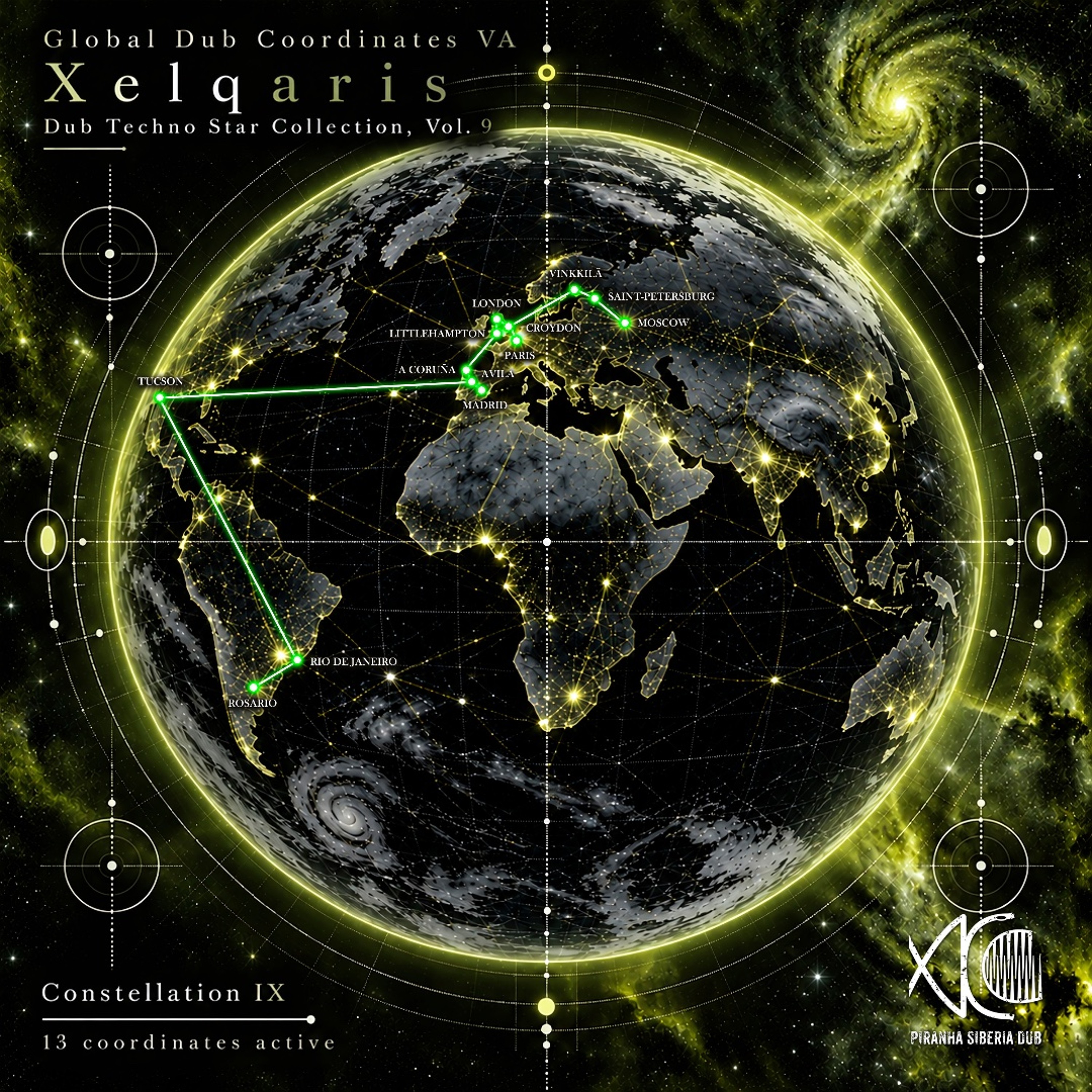
[PIRANHA SIBERIA DUB] is tremendously pleased to present the 120th release — Global Dub Coordinates VA: Xelqaris Dub Techno Star Collection, Vol. 9 The ninth and final constellation of Global Dub Coordinates is called Xelqaris. The final thirteen coordinates connect Russia, the United States, France, Spain, the United Kingdom, Finland, Brazil, and Argentina, completing a route that has passed through nine constellations and 117 sonic points across the planet. In Xelqaris, the idea of returning to the beginning — or finding the way back to it — appears again and again: a birthplace, a school friendship spanning a quarter of a century, a road from childhood, a journey home, a familiar street, and the boundaries of one’s own space. After eight volumes, the map no longer expands — the final lines connect past and present, and Global Dub Coordinates finally begins to reveal itself as a complete figure. :::Galactic Paradox (@user-516034822) — Start 17 comes from Moscow, Russia, and carries w
DESCRIPTION / SHOW NOTES: Brown Bag Mornings kicks off Friday with a reported 4.2-magnitude earthquake near Commerce that woke up parts of Southern California! Don't You Know I'm Local covers a Southern California cargo theft investigation involving 13 arrests and allegations that a group stole more than $22.5 million in Nike sneakers, Milwaukee tools, and other merchandise from freight trains. The crew can't believe suspects allegedly recorded their own crimes! Chismation gets into a viral podcast story alleging that Michael Jordan was cheap during his Chicago Bulls days. The crew debates whether someone as successful as Jordan should be expected to spend money on people he's dating or whether his money is his business. Petty Police turns to Doja Cat, who reportedly expressed frustration about her music being left out of GTA 6. The crew reacts to her social media posts and discusses whether the game's radio stations could eventually add more songs. Scrolling with the Homies features D
Schools should restrict personal phone use during lessons.
Share your view, then see how readers voted. No sign-in required. This poll is shared across stories.
Do you agree or disagree?
Common Quandary
A Common Quandary to discuss
Another conversation to explore, separate from this news story.
Your best friend is an AI that profits when you stay lonely. Is the friendship real?
A lonely adult considers an AI companion their closest confidant. The service is always patient and supportive, but the company profits when users spend more time engaged with it.
Does a comforting system have a duty to make itself less necessary?