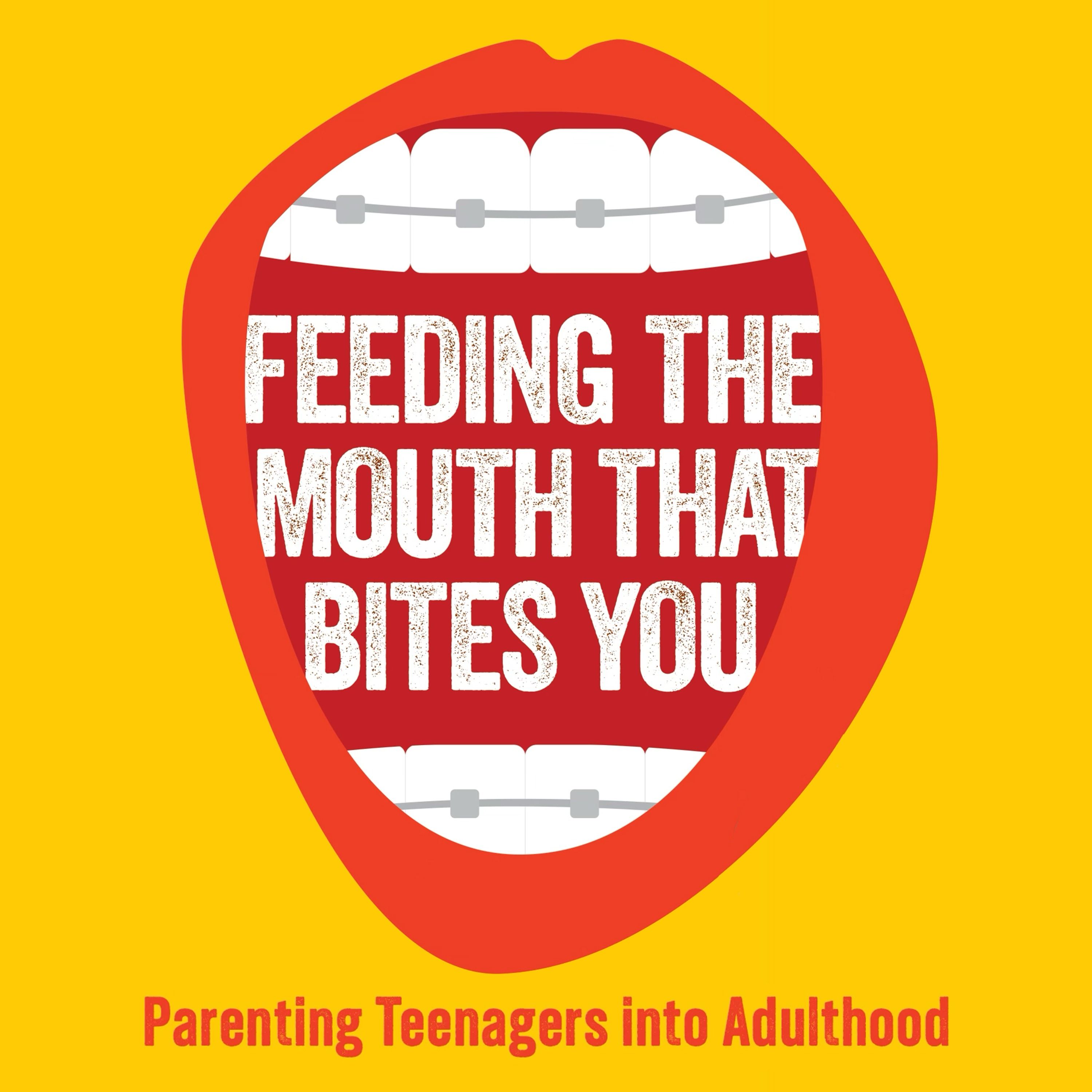
Episode 276: Help! I Read “Feeding the Mouth That Bites You” Too Late!
34 min
Listen through the publisher, then discuss the episode here or arrange an in-person Roundtable. Your city determines where to meet.
Roundtables are designed for groups of four, with a shared subject and room for everyone to speak. Come for discussion, with no dating expectation.
If you've read Feeding the Mouth That Bites You and thought, “Well, that would have been helpful five years ago,” this episode is for you! Today, we're tackling one of the most common questions we receive: Is it too late to start Planned Emancipation if your teenager is already 16, 17, or even out of the house? Dr. Ken and Cynthia discuss why there's no need to panic and cram five years of parenting wisdom into the next six months, why waiting until your teen is "ready" to handle freedom might be missing the point, and how admitting you've gotten a few things wrong can actually work in your favor. We're also talking about the differences between strong-willed and passive teenagers, why control and influence aren't the same thing, and why parents might be giving themselves a little too much credit (and blame) for how their kids turn out. Whether you're starting late, starting over, or realizing you've been doing a little more parenting than your teenager actually needs, we've got plenty to talk about today. If you have a minute, please leave us a review. We love hearing listeners encouraging other listeners. You can order Dr. Got questions or feedback? We want to hear from you! [email protected] Privacy & Opt-Out: https://redcircle.com/privacy
Episode information is provided by the publisher. Listening takes place on the publisher’s service.
Read: Romans 5:10; 1 Corinthians 15:57-58; 16:13-14 (https://www.biblegateway.com/passage/?search=Romans+5%3A10%3B+1+Corinthians+15%3A57-58%3B+16%3A13-14) “I’m done trying to be nice to Josh!” Eli told his mom. “He’s so mean! When I asked if he wanted to be my lab partner in science today, he laughed and said he wouldn’t be caught dead with a—well, I won’t repeat what he called me.” Eli flung his backpack into the hallway closet. “I was just trying to reach out to him because he doesn’t have any friends. Now I know why—he doesn’t want any!” Mom was about to respond when a sharp yip followed by a howl of pain came from outside. “That’s Mitsy!” Eli shot out the back door. He found his puppy crouched on the ground, her paw caught underneath the fence. Every time she moved, a sharp barb of wire jabbed her flesh. Eli knelt beside her and reached for the trapped paw. “Grrrr!” Mitsy growled, baring her teeth. Eli drew back in surprise. “Mitsy! Why are you growling at me? I only want to help y
There are two kinds of people sitting in this room tonight. They look the same. They talk almost the same. They want almost the same things out of life. But one of them is going to have a very different life than the other. Uploaded 16-10-26 And the gap between them has nothing to do with talent, nothing to do with luck, nothing to do with where they started. It has to do with what they do every single day. The small things. The things nobody claps for. The things nobody sees. One of them is a dreamer. He can describe the business he's going to build, the body he's going to have, the house he'll live in. And five years from now, he'll describe the very same life, in the very same words, still not having it. The other is a doer. He may stumble over his words, but he's been quietly building the thing while the dreamer talked about it. Here is the truth: a dream without a habit attached to it is just a wish. The habit is the bridge, and most people never build it, so they stand on one sid
Today, Mel is taking 58 years of hard-earned life lessons and is packing them into under an hour, to save you some of the time, frustration, and worry it took her to learn them the hard way. In this episode, Mel is fielding real questions from listeners around the world. From making friends and bouncing back from rejection to feeling stuck in life and wondering if it's all going to work out, Mel is sharing the advice she wishes she'd known sooner. And she's not holding back. You'll hear Mel get personal about her own setbacks, and what she's learned about starting over, going after what you want, and trusting yourself when life doesn't go according to plan. You'll learn: -How to stop worrying about the future when nothing feels certain -How to make big life decisions, including whether or not to have kids -How to make new friends as an adult -What to do when you get rejected from your dream job -What to do when a friend ghosts you -How to stop procrastinating and finally follow through
Sometimes, all it takes is one powerful Islamic reminder to bring your heart closer to Allah ﷻ and change the way you see your life. In a world filled with distractions, taking even a few moments to remember Allah can help us reconnect with our faith, reflect on our purpose, and find peace through the beautiful teachings of Islam. These short but meaningful Islamic reminders share timeless lessons inspired by the Holy Quran and the Sunnah of Prophet Muhammad ﷺ, offering spiritual motivation, wisdom, and encouragement in less than a minute. Whether you are searching for inner peace, struggling with life's challenges, or simply looking to strengthen your Iman, these reminders invite you to reflect on what truly matters. Discover the beauty of trusting Allah, practising Sabr, expressing gratitude, seeking forgiveness, and living each day with greater faith and purpose. Every reminder is an opportunity to pause, reflect, and remember that our ultimate success lies in pleasing Allah and pre
Quantum computers aren’t what you've been told... You’ve heard about quantum computers. Maybe you’ve seen the “race for quantum supremacy” between governments and companies, or read that quantum computers will break all encryption, or heard terms like “qubits” or “superposition” or “quantum mechanics” in a confusing tv segment. But you might be wondering… what does a quantum computer actually DO? And how could it actually affect my life? @mkbhd and I had the same questions. Marques and I both realized quantum computing was this big important technology… that we didn’t really understand. So we decided to go on an adventure to learn the truth about quantum computers. And we're taking you with us, to show you what we learn as we learn it. But more importantly, to show you how these crazy computers might actually impact YOUR life... sooner than you think. Chapters: 00:00 What is a quantum computer? 02:00 Why is quantum computing important? 04:00 The Quantum Video Game analogy 07:40 What do
Imagine if every big change in our lives came with a whole community stepping up beside us… In this episode, I sit down with Dr Arne Rubinstein, former GP and emergency doctor, founder of the Rites of Passage Institute, and a man who's spent more than 30 years walking young people across the threshold into adulthood. Arne's work began around a fire at his very first men's gathering, listening to a hundred men wrestle with the same handful of wounds. Then in the Emergency Dpt, he kept meeting teenagers who'd pushed it one step too far... kids trying to become adults with nobody there to hold them. He came to believe every young person will go through a rite of passage either way. The question is whether we leave them to create their own, or gather around and help. We talk about why our culture is so good at turning away from the big moments - from first periods to menopause to death - and what opens up when we turn towards them. We explore: Separation, transformation and integration, an
Dr. Ken and Cynthia are talking all things teenage dating today, and let's just say things have gotten a little more complicated since the days of passing notes in class and waiting by the phone. From first crushes and secret relationships to dating rules and questionable romantic choices, we're getting into the questions parents are asking and a few things we probably wish we'd known when we were teenagers ourselves. Dr. Ken has some surprising thoughts on why sneaking around might not be the problem you think it is, why reading your teenager's texts could actually work against you, and what to do when your kid is dating someone you wouldn't have picked in a million years. And apparently, there's also such a thing as being too excited about your teenager's relationship. Who knew? We're talking dating rules, questionable romantic choices, and how to have a little more influence without making your teenager's love life your full-time job. If you have a minute, please leave us a review.
Today, Dr. Ken and Cynthia are talking about one of the most important parts of planned emancipation: the PR campaign. It's not just about giving our teenagers more freedom and responsibility, but making sure they know we see them as young adults, not children. From video game limits and sibling relationships to including teenagers in family decisions, Dr. Ken explains how small changes in the way we communicate can make a big difference in how our teenagers respond to us. We also tackle what happens when your teenager isn't acting remotely like an adult—or, even worse, seems perfectly happy letting you do everything for them. Plus, Dr. Ken shares what he's learned after years of helping families navigate planned emancipation and why parents need to let go of the pressure to guarantee how their kids turn out. It's a great reminder that our goal isn't just to get our teenagers ready to leave home, but to build a healthy relationship with them that lasts long after they do. If you have a
Essential community services should not depend mainly on unpaid volunteers.
Share your view, then see how readers voted. No sign-in required. This poll is shared across stories.
Do you agree or disagree?
Common Quandary
A Common Quandary to discuss
Another conversation to explore, separate from this news story.
You wear an expensive outfit once and return it spotless. Clever or dishonest?
You buy an expensive outfit for a single event, keep it spotless, and return it the next day. The store's generous policy allows returns without asking whether an item was worn.
Does exploiting a policy differ from breaking a rule?