Listen through the publisher, then discuss the episode here or arrange an in-person Roundtable. Your city determines where to meet.
Roundtables are designed for groups of four, with a shared subject and room for everyone to speak. Come for discussion, with no dating expectation.
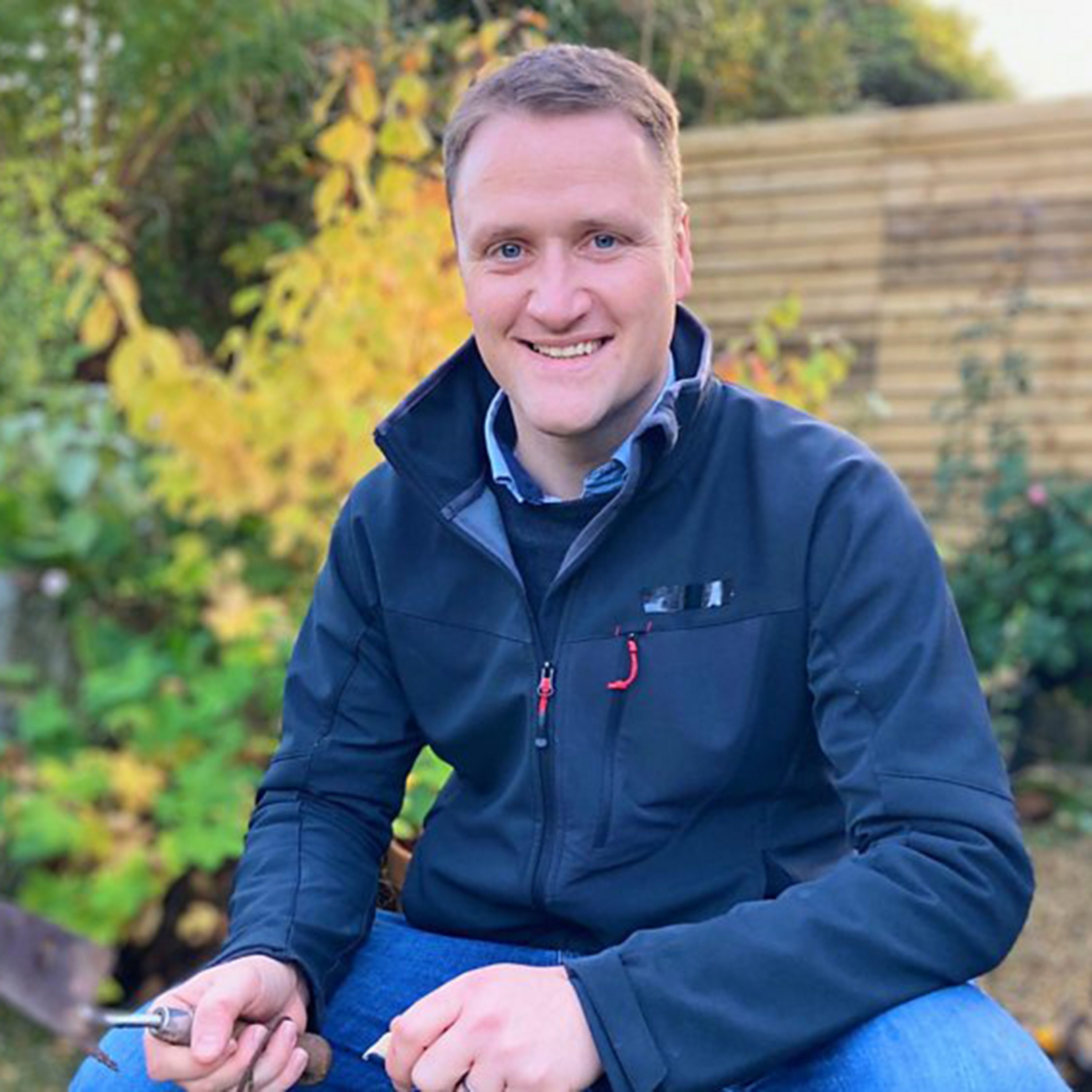
What secrets do the plants and landscapes of the Brontës' novels reveal about their writing? Following recent literary-themed conversations with Ben Dark and William Rowlandson, I'm joined by Amy King, author of The Brontë Botany, to explore the sisters' fascination with the natural world. Released hot on the heels of my own trip to Haworth and its windswept moors, we uncover the botanical details and hidden meanings woven into their novels. Benny's Insect of the Week: Sharp-collared furrow bee Links St John's University academic profile (https://www.stjohns.edu/academics/faculty/amy-king) A Brontë Botany: Flora in the Classic Novels of the Bronte Sisters – Amy M King (https://publishing.andrewsmcmeel.com/book/a-bronte-botany-flora-in-the-classic-novels-of-the-bronte-sisters/) If you enjoyed this week's episode with Amy King, you might also enjoy these episodes from the archives: Episode 169: Darwin's Garden with Dr Jude Piesse (https://rootsandall.co.uk/podcast/episode-140-darwins-garden-with-dr-jude-piesse/) Dr Jude Piesse explores the largely forgotten garden of Charles Darwin's childhood home in Shrewsbury, revealing the people, stories and horticultural history that shaped this remarkable place. Like Amy's work on the Brontës, this episode explores the connections between gardens, literature, history and the natural world, and how plants can offer a fascinating window into the lives and ideas of the past. Episode 245: The Language of Trees with Katie Holten (https://rootsandall.co.uk/podcast/the-language-of-trees/) Artist and activist Katie Holten explores our relationship with trees through art, literature, language and ecology. Her book brings together the work of writers, artists and naturalists to reveal the many ways trees have shaped human culture and imagination. It's a lovely companion to Amy's discussion of how plants inform literature and the stories we tell about the natural world. And follow Roots and All:
Episode information is provided by the publisher. Listening takes place on the publisher’s service.
Lisa Jewell is a phenomenally bestselling thriller writer, who has taken a unique path to the success she currently has. In 1999, she published her debut, 'Ralph's Party', which was the bestselling debut of the year. Then, the first decade of her career focused on commercial women’s fiction and romantic comedies, then after some years figuring out how she'd grow her readership (and pay off her mortgage) she pivoted to dark, psychological suspense thrillers. 'The House We Grew Up In', 'The Girls in the Garden', 'Then She Was Gone', 'The Night She Disappeared', have all been huge bestsellers... and all took off after a suprising social media mention from a reality TV star. Lisa has published more than 20 novels, and sold over 15 million of them across 30 languages. Her new story is an Audible Original Audiobook, 'All She Wants for Christmas'. It's about Fiddy and Louise Stone, who had the perfect marriage, until Louise became a bestselling author and their world was turned upside down. N
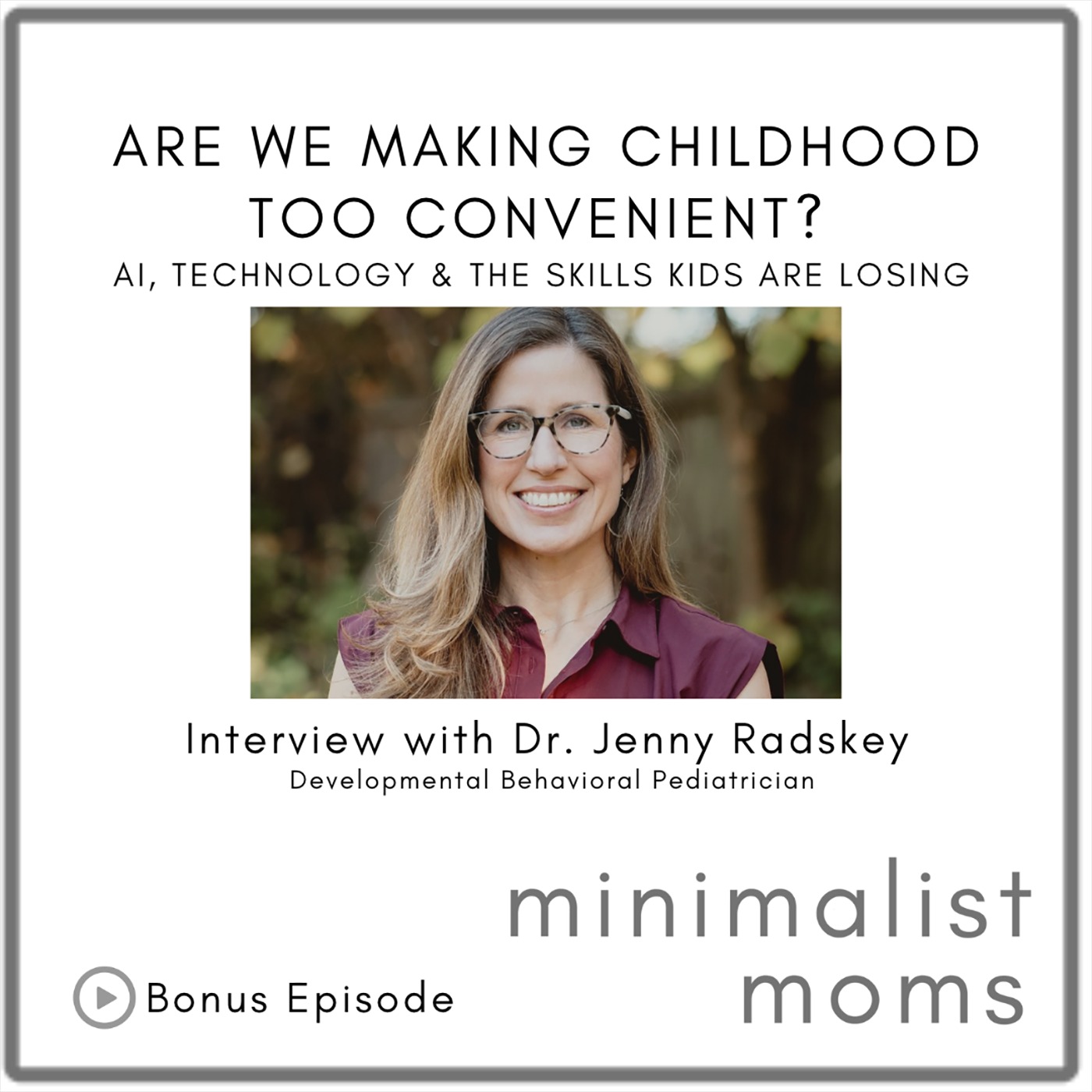
Are we making childhood easier at the expense of the very skills our kids need to thrive? We've talked about screen time and technology on the podcast before, but today's conversation takes us into territory we haven't really explored on the show yet: artificial intelligence and its potential impact on our children's development. As AI becomes more integrated into everyday life, I think it's worth asking some important questions about what our kids might be gaining - and what they could be missing along the way. I'm joined by pediatrician and researcher Dr. Jenny Radesky to explore how technology is reshaping childhood in ways we may not even recognize. From handing over a device to calm a difficult emotion to turning to AI for instant answers, are we unintentionally removing the everyday opportunities our children need to develop patience, persistence, creativity, and critical thinking? Just because something makes life easier doesn't necessarily mean it's making life better. Links Di
After many years of big, blousy tulips, it’s all change this year at Powerscourt. In the name of sustainability, the gardeners at the County Wicklow estate are only planting bulbs that reliably return year after year. David chats to Rosemary O’Flynn about what they’ve decided deserves a place in Ireland’s longest herbaceous border. In Belfast’s Botanic Gardens, Kerrie Hanna shows some of the work she’s created during her time as the garden's first artist-in-residence, including stained glass panels depicting stories connected to the plant collection. Gardener Hayley Thurrat also reveals how art has helped her learn the names of the plants she looks after every day. Also on the programme, Ann-Marie Powell discusses her new book, 'A Year of Colour', which provides recipes for proven plant combinations. Back at Powerscourt, amid the autumn colour, head gardener Alex Slazenger explains why the beautiful European beech may eventually give way to the southern beech as a result of climate cha
We’re informally dangling prepositions as we head into the Thanksgiving holiday; but with all of the hashtagging (https://www.youtube.com/watch?v=n4Q-Y8O5_Hk) of #grateful and #thankful going on throughout social media, Leslie and Marianne thought they’d get in on the action with a One More Sip featuring six plants that make them smile and do a lot of heavy lifting at different times of the year. Marianne is in Northern Virginia Zone 6b/7a and Leslie is a few hours South in central Virginia Zone 7b/8, but several of these plants (from trees to annuals) do well throughout North America. Yes, it’s time for another listicle on One More Sip of The Garden Mixer. Maybe it's time for you to consider some of these six favorites of ours. Welcome to a Barrel Aged episode of One MoreSip. One More Sip is our every-other-week deepdive on a single topic — released fresh to paid subscribers, and then, after ayear of fine barrel aging, uncorked for the wider Mixer community. You’re holding the bottle
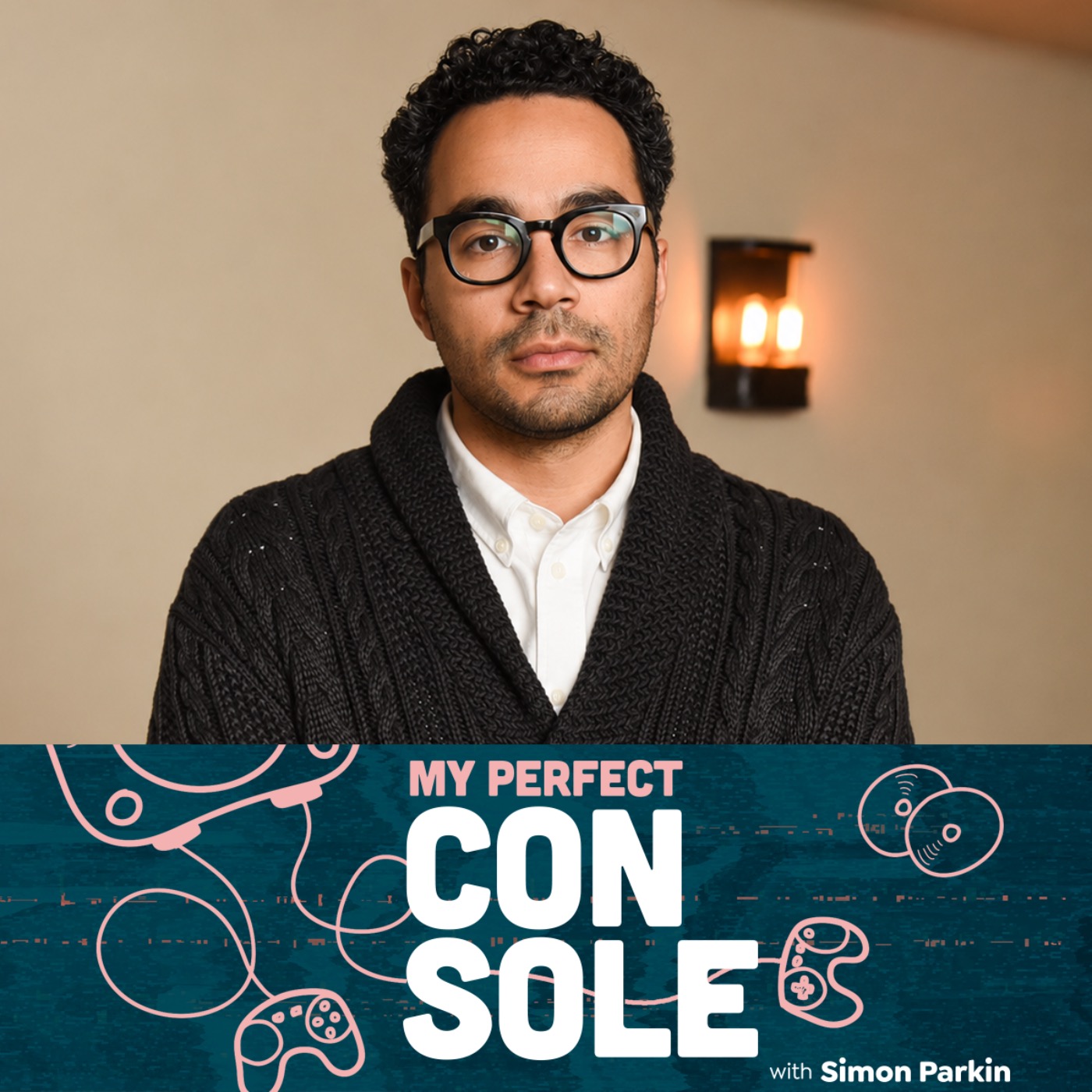
Jamin Wannen is an American journalist, editor, and cultural entrepreneur who has spent much of his career making the case that video games deserve to be discussed with the same seriousness as film, literature, and art. After graduating from Harvard, he worked as a reporter for The Wall Street Journal and wrote for Pitchfork, before co-founding Kill Screen in 2009. Conceived as a magazine for thoughtful, literary writing about games, it became an influential meeting point between games and the wider worlds of art, music, design, and culture. He later hosted 193 episodes of PBS Digital Studios’ Game/Show, programmed gaming events for institutions including the Museum of Modern Art and the Tribeca Film Festival, and founded Gameplayarts, dedicated to game-based arts and culture. Today, he still runs the publication, now Killscreen: a subscriber-supported home for long-form conversations with artists working in and around games. LINKS Jamin Warren – Killscreen Killscreen – Jamin Warren’s
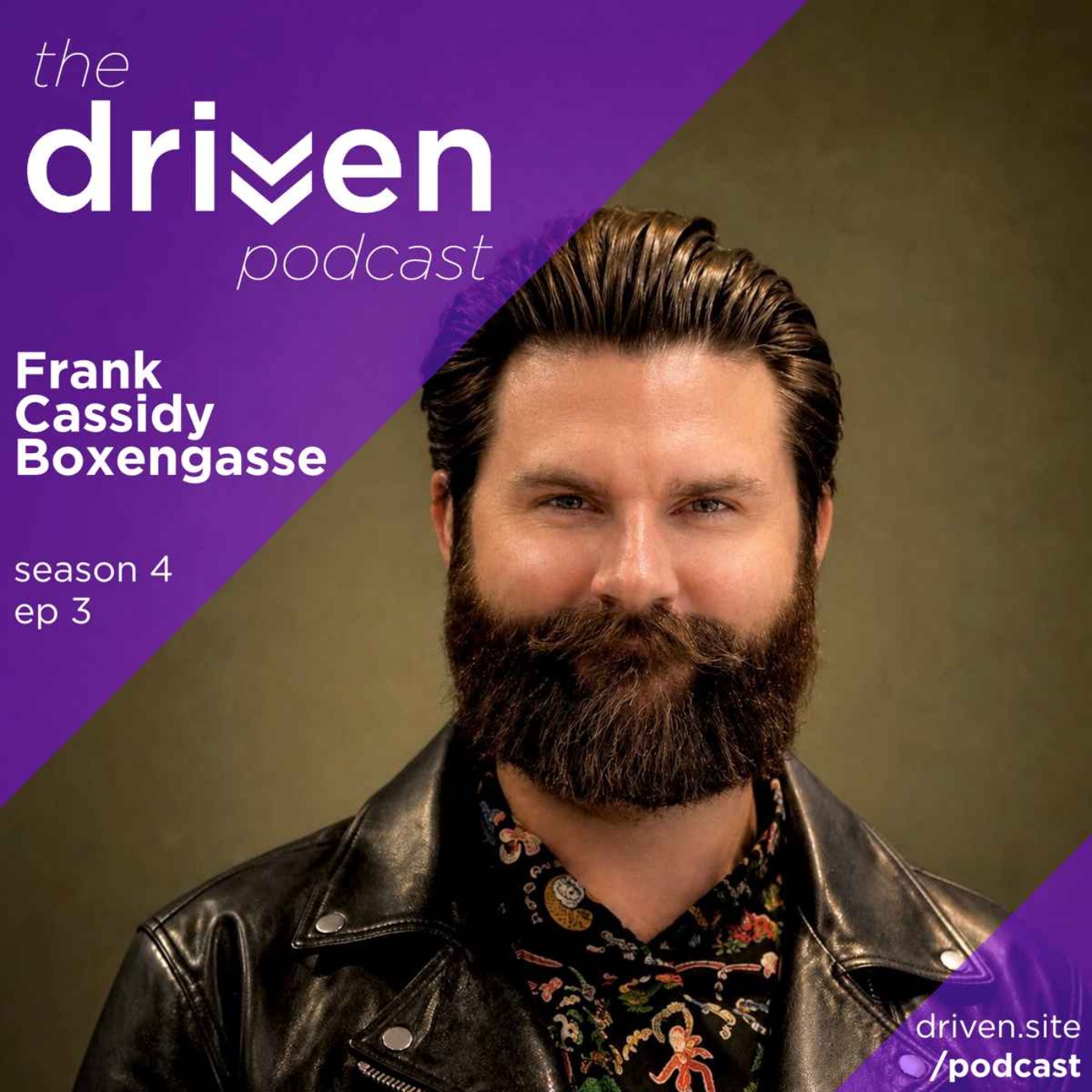
Frank Cassidy was once a humble sofa salesman with a Porsche-shaped obsession. One day he decided to turn his passion for Porsches into a business, a community, and a series of events that would bring other Porsche enthusiasts together. Boxengasse, near Bicester in England, is a Porsche-focused destination that brings together restoration specialists, car collectors, businesses, and enthusiasts from all over the globe. Along with his team at Boxengasse, Frank has built upon his network and now organises Europe's largest Porsche gathering every summer called Megaphonics. For episode 3 of season 4 of The Driven Podcast, John Marcar sits down with Frank to work through his story and discover what makes him tick, while also exploring some of the recent health difficulties for both him and his partner, Annabel. Follow Frank and Boxengasse via Instagram @FrankrCassidy (http://instagram.com/frankrcassidy) // @BoxengasseCo (http://instagram.com/boxengasseco) ___________________________________
What can a plant tell us about the world it evolved in – and what happens when we take it somewhere it doesn't belong? This week, I'm joined by botanist and naturalist Joey Santore of 'Crime Pays But Botany Doesn't' to talk about plant ecology, native species and the importance of understanding the relationships that hold ecosystems together. We also tackle the increasingly heated debate around native and invasive plants, and why ecology should always come before ideology. Benny's Insect of the Week: The Plane Tree Lace Bug Links Website (https://www.crimepaysbutbotanydoesnt.com/) YouTube Crime Pays But Botany Doesn't (https://www.youtube.com/@CrimePaysButBotanyDoesnt) Instagram (https://www.instagram.com/crime_pays_but_botany_doesnt) TikTok (https://www.tiktok.com/@crimepaysbutbotanydoesnt) Patreon (https://www.patreon.com/CrimePaysButBotanyDoesnt) If you enjoyed this week's episode with Joey Santore, you might also enjoy these episodes from the archives: Episode 85: Invasive Plants w
This week, I'm joined by William Rowlandson, writer, academic and environmental campaigner, to explore our complicated relationship with the natural world. We discuss what it really means for something to be wild, how the language we use shapes our understanding of nature, and why even the smallest, overlooked corners of the landscape deserve our attention and protection. Along the way, we question where humans fit within the natural world, and whether the boundaries we draw between ourselves and nature make any sense at all. Benny's Insect of the Week: Marmalade Hoverfly Links Wyld of the Woodling by William Rowlandson (https://psychedelicpress.co.uk/products/wyld-of-the-woodling?srsltid=AYCX9vIkooyAo4uR1qK7aZzMI4XrzwunYBBkNFwb3--ZMoiV5hihxbcf) If you enjoyed this week's episode with William Rowlandson, you might also enjoy these episodes from the archives: Episode 376: From Rewilding to Renaturing with James Canton (https://rootsandall.co.uk/podcast/from-rewilding-to-renaturing) Writ
What can one neglected patch of land grow beyond plants? This week, I'm joined by Shereen Chung-Blake, community gardener and programme coordinator at Bankside Open Spaces Trust, to hear how she turned an unused space in Camberwell into a thriving community garden, and why making horticulture accessible can transform both places and people. Benny's Insect of the Week: Heath Potter Wasp Links Shereen's Instagram (https://www.instagram.com/brixtonhousewifeinthegarden/) LinkedIn (https://www.linkedin.com/in/shereenchungblake/) Camberwell Triangle Gardeners (https://www.instagram.com/camberwelltrianglegardeners/?hl=en) Future Gardeners Course (https://bost.org.uk/future-gardeners) Incredible Edible (https://incredibleedible.org.uk/) London Right to Grow (https://www.capitalgrowth.org/right-to-grow/) SLUG (Community Composting) (https://www.instagram.com/_s.l.u.g._/?hl=en) Burgess Plant Nursery (Community Plants and Propagation) (https://www.instagram.com/burgessplantnursery/?hl=en) Walwort
Admissions should consider applicants' circumstances alongside grades and test results.
Share your view, then see how readers voted. No sign-in required. This poll is shared across stories.
Do you agree or disagree?
Common Quandary
A Common Quandary to discuss
Another conversation to explore, separate from this news story.
Would you want a doctor to give you a fake pill if the lie might make you feel better?
A patient has persistent symptoms that have not responded to standard treatments. A harmless placebo may help, but its effect could weaken if the clinician fully explains that it contains no active medicine.
Can a beneficial deception respect the person it helps?