English-language podcasts

Journey Through Sci-Fi: Science Fiction Film History

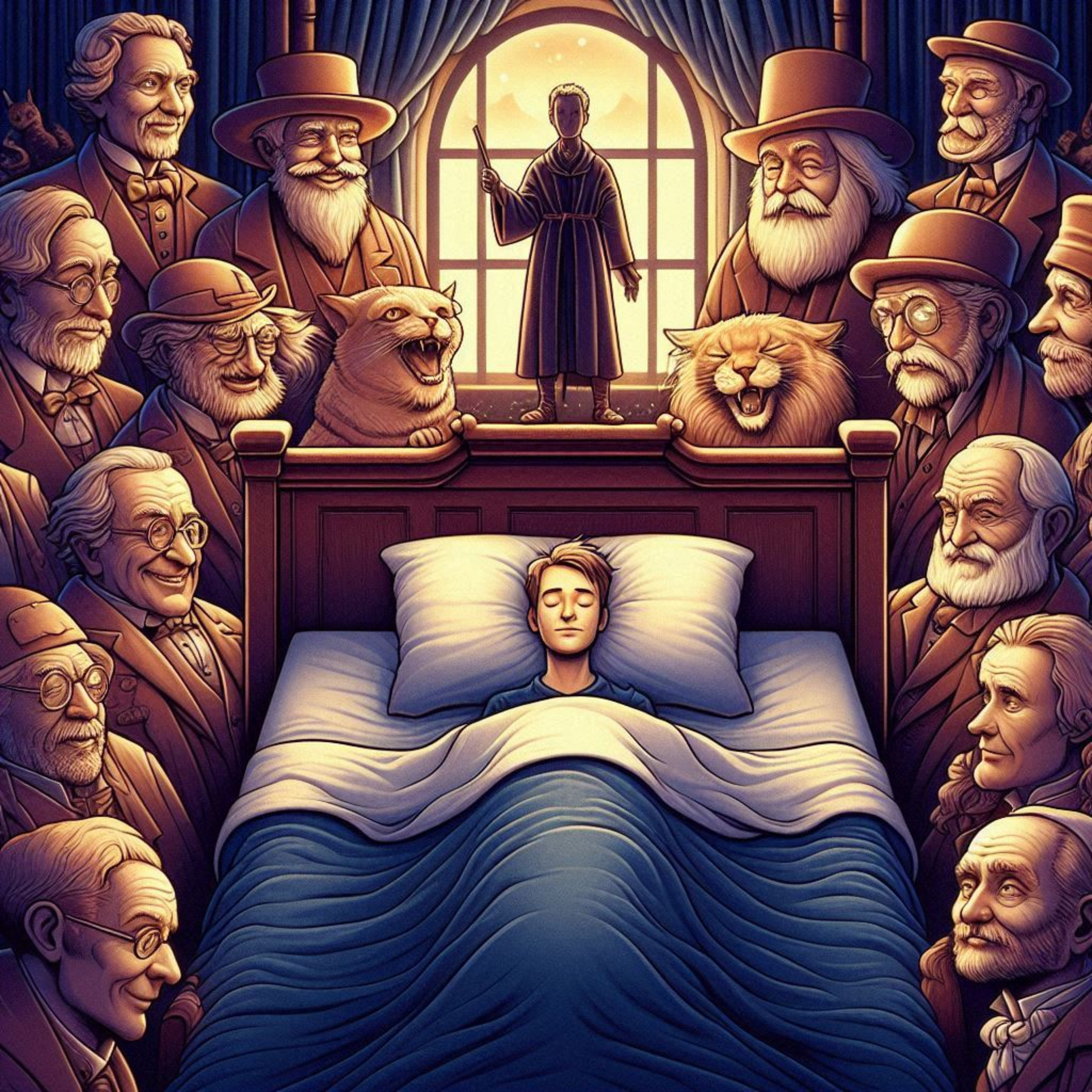
Escape to Witch Mountain (1975) & The Cat from Outer Space (1978): The Friendly Alien Goes to Disney

80 min

Listen through the publisher, then discuss the episode here or arrange an in-person Roundtable. Your city determines where to meet.

Roundtables are designed for groups of four, with a shared subject and room for everyone to speak. Come for discussion, with no dating expectation.

Escape to Witch Mountain (1975) and The Cat from Outer Space (1978). Two lots of castaways, both stranded and both trying to get home. One pair don't know they're aliens. The other one is a cat. Journey Through Sci-Fi continues We Come in Peace, our series tracing the history of friendly aliens on screen. This time, the friendly alien goes to Disney, at a point when the studio had a formula for everything. First, Escape to Witch Mountain. Two orphans with powers they hide from everyone, a millionaire who wants to own them, and Donald Pleasence doing his dirty work. Disney gives it to a Hammer director, opens it like a horror film, calls it Witch Mountain, and only tells you it's science fiction in the last act. Underneath the flying Winnebago is a refugee story about two kids who have learned to hide who they are. Then The Cat from Outer Space. A cat's flying saucer crash-lands, the military impounds it, and the only man who can help is the physicist everyone else laughs at. Sitcom actors, a gimmick animal, bumbling villains and a chase in the sky: it's the 70s Disney formula with a talking cat bolted on. In this episode: ● A horror opening, a Hammer director and Donald Pleasence in the credits ● Never work with children or animals: two kids, a cat, dogs, a horse and a bear ● Aristotle Bolt, villain or just very generous with the toys? ● The book's shadowy European cabal, and the priest who became a grumpy widower ● A close encounter of the furred kind ● Two Abyssinian cat actors who know exactly how pretty they are ● A surprising amount of innuendo for a G-rated Disney film ● When in doubt, make it fly ● A happy ending by way of US citizenship Also discussed: Superman, Return from Witch Mountain, Race to Witch Mountain, Twins of Evil, Halloween, Bedknobs and Broomsticks, Gentle Ben, Star Wars, Planet of the Apes, M*A*S*H, The Absent-Minded Professor, The Love Bug, The Million Dollar Duck, My Favorite Martian and Coneheads. Tia and Tony's powers, or Jake's collar? Tell us which you'd take. Next time: Close Encounters of the Third Kind (1977) and E.T. the Extra-Terrestrial (1982). Hosted and produced by James Payne and Matt Willcock. Edited by James Payne. Follow the show so you never miss an episode, and if you can, a review or a share helps a lot. Journey Through Sci-Fi is part of the EOH Network.

Episode information is provided by the publisher. Listening takes place on the publisher’s service.

Listen at the source ↗

Featured places to meet in Palo Alto, CA

Explore these places and arrange a conversation through ThinkMatch.

City guide for Palo Alto, CA

More from Journey Through Sci-Fi: Science Fiction Film History

Journey Through Sci-Fi: Science Fiction Film History

Godzilla Minus One (2023): You Can't Kill Godzilla

55 min

Godzilla Minus One (2023), straight out of the Patreon archive. We recorded it nearly three years ago, before it won the Oscar, and it's out on the main feed now because Godzilla Minus Zero is in cinemas. Want to know if the sequel lives up to it? Our Godzilla Minus Zero episode is on Patreon (https://ww.patreon.com/journeythroughscifi) now. Japan was at zero at the end of the war. Godzilla is what takes it to minus one. Koichi Shikishima is a kamikaze pilot who didn't go through with it, home to a flattened Tokyo with his family gone and a war that, as far as he's concerned, isn't over. Then a giant atomic lizard turns up and he just can't catch a break. Takashi Yamazaki takes Godzilla right back to basics. No monster team-ups, no saving the world, just a big scary giant lizard and the people caught up in it's destruction. We get into why that works where Shin Godzilla didn't quite, the design that makes him properly scary again, and how Toho reminded Hollywood what a Godzilla film is

Discuss this episode

Journey Through Sci-Fi: Science Fiction Film History

The Man Who Fell to Earth (1976) & The Man from Planet X (1951): Two Aliens from Dying Worlds

79 min

David Bowie lands in New Mexico, a visitor who speaks only in musical tones lands on a foggy Scottish moor, and we don't treat either of them very well. Episode 5 of We Come In Peace, our series on the friendly alien, pairs Edgar G. Ulmer's 1951 B-movie with Nicolas Roeg's cult classic. In this episode: - A 1951 alien film shot in six days on leftover Joan of Arc sets - Californian Scots, and a Scotland Yard in the wrong country - An alien who talks in music, 26 years before Close Encounters - Bowie's first starring role, and why he said he didn't need to act - Why Paramount refused to pay for the finished film, and why America saw a shorter cut - Walter Tevis, the writer of The Queen's Gambit, and the novel that explains what Roeg won't The Man from Planet X or Thomas Jerome Newton, which visitor did we treat worse? Tell us in the comments or a review. Next time: Disney's friendly aliens, with Escape to Witch Mountain (1975) and The Cat from Outer Space (1978). Hosted and produced by

Discuss this episode

Community Poll

Interest-rate decisions should explicitly consider both borrowers and savers.

Share your view, then see how readers voted. No sign-in required. This poll is shared across stories.

Do you agree or disagree?

Choose one answer

Common Quandary

A Common Quandary to discuss

Another conversation to explore, separate from this news story.

A pricey AI tutor can turn B students into A students. Should schools let them use it?

An effective AI tutor adapts to each student and dramatically improves performance, but its subscription is expensive. A public school cannot provide it to everyone and worries that allowing its use will deepen existing inequality.

Should access be limited when a beneficial tool cannot yet be shared fairly?

Explore this quandary