Europe on alert as leaders meet in Ireland amid bomb threats
50 min
Listen through the publisher, then discuss the episode here or arrange an in-person Roundtable. Your city determines where to meet.
Roundtables are designed for groups of four, with a shared subject and room for everyone to speak. Come for discussion, with no dating expectation.
More than 50 world leaders are gathering in Ireland this week for a series of high-level meetings, against a backdrop of growing security concerns across Europe, including bomb threats that have disrupted dozens of flights and targeted several media outlets. Also, combatting loneliness at refugee centers in Germany. And, Doctors Without Borders says DRC is the most challenging place for aid workers. Plus, Peruvian customs agents nab luggage bound for Europe holding some 3,000 tarantulas wrapped in dirty socks. Your support is critical in sustaining our nonprofit newsroom. Donate today (https://give.prx.org/campaign/804766/donate) and your gift will be matched!
Episode information is provided by the publisher. Listening takes place on the publisher’s service.
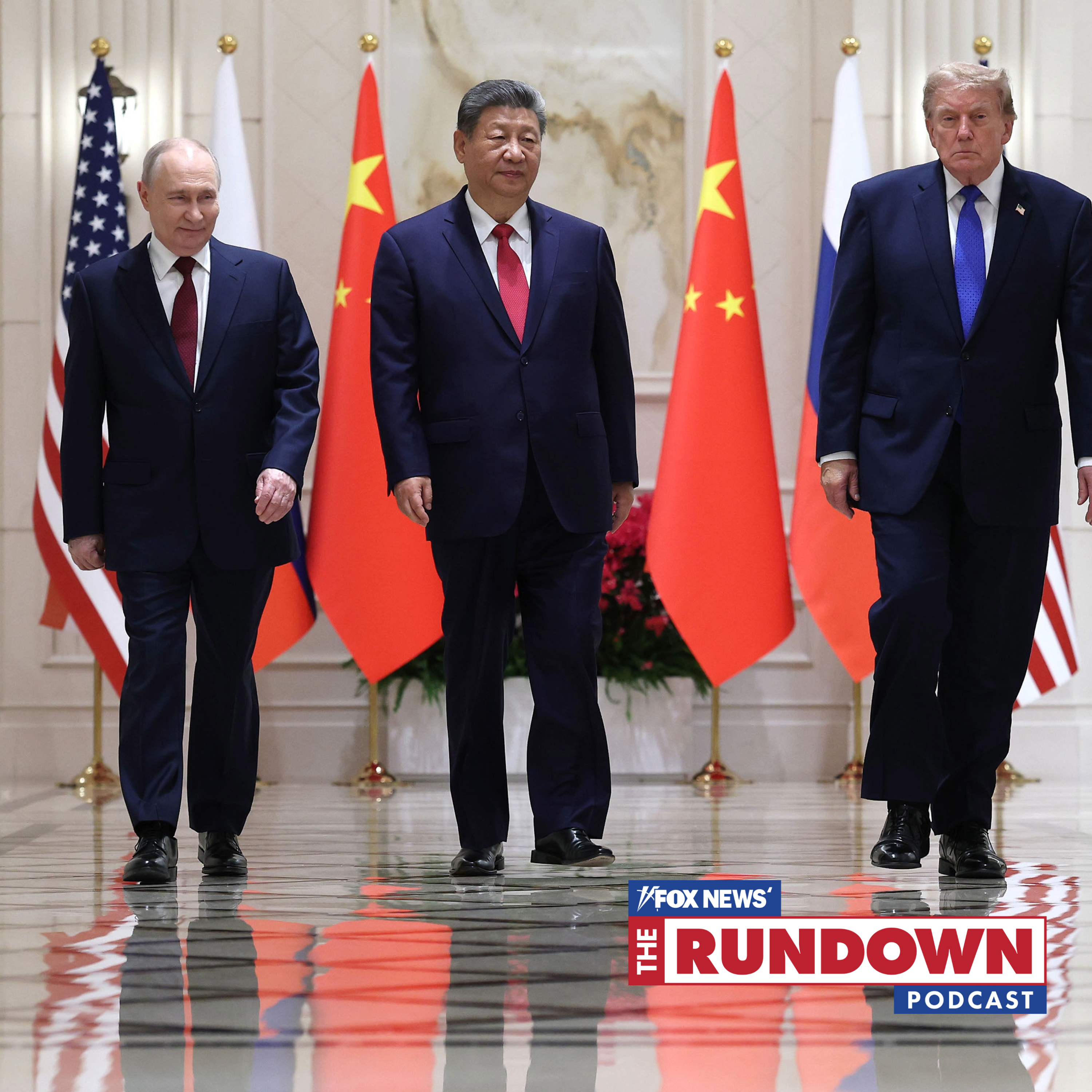
November 20, 2026 On November 19, Trump met with Xi Jinping and Vladimir Putin in Shenzhen, China, The fact that the president of the US would meet with leaders of China and Russia was bizarre since both China and Russia have been helping Iran in its current fight against the US, Trump appeared to want the fanfare and President Xi played that up, Putin wanted the meeting because it would suggest that Russia was a great power, although it is far from being so and Putin’s war on Ukraine is going poorly, The meeting’s purpose seemed to be to produce propaganda for each of the three leaders, Beyond the propaganda is the larger story of the destruction of the post-World War II rules-based international order, In its place is the idea of dividing the world into spheres of influence, The three leaders met for 90 minutes and issued only a vague "joint declaration toward peace," which vowed to reform the UN and weaken the International Criminal Court, where Putin is already under indictment for
Iran fired on Bahrain again Saturday and says this time it was aiming at the American Patriot crews that protect U.S. bases there. MIKE DROP NEWSROOM | 22 NOVEMBER 2026 ABC News reported that Iran's Revolutionary Guard said its Saturday attacks targeted U.S. Patriot air defense sites in Bahrain, home of the Navy's 5th Fleet. The U.S. has not confirmed any hits. Bahrain said a civilian industrial facility caught fire; reports on injuries are still unsettled. U.S. Central Command called an IRGC claim that it damaged a U.S. F-16 false, saying all U.S. fighter jets in the region are safe and accounted for. Mike Ritland breaks down why Iran would announce that it's going after the crews themselves, how this fits a steady escalation since November 13, and why sitting in place with no decision may be the worst option for the troops in harm's way. Also covered: the U.S. and Israel weighing a new assault on Iran, two tankers hit on the U.S.-guarded side of the Hormuz route, a report on China's
For review: 1. Iraq has reached a compromise with the powerful Iran-backed militia Kataeb Hezbollah, three senior security officials said, after Prime Minister Ali al-Zaidi readied security forces to move against the group. Reflecting the gravity of the situation, Iraqi Shiite political sources said Esmail Qaani, commander of Iran’s elite Revolutionary Guards’ Quds Force, arrived in Baghdad late on Monday to help defuse tensions with Kataeb Hezbollah, Tehran’s most powerful militia ally in Iraq. 2. Lebanese President Joseph Aoun launched a lengthy rebuke of Iran in an Independence Day address, arguing that the Islamic Republic does not have the right to interfere in Lebanon’s internal affairs, as it long has via support for its local terror proxy, Hezbollah. 3. Yemen’s Houthis launched strikes on the Saudi capital Riyadh on Saturday, after vowing reprisals for a “special operation” by the Saudi-led coalition fighting them. The coalition later said it had “intercepted and destroyed” thr
A wave of major technology outages is raising troubling questions about America's cybersecurity, aging infrastructure, and readiness for a new era of artificial intelligence. Are these isolated technical failures, or warning signs of a much larger national security problem? John Solomon and Amanda Head welcome Ohio Congressman and former Army Ranger Warren Davidson, who discusses recent disruptions involving the FAA, Microsoft, and other critical systems. Davidson calls for greater transparency from government agencies and technology companies, questions whether America's infrastructure is adequately protected against emerging cyber threats, and examines how artificial intelligence could be used both to strengthen defenses and exploit vulnerabilities. The conversation also turns to immigration and national security, with Davidson raising concerns about individuals who entered the country illegally, potential gaps in government screening systems, and the surveillance powers used to moni
Following President Trump’s trip to Asia and a first-ever trilateral meeting with the leaders of China and Russia, foreign policy experts are weighing what was accomplished on the world stage. Former national security advisor to Vice President Dick Cheney and Heritage Foundation senior research fellow Stephen Yates joins The Rundown to analyze the summit’s outcomes on Taiwan, Ukraine, Iran, and strategic arms talks. Yates also explains how new rare-earth agreements with U.S. allies and export controls on AI chips balance Trump’s warmer rhetoric toward Beijing. Later, widespread tech outages across major platforms and government systems raise urgent questions about whether U.S. digital infrastructure is prepared for the artificial intelligence era. Former Cybersecurity and Infrastructure Security Agency (CISA) director Bridget Bean breaks down how rapid software patching can trigger cascading system failures, the growing cyber threats posed by China and Iran, and how organizations can d
On 4th March 2023, UN member states agreed a historic treaty that had been over fifteen years in the making. The High Seas Treaty is the first ever treaty to protect the world’s oceans outside national boundaries. The aim is to meet the 30 by 30 biodiversity target, protecting 30% of the world’s oceans by the year 2030. Also known as the open sea or international waters, the high seas begin at the limit of countries’ exclusive economic zones. That means up to 370km, or 200 nautical miles, from the coastline. They account for 64% of the world’s oceans, and have been referred to as the last true wilderness, given how much mystery still lies within. Why is protecting the oceans so important? What measures are expected to come from the treaty? In under 3 minutes, we answer your questions! To listen to the last episodes, you can click here: How to make the most out of a rental property? (https://originals.bababam.com/do-you-really-know/202303090400-how-make-most-out-rental-property) What is
After altering the constitution to remove term limits, El Salvador President Nayib Bukele officially launched his candidacy to serve a third term. Also, the UK and EU consider getting back together after Brexit. And, the leaders of Fiji and Tonga have declared national disasters over drought conditions fueled by El Nino. Plus, a Peruvian booby bird where it shouldn’t be. Our reporting is independent, inclusive and in-depth. Best of all, it’s listener-supported. Give today (https://give.prx.org/campaign/804766/donate) to support The World!
In a 9-6 decision, the International Court of Justice ruled today that Myanmar committed genocide against its Rohingya Muslim minority during a military campaign in 2017. Also, for the first time, Ireland removes its ban on books by authors like Oscar Wilde, JD Salinger and F. Scott Fitzgerald, that were previously deemed too obscene. And, climate change disrupts Kashmir’s prized saffron crop. Plus, Zimbabwe’s low-cost treatment for depression and anxiety in the form of Friendship Benches gains popularity worldwide. Our reporting is independent, inclusive and in-depth. Best of all, it’s listener-supported. Give today (https://give.prx.org/campaign/804766/donate) to support The World!
Rwanda is again offering to partner with Europe on migration, with Germany, Austria, Greece, Denmark and the Netherlands announcing a new plan to facilitate deportations. Also, a look at what it’s like for Palestinians to travel through the West Bank. And, people in the Czech Republic are gearing up for what organizers say might be the biggest protest in the country’s post-revolution history over press freedom concerns. Plus, the Grand Theft Auto video game is set to launch its long-awaited sixth installment. Our reporting is independent, inclusive and in-depth. Best of all, it’s listener-supported. Give today (https://give.prx.org/campaign/804766/donate) to support The World!
Creators should be compensated when their work is used commercially to train AI systems.
Share your view, then see how readers voted. No sign-in required. This poll is shared across stories.
Do you agree or disagree?
Common Quandary
A Common Quandary to discuss
Another conversation to explore, separate from this news story.
You scratched a borrowed heirloom and repaired it perfectly. Do you confess?
You borrow a family heirloom for an event and accidentally leave a small scratch. A careful repair makes it almost invisible, and its owner happily accepts it back without noticing anything.
What is confession for when the harm has already been repaired?