Access the masterclass instantly for free: https://nci.university/learn Uploaded 10-01-26 Your goals don’t fail because you lack discipline — they fail because they were aimed at the wrong system. Optimizing behavior without fixing brain chemistry is like issuing commands to a damaged machine. Until the chemical environment is right, effort just increases friction and burnout. All goals live in the conscious mind — but control does not. Real behavior is governed by the mammalian brain, the ancient systems that decide safety, threat, and energy allocation. Every resolution collapses when those lower systems detect risk, even if you consciously “want” the outcome. Goal-setting ignores this hierarchy — and that’s why it keeps failing. Once you target the parts of the brain actually in charge, change stops feeling like force. Discipline becomes unnecessary when the system itself is aligned. Please note that the content provided in this broadcast is for informational and educational purpose
Giouli thought alcohol was the one thing that let her stop being perfect. Hear how a 30-day break she expected to end in January led her to write the first quit lit book in Greece and help change how her country talks about drinking. What happens when a question you ask yourself one January refuses to go away? For Giouli, alcohol started as freedom from perfectionism at university. It followed her through a demanding events career and into motherhood, when wine came home every night and blackouts began to scare her. Rules and moderation only left her feeling guilty. Then, holding a glass of red wine on her balcony, she asked herself who she was without it. That question led her to write two books, become a coach, and help shift the drinking culture in Greece. Why alcohol felt like freedom from perfectionism, not a way to numb The common belief about drinking at home that kept her from questioning alcohol What moderation rules did to her guilt and her sense of control The balcony moment
At 17, he was broke, homeless, and sleeping in a laundry room. With $12 to his name, he found a book that helped him rewire his mind—and it changed everything. This is the true story of how Young Tony Robbins used belief, discipline, and unstoppable drive to achieve his dream... Uploaded 15-06-25 Watch more videos like this Tony Robbins' Untold Story of His Childhood with Randall Kaplan: https://youtu.be/F6r0zvfJDF8 Do THIS When You Feel Lost In Life - FULL Tony Robbins Intervention: https://youtu.be/ngTzB0WeYOc This ONE Mental Shift Will Rewrite Your Entire Future...: https://youtu.be/zi_22RoSklI Wake Up the Part of You That’s Been Asleep | Tony Robbins Breakthrough: https://youtu.be/ngTzB0WeYOc Join "The Edge" - Tony Robbin's FREE weekly newsletter: https://tonyr.co/3YJ0m2L Try Tony AI for just $1: https://tonyr.co/4cr742A Follow Tony Robbins: Facebook: https://www.facebook.com/TonyRobbins Instagram: https://instagram.com/tonyrobbins/ TikTok: https://www.tiktok.com/@tonyrobbins Twitt
Support Stoicism Philosophy on Ko-fi Do you enjoy our content? Help us keep sharing Stoic wisdom by supporting us on Ko-fi. Click here to support us (https://ko-fi.com/stoicpodcast) Thank you for being a key part of Stoicism Philosophy. Your generosity keeps Stoic philosophy alive! HOW TO GET WHAT YOU WANT does not begin with wanting more, but with learning to master your mind, your impulses, and your actions. In this video, you will discover 8 Stoic secrets for pursuing your goals with discipline, calm, and clarity, without depending on luck or letting yourself be carried away by anxiety. Stoicism teaches that true power lies in controlling what depends on you: your decisions, your character, your focus, and your response to obstacles. Through principles inspired by the wisdom of Marcus Aurelius, Seneca, and Epictetus, you will learn how to turn desire into action, strengthen your self-control, maintain inner peace, and keep moving forward even when circumstances are not perfect. If y
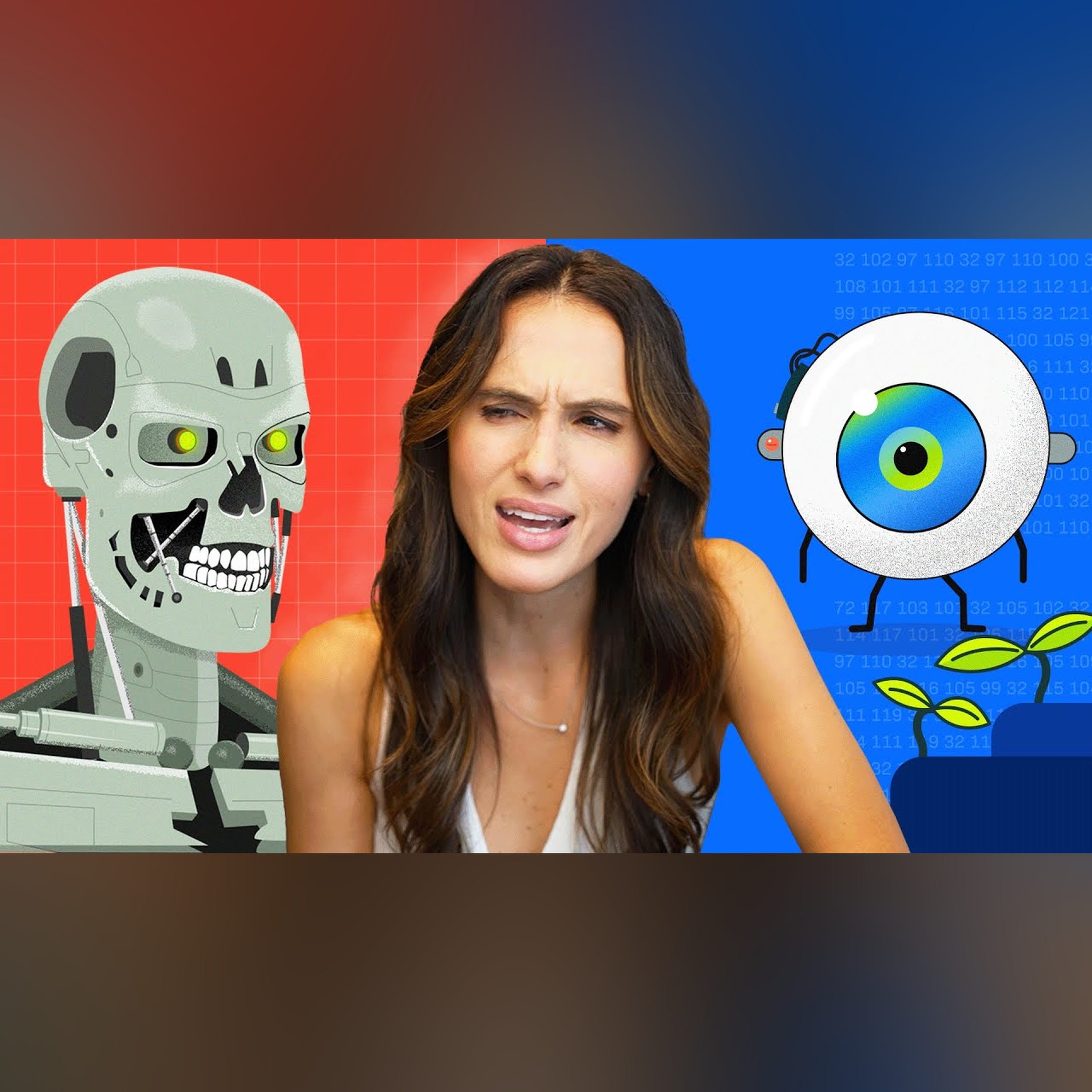
AI is here. Now what? Everyone’s talking about artificial intelligence and machine learning. There are lots of names thrown around - OpenAI’s ChatGPT and DALLE-2, Google’s Bard, Meta’s LLaMa 2, Midjourney, AlphaFold… Right now, we’re in this weird moment where lots of smart people agree we’re on the cusp of a truly world-changing technology. But some seem to be saying it's going to lead to human extinction while others are saying it’s “more profound than fire.” But it all feels so VAGUE. I want to know: How specifically would AI kill me? Or totally transform my life for the better? In this video, that’s what I’m going to try to learn. We dive into what the most extreme bad and good AI futures actually look like, so that you and I can get ready. And more importantly, so we can make sure that we get our real future RIGHT. Chapters: 00:00 Why is AI so confusing? 1:13 What is AI? 2:37 Why is everyone talking about AI now? 5:12 Why is AI dangerous? 6:22 How would AI kill me? 8:08 Should we
#JimRohnMotivation #JimRohn #JimRohnSpeech In this Jim Rohn Motivation video, Jim Rohn shares the truth about growth, resilience, and the mindset shift that transforms your life. Life doesn’t get easier—you get stronger. Stop waiting for circumstances to change. Start becoming the person who can lead, endure, and grow no matter what. Key Topics From This Motivational Video: Why waiting for ease keeps you stuck How mindset shapes resilience and success The role of consistency and execution in transformation Why discomfort is the training ground for greatness How to raise your standard and stop negotiating with weakness This Jim Rohn motivational video is about reclaiming your power—not by waiting for the pressure to pass, but by rising to meet it. It’s about becoming someone who doesn’t flinch, who doesn’t fold, who doesn’t break when things get hard—but instead grows stronger. Better isn’t a moment—it’s a standard. And this is your wake-up call to raise it. This Jim Rohn Motivational V
A 7% drop in Australian wine exports doesn’t sound huge until you put it next to the reality of a small local market and a massive national crush. We dig into what’s driving the latest numbers, including tariffs and cost pressures in the US, a lift in Canada as US wine disappears from government-controlled shelves, and why China’s “restocking” story is more complicated than the headlines. We also talk about the uncomfortable truth that a big slice of what we export is bulk wine, which can be cheaper and lower carbon, but can also mean less control over the final bottle and the way your wine shows up for consumers. Then we compare how the major wine states are responding to the squeeze and why their approaches barely resemble each other. South Australia throws serious money at oversupply and vineyard transition, while New South Wales focuses on tourism and consumer demand, Tasmania doubles down on premium, and Victoria prioritises efficiency, risk management, biosecurity and sustainabil
We thought this would be a neat little rosé experiment. Instead, it turned into a reality check about how we buy wine, how we judge “quality”, and how quickly our brains fill in the blanks when we see a price tag. We line up four Australian rosé wines from Dan Murphy’s at $5, $15, $20 and $30, all the same vintage, and we deliberately pick labels that do not name the grape variety. Then we blind taste, argue over colour, and get very specific with descriptors: raspberry and grapefruit bitterness, strawberries and cream lollies, candied orange peel, that “wet stone” mineral thing, and even the odd grey-edged “pigeon eye” look. One glass feels hot and short, another feels straight and structured, and we start wondering whether we’ve been unfair on rosé or whether some styles really are built for a simple, cold, summer serve. To keep it grounded, we lean on the WSET-style BLIC method (balance, length, intensity, complexity) so we’re not just saying “yum” or “yuck”. Then we reveal the pric
Predictable working hours are more important than maximum scheduling flexibility.
Share your view, then see how readers voted. No sign-in required. This poll is shared across stories.
Do you agree or disagree?
Common Quandary
A Common Quandary to discuss
Another conversation to explore, separate from this news story.
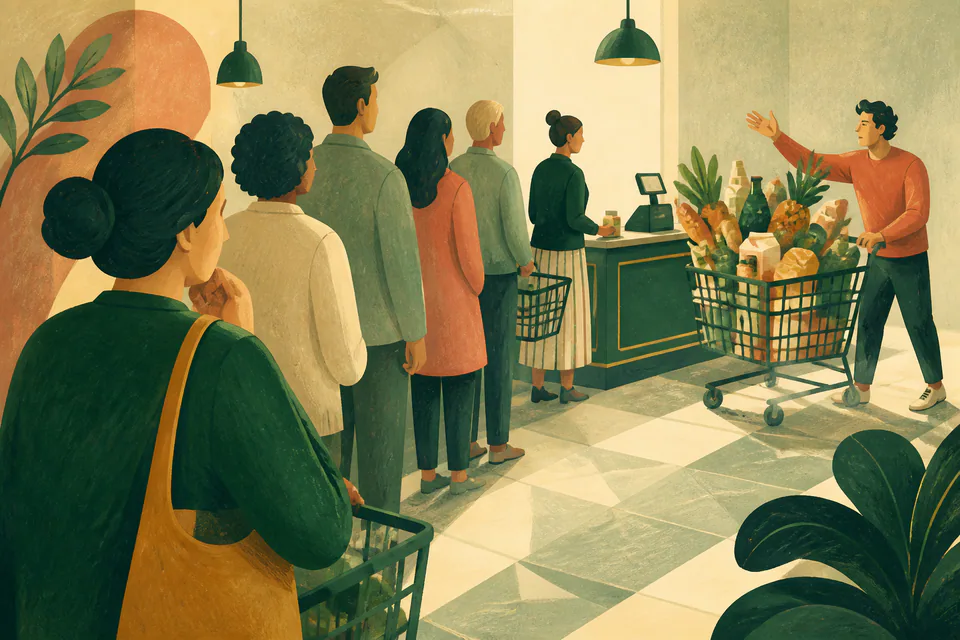
Someone holds a grocery line spot while their partner fills the cart. Is that cutting?
A shopper with one item stands ahead of you in a long checkout line. Just before reaching the register, their partner arrives with a cart packed to the top and joins them. They insist they were shopping together all along.
Can one person reserve a place in line for an unknown amount of work?