Listen through the publisher, then discuss the episode here or arrange an in-person Roundtable. Your city determines where to meet.
Roundtables are designed for groups of four, with a shared subject and room for everyone to speak. Come for discussion, with no dating expectation.
On today’s episode of Back Porch Theology, Lisa Harper is joined by worship leader and songwriter Brooke Ligertwood for a rich conversation about the book of Hebrews, the supremacy of Jesus, and the beautiful mystery of His fully divine and fully human nature (hello, hypostatic union!). Together, they remind us that when life gets hard, our greatest hope is found in fixing our eyes on Jesus, the author and perfecter of our faith. So please pour yourself a cup of coffee or hot tea with honey, grab your Bible, and join us on the porch. We’re really glad you’re here! SCRIPTURE REFERENCES: Hebrews 1:1–4 Hebrews 2:1 Hebrews 4:12–16 Hebrews 5 Hebrews 7:1–3 Hebrews 9–10 Hebrews 11:32–39 Hebrews 12:1–2 John 1 John 16:33 2 Timothy 4:2 Genesis 14 Job 2 1 Kings 19
Episode information is provided by the publisher. Listening takes place on the publisher’s service.
The debate over Christian nationalism raises some uncomfortable questions about faith, politics, and the role of government. Al, Zach, John Luke, and Christian examine how Christianity transformed the Roman Empire and why the early church flourished despite intense persecution. The guys also revisit the Garden of Eden, questioning whether Adam's failure to protect Eve was the first sin and what his actions reveal about responsibility and obedience. They consider what history teaches us about the dangers of unchecked power and why Christians must put their allegiance to God's kingdom above any earthly government. In this episode: Genesis 2, verses 15–17; Genesis 3, verses 1–7; Daniel 2; John 1, verses 4–5; Matthew 5, verses 27–30; Matthew 28, verses 18–20; John 11, verses 49–52; Luke 23, verses 6–12; Galatians 3, verse 28; 1 Timothy 2, verses 11–14; Romans 13, verses 1–7 Today’s conversation is about Lesson 6 of Western Heritage: From the Book of Genesis to John Locke taught by various
In this meditation, I invite you to reflect on the little joys that make up so much of our everyday lives. We are often encouraged to seek great experiences, extraordinary achievements and moments of intense happiness. Yet much of human life is made up of smaller, quieter experiences that can be just as meaningful. A good meal, a beautiful scene, a favourite piece of music, a conversation with a friend or a peaceful cup of coffee can all become moments of genuine joy. Within our contemplative tradition, joy is understood as a fruit of the Holy Spirit, an experience that can reveal the presence and action of divine love. Through meditation, we explore how cultivating kindness, compassion, gratitude and openness can create more opportunities for these small joys to arise. We also recognise that life will not always be joyful. Yet by learning to notice and appreciate the ordinary gifts around us, we may discover sources of strength and comfort during difficult times. Beginning with the si
For the days you got through and nobody saw what it took. A quiet place this evening where it counts. About 12 minutes with Steven Webb's calm voice and music underneath. Perfect for the evening. We let the body soften, from the jaw and the eyes down to the belly, because it's been on alert all day. Then we look at what today really cost. Getting up when your body said no. Being kind to someone while you were falling apart inside. Saying "yeah, fine" because where would you even start? There's an old Zen idea I keep coming back to: a thing doesn't need to be seen to be real. The rain falls on an empty field, nobody watches, and it still soaks in. We put the day down for a minute, not away, just down, and finish with three gentle wishes. May the hard days I got through be counted. I've been paralysed a long time, and I know what it can take just to get through the day. You're not doing this on your own. Treat me to a coffee, keep the podcast free, and get my Weekly Calm every Sunday. It
I'm Too Hard on Myself — Guided Meditation for Self-Compassion, Negative Self-Talk & Anxiety | 10 Minutes Are you too hard on yourself? A small mistake, something forgotten, a day you simply ran out of energy, and that familiar voice arrives: "I should have done better. Why am I like this? Why can't I just get things right?" This guided meditation for self-kindness and anxiety helps you step back from negative self-talk, soften the pressure you've been carrying and practise speaking to yourself with a little more care. For gentle support every day, download Anchored, my app for panic and anxiety. Guided sessions, breathing tools and fresh caring tips daily, and it plays with the screen off. iPhone: https://apps.apple.com/us/app/anchored-panic-anxiety/id6785035669 | Android: https://play.google.com/store/apps/details?id=com.martinhewlett.anchored We begin with easy breathing and a slightly longer out breath, then learn to notice the inner critic without arguing with it. Through a short
Noah built an ark in response to a warning about things he had not yet seen, while Abraham left his homeland because God called him to a destination he had not been shown. Neither man had the complete picture of what lay ahead. We ask God to reveal the next five years when He may be asking us to trust Him with the next decision. Faith does not mean abandoning wisdom or planning; it means refusing to make complete understanding a condition for obedience. Sometimes, clarity comes as we walk, not before we begin. Every contribution counts. Thank you for being part of our journey!
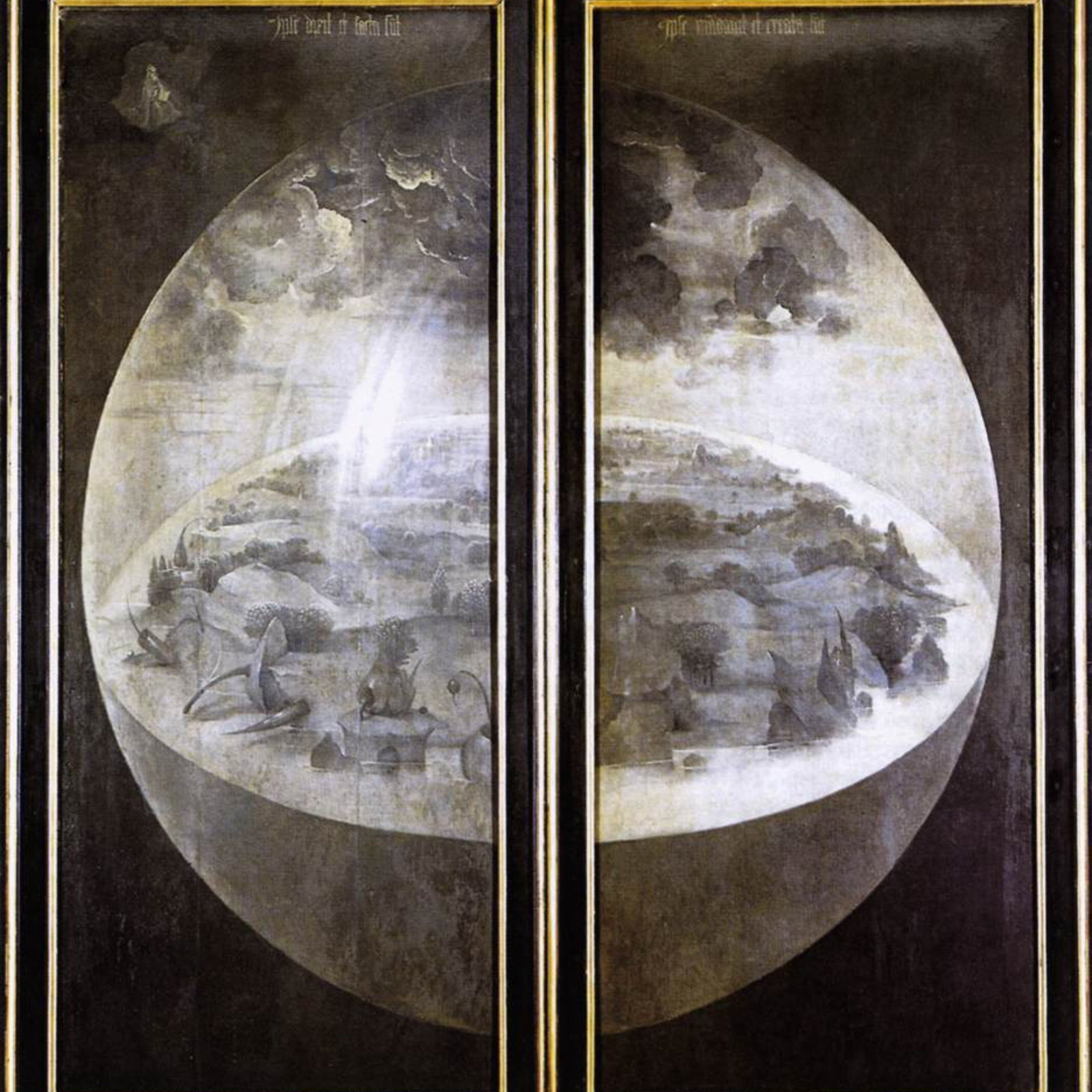
By analyzing the writings of Thomas Aquinas and other historical records, Fr. Timothy Bellamah, O.P. debunks the pseudo-controversy of the medieval "flat-earth" myth to demonstrate that the Church has long supported scientific inquiry. This lecture was given on September 20th, 2026, at Dominican House of Studies. About the Speaker: Fr. Bellamah was born and raised in Washington, D.C. He entered the Order of Preachers in 1991 and was ordained a priest in 1998. He studied at Wake Forest University (B.S., 1982), the Pontifical Faculty of the Immaculate Conception (M.Div. and S.T.B., 1997; S.T.L, 1999) and the Ecole Pratique des Hautes Etudes, Paris, (Ph.D., Section des sciences Religieuses, 2008). He has previously taught at Providence College in the Department of Theology and the Department of the Development of Western Civilization. From 2010 to 2018 he served as editor of the speculative review The Thomist and is a member of the Leonine Commission, a team of Dominican scholars responsi
On today’s episode of Back Porch Theology, Lisa and Allison are joined by their brilliant friend, Dr. Amy Orr-Ewing, for a rich and practical conversation through the New Testament books of James and Titus. Together, they explore how sound doctrine should produce godliness, how kindness and humility strengthen our Christian witness, and why our faith should be evident in everything from the words we speak to the way we care for the vulnerable. So grab your coffee, pull up a chair, and join us on the porch. This is one conversation you won't want to miss! SCRIPTURE REFERENCES: 2 Timothy 1:6–7 Titus 1:1–4 Titus 2:3–5 Titus 3:4–5 James 1:1 James 1:12 James 1:17 James 1:27 James 2:1–4 James 3:9–10 James 5:13 1 Peter 3:15 Proverbs 10:19 Acts 28 Leviticus 19:9–10 2 Corinthians 2:15–16 Philippians 2:3 1 John 4:18 Luke 2
On today's episode Back Porch Theology, Lisa and Allison are joined by Dr. Amy Orr-Ewing to explore some of the most misunderstood passages in 1 and 2 Timothy. From Paul's instructions about women in the church to his encouragement to stand firm in faith, they explore how understanding the cultural context of Ephesus changes the way we read these letters. Together, they remind us that spiritual maturity, sound doctrine, and courageous faith are just as essential today as they were in the early church. So pull up a chair and join us - we're so glad you're here! Scripture References: 1 Timothy 1:1 1 Timothy 1:11 1 Timothy 2:9–10 1 Timothy 2:11–15 2 Timothy 1:5 2 Timothy 1:6 2 Timothy 1:7 2 Timothy 4:17 2 Timothy 4:18
Independent replication should normally precede major decisions based on a single study.
Share your view, then see how readers voted. No sign-in required. This poll is shared across stories.
Do you agree or disagree?
Common Quandary
A Common Quandary to discuss
Another conversation to explore, separate from this news story.
A coworker tells you their salary in confidence—and proves everyone else is underpaid. Do you share it?
A coworker privately tells you their salary and asks you not to repeat it. You later realize the figure is strong evidence that several equally experienced colleagues are being underpaid.
When does fairness outweigh a promise of confidentiality?