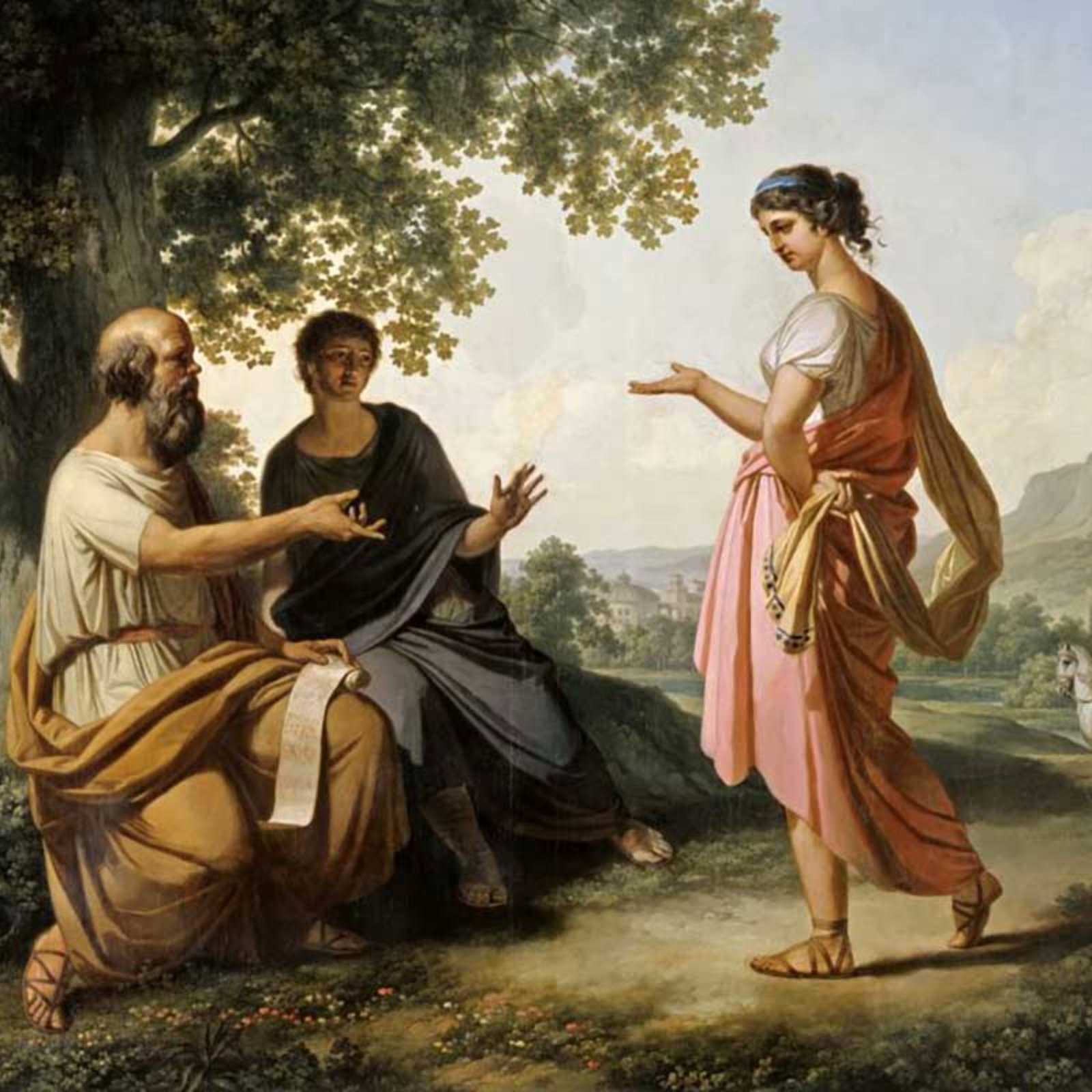
Dr. Kevin Kambo analyzes the classical concept of "homophrosune," or oneness of mind, as a model for integrating the masculine and feminine temperaments of courage and orderliness, providing his listeners with a picture of the sexes harmoniusly unified in the household and city. This lecture was given on September 22nd, 2026, at New York University. About the Speaker: Kevin M. Kambo is an assistant professor of philosophy at the University of Dallas in Irving, TX. Before completing his doctoral studies at the Catholic University of America, he earned a bachelor of science in Chemistry at Stanford University and worked as an intellectual property paralegal in Manhattan, NY. Dr. Kambo specialises in classical Greek philosophy, particularly on Platonic moral psychology and on the dramatic elements of Platonic dialogues. He also works on the reception of Platonic thought through history, from late antique (e.g., in Clement of Alexandria and Augustine of Hippo) through contemporary (e.g., W
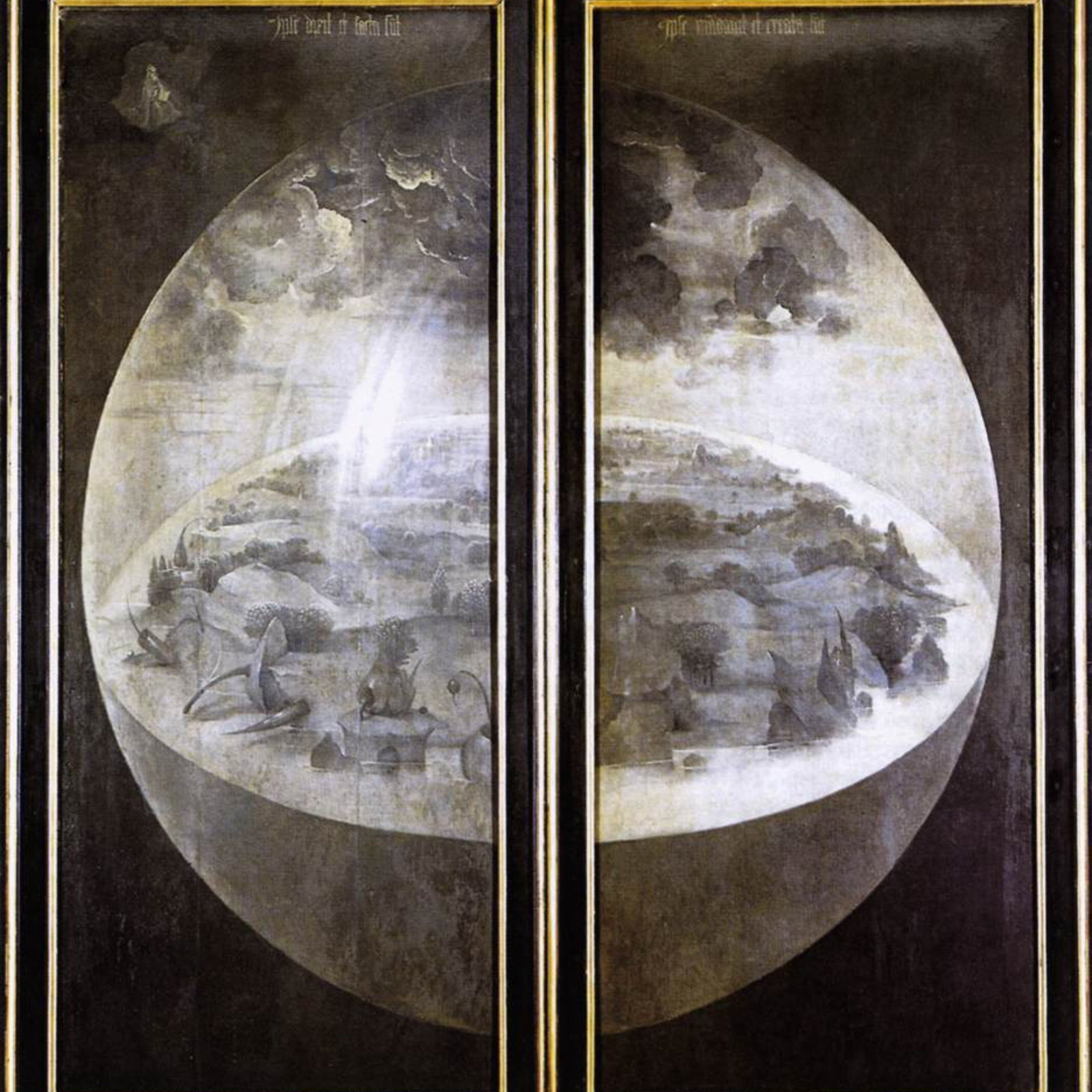
By analyzing the writings of Thomas Aquinas and other historical records, Fr. Timothy Bellamah, O.P. debunks the pseudo-controversy of the medieval "flat-earth" myth to demonstrate that the Church has long supported scientific inquiry. This lecture was given on September 20th, 2026, at Dominican House of Studies. About the Speaker: Fr. Bellamah was born and raised in Washington, D.C. He entered the Order of Preachers in 1991 and was ordained a priest in 1998. He studied at Wake Forest University (B.S., 1982), the Pontifical Faculty of the Immaculate Conception (M.Div. and S.T.B., 1997; S.T.L, 1999) and the Ecole Pratique des Hautes Etudes, Paris, (Ph.D., Section des sciences Religieuses, 2008). He has previously taught at Providence College in the Department of Theology and the Department of the Development of Western Civilization. From 2010 to 2018 he served as editor of the speculative review The Thomist and is a member of the Leonine Commission, a team of Dominican scholars responsi
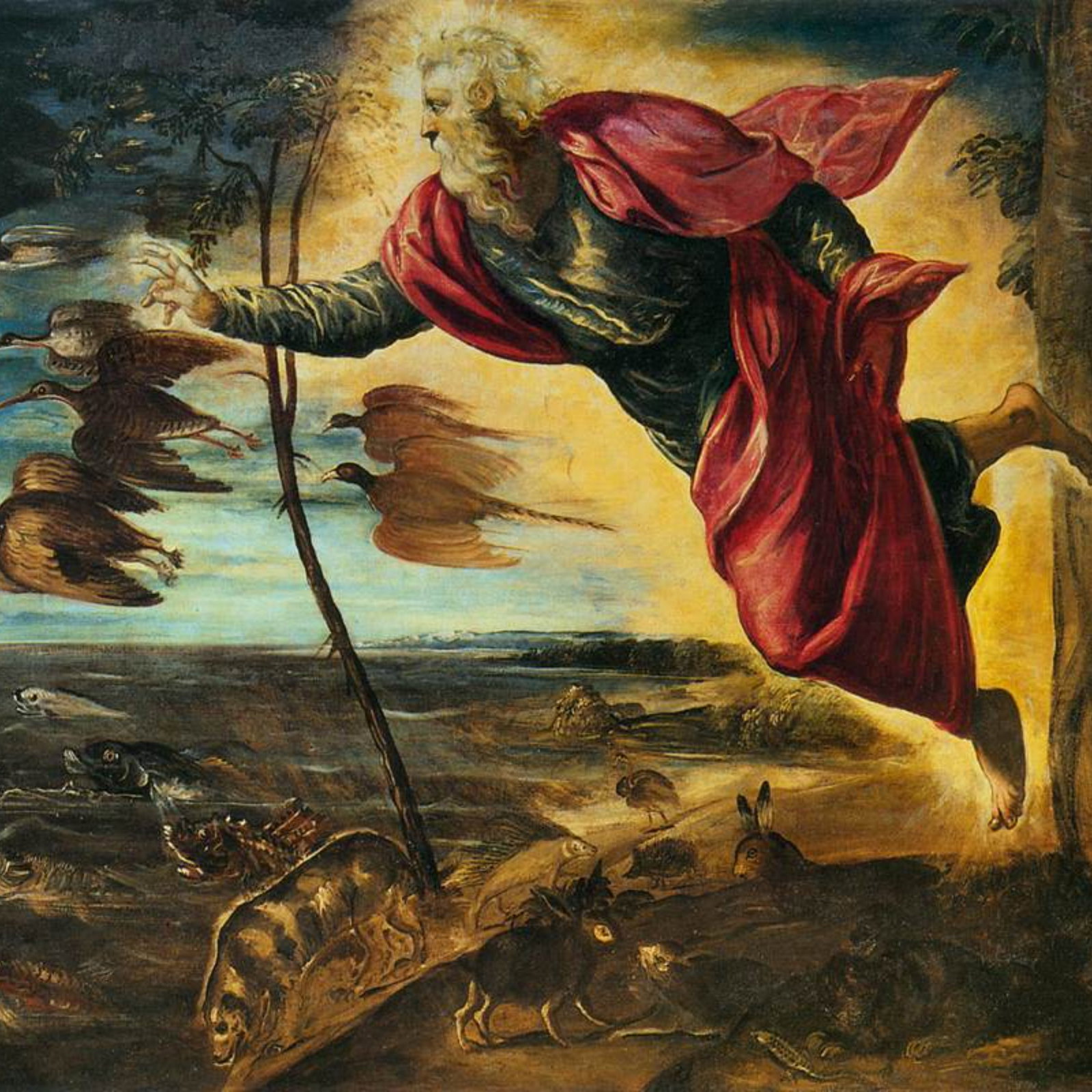
Utilizing St. Thomas Aquinas’s framework of primary and secondary causality, Fr. Timothy Bellamah, O.P. reconciles Catholic doctrine with evolutionary biology by explaining how God governs the world through the natural operations of created things. This lecture was given on September 19th, 2026, at Dominican House of Studies. About the Speaker: Fr. Bellamah was born and raised in Washington, D.C. He entered the Order of Preachers in 1991 and was ordained a priest in 1998. He studied at Wake Forest University (B.S., 1982), the Pontifical Faculty of the Immaculate Conception (M.Div. and S.T.B., 1997; S.T.L, 1999) and the Ecole Pratique des Hautes Etudes, Paris, (Ph.D., Section des sciences Religieuses, 2008). He has previously taught at Providence College in the Department of Theology and the Department of the Development of Western Civilization. From 2010 to 2018 he served as editor of the speculative review The Thomist and is a member of the Leonine Commission, a team of Dominican scho
Because the modern erosion of language has obscured our understanding of the good, Prof. Scott J. Roniger argues that we must recover an authentic, ecstatic definition of love grounded in community to overcome cultural despair. This lecture was given on September 18th, 2026, at Vanderbilt University. About the Speaker: Dr. Scott J. Roniger is Associate Professor of Philosophy at Loyola Marymount University in Los Angeles, where he directs the Lonergan Center for Catholic Faith and Culture. He held the Fr. Robert H. Taylor, SJ Chair in Philosophy from 2022-2024. Dr. Roniger earned a Baccalaureate in Sacred Theology (STB), summa cum laude, and a Masters of Sacred Theology, magna cum laude, from the Pontifical University of St. Thomas Aquinas in Rome. He then earned a Master of Arts in Philosophy from the University of Chicago and a Licentiate in Philosophy (Ph.L.), summa cum laude, from the Pontifical University of the Holy Cross in Rome. He earned his doctorate in philosophy, with disti
Dr. Lukas Opacic reframes modern political disagreement as a necessary component of our shared quest for the good, arguing that moral pluralism actually presupposes a robust, Thomistic participation in the common good. This lecture was given on September 17th, 2026, at University of Sydney. About the Speaker: Dr. Opacic teaches Federal Constitutional Law and Public Law. His research concerns the relationship between public law, political realism, and religion. His work challenges the view, common in academic thought, that ideal legal and political principles can be constructed outside of real-world political conditions. He also applies this theoretical framework to doctrinal questions in constitutional law as well as contemporary debates about religious liberty. His research also explores the way in which these questions are informed by theological concepts and history. Previously, Dr. Opacic lectured in Constitutional Law and Jurisprudence at Macquarie University. He has also presente
Challenging popular narratives of the Scientific Revolution and Catholic suppression, Dr. Nuno Castel-Branco demonstrates that early modern censorship focused on theology while allowing the scientific discoveries of figures like Steno and Galileo to flourish. This lecture was given on September 23rd, 2026, at University of North Carolina at Chapel Hill. About the Speaker: Nuno Castel-Branco is a Research Fellow at All Souls College, Oxford. He completed his Ph.D. in the history of science and technology at Johns Hopkins University in 2021 after earning a Bachelors and Masters in Physics at the University of Lisbon. After his PhD, he was a Research Fellow at Harvard University’s Villa I Tatti in Florence and at the Max Planck Institute for the History of Science in Berlin. He often speaks about the history of science to broad audiences in the United States and Europe. His first book, The Traveling Anatomist: Nicolaus Steno and the Intersection of Disciplines in Early Modern Science was
Prof. Christopher Mooney explores Saint John Henry Newman’s defense of conscience as the immediate apprehension of divine law, arguing that prioritizing this interior voice over social constructs is essential for moral freedom. This lecture was given on September 24th, 2026, at University of Louisiana at Lafayette. About the Speaker: Dr. Christopher Mooney is an assistant professor of theology at the Augustine Institute Graduate School in St. Louis, Missouri, where he teaches on Catholic theology, scriptural interpretation, and the Church Fathers. His teaching and research specialize in Augustine, the Fathers, and historical theology, and he is the author of Augustine's Theology of Justification by Faith (2026). A native of Connecticut, he studied at Georgetown and Yale Divinity School before receiving his PhD from the University of Notre Dame. He also serves as a theological representative for the USCCB's Catholic-Reformed dialogue. He lives next door to the Augustine Institute's camp
Prof. Michael Krom considers the question of the use of AI and autonomous drones, drawing upon just war theory with virtue ethics to protect human agency and moral responsibility in a new age of warfare. This lecture was given on September 24th, 2026, at Cornell University. About the Speaker: Michael Krom started reading Aquinas’s Summa Theologiae shortly after his conversion at the end of college. Upon learning about Flannery O’Connor’s “hillbilly Thomist” habit of reading Aquinas every night, he started studying two articles a day and completed the Summa while in graduate school at Emory University. As a professor at Saint Vincent College, he saw the urgent need for collegians and seminarians to receive a solid foundation in Aquinas’s philosophical theology. In 2020, he published Justice and Charity: An Introduction to Aquinas’s Moral, Economic, and Political Thought (Baker Academic Press), and teaches a Thomistic philosophy course each fall. In addition to continuing work on the mor
Applying Thomas Aquinas’s hierarchy of goods to the modern "looksmaxxing" trend, Prof. Catherine Peters critiques the elevation of physical attractiveness to an ultimate end, arguing that true human flourishing requires cultivating virtue rather than aesthetic optimization. This lecture was given on September 24th, 2026, at University of Michigan. About the Speaker: Catherine Peters is an associate professor of medieval philosophy at Loyola Marymount University in Los Angeles, California. Her work centers on issues of philosophical anthropology, metaphysics, and natural theology. She is passionate about translating medieval thought into modern terms and applying its insights to perennial questions such as “Who am I?” “What should I do?” and “Is there a God?” A frequent presenter in both the United States and Europe, her scholarship has been published in numerous volumes and journals, including The Thomist, New Blackfriars, National Catholic Bioethics Quarterly, The Journal of Islamic P
Dr. Peter Kreeft explores the profound parallels and radical distinctions between Socrates and Jesus, examining how these two figures fundamentally shaped the course of human history and the Catholic intellectual tradition. This lecture was given on September 21st, 2026, at Brown University. About the Speaker: Peter Kreeft, PhD, serves as Professor of Philosophy at Boston College, where he has taught since 1965. Born in Paterson, New Jersey, Dr. Kreeft completed his undergraduate studies at Calvin College in Grand Rapids, Michigan, before pursuing graduate studies at Fordham University in the Bronx, earning an MA (1961) and PhD (1965). Dr. Kreeft taught at Villanova University from 1962 to 1965, and has taught courses at numerous academic institutions, including Fordham University, The King's College (New York City), St. Charles Seminary, and Our Lady of Grace Seminary. Dr. Kreeft is a sought-after speaker who has taught, lectured, and written topics as varied as classical philosophy,
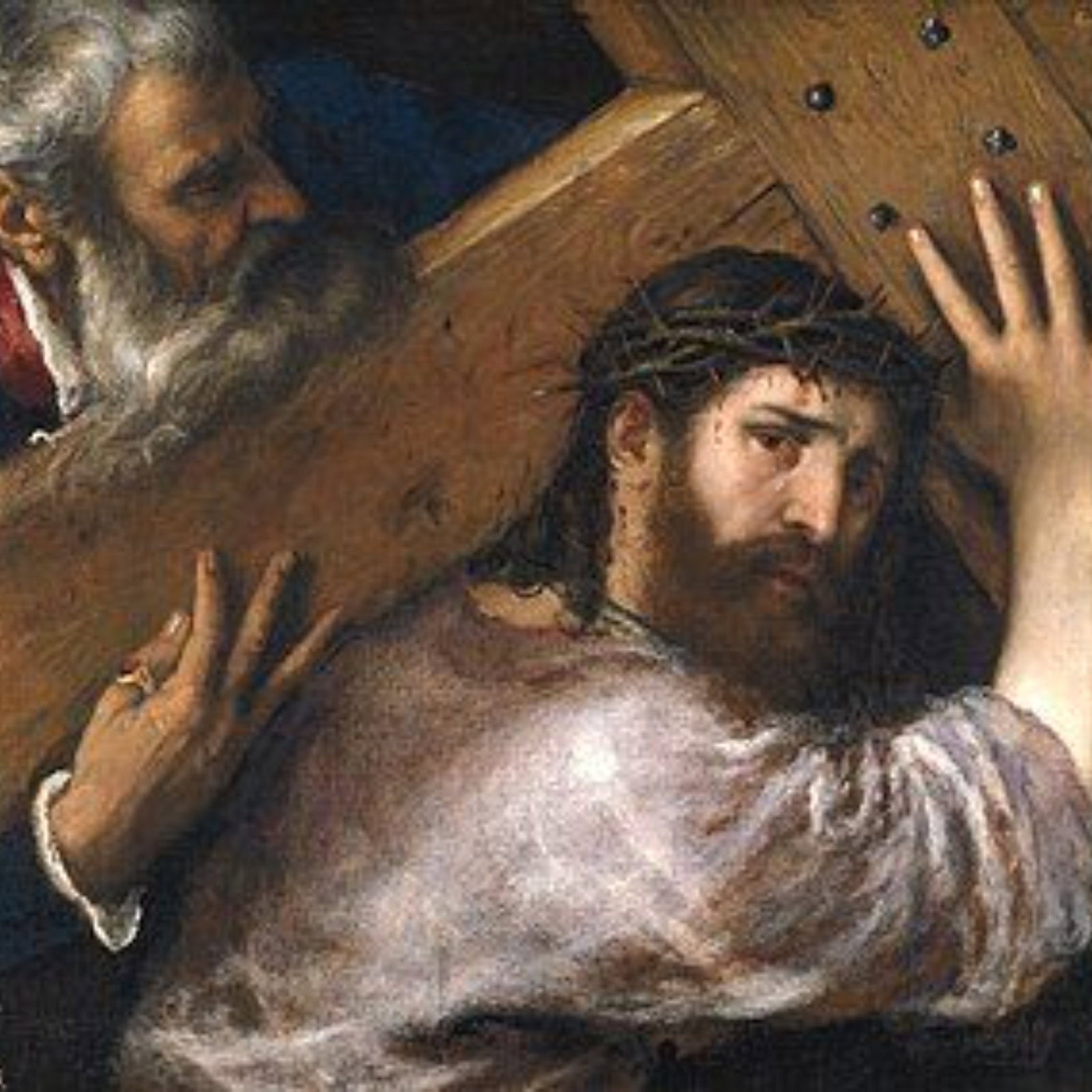
Emphasizing that suffering is not inherently good, Prof. Bruce Marshall explains how uniting our personal griefs to Christ's redemptive sacrifice during the Eucharist transforms pain into a path of divine intimacy and resurrection hope. This lecture was given on October 3rd, 2026, at Dominican House of Studies. About the Speaker: Bruce D. Marshall is Lehman Professor of Christian Doctrine at Southern Methodist University, and in 2023 he held the Aquinas Chair in the Thomistic Institute at the Angelicum in Rome. He is the author of Trinity and Truth and Christology in Conflict, and at present he is completing a book entitled The Primacy of Christ: Faith, Reason, and the Cross. Marshall has written extensively on the doctrines of the Trinity, the person and redemptive work of Christ, the Eucharist, the Catholic Church and non-Christian religions, and the relationship between faith and reason. He received his B.A. from Northwestern University and his Ph.D. from Yale University, and is a p
Fr. Isaac Augustine Morales, O.P. examines the Johannine theology of glory, arguing that the cross, as the definitive revelation of God's presence, calls believers to participate in its mystery through humble service and love. This lecture was given on October 3rd, 2026, at Dominican House of Studies. About the Speaker: Fr. Isaac Morales, O.P. is associate professor of theology at Providence College. Before joining the Dominican Order, he received an MTS in biblical studies from the University of Notre Dame and a PhD in New Testament from Duke University. He is the author of The Bible and Baptism: The Fountain of Salvation (Baker Academic Press) and a forthcoming book on eschatology titled The Life of the World to Come: Seeing God, Resurrection, and the Christian Hope. He also regularly teaches a course on the life and writings of C. S. Lewis. Keywords: Gospel Of John, Divinity, Glory, Theology Of The Cross, Revelation, Johannine Theology, Sacred Scripture, Mystical Theology
Highlighting structural parallels in the Gospel of Mark, Fr. Isaac Augustine Morales, O.P., demonstrates how Jesus redefines messianic identity and the title "Son of God" through self-giving love and solidarity with the suffering rather than worldly domination. This lecture was given on October 2nd, 2026, at Dominican House of Studies. About the Speaker: Fr. Isaac Morales, O.P. is associate professor of theology at Providence College. Before joining the Dominican Order, he received an MTS in biblical studies from the University of Notre Dame and a PhD in New Testament from Duke University. He is the author of The Bible and Baptism: The Fountain of Salvation (Baker Academic Press) and a forthcoming book on eschatology titled The Life of the World to Come: Seeing God, Resurrection, and the Christian Hope. He also regularly teaches a course on the life and writings of C. S. Lewis. Keywords: Gospel Of Mark, Theology Of The Cross, Son Of God, Bible, Biblical Scholarship, Passion Narrative,
Dr. Robert McNamara explains how the physical body is a revelatory book of our identity, arguing that we find true freedom and fulfillment by understanding our existence as a gift meant for communion. This lecture was given on September 29th, 2026, at Queen's University Belfast. About the Speaker: Dr. Robert McNamara is lecturer in philosophy and department head at St. Patrick’s Pontifical University, Ireland, adjunct professor of philosophy at Franciscan University of Steubenville, USA, while also tutoring periodically at the ITI Catholic University, Austria, and the Maryvale Institute, England. Robert is an associate series editor of Edith Stein Studies, an associate scholar of the Hildebrand Project, a research fellow at the Institute for the Study of Man and Woman, and a founding member of the Aquinas Institute of Ireland (currently suspended). Having studied physics, computing, philosophy, and theology, Robert brings a multidisciplinary approach to his work while exploring anthrop