Listen through the publisher, then discuss the episode here or arrange an in-person Roundtable. Your city determines where to meet.
Roundtables are designed for groups of four, with a shared subject and room for everyone to speak. Come for discussion, with no dating expectation.
View full lesson: http://ed.ted.com/lessons/five-fingers-of-evolution How can a "thumbs up" sign help us remember five processes that impact evolution? The story of the Five Fingers of Evolution gives us a clever way of understanding change in gene pools over time. Lesson by Paul Andersen, animation by Alan Foreman.
Episode information is provided by the publisher. Listening takes place on the publisher’s service.
When you’re feeling a little blue, eating to feel better can be an appealing proposition. But the reality is we often turn to junk food or sugary treats that are high in calories and packed with salt or saturated fats. Of course, our mood can be impacted by a number of factors and there’s no magic fix that will instantly make us feel better. But there are actually types of food out there that have been proven to improve brain health and thereby beat mood disorders. Which foods are proven to improve brain health? Avocados are rich in Omega 3, aren’t they? Don’t bananas also contain tryptophan? In under 3 minutes, we answer your questions! To listen to the last episodes, you can click here: Do tongue scrapers actually help with bad breath? (https://originals.bababam.com/do-you-really-know/202406140300-do-tongue-scrapers-actually-help-bad-breath) Do our brains really tell the whole story about us? (https://originals.bababam.com/do-you-really-know/202406130300-do-our-brains-really-tell-who
Théo Mogenet of Bull Bitcoin joins Marty to unpack The Cost of Lies, a manifesto comparing the fiat system to a Chernobyl reactor that was never supposed to explode. They walk through the debt trap math behind why higher interest rates now feed deficits and inflation, the five ways governments try to escape, and why financial repression and capital controls are the likeliest path. Théo zooms in on France's fiscal crisis, Japan's leverage over foreign bond markets, and why self-custodied Bitcoin is the individual's way out. Théo on X: https://x.com/theo_mog Bull Bitcoin: https://www.bullbitcoin.com/ STACK SATS hat: https://tftcmerch.io/ Our newsletter: https://www.tftc.io/bitcoin-brief/ Discord: https://discord.gg/yHGkvYxdqT Opportunity Cost Extension: https://www.opportunitycost.app/ Shoutout to our sponsors: Block: Terms apply. Bitcoin services by Block, Inc. See the Bitcoin disclosures at cash.app/legal/podcast. Aven CrowdHealth Simple Mining Salt of the Earth: Join the TFTC Movement
Happy Pot Luck Saturday! We talk Cary Grant, David Niven, Loretta Young, an angel with questionable intentions, and a Christmas movie that takes four nights to finish. We cover the 1947 classic The Bishop’s Wife and try to figure out how a film with five Oscar nominations earns only one and a half candy canes. We talk Cary Grant’s charm, David Niven’s stiff bishop, a wealthy widow who just wants to build a cathedral, and an angel who seems more interested in the bishop’s wife than saving Christmas. We talk Hollywood casting mistakes, Billy Wilder’s rewrites, and on-set tensions. We talk endless ice skating, glowing cathedrals, magically refilling bottles, self-decorating Christmas trees, and familiar faces from It’s a Wonderful Life. We talk Siskel and Ebert, critics who loved the wrong movies, and Kev rewriting the entire story into something we might actually want to watch. Plus, Whitney Houston and Denzel Washington in The Preacher’s Wife, Alastair Sim versus George C. Scott as Scro
Living that Post-Labor Lifestyle - Lessons and Insights Episode release date: 21 Nov 2024 Core Ideas: Metamodernism: Narratives and emergence view of reality - Reduce suffering - Increase prosperity - Increase understanding mantra: Seek knowledge. DISCLAIMER: This is a community-driven show. -----------------------------
At a concert, most listeners hear the melody. A trained singer hears the breath control that carries a difficult phrase. At a football match, the crowd follows the ball while a coach notices the defender who quietly closes off an attack. Knowing more changes who seems extraordinary. Audiences have traditionally borrowed that knowledge from commentators, critics, and friends, whose explanations help determine which achievements receive applause and which pass unnoticed. AI could make that guidance a routine part of watching almost anything. Tools already track players’ movements, analyze musical pitch and timing, and explain technical processes. As those abilities become integrated into broadcasts and personal assistants, viewers could ask what made a particular passage difficult or why a player chose one route over another. Instead of receiving occasional commentary, someone could explore an entire performance with detailed explanations tailored to their questions. The consequential sh
Support Stoicism Philosophy on Ko-fi Do you enjoy our content? Help us keep sharing Stoic wisdom by supporting us on Ko-fi. Click here to support us (https://ko-fi.com/stoicpodcast) Thank you for being a key part of Stoicism Philosophy. Your generosity keeps Stoic philosophy alive! HOW TO GET WHAT YOU WANT does not begin with wanting more, but with learning to master your mind, your impulses, and your actions. In this video, you will discover 8 Stoic secrets for pursuing your goals with discipline, calm, and clarity, without depending on luck or letting yourself be carried away by anxiety. Stoicism teaches that true power lies in controlling what depends on you: your decisions, your character, your focus, and your response to obstacles. Through principles inspired by the wisdom of Marcus Aurelius, Seneca, and Epictetus, you will learn how to turn desire into action, strengthen your self-control, maintain inner peace, and keep moving forward even when circumstances are not perfect. If y
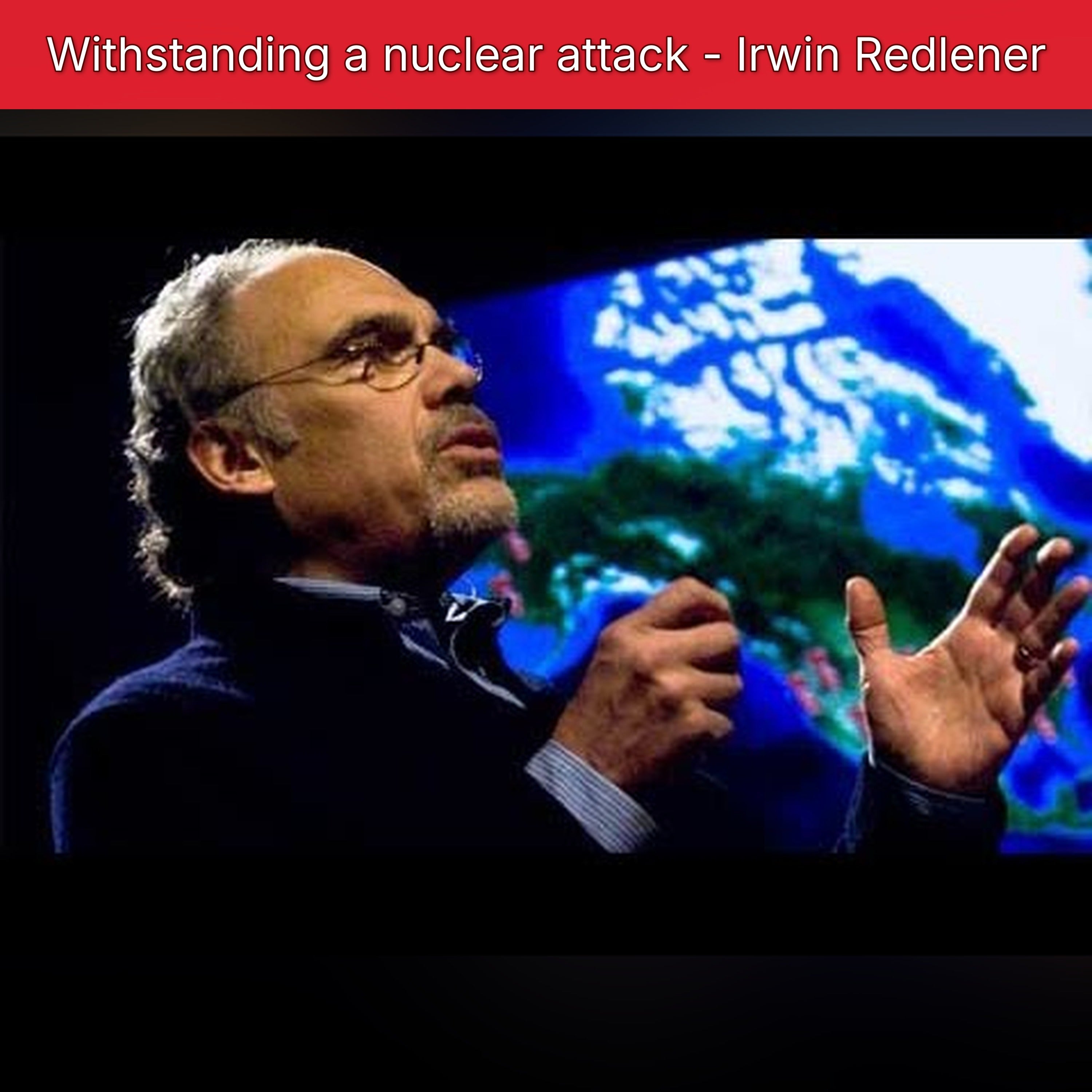
View full lesson: http://ed.ted.com/lessons/surviving-a-nuclear-attack-irwin-redlener The face of nuclear terror has changed since the Cold War, but disaster-medicine expert Irwin Redlener reminds us the threat is still real. He looks at some of history's farcical countermeasures and offers practical advice on how to survive an attack. Talk by Irwin Redlener.
Explore what makes polio so dangerous, what is causing the 21st century resurgence of cases, and how we can eradicate the disease. -- In 1952, polio was everywhere: killing or paralyzing roughly half a million people annually. Yet just 10 years later, paralytic polio cases in the US dropped by 96% and we were on track to get rid of polio for good. But in recent years, the virus started striking back. So, what’s behind these recent spikes? Explore the dangers of poliovirus and the possibility of eradicating this deadly disease. Directed by Anton Bogaty. This video made possible in collaboration with Gates Ventures Learn more about how TED-Ed partnerships work: https://bit.ly/TEDEdPartner A special thanks to Ananda Bandyopadhyay, Amber Zeddies, and Kathleen O'Reilly who provided information and insights for the development of this video. Support Our Non-Profit Mission ---------------------------------------------- Support us on Patreon: http://bit.ly/TEDEdPatreon Check out our merch: htt
Todd Humphreys forecasts the near-future of geolocation when millimeter-accurate GPS "dots" will enable you to find pin-point locations, index-search your physical possessions ... or to track people without their knowledge. And the response to the sinister side of this technology may have unintended consequences of its own. (Filmed at TEDxAustin.) Uploaded 26-06-13 Talk by Todd Humphreys.
Private companies delivering public services should face the same transparency duties as public agencies.
Share your view, then see how readers voted. No sign-in required. This poll is shared across stories.
Do you agree or disagree?
Common Quandary
A Common Quandary to discuss
Another conversation to explore, separate from this news story.
The luxury hotel charges too much and will never miss one robe. Do you pack it?
After an expensive hotel stay, you notice a plush robe without a price tag or warning. The room cost more than expected, several promised amenities were unavailable, and you convince yourself the robe is probably included.
When does feeling overcharged become permission to compensate yourself?