Foxconn Makes 46% of the World's Electronics. Nobody Knows the Brand
29 min
Listen through the publisher, then discuss the episode here or arrange an in-person Roundtable. Your city determines where to meet.
Roundtables are designed for groups of four, with a shared subject and room for everyone to speak. Come for discussion, with no dating expectation.
Growth Newsletter: https://levelingup.beehiiv.com/subscribe Need marketing help? Visit: https://www.singlegrain.com/ and https://npdigital.com/ Want to recruit great marketers? Find them here: https://marketingschool.io/hire Eric calls in from Taiwan, where he is visiting some of the largest manufacturers in the world. Foxconn makes 46% of the world's electronics, including the iPhone and the PS5, yet many people do not know it is the same company as Hon Hai. Eric and Neil debate whether branding matters when your ideal customers already know you, then Eric shares stories from the YPO India members on the trip, from the founder who moved into the slums to win a deal to why they all seem to own palaces. In the second half, Eric shows photos and charts from inside TSMC and Foxconn: a chip growth forecast that jumped from 12% to 28%, AI spending compared with railroads and the Apollo program, and what billion-dollar founders in Taiwan do differently. Nothing here is financial advice. A grounded look at how the biggest companies you never hear about are built. Key takeaways ◾You only need to be known by the customers who matter ◾Big outcomes often take years of unglamorous work ◾Use AI for problems you could not solve before Chapters 00:00 Calling in from Taiwan 00:34 Foxconn makes 46% of the world's electronics 01:11 Why Taiwanese companies struggle with branding 01:43 TSMC and the need for leaders like Jensen 02:32 Does branding matter in B2B? 03:06 Being known to the customers who matter 04:25 Two Americans in the room 05:11 What it costs to join YPO Mumbai 05:46 The man who moved into the slums 06:49 Why he wanted into that chapter 07:35 Elon's Airstream at SpaceX 09:02 Why the homes are so big 09:44 Rich and still humble 10:17 Thinking too small about AI 10:52 AI capex versus the Manhattan Project 11:37 Photos from TSMC and Foxconn 12:24 The chip growth forecast jumps to 28% 13:01 NVIDIA's backlog and earnings 14:40 Young Jensen at the TSMC Museum 15:09 Marketing as a design service 16:07 The money is in boring B2B 17:24 A chip CEO on why chasing money loses 18:53 AI spending versus railroads and Apollo 20:41 Data centers are almost sold out 21:28 A lesson in charisma over hot pot 22:21 Neil's five o'clock rule 23:28 What Eric would change about his business 24:59 Morris Chang started TSMC at 63 25:48 Why chip founders want things to slow down 𝗔𝗕𝗢𝗨𝗧 𝗧𝗛𝗘 𝗖𝗛𝗔𝗡𝗡𝗘𝗟 ️ Learn More About the Hosts Neil Patel: https://www.youtube.com/@neilpatel Free Resources Ubersuggest: https://www.ubersuggest.com/ Answer The Public: https://www.answerthepublic.com/
Episode information is provided by the publisher. Listening takes place on the publisher’s service.
Walk through any room of adults and you will hear it. The dreams. The plans. The businesses they are going to start, the books they are going to write, the bodies they are going to have. The talking is constant, the conviction is real, the wanting is genuine. Uploaded 29-06-26 Here is the truth: most of those people will never build any of it. Not because the dreams were bad. Not because they did not want it. They will not build the life they talk about because they have confused the talking with the building — and the confusion has been running so long they can no longer tell the difference. There is a specific gap between the version of you who describes the life you want and the version who actually builds it. The gap is not desire; both versions want it. It is not intelligence; both are smart. It is something quieter, less glamorous, less talked about — and almost nobody knows where the gap actually lives, which is why almost nobody closes it. This seminar walks through 5 things yo
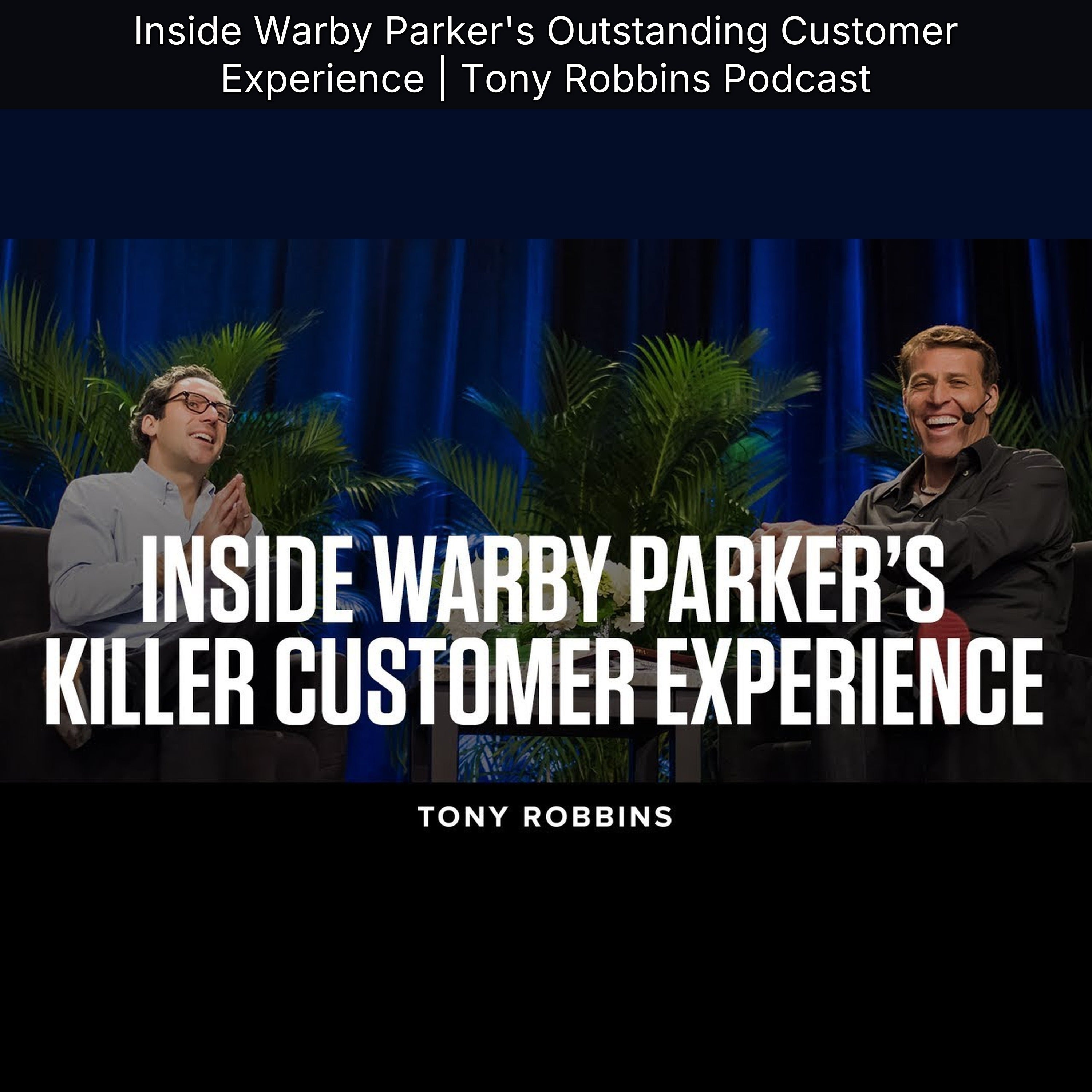
Neil Blumenthal was one of the executives who launched the successful eyewear company, Warby Parker, in 2010. The company has been a massive success, in large part because their business model allows them to offer high quality eyewear at affordable prices. This concept attracted people, and the brand was able to provide something else that would quickly help their brand build an internationally acclaimed reputation — an incredible customer experience. At the core of the Warby Parker success story is the brand’s commitment to creating a masterful customer service experience. In this episode of the Tony Robbins podcast, you’ll hear a detailed account from Neil Blumenthal about the customer-centric strategy and foresight that was critical in establishing Warby Parker as a billion-dollar business. Neil Blumenthal and his cofounders found that glasses were ridiculously overpriced. After a friend mistakenly left a pair of $700 glasses on an airplane, they decided there was a gap in the marke
What if the way to build a world-changing company is to stop chasing money altogether? In this episode of From Underdog to Entrepreneur, Pat Miller sits down with Naveen Jain, founder and CEO of Viome, a gut microbiome and personalized nutrition company, and co-founder and executive chairman of Moon Express. Naveen previously founded InfoSpace, Intelius, and Talentwise, and is the author of Moonshots: Creating a World of Abundance and the new book Counterintuitive: Unconventional Principles for Success in Life and Business. Naveen opens with gratitude for the opportunities he found as an immigrant in America, then shares the framework he uses before starting any venture: ask "Why this? Why now? Why me?" He explains how Moon Express became the first company to get permission to leave Earth orbit, helped change U.S. law so private companies can own what they bring back from space, and became one of six companies to win a NASA contract. Then his father was diagnosed with stage four pancre
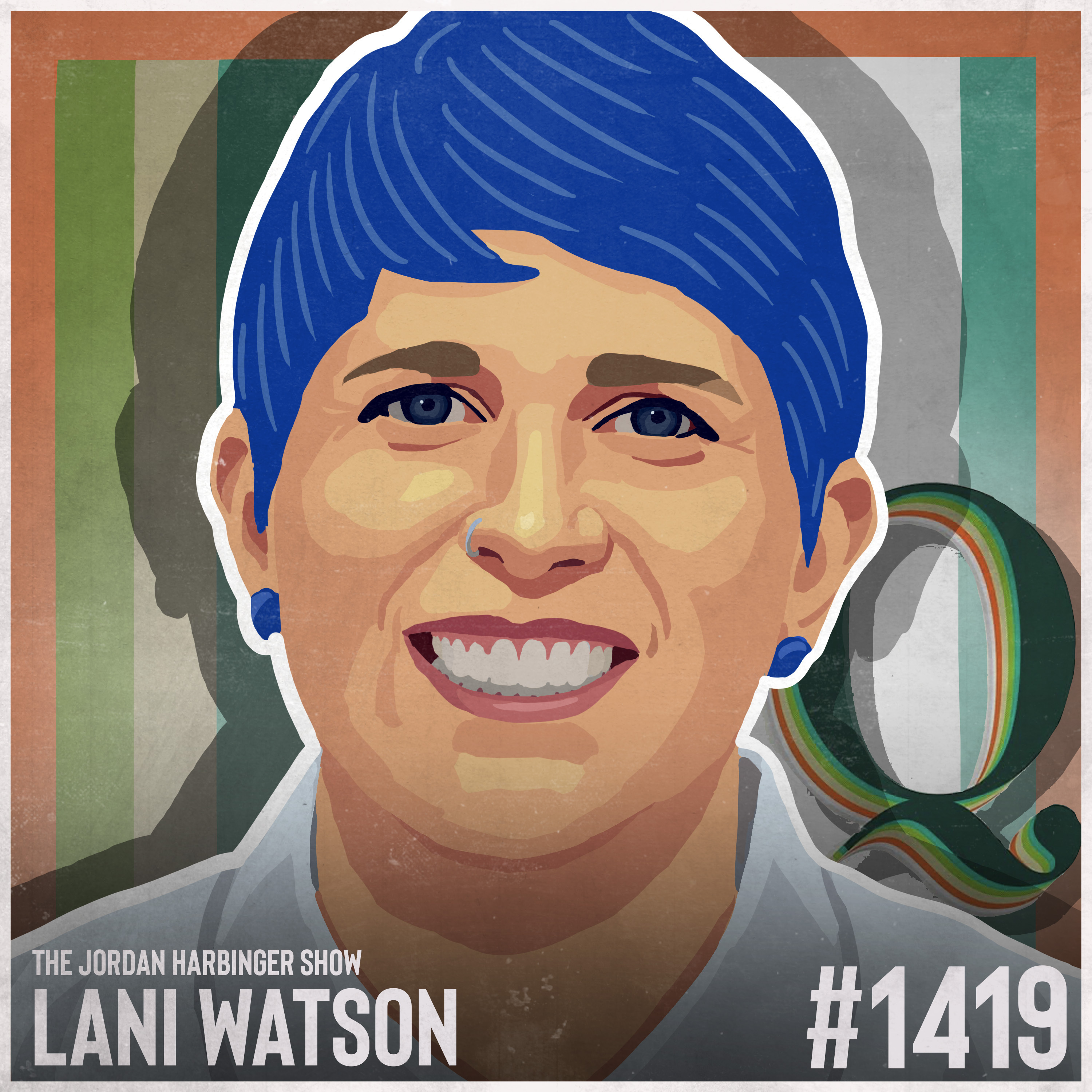
Kids ask about 107 questions an hour. Then school happens. Philosopher Lani Watson explains what we lose when we stop asking, and how to get it back. Full show notes and resources can be found here: jordanharbinger.com/1419 (https://jordanharbinger.com/1419) What We Discuss with Lani Watson: How a recurring question after giving birth — "Should it hurt this much?" — kept Lani's attention on her worsening pain and pushed clinicians to respond, revealing a severe ileus needing urgent treatment that simply saying "I'm in pain" might have left overlooked. Why there's no such thing as "just asking questions" — every question involves choices about what, who, when, and how to ask, so loaded headlines and rhetorical what-ifs can steer attention and smuggle in assumptions while dodging accountability. Why kids who ask around 107 questions an hour grow into adults afraid of sounding stupid: schools reward answering over asking, but the Right Question Institute's question formulation technique a
What could a hacker find about you in just 20 minutes? Old passwords? Phone number? Childhood home? Ethical hacker Ryan Montgomery aka 0day reveals how exposed your personal data already is, and the simple moves that protect your online privacy. Ryan Montgomery is an ethical hacker and cybersecurity expert who overcame addiction and jail as a teenager to become a go-to expert helping law enforcement unmask online predators. He is the founder of the cybersecurity company Pentester and works with the Sentinel Foundation on child-crime and counter-trafficking investigations. His tools are built on the same technology he uses to track predators, and they show ordinary people exactly what’s exposed about them online and then remove it. In this episode, he explains: ■ The Reverse Password Trap: One unique old password leaked in a data breach lets hackers trace every other email account you’ve ever tied to it. ■ The Invisible Footprint: Even people who have never used a computer are exposed,
How to kill your current self My private network for entrepreneurs ⚜ - http://newelite.pro/search-for-freedomJoin the Icon Blueprint personal brand academy waitlist - https://t.me/+AwtcD_v7V4xiNGE1My instagram - https://www.instagram.com/jackhopfitness?igsh=aGhqMm1iNHg2eXg5&utm_source=qre Episodes created by entrepreneur and masculinity ace Jack Hopkins for his youtube channel, this podcast is dedicated to helping men rediscover their inner strength and confidence in a society that often promotes feminine values over masculine ones.Follow the podcast for valuable insights, inspiring stories, and practical advice on how to embrace your masculinity, build your confidence, and achieve your goals. Whether you're looking to improve your relationships, advance your entrepreneurial career, or simply feel more confident and capable, Jack has valuable insights that can help you achieve your goals.So, if you're ready to reclaim your masculinity and awaken the beast that lives inside you, follow
Growth Newsletter: https://levelingup.beehiiv.com/subscribe Need marketing help? Visit: https://www.singlegrain.com/ and https://npdigital.com/ Want to recruit great marketers? Find them here: https://marketingschool.io/hire Eric breaks down a YouTube thumbnail that took a 15,000 subscriber channel to 1.1 million views, and the idea behind it: cultural hacking. He and Neil cover the LeBron James likeness lawsuit, who should own security at your company, and Kevin Rose's open-source alternative to DocuSign. Then they show how to reverse engineer a funnel and test marketing campaigns on synthetic traffic before real visitors see them, why it pays to be unreasonably demanding of your AI tools, and what reading competitor ad libraries every day can reveal, including $7 million of wasted ad spend. A grounded look at the tools and thinking that are working right now. Key takeaways ◾Pair a trusted name with a person in the news for your thumbnail ◾Test campaigns on synthetic traffic before sp
Growth Newsletter: https://levelingup.beehiiv.com/subscribe Need marketing help? Visit: https://www.singlegrain.com/ and https://npdigital.com/ Want to recruit great marketers? Find them here: https://marketingschool.io/hire Neil is getting more calls from companies that want to optimize for AI agents. He explains why the answer is to be everywhere agents look, and why Google now works like a store shelf instead of the Yellow Pages. Eric shares how his team gives away basic workflows so agents can discover them, and why he expects agents to outnumber humans by more than 10,000 to 1. They also cover what TSMC's focus teaches about expertise, a simple incrementality test that shows what your ads really drive, and why AI amplifies both smart and poor decisions. The episode ends with the Mike Tyson documentary, car dealerships, and Neil's YPO interview. A grounded look at how to stay visible as agents take over the web. Key takeaways ◾Be everywhere agents look: search, social, reviews and
Growth Newsletter: https://levelingup.beehiiv.com/subscribe Need marketing help? Visit: https://www.singlegrain.com/ and https://npdigital.com/ Want to recruit great marketers? Find them here: https://marketingschool.io/hire Jensen Huang has resigned as NVIDIA CEO, and Eric is in Taiwan this week asking the chip executives who supply NVIDIA what happens next. Their answer: he needs to come back, because deals like the one with TSMC were done on a handshake. Eric and Neil look at the New York Times report on Taiwan's reaction, the employee posts with millions of views, Polymarket's odds and a $255 million lawsuit over a social media post. Then Eric takes you inside Foxconn, which makes 46% of the world's electronics, and the YPO India members on the trip. Neil explains how to get picked by AI agents and a simple test that shows what your ads really drive, and they finish with cultural hacking for YouTube thumbnails and charts from TSMC. Nothing here is financial advice. A grounded look
School policy should consider all families rather than follow the loudest parental voices.
Share your view, then see how readers voted. No sign-in required. This poll is shared across stories.
Do you agree or disagree?
Common Quandary
A Common Quandary to discuss
Another conversation to explore, separate from this news story.
You scratched a borrowed heirloom and repaired it perfectly. Do you confess?
You borrow a family heirloom for an event and accidentally leave a small scratch. A careful repair makes it almost invisible, and its owner happily accepts it back without noticing anything.
What is confession for when the harm has already been repaired?