Friday Focus: Iran’s Gains and America’s Political Reckoning
29 min
Listen through the publisher, then discuss the episode here or arrange an in-person Roundtable. Your city determines where to meet.
Roundtables are designed for groups of four, with a shared subject and room for everyone to speak. Come for discussion, with no dating expectation.
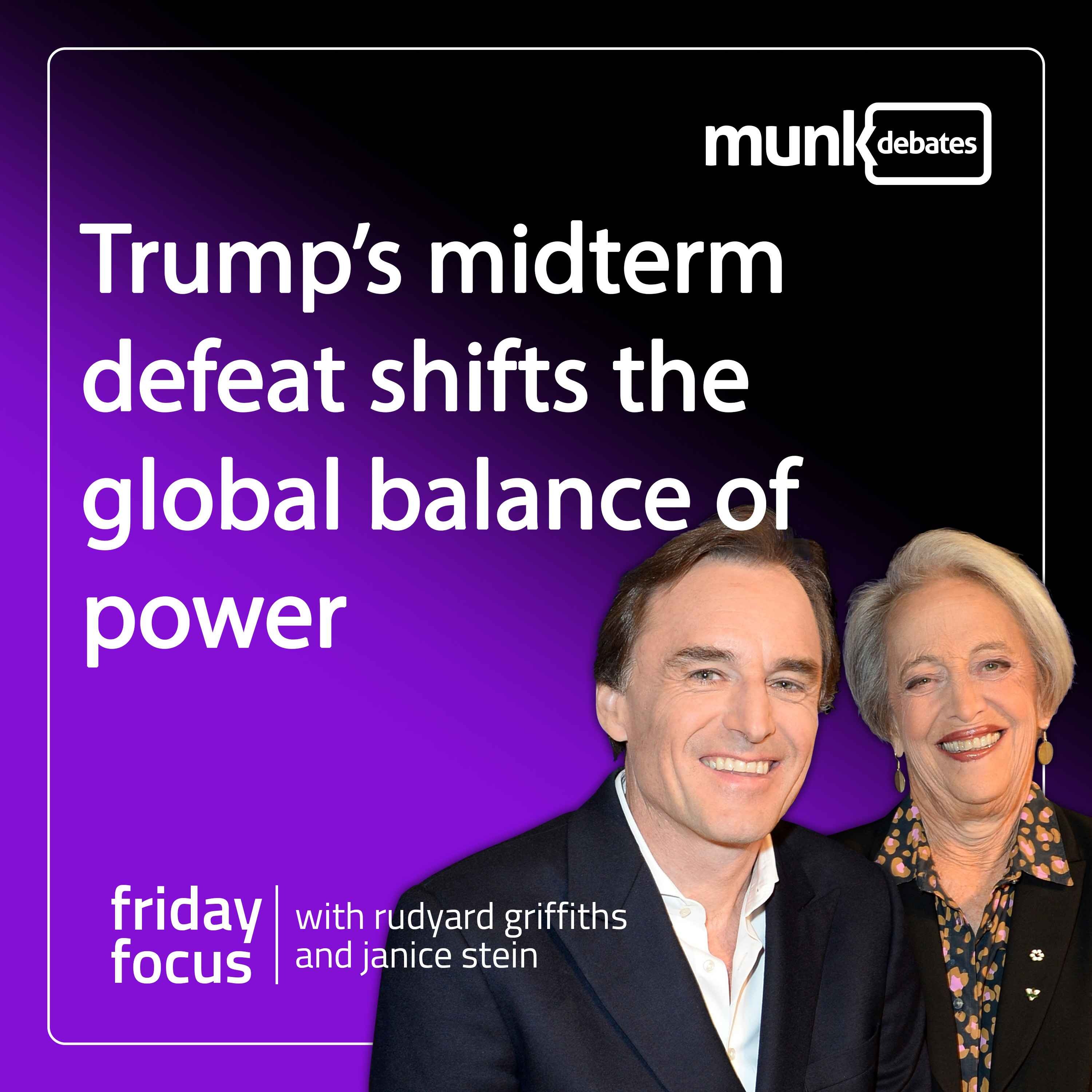
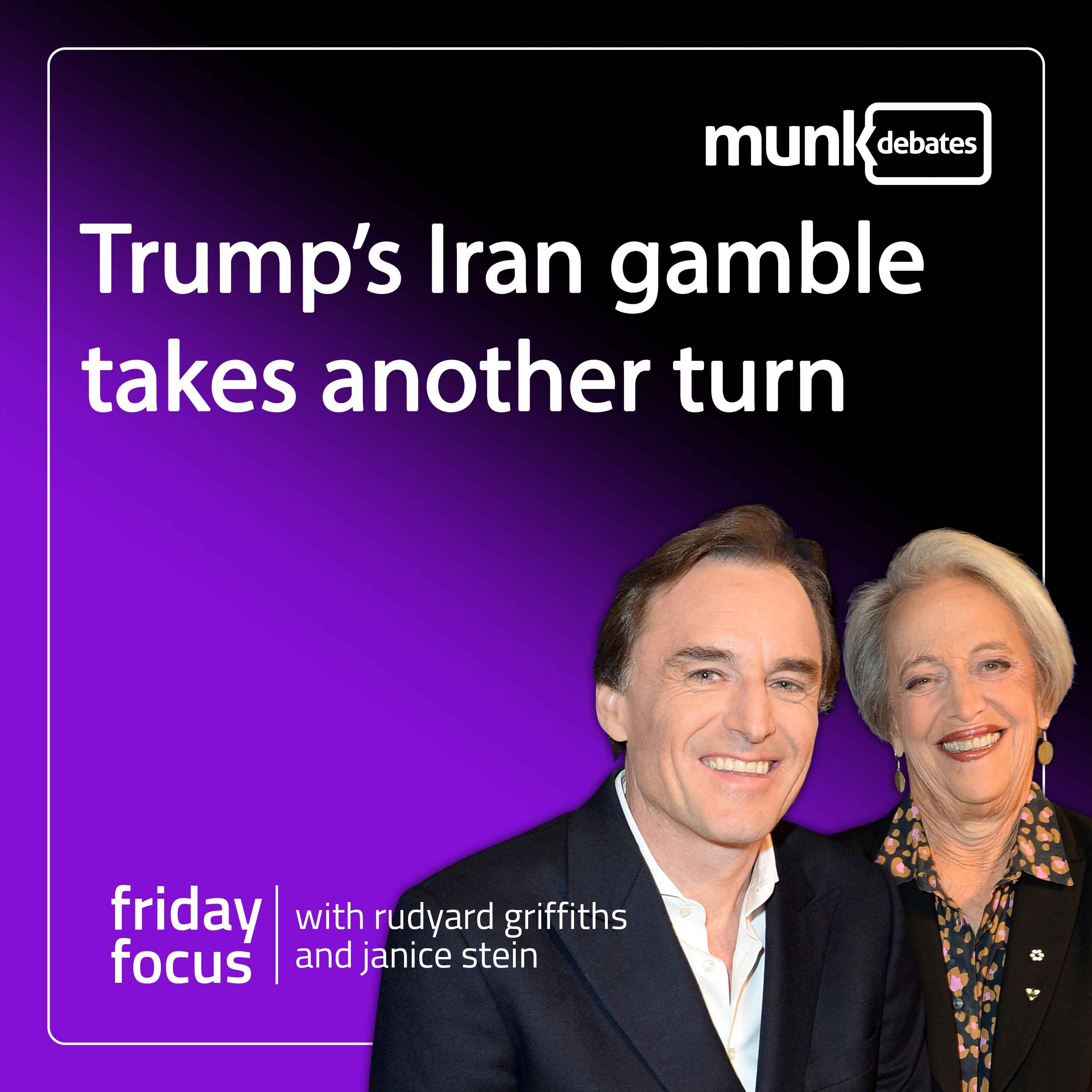
Rudyard and Janice examine the midterm results through the lens of the Iran conflict. Tehran may be the biggest beneficiary: a wounded U.S. president, a vice-president openly citing the war as a factor in the Republicans’ defeat, and Benjamin Netanyahu's political prospects diminishing Israel. If the Iranian regime can survive the conflict, it may emerge into a dramatically altered strategic environment. The next two weeks could prove decisive. What will Iran’s gains - as a relatively weak military power - signal to China and Russia about American power? In the second half of the show, Rudyard and Janice turn to what the midterms mean for Canada. A more moderate United States would be a welcome development, and Tuesday’s results may open the door to a return to political normalcy and a retreat from chaos. But Canada must also draw its own lessons: it needs to invest in its strength and resilience to protect itself against the next Trump-like threat. Go to www.munkdebates.com to sign up. Hosted on Acast.
Episode information is provided by the publisher. Listening takes place on the publisher’s service.
One week after the U.S. midterm elections, join Valérie Beaudoin, one of Canada's most respected commentators on U.S. politics, for a discussion on how Canadian policymakers and officials are digesting the results in Washington. From the new balance of power in Congress to the potential implications for Canada-U.S. relations, trade economic growth, and cross-border policy priorities, we'll explore what the election outcome could mean for Canada in the months ahead. Recorded on November 10, 2026. -- Optique canadienne sur les élections américaines de mi-mandat – Valérie Beaudoin Pour une version avec des sous-titres français, veuillez consulter Une semaine après les élections de mi-mandat aux États-Unis, Valérie Beaudoin, l’une des commentatrices de la politique américaine les plus respectées du Canada, discute des façons dont les décideurs canadiens et Ottawa ont réagi aux résultats à Washington. Du nouvel équilibre des pouvoirs au Congrès aux répercussions possibles sur les relations
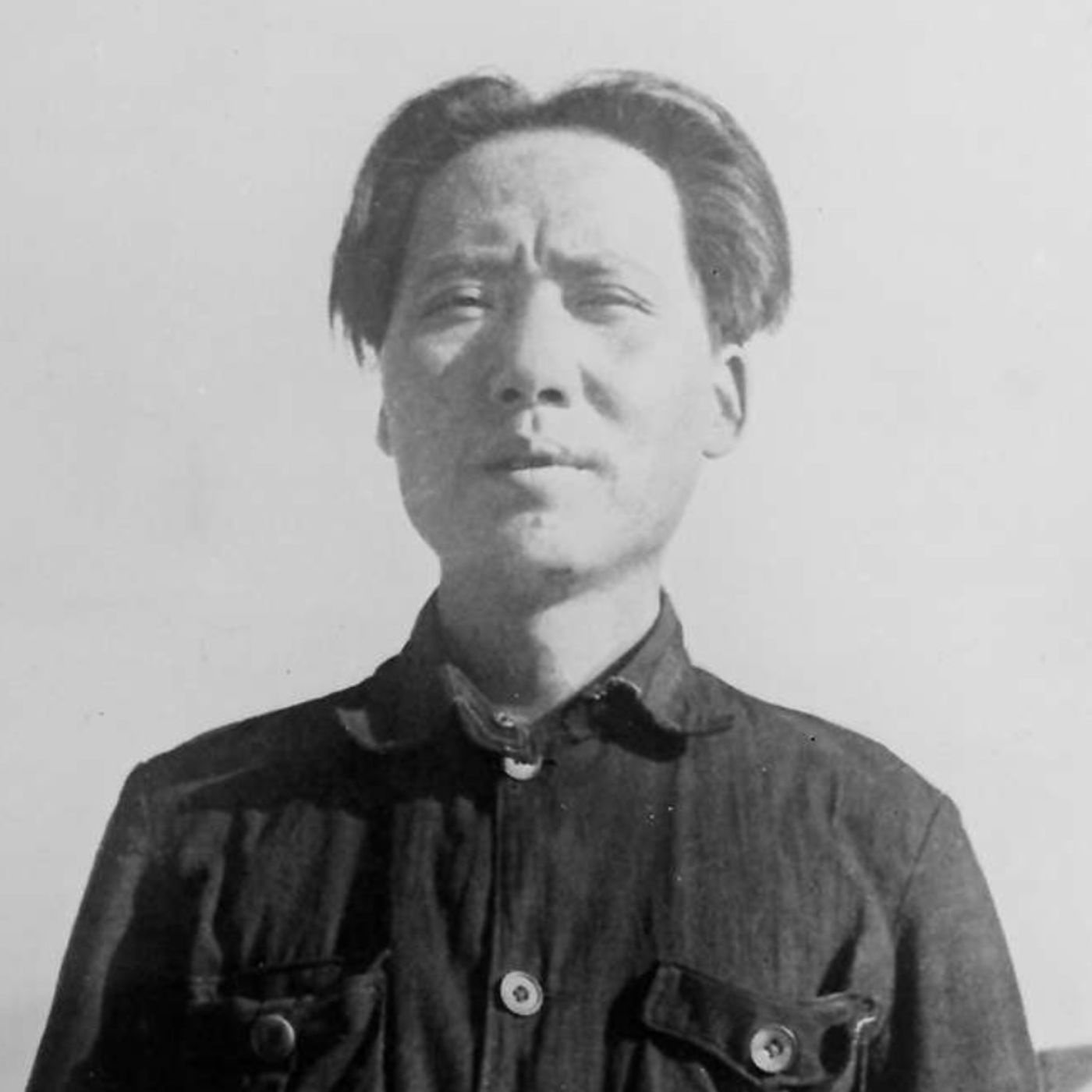
1937 MAO Princelings in Power: The Contrasting Political Legacies of Bo Xilai and Xi Jinping — Part Two Tania Branigan, author of Red Memory: The Afterlives of China’s Cultural Revolution, explains how the princelings Bo Xilai and Xi Jinping endured family persecution and rural labor during the Cultural Revolution. She contrasts Bo’s flamboyant rise and murder-scandal downfall in Chongqing with Xi’s consolidation of power through revived revolutionary nostalgia. (5)V
In this Jim Rohn Motivation video, we unpack the real meaning of resilience—not as something you're born with, but something you build. It’s not about pretending life is easy. It’s about developing the mindset, discipline, and strength to keep going when everything in you says stop. Key Topics From This Motivational Video: Resilience as a skill, not a trait Taking full ownership of your life and mindset Reframing adversity into growth opportunities Emotional regulation and grounded self-talk Endurance, grit, and the decision to grow daily This Jim Rohn Motivational video reminds us that resilience doesn’t come from waiting for life to calm down—it comes from training your mind to rise in the middle of the chaos. It’s a mindset built on consistent ownership, reframed challenges, and the ability to lead yourself under pressure. Strength isn’t given. It’s earned—through the unseen decisions you make when no one is watching. This Jim Rohn Motivational Video Is Perfect For: Anyone feeling o
Journalist Simon Moya-Smith and Indigenous studies professor Julie Francella join John Fugelsang for a wide-ranging conversation on Indigenous rights, environmental protections, media representation, and the cost of speaking out. They explain how the proposed American Affordability and Jobs Act could weaken environmental reviews, tribal consultation, and protections for sacred sites—and why pipelines, data centers, and other development projects can bring serious risks to Indigenous communities, including threats to water, land, and safety. They also examine racist stereotypes in political and media coverage, from a cartoon targeting Deb Haaland to a U.S. attorney’s letter mocking Senator Elizabeth Warren with harmful tropes. Simon and Julie discuss why these depictions persist, how underrepresentation in newsrooms contributes to the problem, and why precise language and Indigenous voices matter. Along the way, callers share perspectives on community activism, Native traditions, and th
When you’re looking through the lens of depression, how do you see the world? How do you react to those around you? And how do you handle obstacles that come your way? Uploaded 11-09-19 What about when you’re in a state of peace? How do you act? How do you react? Do you sweat the small stuff, or do you just shake it off? Does adversity rattle you, or are you able to approach challenges with confidence and ease? The fact is that you will have a very different experience in life when you are in a peaceful state, rather than a state of suffering. Your thoughts, actions and reactions – these stem directly from where you find yourself mentally and emotionally. This is why Tony says that the most important decision you will ever make is to live in a beautiful state – even when life doesn’t go your way. Because ultimately, our lives aren’t shaped by our conditions. Our lives are shaped by our decisions. And you must decide where to direct your focus. An undirected mind operates naturally in s
Everyone is saying the same thing: higher rates are depressing the usual AI buy-the-dip mentality. Investors supposedly became less enthusiastic because the Federal Reserve is, in its view, tightening, bond yields are or were rising, and so the discount rate applied to future profits is becoming more painful. Or something. That explanation isn’t just incomplete, it’s dead wrong. Eurodollar University's Money & Macro Analysis ---------------------------------------------------------------------------------- That’s exactly what Monetary Metals does. No selling. No trading. Just more gold every month. Check it out here: https://monetary-metals.com/snider ---------------------------------------------------------------------------------- We need to confront our biggest challenge, but hardly anyone knows what it truly is or how to do it. Eurodollar University Live in February 2027 will change all that. Join us and fight for America's future. Start with the next generation. ------------------
This week’s 49th ASEAN Leaders’ Summit brings together three of the world’s most powerful leaders: Donald Trump, Vladimir Putin and Xi Jinping. But is Trump representing American interests, or is he acting like a wannabe dictator, cozying up to two actual dictators as they seek to carve up the world into competing spheres of influence? They then turn to Mark Carney’s upcoming meeting with Xi Jinping at the summit. In an effort to protect Canada’s auto industry, Carney is unlikely to confront Beijing over its many transgressions against Canada, including foreign interference. There will be no “elbows up” when it comes to China. But dependency carries its own risks. Is Carney making the right trade-off in trying to diversify Canada’s trade away from the United States, only to become more exposed to China? And why is Carney increasingly cozying up to autocrats, from China to Turkey to Saudi Arabia? This is a moment that demands extraordinary Canadian diplomacy and new alliances to strengt
Rudyard and Janice begin with a recap of last night’s Munk Debate, America’s Liberal Reckoning, featuring Fareed Zakaria and Patrick Deneen. The debate highlighted growing fractures within the Republican coalition, with elements of the New Right increasingly distancing themselves from Trump, while deep anger over American inequality remains largely unaddressed. Patrick Deneen gave voice to the frustrations of younger Americans who feel the political establishment has failed to address their concerns. They then turn to Iran, where the president appears to be back on the offensive and JD Vance has stepped away from the file. Rumours of a possible Iranian strike are circulating across the region, raising fears that a single attack could reignite the conflict. Are Vance and Marco Rubio quietly positioning themselves for the exits, looking to distance themselves from Trump and protect their own political futures? In the second half, Rudyard and Janice examine a tumultuous week in big tech.
Rudyard and Andrew examine the aftershocks of the U.S. midterm elections, with Trump refusing to take responsibility for the Republicans’ heavy losses and some of his most loyal allies beginning to distance themselves. Has the president lost control of his party? One clear miscalculation was his failure to recognize just how unpopular the Iran war had become, even among his own supporters. Have we reached the uncomfortable conclusion that Iran has won the war on its own terms? What might a negotiated settlement look like? And for Canada, should the election results prompt a rethink of our approach to trade negotiations with Washington? In the second half of the program, Rudyard and Andrew turn to last week’s federal budget. What grade would Andrew give it? With revenues rising and spending falling, the government has roughly $30 billion a year in additional fiscal room. Yet rather than put that money toward reducing the deficit, the budget commits it to new spending. Why is the governm
Essential public services should be protected even when they operate at a financial loss.
Share your view, then see how readers voted. No sign-in required. This poll is shared across stories.
Do you agree or disagree?
Common Quandary
A Common Quandary to discuss
Another conversation to explore, separate from this news story.
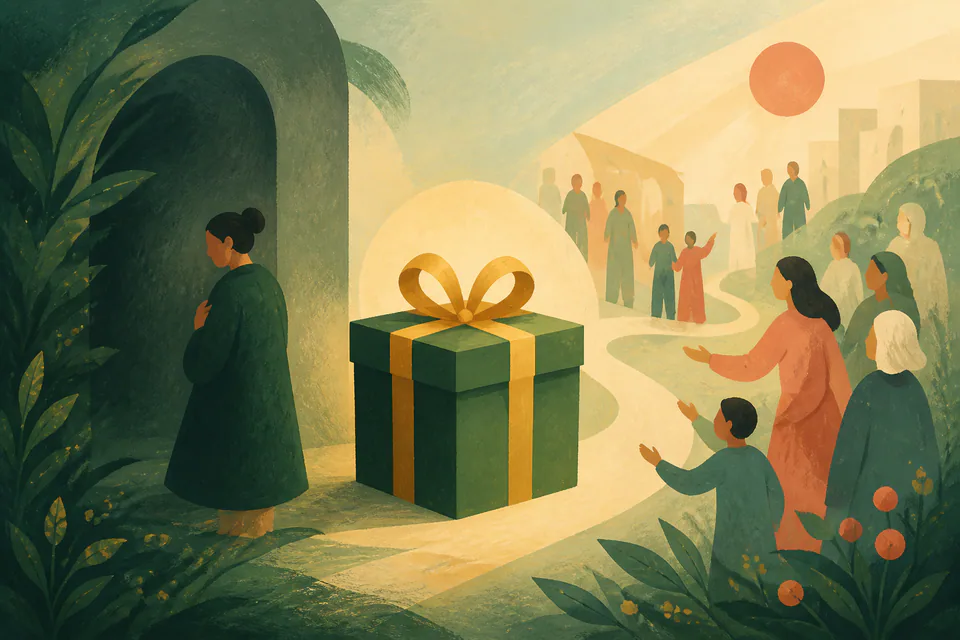
Your anonymous gift could inspire millions more if you reveal your name. Do you?
A donor wants to make a transformative gift without recognition. The charity believes announcing the gift and the donor's identity would encourage matching contributions and help far more people.
Can the opportunity to create more good outweigh a preference for privacy?