Friday of the Thirty-third Week in Ordinary Time - Restoring Sacred Worship
Listen through the publisher, then discuss the episode here or arrange an in-person Roundtable. Your city determines where to meet.
Roundtables are designed for groups of four, with a shared subject and room for everyone to speak. Come for discussion, with no dating expectation.
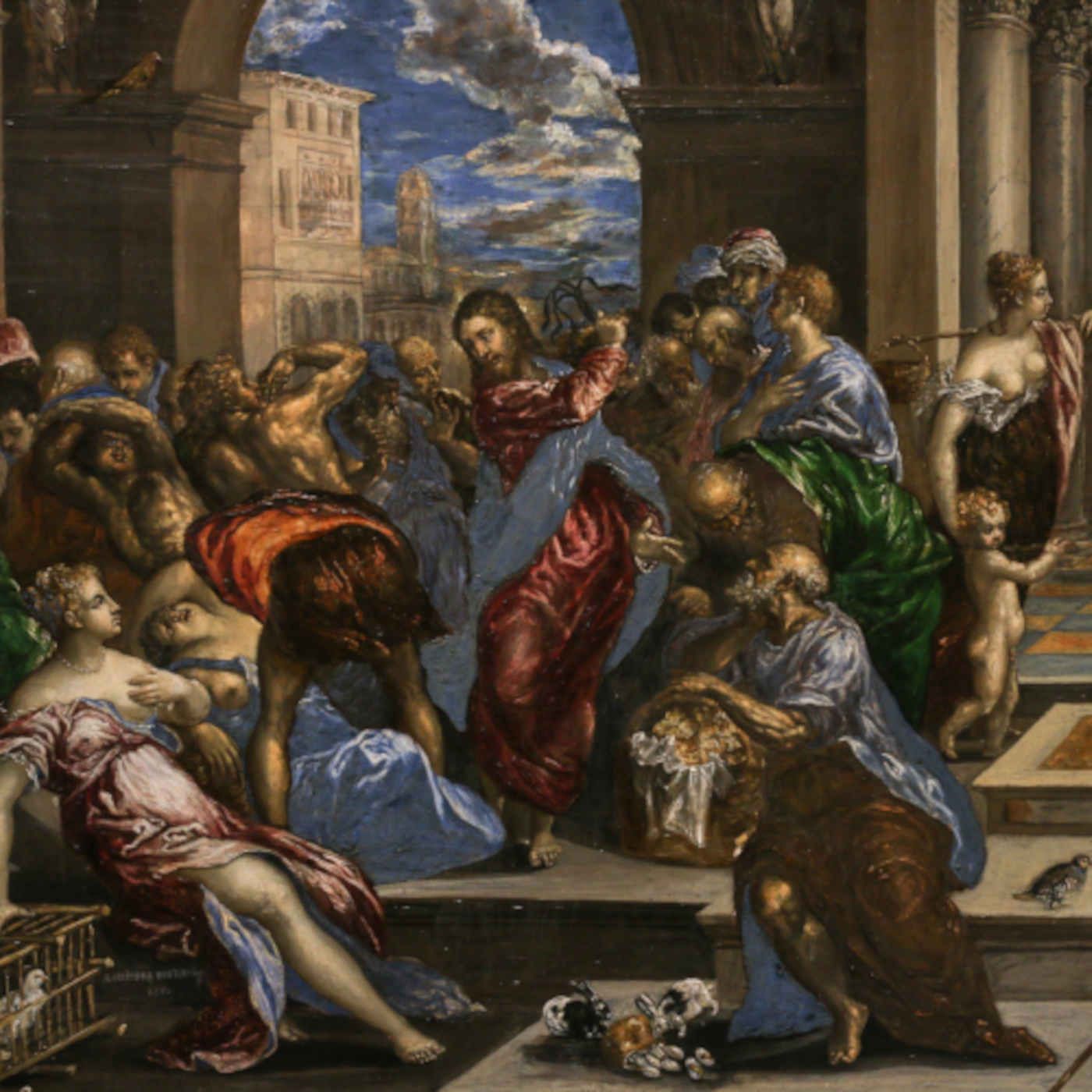
Read Online (https://catholic-daily-reflections.com/2026/11/19/restoring-sacred-worship/) Restoring Sacred Worship Jesus entered the temple area and proceeded to drive out those who were selling things, saying to them, “It is written, My house shall be a house of prayer, but you have made it a den of thieves.” And every day he was teaching in the temple area. Luke 19:45–47 Today’s Gospel opens what is arguably the most dramatic and consequential week in human history. Jesus arrives in Jerusalem for the weeklong Feast of Passover, welcomed with jubilation by the crowds who had become His disciples over the previous three years of public ministry. The city is alive with expectation. Many wonder if this is the moment He will assert His Kingship and restore the United Kingdom of Israel. However, on the first day of the feast, Jesus takes a startling action: He enters the Temple and drives out the merchants, rebuking them for turning His Father’s house into a “den of thieves.” Passover was the most sacred feast on the Jewish calendar, commemorating Israel’s deliverance from slavery in Egypt. It recalled the night the angel of death passed over the homes marked by the blood of a sacrificed lamb, which began the forty-year journey through the desert into the Promised Land. Centuries later, King Solomon built the Temple on Mount Moriah, the very place where Abraham was tested in his willingness to sacrifice Isaac—a prefiguration of the sacrifice made by God the Father of His only Son on that same mount in Jerusalem. Since then, Jews from every tribe made an annual pilgrimage there to worship, recall God’s covenant with Abraham, and celebrate the Exodus. During Passover, each family was required to offer an animal sacrifice at the Temple. To facilitate this, merchants sold lambs, goats, and doves, especially to pilgrims who had traveled long distances. Over time, however, what began as a practical service became deeply corrupted. Greed and commercialism replaced reverence. The sacred was eclipsed by profit. Jesus’ cleansing of the Temple was a prophetic judgment. He was declaring that true worship must be restored. The Lamb of God had come to offer the definitive sacrifice, and the Temple would soon give way to a new and eternal covenant centered on Christ’s own Body, to be sacrificed and His flesh consumed. This context helps us understand why the chief priests, scribes, and leaders of the people sought to put Jesus to death. He was disrupting a system they had long maintained—one that had become increasingly entangled with pride, financial gain, and empty ritual. From the pilgrimage and sacrifices to the flow of money that supported the Temple and, in some cases, enriched its leaders, much was at stake. One important lesson we can draw from this clash is that when we stray from our central duty of divine worship and begin to elevate man-made customs over the purity of worship itself, we too are in need of a cleansing from the Lord. While human traditions can be deeply meaningful, they become a spiritual obstacle when treated as an end rather than a means to holiness. For example, we may cling to devotional practices, liturgical preferences, or parish customs that once deepened our faith, but over time may have become routine, prideful, or divisive. When the form overshadows the substance, or personal preference outweighs reverence, humility, and obedience, even good traditions can hinder true worship. Reflect today on the central mission of your life: divine worship. This is what you were made for and the means by which you become a member of God’s Kingdom. Though religious devotions and preferences can be helpful, consider whether your religious customs, habits, or personal opinions cloud the purity of your worship. Are you more concerned about the externals and customs, or worshiping God? If it is the former, ask the Lord to overturn those distortions and call you, your parish, and His entire Church back to sacred worship. Most holy Lamb of God, as You entered the Temple during Passover and beheld the distortions that had crept into that sacred feast, Your holy zeal moved You to cleanse the Temple. Please cleanse the temple of my soul with that same divine zeal. Purge me of all superficial religious attachments and preferences, that I may be truly free to worship You in spirit and in truth. Jesus, I trust in You. Image: Christ Cleansing the Temple (https://www.flickr.com/photos/paullew/40565981032), by Lawrence OP, (https://www.flickr.com/photos/paullew/40565981032) CC BY-NC-ND 2.0 (https://creativecommons.org/licenses/by-nc-nd/2.0/) Inc. All rights reserved.
Episode information is provided by the publisher. Listening takes place on the publisher’s service.
Listen at the source ↗