Saturday of the Thirty-third Week in Ordinary Time - Questioning God
Listen through the publisher, then discuss the episode here or arrange an in-person Roundtable. Your city determines where to meet.
Roundtables are designed for groups of four, with a shared subject and room for everyone to speak. Come for discussion, with no dating expectation.
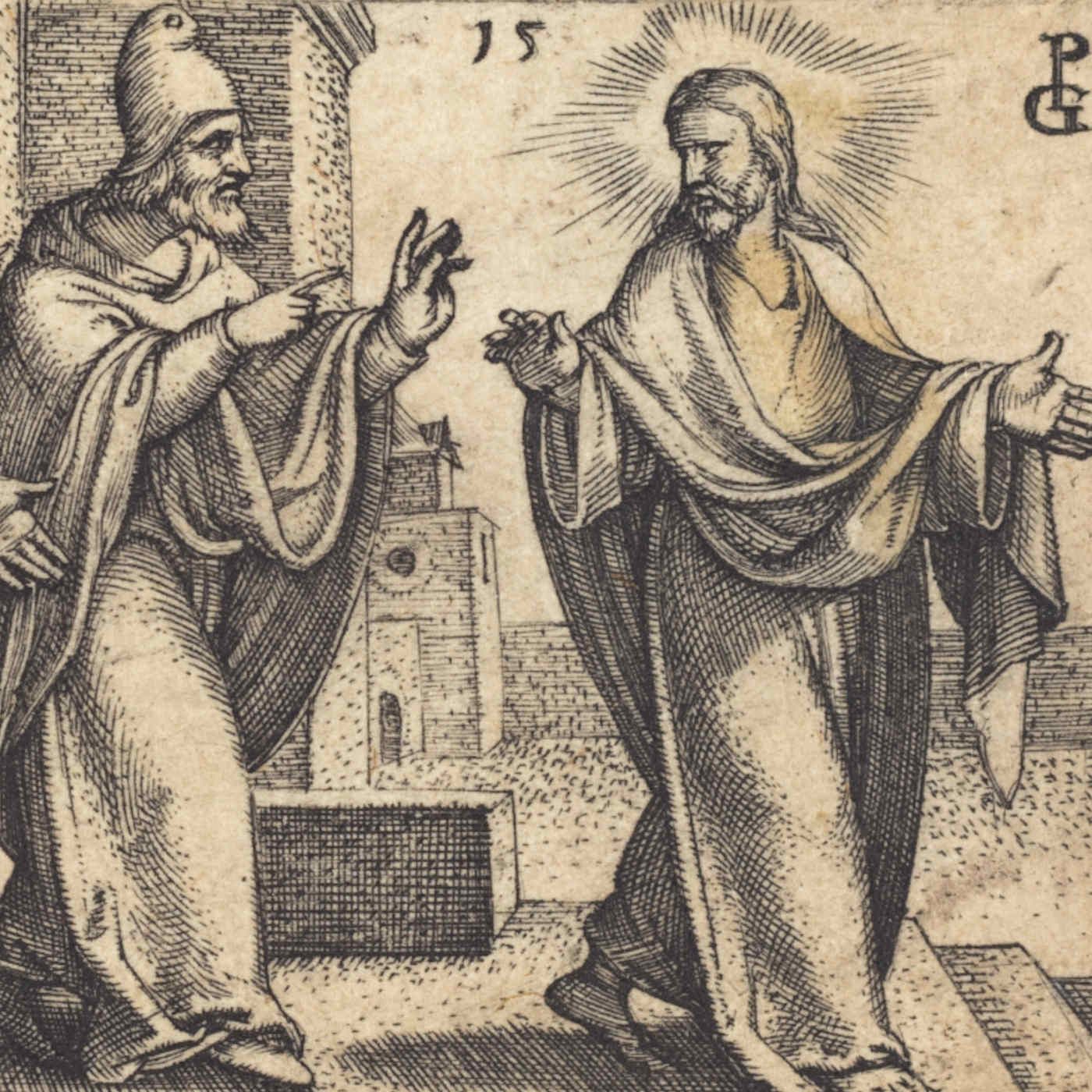
Read Online (https://catholic-daily-reflections.com/2026/11/20/questioning-god/) Questioning God Some Sadducees, those who deny that there is a resurrection, came forward and put this question to Jesus, saying, “Teacher, Moses wrote for us, If someone’s brother dies leaving a wife but no child, his brother must take the wife and raise up descendants for his brother. Now there were seven brothers…” Luke 20:27–29 After entering Jerusalem for the Passover and cleansing the Temple, Jesus returned each day to teach within its courts. The people warmly received Him, hanging on His every word. Yet the religious leaders, fearful of His influence, deliberately and methodically sought to trap Him, discredit Him, and destroy Him. First, the chief priests, scribes, and elders challenged His authority, questioning His right to drive out the moneychangers and those selling animals for sacrifice. He declared they had turned His Father’s house into a den of thieves. When that ploy failed, the leaders tried to ensnare Him with a question about Roman taxation, hoping to force Him either to oppose Caesar or alienate the people. But He escaped their snare with divine wisdom, famously replying, “Render unto Caesar what is Caesar’s, and to God what is God’s.” In today’s Gospel, it is the Sadducees’ turn to take their shot at trapping Jesus. The Sadducees were a priestly, aristocratic sect closely tied to Temple worship and political collaboration with Rome. In contrast with the Pharisees, they denied the resurrection of the dead, the immortality of the soul, and the existence of angels—all of which were foundational to Jesus’ own teachings. They accepted only the Torah, the first five books of Moses, as authoritative, which is why they crafted their hypothetical question from Mosaic Law. They presented a scenario in which seven brothers successively marry the same woman, each dying without leaving children. After the woman also dies, they ask whose wife she will be at the resurrection. Their hypothetical was not intended to discover truth but to ridicule the idea of resurrection itself. However, Jesus calmly meets their skepticism with divine insight. He reveals that life in the resurrection is not a mere extension of the earthly existence we enjoy today. In the age to come, marriage as we know it will no longer exist because the faithful will share in a glorified existence that is immortal, spiritual, and wholly united to God. Jesus then turns the Torah against them and points to God’s words from the burning bush: “I am the God of Abraham, the God of Isaac, and the God of Jacob.” Jesus explains that God “is” the God of their forefathers not “was.” This insight revealed the immortality of the soul, since YHWH Himself spoke in the present tense. This exchange showcases Jesus’ unmatched wisdom and desire to lead His opponents to the truth by revealing eternal realities with clarity. His teachings were so insightful that some scribes who believed in the resurrection replied, “Teacher, You have answered well.” Perhaps some of them were won over by divine wisdom. Imagine sitting down with Jesus and asking Him anything. What would you ask? Perhaps there is something in your life that you do not understand—why God permitted a certain suffering or trial, for example. Or perhaps you have more general questions, such as how certain scientific theories can coexist with divine revelation when they appear to be in conflict. Deep down, many people believe in God and the faith He revealed, but lack clarity, especially regarding difficult topics. Though this may lead some to doubt, it leads others to a holy curiosity that seeks not to trap God, but to humbly seek His divine wisdom and knowledge. Reflect today on any questions you may have about God, suffering, or the meaning of events in your life. Jesus holds every perfect answer to every question we could ask. In the light of His Truth, all things make sense. Hold onto that faith and hope, and seek out the truth you need to resolve any confusion in your heart. God desires to speak to you, grant you understanding, and affirm with clarity and conviction every truth you now hold in faith. Lord of all Truth, at times I struggle with confusion, and that confusion can lead to doubt. Please grant me the gift of a pure and unwavering faith, especially when I encounter mysteries that are difficult to understand. When I am burdened by questions or uncertainty, dear Lord, grant me the gifts of wisdom, knowledge, and understanding. Help me to deepen my faith, to cling to Your Word, and to confidently proclaim Your truth to others. Jesus, I trust in You. Image: Georg Pencz, The Pharisees Wish to Stone Christ, Public domain / CC0 (https://creativecommons.org/publicdomain/zero/1.0/), via rawpixel (https://www.rawpixel.com/image/9988192/the-pharisees-wish-stone-christ-georg-pencz) (National Gallery of Art) Inc. All rights reserved.
Episode information is provided by the publisher. Listening takes place on the publisher’s service.
Listen at the source ↗