From Dieting at 11 to Doing It Differently at Midlife with Donna Raby
60 min
Listen through the publisher, then discuss the episode here or arrange an in-person Roundtable. Your city determines where to meet.
Roundtables are designed for groups of four, with a shared subject and room for everyone to speak. Come for discussion, with no dating expectation.
Episode 146: From Dieting at 11 to Doing It Differently at Midlife with Donna Raby Donna Raby joins us with a refreshingly honest story that starts where so many women do: dieting young, trying every plan going, and still never feeling “done”. What changes everything is not another set of food rules, but a different question: what’s actually happening inside my body, and how do I support it without punishment? We chat through the messy middle of building sustainable health habits in real life. Donna shares how she went from avoiding exercise to finding consistency through live online classes, a walking pad, and the simplest mindset shift of all: make it easy enough to do, even in your pyjamas. We also get practical about high protein meals, calorie deficits versus maintenance, and why “falling off the wagon” language keeps you stuck in yo-yo dieting. Then we go deeper into metabolic health and hormones. Donna reflects on testing, stress load, sleep, fatigue, adult acne, and the confusing overlap between life stress and perimenopause symptoms. We talk about what data can show you, why you might not feel instant changes from supplements, and how a supportive community helps you keep showing up when life hits hard. If you want a kinder approach to wellness, strength training, and menopause friendly habits that last, hit play. Got a question or comment? Thank you for listening. We look forward to you joining us on the next episode.
Episode information is provided by the publisher. Listening takes place on the publisher’s service.
Is your body weight stable, but you're still not eating enough to properly fuel your training, recovery, and overall health? Introducing Why Stable Weight Doesn't Always Mean You're Eating Enough from Jeff Hoehn of the Mind Muscle Connection Podcast (https://www.buzzsprout.com/1508401). Just because your weight isn't changing doesn't necessarily mean you're adequately fueled. In this episode, Jeff breaks down why maintaining a stable body weight doesn't always mean you're meeting your body's energy needs, especially if you're training hard, staying lean, or spending long periods dieting. You'll learn: Why stable body weight doesn't automatically mean adequate energy availability Who is most at risk of underfueling, even when their weight isn't changing How high training output, staying too lean, and chronic dieting can contribute to low energy availability The potential signs of underfueling, including changes in performance, recovery, hormones, and menstrual health Why spending too lo
If you're training hard but feeling wiped, eating a restricted diet for your gut, or just never hungry after a tough workout, you might not be getting the protein you need. This episode breaks down how much you really need and how to get it without upsetting your gut. YOU'LL TAKEAWAY: Macronutrients and calories 101, and how restrictive diets throw off your balance How your body digests protein, and why it matters before workouts The many roles of protein, from enzymes and iron storage to post-workout appetite How much protein you need, plus 3 easy low FODMAP ways to boost it — RESOURCES & LINKS MENTIONED: ⤵️ Want high touch coaching support for IBS & fuelling performance? Apply for coaching. (http://gutfitnutrition.com/apply) Free Training: How to Control IBS So You Can Fuel Your Training Without a Lifelong Low FODMAP Diet (https://gutfitnutrition.com/heal-ibs-training-live) Supporting your immune system when you're sick (Ep. 70) (https://open.spotify.com/episode/5bCto0jWLcbC5hQW4hrH6
If your partner is withdrawing, getting grumpier, feeling depressed or refusing to talk about what’s really going on, relationship expert Professor Denise Turner is here to help. She explains what’s going on with midlife men right now & how to help without sacrificing your own health and happiness. Denise tells Lorraine & Trish how to talk to a man who won’t - or can’t - express his emotions, the external & social factors that may be contributing to his behaviour & the red flags that indicate it’s time to get professional help. Plus the two questions to ask yourself when working out what to do if you feel your relationship is in trouble. Also in this episode: an update on Margo the elderly podcat & Lorraine discovers why she’s been tripping over so often (& it’s not to do with her big Crocs!) If you or a partner are struggling, please speak to your GP or contact Samaritans on 116 123 (free, 24/7). New episodes of Postcards from Midlife are released weekly. Join our Facebook Group to sh
For the days you got through and nobody saw what it took. A quiet place this evening where it counts. About 12 minutes with Steven Webb's calm voice and music underneath. Perfect for the evening. We let the body soften, from the jaw and the eyes down to the belly, because it's been on alert all day. Then we look at what today really cost. Getting up when your body said no. Being kind to someone while you were falling apart inside. Saying "yeah, fine" because where would you even start? There's an old Zen idea I keep coming back to: a thing doesn't need to be seen to be real. The rain falls on an empty field, nobody watches, and it still soaks in. We put the day down for a minute, not away, just down, and finish with three gentle wishes. May the hard days I got through be counted. I've been paralysed a long time, and I know what it can take just to get through the day. You're not doing this on your own. Treat me to a coffee, keep the podcast free, and get my Weekly Calm every Sunday. It
Get the 200+ Page Optimal Living Daily Workbook (PDF) - Free. Want to turn today's episode into an actionable plan? Episode 4233: Kate Galliett explains three reasons we make health, fitness and life harder than they need to be: ignoring how the body works as a connected system, trusting only extreme intensity, and leaking the energy that fuels motivation and discipline. She makes the case that appropriate effort, not maximum effort, is the only sustainable path to lasting results. Read along with the original article(s) here: https://fitforreallife.substack.com/p/why-you-make-everything-harder-than Quotes to ponder: "The better way is to give appropriate effort and get appropriate results. This is the only sustainable way." "If you try and live at the extremes, you will constantly ping-pong back and forth from one extreme to the other." "Just imagine - you might not actually lack discipline after all, you just might be leaking energy that feeds your ability to be disciplined." We spen
Today, I’m honored to connect with Dr. Troy Badger. He is a board-certified cardiologist and interventionalist and the founder of Cardiostrong, a concierge preventive cardiology clinic in Provo, Utah, focused on reducing cardiovascular risk, optimizing metabolic health, and improving strength and cardiorespiratory fitness for executives and athletes. In today’s conversation, we discuss Dr. Badger’s gender- and age-specific approach to heart health, including treatment differences for men and women, and diagnoses such as INOCA, SCAD, vasospastic disease, and Takotsubo. We examine emotions and their influence on heart health, coronary ischemia and cardiomyopathies, labs and diagnostics, how Dr. Badger assesses risk in his patients, and the differences between a CAC and a CCTA. Dr. Badger also shares the labs he finds essential for all patients and discusses the role of VO2 Max, cardiovascular training, and lifestyle—specifically nutrition, the use of GLP-1 drugs, and a multidisciplinary
Episode 145: Confessions Of A Wellbeing Coach Perimenopause can make even the most health-literate woman feel like she has lost the plot and that’s before the hot flush hits mid-choir while everyone else is wrapped in scarves. Julie is away this week, so Catherine climbs under a blanket “recording studio” and turns the mic into a mini therapy session: the confessions of a wellbeing coach who thought she would breeze through the menopause transition because she eats well, trains hard and teaches others to do the same. We get real about the symptoms and the stories we attach to them: the myth that lifestyle alone guarantees a symptom-free perimenopause, the pressure to be “the perfect advert” for wellness, and the awkward truth that HRT and healthy habits are not enemies. Catherine shares what it feels like when joints ache, brain fog creeps in, and you have to swallow the humbling lesson that being active does not make you superhuman. From injuries and plantar fasciitis to pelvic floor
Episode 144 One diet works wonders for your friend and does nothing for you, so what’s actually going on? We’re pulling back the curtain on what 25 years in nutrition really teaches, and it’s not a miracle supplement or a perfect meal plan. It’s the messy, empowering truth that health is personal, symptoms have context, and real progress comes from understanding your body rather than copying someone else’s rules. I share the biggest lessons I’ve learned from thousands of client conversations, from why “one size fits all” advice fails to how modern functional testing can take the guesswork out of gut health, hormones and nutrient status. We talk about the trap of restriction culture, especially for women over 40, and why focusing on nourishment often helps more than building longer lists of foods to avoid. If you’re active, tired, dealing with cravings, or stuck in a cycle of undereating, this will land. We also connect the dots between stress, the nervous system and physical symptoms l
Established legal precedents should change when strong reasons outweigh the value of consistency.
Share your view, then see how readers voted. No sign-in required. This poll is shared across stories.
Do you agree or disagree?
Common Quandary
A Common Quandary to discuss
Another conversation to explore, separate from this news story.
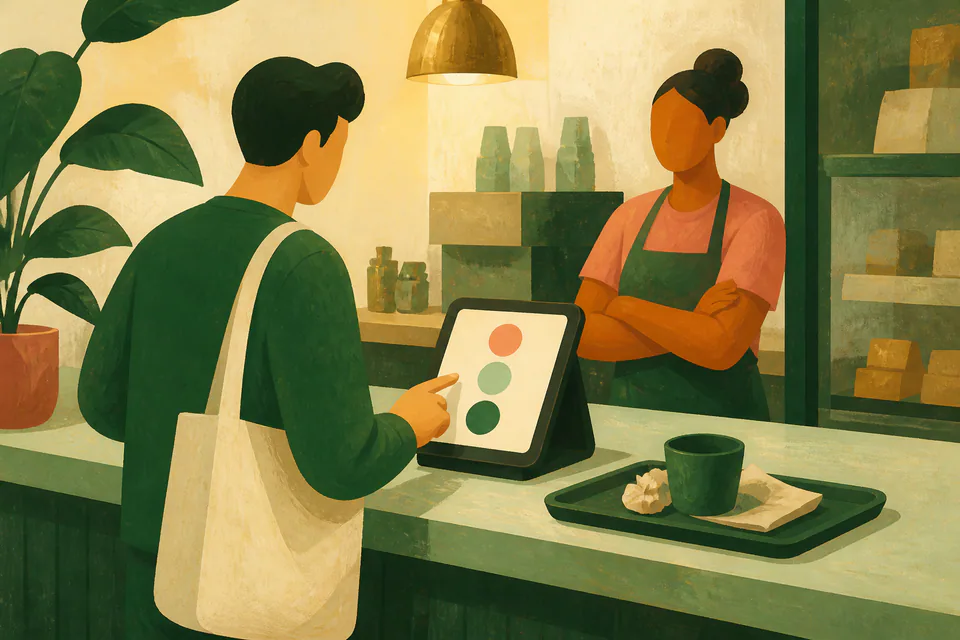
The touchscreen asks for a 25% tip while the cashier watches. What do you press?
At a counter-service shop, you place your own order, collect it, and clear the table. The payment screen suggests a twenty-five percent tip while an employee watches you choose.
When does a voluntary custom become an unfair social demand?