From Mormon Leader to Bridge Builder - David Ostler Pt. 1 | Ep. 2227
167 min
Listen through the publisher, then discuss the episode here or arrange an in-person Roundtable. Your city determines where to meet.
Roundtables are designed for groups of four, with a shared subject and room for everyone to speak. Come for discussion, with no dating expectation.
Today we sit down with David Ostler, a former bishop, stake president, and mission president, and author of Bridges: Ministering to Those Who Question. Raised in a prominent Mormon family in Salt Lake City, Dave grew up surrounded by church leadership and expectations. He served a mission in Japan, married in the temple, and eventually became a bishop at just 33 years old. Dave reflects on how his upbringing shaped his understanding of faith, authority, and what it meant to be a Mormon man. He shares the challenges of church leadership, including administering discipline and balancing the demands of his calling with family life. At this point, Dave is aware of the humanness of the church’s leaders and its institutional limitations and many challenges of church history, church teachings on race, gender, and polygamy. In nuance he continued along the path he had always understood to be right. After retiring from a career in business, Dave and his wife Rachelle moved to India to do humanitarian work before being called to preside over the Sierra Leone Freetown mission. There, Dave presided over missionaries and members in mission districts and experienced the church in an entirely different culture with unique and surprising challenges. Sierra Leone is one of the poorest countries in the world and they were confronted with its poverty and illiteracy and were confronted with many questions about how the church operates in such a different world. When the Ebola outbreak forced them to leave their mission early, Dave and Rachelle returned home carrying an experience that would take years to process. Then, be sure to turn into the next episode to hear where Dave’s story is today. If you have questions about the episode, you can contact Dave directly at [email protected] ___________________ YouTube (https://youtu.be/1Ibw6EXn9Zk) Our overall mission is to: 1. 2. 3. Patreon (https://www.patreon.com/mormonstories%C2%A0) Venmo (https://account.venmo.com/u/mormonstories) PayPal (https://paypal.me/mormonstories) Our Platforms: Mormon Stories Blog (https://www.mormonstories.org/episodes) ️Patreon (https://www.patreon.com/mormonstories) ️Instagram (https://www.instagram.com/mormstories) TikTok (https://www.tiktok.com/@mormonstoriespodcast) Discord (https://discord.com/invite/kuX5p6yyjF) Contact us: [email protected] PO Box 171085, Salt Lake City, UT 84117
Episode information is provided by the publisher. Listening takes place on the publisher’s service.
Jase looks back on the time a would-be church leader sat at his kitchen table and claimed he was above temptation. Jase called him a liar and recalls that the same man asked Missy to pray with him privately, an invitation she turned down. Al explains why Phil brushed off comparisons to the apostle Paul, and Jase returns to the building where he first shared Jesus with a friend 40 years ago. The guys dig into Jude’s warning about people who abuse trust in the church and why repentance can feel like finally catching your breath. In this episode: Romans 8, verse 29; Matthew 20, verses 13–14; Jude 1, verses 8, 10–11; Matthew 18, verses 6–7; 1 Corinthians 9, verses 15–18; 1 Corinthians 10, verses 11–13; 1 Corinthians 5, verse 13; Matthew 22, verses 37–39; Acts 3, verses 18–19. Want to watch Unashamed ad-free? Only on EKKL! “Unashamed” Episode 1467 is sponsored by: https://theoakscollaborative.com/unashamed - Invest in The Oaks Collaborative’s Kingdom work by sponsoring a college student for
With Wade Christofferson’s sentencing approaching, we examine letters asking the judge to consider his character—and how little several say about the children he harmed. Also tonight: West Virginia’s highest court sends claims against individual LDS leaders back to arbitration, and Texas officials approve key tax and zoning measures for a proposed data center on ranchland owned by a Church subsidiary. Join Bill Reel, Radio Free Mormon, and Rebecca for tonight’s Mormon Newscast as we look at accountability, Church finances, and some contradictions that deserve a closer look. • WADE CHRISTOFFERSON’S SUPPORT LETTERS: WHERE ARE THE CHILDREN? Ahead of sentencing, Wade Christofferson’s wife, brother, former bishop, and other supporters describe his kindness, faith, service, and health problems. We examine the letters and ask why several give so much attention to the adult who abused children while barely acknowledging what those children experienced. • WEST VIRGINIA ABUSE CASE MOVES FORWARD
When a family moved into an apartment in New York, they had no idea just how much history the building held. Over the years, it had reportedly served several purposes, including a city hall and a jail. But they wouldn't learn those details until after some frightening experiences had already begun. On their very first night, the mother came running into her son's room, terrified by a man who had appeared in her bedroom. He hadn't simply frightened her. According to her account, he'd made it very clear that the family wasn't welcome. And things only became stranger from there. As the family settled in, they experienced unexplained sounds, unsettling physical encounters, and incidents that made them question what was actually moving around their home. Had something remained behind from the building's long history? And was it determined to make the new occupants leave? #RealGhostStoriesOnline #TrueGhostStories #HauntedApartments #HauntedJail #HistoricHauntings #NewYorkGhostStories #Parano
FLASHBACK FRIDAYS: Life often unfolds in ways we could scarcely imagine, weaving paths that connect science and spirit, intellect and intuition. Shehnaz Soni, our guest on today’s episode, exemplifies this wondrous dance. As a NASA aerospace engineer and a quantum coach, she navigates the intersection of high-tech innovation and metaphysical insight, proving that these realms are not separate but two sides of the same coin. Her story is one of unshakable courage, relentless curiosity, and a fearless embrace of the unknown.Imagine growing up in a culture that limits your questions, a world where inquiry is stifled, and possibilities feel boxed in by tradition. Yet, from a young age, Shehnaz was an outlier, a seeker of truths that no one dared to ask. "If you're questioning it, it's because it is questionable," she tells us. It is this inherent defiance, this determination to understand life’s mysteries, that propelled her from the shores of Karachi, Pakistan, to the cutting-edge laborat
This is a Grave Talks CLASSIC EPISODE! For Melissa Clevenger, the spirit world has never been a distant mystery—it has been a lifelong reality. Since the age of five, Melissa has been able to see and hear spirits. But her early encounters weren’t comforting or controlled. The voices didn’t ask permission. The apparitions didn’t wait for understanding. What began as terrifying childhood experiences slowly evolved into something she could manage—and eventually embrace. As she matured, the chaos of those early years transformed into meaningful communication, guiding her toward a deeper understanding of her abilities and the messages coming through. Today, Melissa shares her journey from fear to purpose, reflecting on what it means to live with heightened sensitivity and dedicate her life to connecting the living with those who have passed on. On this episode of The Grave Talks, we explore the reality of growing up with psychic abilities, the challenges of navigating unseen energies, and t
Read Online (https://catholic-daily-reflections.com/2026/11/20/questioning-god/) Questioning God Some Sadducees, those who deny that there is a resurrection, came forward and put this question to Jesus, saying, “Teacher, Moses wrote for us, If someone’s brother dies leaving a wife but no child, his brother must take the wife and raise up descendants for his brother. Now there were seven brothers…” Luke 20:27–29 After entering Jerusalem for the Passover and cleansing the Temple, Jesus returned each day to teach within its courts. The people warmly received Him, hanging on His every word. Yet the religious leaders, fearful of His influence, deliberately and methodically sought to trap Him, discredit Him, and destroy Him. First, the chief priests, scribes, and elders challenged His authority, questioning His right to drive out the moneychangers and those selling animals for sacrifice. He declared they had turned His Father’s house into a den of thieves. When that ploy failed, the leaders
In Part Six of the Brigham Young Podcast series, we continue our discussion with historian John Turner about his book Brigham Young: Pioneer Prophet, returning to Chapter Five, “Prophets and Pretenders,” (on page 132) to explore one of the most controversial aspects of Brigham Young’s legacy: polygamy. We examine how Brigham Young expanded plural marriage after Joseph Smith’s death, including his sealings to Joseph Smith’s widows and the challenges historians face in determining how many wives Young had and what those relationships involved. We discuss the difference between marriage and sealing, polyandrous relationships, the ages of Young’s wives, and how many of these women bore him children. We also explore the theological implications of polygamy, including the belief that women needed to be sealed to men to achieve exaltation, the role of eternal family relationships, and the ways these teachings shaped early Mormon understandings of salvation and the afterlife. What was Brigham
Travis Chappell grew up inside the Independent Fundamental Baptist (IFB) movement, in a KJV-only, young-earth, literalist Christian world where church, school, friendships, theology, and identity were deeply intertwined. At 12, Travis believed God had called him into full-time ministry. As a teenager, he preached, went soulwinning door-to-door, and believed with complete certainty that people who did not accept Jesus would spend eternity in hell. In this episode of Exvangelical Stories, Dr. Todd Phillips sits down with entrepreneur and podcaster Travis Chappell for a personal conversation about Christian fundamentalism, deconstruction, religious certainty, hell, the Bible, church authority, marriage, loneliness, community, and learning to live without having all the answers. Travis shares the youth conference where he committed his life to ministry, what it was like growing up inside the IFB “bubble,” and the pivotal meeting with his pastor when he began questioning whether ministry wa
LDS Attorney Questions Former Bishops’ Accounts Former Kirton McConkie attorney Kate Lauck is defending the LDS Church’s abuse helpline in two recent interviews. But when confronted with accounts from former bishops who say they were instructed not to report abuse, Lauck responds, “I just don’t believe it.” John Dehlin and I examine her claims, the legal evidence, and the Church’s handling of abuse allegations. Registered Offenders Attending LDS Church Services An anonymous Reddit post alleges that two registered offenders regularly attend an LDS ward, raising questions about how congregations protect children while welcoming individuals with criminal histories. We’ll also discuss Dr. Julie Hanks’s perspective on child protection. The Pauls and Betrayal Savannah and Hayden Paul are part of an ongoing Mormon conversation about marriage, and betrayal. We’re examining the messages being shared with Latter-day Saint couples and the expectations placed on women. Women Paid Less in Utah High
Officials should explain how public consultation changed their final decision.
Share your view, then see how readers voted. No sign-in required. This poll is shared across stories.
Do you agree or disagree?
Common Quandary
A Common Quandary to discuss
Another conversation to explore, separate from this news story.
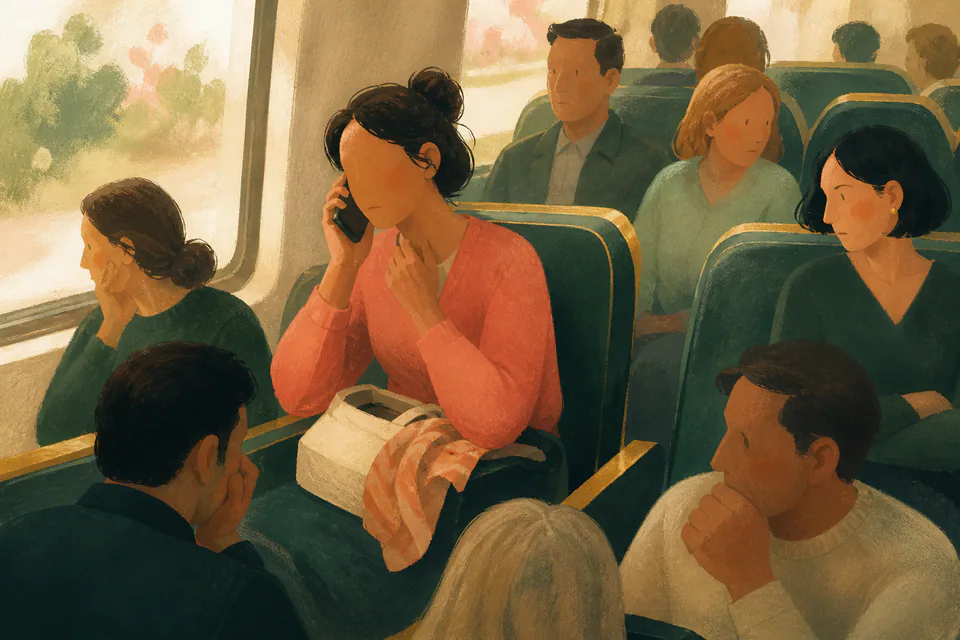
A stranger takes an emotional call in the quiet car. Do you shush them?
On a crowded train's designated quiet car, a passenger answers a call and begins discussing an apparent family emergency. They are speaking softly but continuously, and everyone nearby is listening despite trying not to.
Do public rules make room for private emergencies?