From the Telephone to Modern Computing | James Gleick
63 min
Listen through the publisher, then discuss the episode here or arrange an in-person Roundtable. Your city determines where to meet.
Roundtables are designed for groups of four, with a shared subject and room for everyone to speak. Come for discussion, with no dating expectation.
James Gleick — acclaimed science writer and bestselling author of Chaos: Making a New Science as well as biographies on polymaths Isaac Newton and Richard Feynman — joins Sonal Chokshi and Robert Hackett to discuss his new book, The Telephone: A New History. It is a story of a device — who really invented it, how? — of a network, of a lab, and of how innovation happens. The telephone was dismissed as a toy or a frivolity — at best, something people could use to listen to concerts or sermons from home. Even with a working invention, everyone was still trying to figure out what a telephone was for, using the framework of what they already knew. Then its users started finding their own answers. Farmers built their own decentralized networks using barbed-wire fences — the “devil’s rope” — and, over time, research at a company built around phone calls helped lay the foundations of modern computing. This conversation explores the nuances of building at the frontier: competing inventors, the experiments, the “scenius of genius.” Why did established businesses underestimate it? Did the telephone network have to become a monopoly? What made Bell Labs so productive? And how a single invention could set off a technology revolution? Resources: Originally published by the a16z Frontier Show. Read The Telephone: A New History:https://us.macmillan.com/books/978037... (https://www.youtube.com/redirect?event=video_description&q=https%3A%2F%2Fus.macmillan.com%2Fbooks%2F9780374618940%2Fthetelephone%2F&redir_token=QUlxb01IWmlWODZmTEp3dGtzUHRjbXpMNGFJZ3xBQnJ0NjlrUEVKa2tRVzdQYURMQUFieEMwVUtiTlVyQ1hGZGZCR29IX2x2UXk0WjdDVERxQll4QmlUVGFJV0cyRkIzSTNPTnMtOHJrdkVXbG04VXZIUFRqdjMteDBQNUcwUnFy&v=yl5D4S6m0gM) Stay Updated: Find a16z on YouTube: YouTube (https://www.youtube.com/@a16z) Find a16z on X (https://x.com/a16z) Find a16z onLinkedIn (https://www.linkedin.com/company/a16z) Follow our host: https://twitter.com/eriktorenberg For more details please see a16z.com/disclosures. Hosted by Simplecast, an AdsWizz company.
Episode information is provided by the publisher. Listening takes place on the publisher’s service.
In Brought to You By: How Corporations Warped the Truth, Conned the Public, and Broke Democracy (https://bookshop.org/a/12343/9781639736331), Amy Westervelt exposes the plot hidden within the familiar story of science denial. Over the last century, Big Industry has built a vast apparatus of think tanks, lobbyists, sponsored university labs, and obliging news networks to con the public and fool decision-makers, poisoning the informational ecosystem and warping the nature of truth along the way. With her signature wit and incisiveness, Westervelt introduces the masterminds of corporate misinformation: Herb Schmertz, the public relations pioneer who made Mobil “the thinking man's oil company;” Richard Edelman, the PR guy who helped the dairy industry vilify oat milk; David Petraeus, the disgraced spy chief using counter-insurgency tactics to discredit climate science; and many more. She shows how these company men have worked to usher in an era of unprecedented corporate control. Only by
Obsessions, Addictions, and Compulsions | The Dangers of Your Smartphone Addiction | Tony Robbins Podcast Uploaded 30-05-19 Did you know that the average American checks email within 6 seconds of arriving at work? Or that 75% of adults say they spend the entire day within an arm’s reach of their phones? Whether we want to admit it or not, the smartphone has become a critical extension of our lives. And it’s easy to understand why. Smartphone technology allows us a number of communication options including voice calls, text messages, video chat and instant messenger. We have immediate access to the information and are constantly connected to the web. And with the advancement of mobile technology, we can do our banking, shop online, check movie times, check our heart rates, edit photos, publish blog posts – anytime, anywhere. But what is this convenience really costing us? In this episode of the Tony Robbins Podcast, we’re talking with renowned social psychologist, Adam Alter. Adam is an
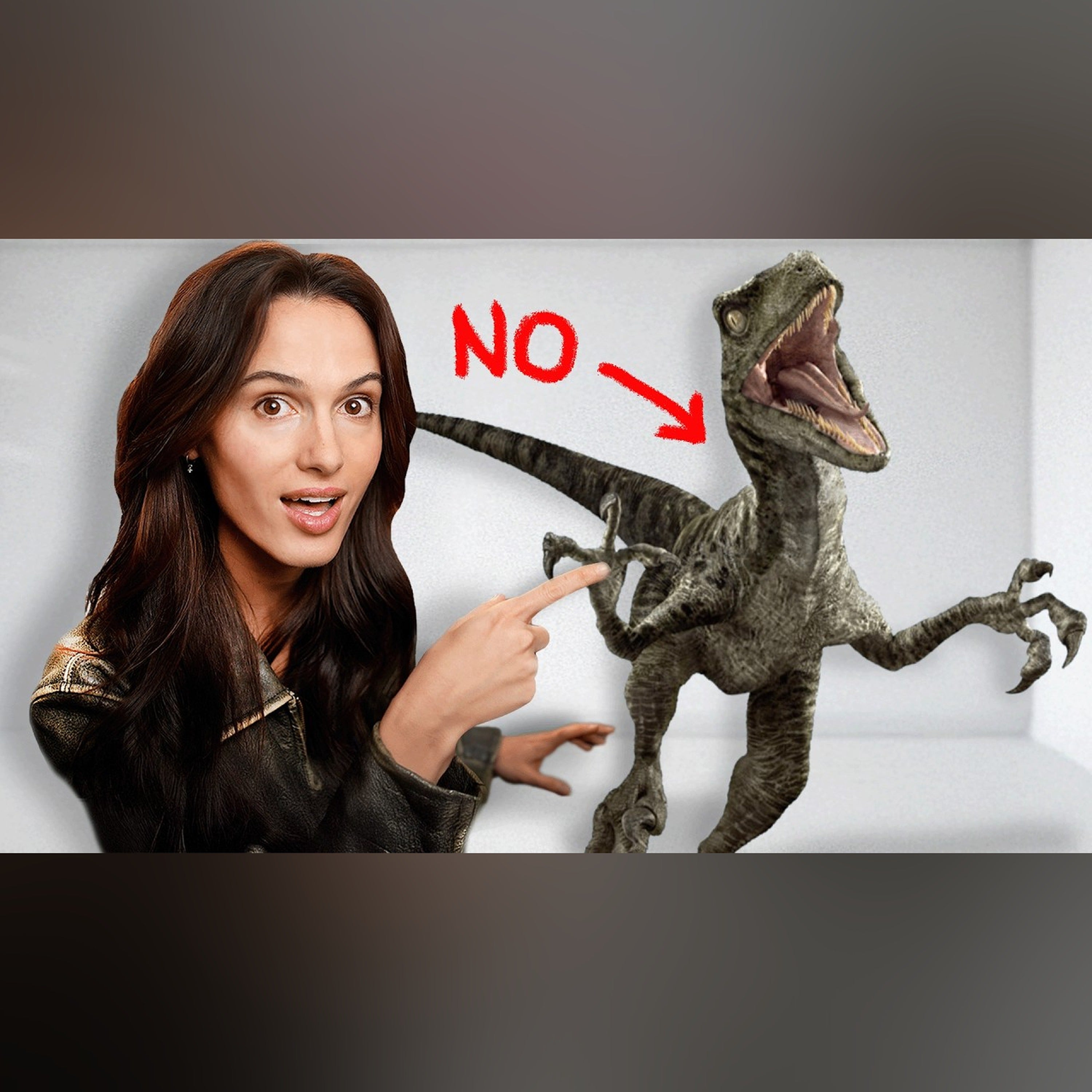
Dinosaurs were not like I thought... Check out https://groundnews.com/Cleo for a data-driven, balanced approach to staying informed. Use my link to save 50 percent on the Vantage plan and see how current events are framed from every perspective. I’m finally learning the truth about dinosaurs. I’ve loved dinosaurs since I was a kid, but it turns out a lot of what I thought I knew is wrong… or at the least outdated. So, in this video, I’m gonna show you the cutting edge of dinosaur discovery. I’ll give you rare access into a warehouse full of dinosaur bones, try to find my own fossil, and show you something new these scientists just discovered… Chapters: 00:00 What were dinosaurs really like? 01:08 Why is today a big deal for dinosaur discovery? 03:31 How big were dinosaurs, really? 05:49 When did dinosaurs actually live? 08:20 How many dinosaurs have we found? 09:26 What was the T-Rex like? 10:39 Did I find a bone?? 11:55 What IS a dinosaur? 14:31 What did dinosaur skin feel like? 15:06
Explore how the Hubble Space Telescope reveals the Universe, from iconic images to major discoveries, and how it complements the James Webb Space Telescope. "ASTROMAN: the Dark Sky Guardian" is a podcast channel that aims to explore popular science in multiple disciplines and research on interdisciplinary approaches, such as sustainability, dark-sky protection, astrophotography, space exploration, astronomy innovation, inclusive science communication, and STEAM Education by integrating science and arts. Exodus Chun-Long Sit, also known as the ASTROMAN, is a transmedia astronomy educator, popular science author, STEAM educator, and science communicator in Hong Kong. He is recently the National Astronomy Education Coordinator (Chair of Hong Kong, China) of the International Astronomical Union and President of Starrix. He was also an International Committee Member of the Dark Sky International, regularly organizing public lectures at the Hong Kong Space Museum and the Hong Kong Science Mu
For a written breakdown, early access to content like this, and extra nuances, see the associated StayCurious Metabolism newsletter: https://open.substack.com/pub/staycuriousmetabolism/p/are-we-close-to-unlocking-the-secret?r=40ekz2&utm_campaign=post&utm_medium=web&showWelcomeOnShare=true (https://open.substack.com/pub/staycuriousmetabolism/p/are-we-close-to-unlocking-the-secret?r=40ekz2&showWelcomeOnShare=true) Winnow Microplastic Binding Probiotic: https://www.winnowlabs.com/STAYCURIOUS25 Microplastics Heart Health, Letter https://staycuriousmetabolism.substack.com/p/microplastics-in-my-heart-its-worse?r=40ekz2 Microplastics Brain Health, Letter: https://staycuriousmetabolism.substack.com/p/this-graph-changed-how-i-think-about?r=40ekz2 Nattokinase Video: https://youtu.be/LGQO227_Mto Description: What if you could burn hundreds of extra calories per day, without changing your exercise routine or activity? It sounds impossible. But controlled human trials suggest that simply lowering p
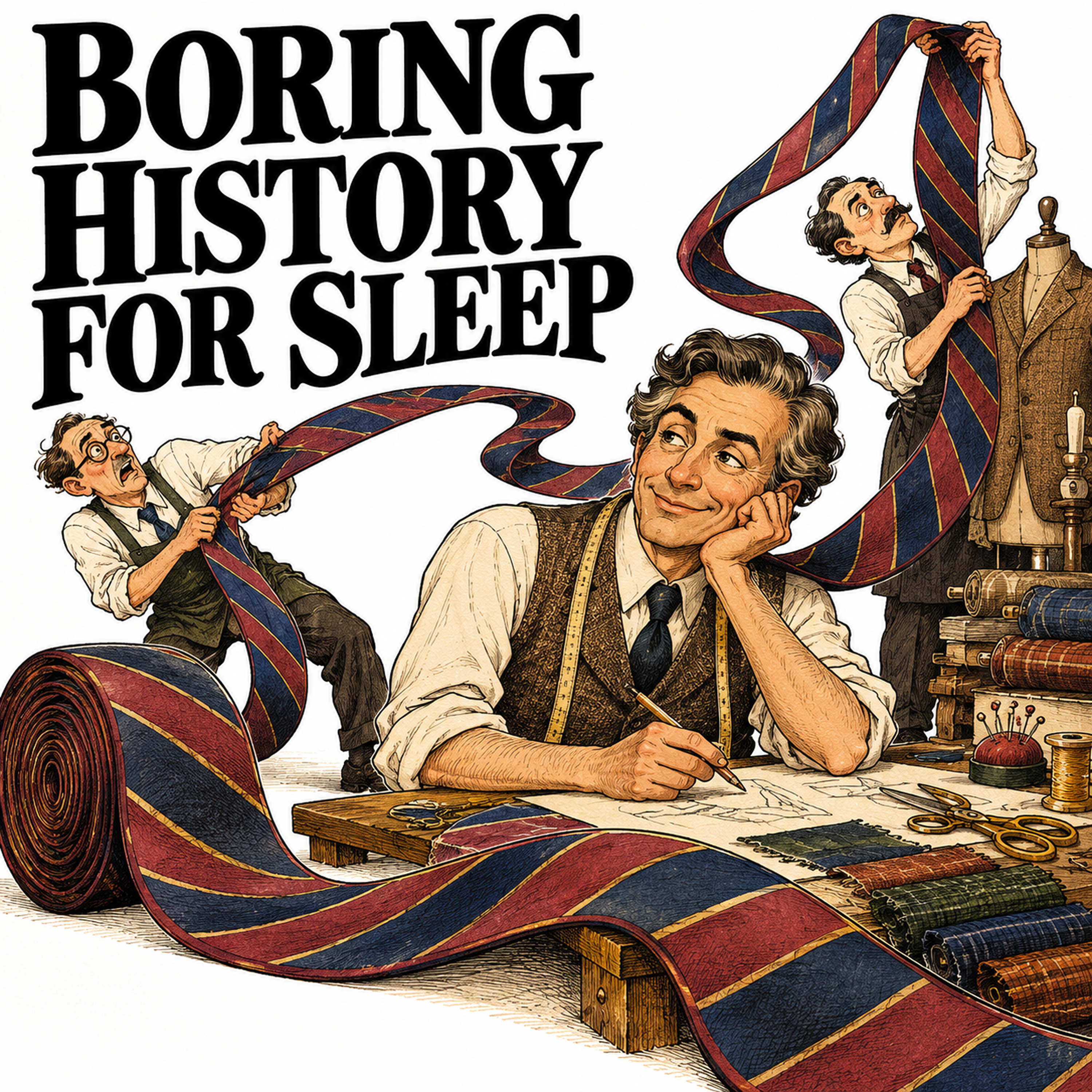
How did a young boy from the Bronx turn a simple dream into one of the world's most recognizable fashion empires? Ralph Lauren began with an unusual idea: creating wide, distinctive men's ties at a time when narrow styles were everywhere. Discover how he launched his Polo collection in 1967, built his first menswear line, and gradually expanded into women's fashion, accessories, and home design. Explore the inspiration behind his timeless American style, his business ambitions, and the risks that helped transform a small neckwear venture into a global brand. Follow the remarkable journey of a designer who turned his personal vision into a fashion legacy recognized around the world. Boring History for Sleep — Soft stories about extraordinary ambitions, forgotten beginnings, and the people who shaped our world.
David Heinemeier Hansson thinks the agent era is reopening a window in computing that has been closed for decades: the chance to build a new operating system people actually want to use. DHH joins a16z General Partners Martin Casado and Anish Acharya to explain why he’s building Omarchy, an agent-first Linux distribution designed around a computer that users can modify simply by asking. They discuss why the command lines, config files, and detailed error messages that once made Linux intimidating now make it unusually well suited to agents, and why DHH believes software development has become cheap enough to challenge decades-old platform lock-in. But if code is becoming abundant, what still matters? DHH argues that taste, craft, and the willingness to obsess over the final 2% become more important, not less. The conversation moves from tiny teams wielding the productive capacity of thousands of people to open models, competition at the frontier, and the return of hacker, demo, and pse
The question isn’t simply whether humanity should race toward superintelligence or stop. Nick Bostrom argues the harder challenge is preserving the ability to slow down when safety falls behind, without turning a temporary pause into permanent technological stagnation. a16z’s Eddy Lazzarin and Elena Burger sit down with Bostrom to revisit the ideas he helped bring into the mainstream, now that increasingly capable AI systems actually exist. They discuss why alignment may become harder as models grow more situationally aware, which capability improvements may carry more risk than others, and why Bostrom favors “pacing the frontier” rather than committing to a broad or indefinite pause. They also examine the cost of waiting. Bostrom argues that safely developed superintelligence could radically extend human lifespans and address problems from disease to poverty, meaning delay carries risks of its own. From there, the conversation turns to Deep Utopia, governance, the possibility of post-
AI agents are getting smarter, but every new agent still has to learn who you are. What if your preferences, priorities, relationships, and digital context could move with you instead? First Person Labs co-founder Ken Liu joins a16z’s Martin Casado and Joel de la Garza to introduce Second, a personal context layer designed to understand what you’re doing across your digital life and make that context available to the agents you choose. They discuss how Second can proactively connect information across conversations and applications, why protecting such personal data requires a different security architecture, and the longer-term vision of AI that doesn’t just respond to prompts, but understands enough context to know when and how to help. Resources: Try Second:https://2.computer (https://2.computer/) Learn more about First Person Labs: https://fpl.company/ Follow Ken Liu: https://www.linkedin.com/in/kenziyuliu/ Follow Martin Casado on X: https://x.com/martin_casadoa16z.com (https://a16
Sports eligibility rules should be based on transparent evidence and allow meaningful appeal.
Share your view, then see how readers voted. No sign-in required. This poll is shared across stories.
Do you agree or disagree?
Common Quandary
A Common Quandary to discuss
Another conversation to explore, separate from this news story.
The company printer sits idle all day. Can you print two hundred wedding invitations?
Your office has a fast color printer that is rarely used, and supplies are ordered automatically. Printing your wedding invitations after hours would save substantial money. Personal use is technically prohibited but routinely ignored for small jobs.
When does an insignificant workplace perk become taking?