English-language podcasts

Fun Facts Daily

Fun Facts About Horses
17 min

Listen through the publisher, then discuss the episode here or arrange an in-person Roundtable. Your city determines where to meet.

Roundtables are designed for groups of four, with a shared subject and room for everyone to speak. Come for discussion, with no dating expectation.

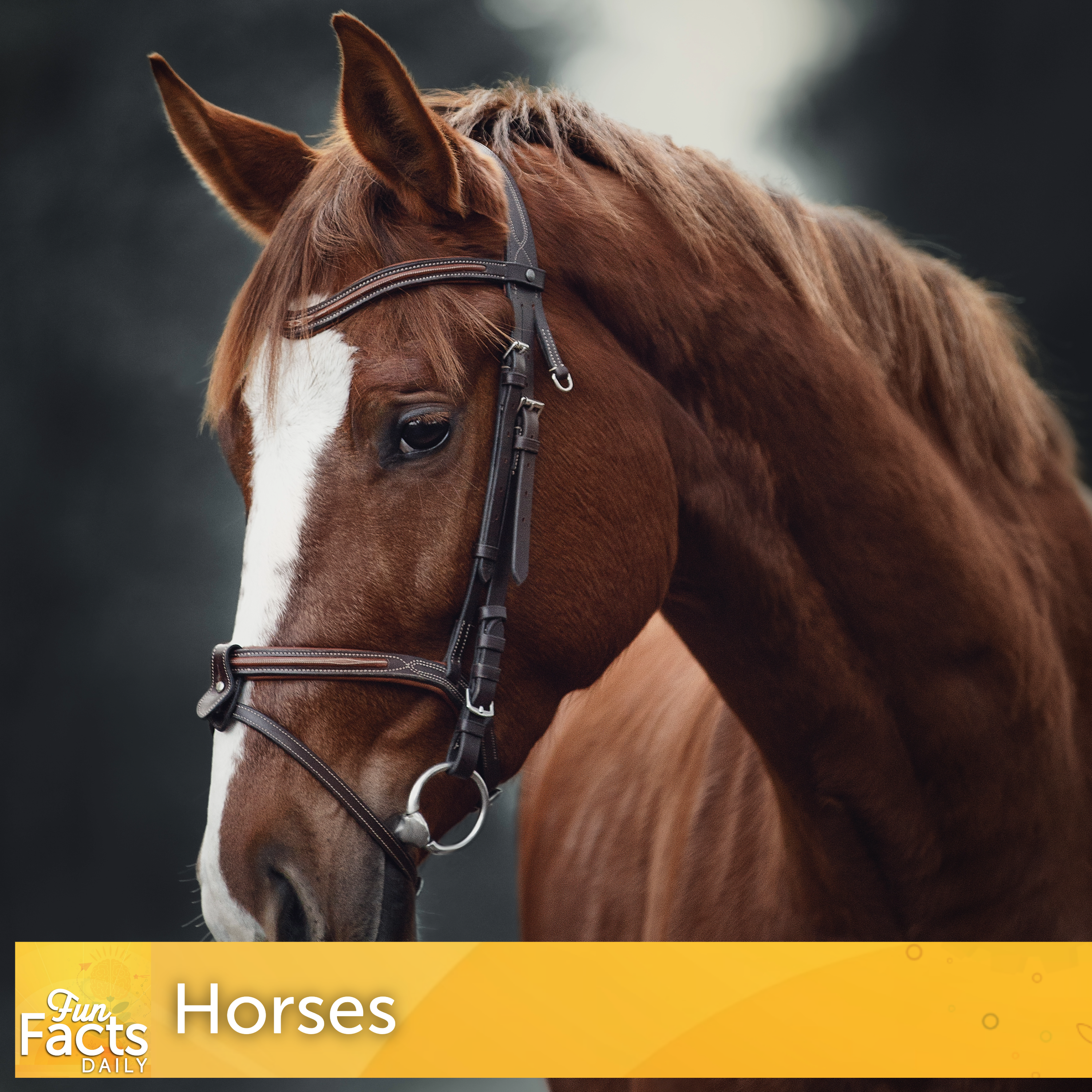
Horses (Equus caballus) are classified as odd-toed ungulates; modern equines support their body weight on a single enlarged middle toe encased in a tough keratin hoof wall, an evolutionary trait tracing back roughly 50 million years to the small, multi-toed Eohippus of North America. Although horses vanished from the Americas between 10,000 and 8,000 years ago due to climate shifts and prehistoric hunting, surviving Eurasian populations flourished and were domesticated before Spanish explorers reintroduced them to the Western Hemisphere in the late 15th and early 16th centuries. Historically central to agriculture and early transportation, horses inspired James Watt's standard definition of horsepower—the capacity to lift 33,000 foot-pounds of work per minute—even though a single draft horse can generate peak outputs approaching 15 horsepower during brief, explosive efforts. Equine physiology features unique sensory and biomechanical systems optimized for vigilance and survival as open-plains herd animals. Featuring large, two-inch-diameter eyes with horizontal rectangular pupils and reflective tapetum lucidum tissue, horses maintain a 350-degree panoramic field of vision and acute night vision, limited only by blind spots directly in front of the muzzle and behind the tail. Because horses are obligate nasal breathers with an airtight soft palate seal, galloping requires immense respiratory efficiency; a visceral piston effect mechanically drives up to 1,800 liters of airflow per minute through the nostrils in a strict one-to-one synchronization with each stride. While a specialized anatomical network of tendons and ligaments known as the stay apparatus enables horses to rest upright during light slow-wave sleep, vital rapid eye movement (REM) sleep requires full recumbency on the chest or side to accommodate total muscle relaxation, balancing herd alertness with essential neurological restoration. More to explore: Fun Facts About Your Sense of Vision (https://pod.link/1810507693/episode/MjhiZjcyZmEtYjExZi0xMWYxLWI0ZTgtMDdiNDU1ZjkxNzAz) Spotify playlist: Fun Facts About Animals (https://open.spotify.com/playlist/2AhRsVhVq517sgLOgNf9hO?si=tB8NBhSmTM6vbz05upRxTA) Want to learn more? Fun Facts Daily is an Airwave Media Podcast.

Episode information is provided by the publisher. Listening takes place on the publisher’s service.

Listen at the source ↗

Featured places to meet in Palo Alto, CA

Explore these places and arrange a conversation through ThinkMatch.

City guide for Palo Alto, CA

More from Fun Facts Daily

Fun Facts Daily

Fun Facts About Clocks

18 min

From ancient sundials to modern atomic timekeepers, the history of clocks reveals how human societies have measured time with growing precision. Early mechanical clocks in the Northern Hemisphere adopted a clockwise motion to mirror the sweep of sundial shadows across the sky, while exceptions such as Prague's 16th-century Jewish Town Hall clock and La Paz's modified legislative clock demonstrate cultural and regional variations. Practical timekeeping milestones include Levi Hutchins's 1787 4:00 a.m. alarm clock, Antoine Redier's 1847 adjustable alarm patent, and the November 18, 1883 establishment of four North American standard time zones to replace chaotic local solar times across towns and railroads. Precision timekeeping spans from monumental pendulums to quantum-scale oscillators. London's Great Clock in Elizabeth Tower relies on a two-second pendulum regulated with pre-decimal pennies to adjust its daily rate by two-fifths of a second, whereas cesium-133 atomic clocks define the

Discuss this episode

Fun Facts Daily

Fun Facts About Your Nervous System

15 min

The human nervous system is an intricate, high-speed biological network comprising the brain, spinal cord, and an extensive web of peripheral nerves that regulate nearly every bodily function, sensation, and movement. Nerve signals travel at varying speeds depending on myelination, with insulated alpha motor neurons transmitting electrical impulses at speeds up to 268 miles per hour via saltatory conduction, while unmyelinated pain fibers transmit sensations at much slower rates. Specialized neural pathways, such as reflex arcs, bypass the brain entirely during emergencies, routing signals through the spinal cord and interneurons to initiate rapid protective muscular reactions in fractions of a second before conscious processing occurs. Beyond the central nervous system, the human body features specialized decentralized networks like the enteric nervous system within the gastrointestinal tract, which contains roughly 100 million neurons and produces the vast majority of the body's sero

Discuss this episode

Fun Facts Daily

Fun Facts About Zebras

16 min

Zebras are iconic African equines recognized worldwide for their distinctive black-and-white striped coats, which conceal jet-black skin beneath unpigmented white and pigmented black hair. Far from functioning as camouflage against large savanna predators like lions, whose visual acuity fails to distinguish individual stripes at distances exceeding 164 feet, these high-contrast patterns act as an effective optical defense against biting horseflies. The overlapping visual lines scramble the insects' flight mechanics, causing them to miss their landing and bounce off the coat. Because every individual possesses a unique stripe arrangement akin to a human fingerprint, researchers use automated pattern-recognition tools and databases to track populations across the three recognized species: plains zebras, mountain zebras, and Grevy's zebras. Beyond their striking appearance, these animals exhibit remarkable ecological behaviors and physical adaptations across diverse African habitats. Plai

Discuss this episode

Community Poll

Polluters should pay cleanup costs even when the damage occurred many years ago.

Share your view, then see how readers voted. No sign-in required. This poll is shared across stories.

Do you agree or disagree?

Choose one answer

Common Quandary

A Common Quandary to discuss

Another conversation to explore, separate from this news story.

You lecture everyone about climate change—then get invited on a dream flight. Do you go?

A close friend living overseas invites you to an important celebration. Flying is affordable but carbon-intensive. Your individual decision will not determine whether the flight operates, yet it conflicts with commitments you publicly encourage others to make.

When is a small personal contribution to a large harm morally significant?

Explore this quandary