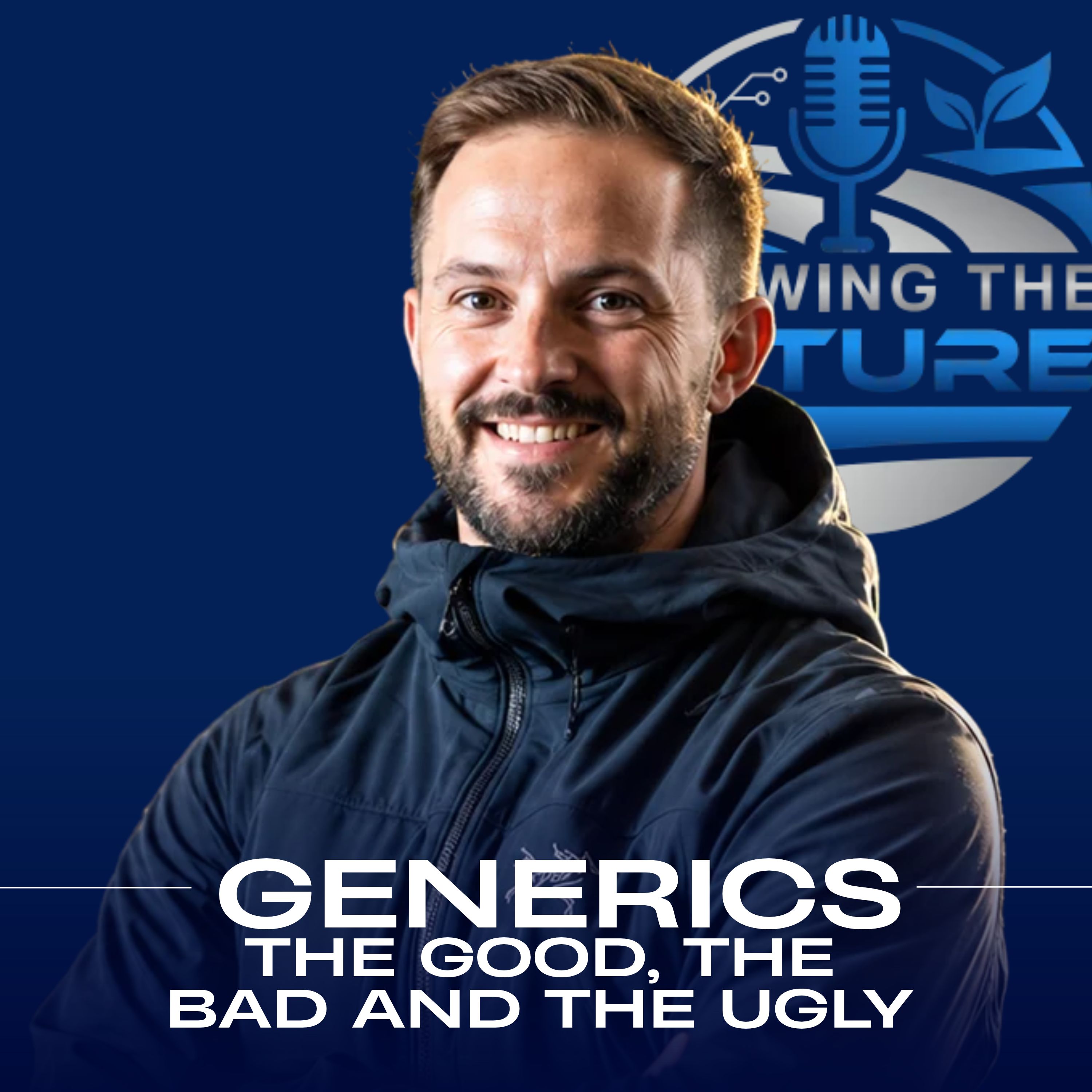
Generics: The good, The Bad, And The Ugly
Listen through the publisher, then discuss the episode here or arrange an in-person Roundtable. Your city determines where to meet.
Roundtables are designed for groups of four, with a shared subject and room for everyone to speak. Come for discussion, with no dating expectation.
Two quotes for the same chemical, and one looks almost too good to believe. Dan Aberhart asks Marc-Andre Fortin what is behind the gap and what you can check about a formulation before you buy. Marc-Andre has spent about ten years working on generic supply chains and has made repeated trips to the manufacturers in China. He is clear that not every generic is built the same, and that not every generic is as good as branded on every product. He explains how the same label can sit on products from different source points, why that makes it hard to know who to call when something goes wrong, and how his company tests every formulation before and after it buys. One example is a rainfastness problem found on a glufosinate product. A farmer and his agronomist did the analytical work, Paradigm swapped the product, and the manufacturer rebuilt the formulation within one season cycle. The conversation covers the history of generics in Canada, how label data and the regulatory process work, what changes about herbicide and fungicide agronomy when a product drops in cost per acre, and how fast to ramp up. Questions from the room come from farmers, agronomists, brokers and retailers. Key Topics Why “generic” is not one thing, and what to ask about formulation How a generic reaches the farm gate, and why accountability matters when a product fails The rainfastness story and how a complaint turned into a new formulation What the label and regulatory review do and don’t tell you How to ramp up generics without taking on liability Resources Mentioned -Paradigm Inputs -Pest Management Regulatory Agency (PMRA) Connect with Growing the Future Website:growingthefuture.ca (https://growingthefuture.ca/)
Episode information is provided by the publisher. Listening takes place on the publisher’s service.
Listen at the source ↗