Listen through the publisher, then discuss the episode here or arrange an in-person Roundtable. Your city determines where to meet.
Roundtables are designed for groups of four, with a shared subject and room for everyone to speak. Come for discussion, with no dating expectation.
Those who try to separate the call of the gospel from the call to be holy make a great error. In this sermon on Ephesians 4:20–21 titled “Hearing and Learning Christ,” Dr. Lloyd-Jones argues that the Bible presents the life of faith as a pursuit of holiness and righteousness that comes out of the new person through the Holy Spirit. Christians ought not separate belief in the gospel from living out the call of God in their lives to be imitators of Christ and to obey all that He commands. Preachers who misunderstand the connection between holiness and belief in the gospel often confuse listeners that they seek to evangelize by presenting the Christian life as compartmentalized. However, as Dr. Lloyd-Jones points out, even the pursuit of holiness in the life of the Christian is ultimately a result of what God has done in and through His Son Jesus Christ. Christians can easily fall into legalism when they disconnect the sovereign act of salvation from everyday Christian life. Christians must avoid dualisms knowing that Christ made them a new people by His death and resurrection. Therefore they respond in love and obedience, not as a way to gain favor with God, but because Christ has already done so for them.
Episode information is provided by the publisher. Listening takes place on the publisher’s service.
In this meditation, I invite you to reflect on the little joys that make up so much of our everyday lives. We are often encouraged to seek great experiences, extraordinary achievements and moments of intense happiness. Yet much of human life is made up of smaller, quieter experiences that can be just as meaningful. A good meal, a beautiful scene, a favourite piece of music, a conversation with a friend or a peaceful cup of coffee can all become moments of genuine joy. Within our contemplative tradition, joy is understood as a fruit of the Holy Spirit, an experience that can reveal the presence and action of divine love. Through meditation, we explore how cultivating kindness, compassion, gratitude and openness can create more opportunities for these small joys to arise. We also recognise that life will not always be joyful. Yet by learning to notice and appreciate the ordinary gifts around us, we may discover sources of strength and comfort during difficult times. Beginning with the si
Noah built an ark in response to a warning about things he had not yet seen, while Abraham left his homeland because God called him to a destination he had not been shown. Neither man had the complete picture of what lay ahead. We ask God to reveal the next five years when He may be asking us to trust Him with the next decision. Faith does not mean abandoning wisdom or planning; it means refusing to make complete understanding a condition for obedience. Sometimes, clarity comes as we walk, not before we begin. Every contribution counts. Thank you for being part of our journey!
Matthew 25: 31-46 - 'I was naked and you clothed me; sick, and you visited me.' Catechism of the Catholic Church Paragraphs: - 544 (In 'The Kingdom of God is at hand') - Jesus identifies himself with the poor of every kind and makes active love toward them the condition for entering his kingdom (abbreviated) - 1033-1034 (in 'I Believe in Life Everlasting') - Our Lord warns us that we shall be separated from him if we fail to meet the serious needs of the poor and the little ones who are his brethren...Jesus often speaks of "Gehenna" of "the unquenchable fire" reserved for those who to the end of their lives refuse to believe and be converted, where both soul and body can be lost. Jesus solemnly proclaims that he "will send his angels, and they will gather . . . all evil doers, and throw them into the furnace of fire," and that he will pronounce the condemnation: "Depart from me, you cursed, into the eternal fire!" - 2447 (in 'Love for the Poor') - The works of mercy are charitable acti
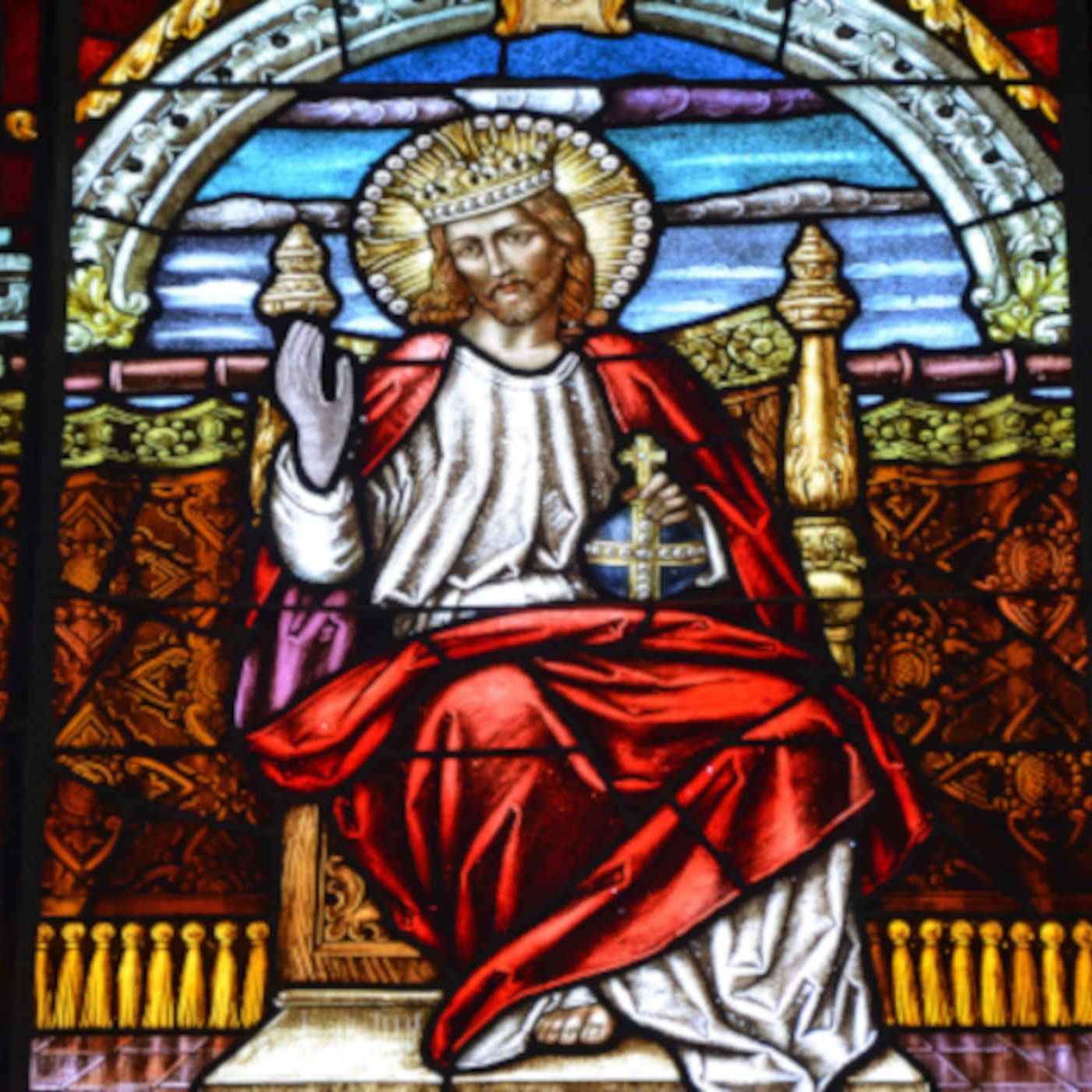
Read Online (https://catholic-daily-reflections.com/2026/11/21/christ-the-universal-king/) Christ the Universal King “Then he will say to those on his left, ‘Depart from me, you accursed, into the eternal fire prepared for the devil and his angels. For I was hungry and you gave me no food, I was thirsty and you gave me no drink, a stranger and you gave me no welcome, naked and you gave me no clothing, ill and in prison, and you did not care for me.’” Matthew 25:41–43 On June 11, 1899, Pope Leo XIII solemnly consecrated the entire human race to the Sacred Heart of Jesus, a moment he regarded as the “great act” of his pontificate. This consecration was rooted in the sacred truth that, “[Christ’s] empire includes not only Catholic nations, not only baptized persons… but also all those who are outside the Christian faith; so that truly the whole of mankind is subject to the power of Jesus Christ” (Annum Sacrum, 3). This prophetic act of entrustment was followed by decades of growing unrest
Life is too short to waste on things that don't last. In this powerful message, Dr. Michael Youssef challenges believers to stop living without purpose and start living fully for Jesus Christ. Drawing from 1 Peter 4, Dr. Youssef points to Jesus, who remained focused on the Father's will even as He faced the Cross. His example shows us what it means to live with spiritual purpose, resist temptation, and remain faithful when life gets difficult. A transformed identity in Christ changes your priorities. Instead of chasing comfort, approval, or worldly success, God calls you to live for what matters eternally. This episode challenges you to: Discover your purpose through Jesus Christ, Stop wasting time on temporary pursuits, Resist sin and pursue Biblical holiness, Follow Christ's example of unwavering obedience, Repent of distractions and misplaced priorities, Pray for the Church and those who don't know Christ. You were created for more than just getting through life. When Christ becomes
Sunday 22 November 2026 Today is Sunday the 22nd of November, the solemnity of Our Lord Jesus Christ, King of the Universe, beginning the 34th week of Ordinary Time. In the scripture we will pray with today, we hear of Jesus’ deep desire for us to love and serve those in need. As you hear Madison Cunningham with The Porter’s Gate singing, ‘Little Things with Great Love’, how does this song speak to you? In the garden of our Savior, no flower grows unseen; His kindness rains like water on every humble seed. No simple act of mercy escapes His watchful eye — for there is One who loves me: His hand is over mine. In the kingdom of the heavens, no suffering is unknown; each tear that falls is holy, each breaking heart a throne. There is a song of beauty on every weeping eye — for there is One who loves me: His heart, it breaks with mine. Oh, the deeds forgotten; oh, the works unseen, every drink of water flowing graciously, every tender mercy, You’re making glorious. This You have asked us:
The great message of Christianity is that Christians are not only saved from their sin and made right before a holy God, but they are made new creatures as the first fruits of the new creation in Christ. In this sermon on Ephesians 5:3–5 titled “Distinct Roles of Church and State,” Dr. Martyn Lloyd-Jones demonstrates how Scripture undercuts all doctrines of antinomianism, because by the power of the Holy Spirit all who are true believers are renewed and transformed daily through God’s grace. For it is the gospel that truly transforms fallen men and women; it alone can overcome the depravity of fallen human nature and make them new in Christ. This is why all attempts to make people moral without the gospel fail to address the deepest need of humanity. When the church becomes more concerned with moralism than the gospel, it loses the focus of its mission. This has often happened throughout the history of the church, and today many are repeating this error. The remedy to this is to see th
Christians often talk about the atoning death of Christ when in conversation about spiritual things. It is often mentioned regarding its relation to salvation. However, is it possible that it could mean even more? What is the impact it is supposed to have on the rest of one’s life? In this sermon on Ephesians 5:2 titled “The Atoning Work of Christ,” Dr. Martyn Lloyd-Jones instructs on how this verse and Christ’s atonement apply to the lives of believers even after they are saved. The Scriptures are never satisfied with a mere general statement about the love of God— as this verse demonstrates, God’s love is specifically written about in the Bible because the specific acts of God demonstrate His love. A person’s conduct is determined by their doctrine. Dr. Lloyd-Jones reminds that “as a man thinks, so is he.” Thus, one’s view of the doctrine of Christ’s atonement will have consequences for the Christian walk. In Christ’s atonement, one gains a clear example of the love of God. Dr. Lloyd
With so much input on how Christians are supposed to live their lives, how can they discern which way is correct? In this sermon on Ephesians 5:1–2 titled “Imitators of God,” Dr. Martyn Lloyd-Jones explains from Scripture how Christians are supposed to live and why they are to follow these guidelines. Paul says “we are to be imitators of God.” Christianity, Dr. Lloyd-Jones says, is more than just a moral code. Believers are never to obey simply because it is the normal “Christian” thing to do. Rather, they are to obey because they know what God has done for them and why God tells them to avoid certain things. In His graciousness, the Lord did not leave His people without reasons for obedience— instead, He tells often in Scripture the reasons why people are better off obeying His instructions. Just as children are representatives of their families, God’s children act as representatives of Him to the world. People should be able to look at them and see the Father because Christians shoul
Reliable software matters more than releasing new features quickly.
Share your view, then see how readers voted. No sign-in required. This poll is shared across stories.
Do you agree or disagree?
Common Quandary
A Common Quandary to discuss
Another conversation to explore, separate from this news story.
The prettiest trees on your street are ecological troublemakers. Do they come down?
A row of mature flowering trees defines a neighborhood and provides valuable shade. Ecologists identify them as invasive and recommend replacing them with native saplings that will take decades to grow.
How should visible community value be weighed against gradual ecological harm?