How America's military shaped the nation's history and evolved over 250 years
10 min
Listen through the publisher, then discuss the episode here or arrange an in-person Roundtable. Your city determines where to meet.
Roundtables are designed for groups of four, with a shared subject and room for everyone to speak. Come for discussion, with no dating expectation.
Over the last 250 years, the United States military has helped shape the nation's history – from the fight for independence to its emergence as the world's leading military power. But as the military's reach has grown, fewer Americans are serving in uniform. Judy Woodruff explores what that means for the country in her series, Crossroads: America at 250. Hosted on Acast. See acast.com/privacy
Episode information is provided by the publisher. Listening takes place on the publisher’s service.
This week on The Necessary Conversation, it's Chad, Haley, and Mary Lou. Bob is still recovering but sent in a video message about Trump calling Putin his friend that we watch together. 🇷🇺 Trump held the first-ever three-way talks with Putin and Xi, called it a "12 out of 10," and produced nothing. Then at a press conference he called Putin his friend — and when asked if Putin is a friend to America, the president of the United States said, "I can't speak to America." That same day, Trump's friend Putin launched massive strikes into Ukraine, hit Poland with two missiles — an act of war against a NATO ally — then struck near a Ukrainian restaurant and drone-bombed the first responders, killing a 7-year-old child and a 20-year-old paramedic. We watch Bob's video and ask Mary Lou: is Russia our friend? 🇨🇳 The House Foreign Affairs Committee revealed Trump's Commerce Department approved nearly 880,000 advanced AI chips for Chinese military-linked companies including Alibaba, Tencent, a
1653 OLIVER CROMWELL eorge Downing’s Early Years, Harvard Training, and Rise in Cromwell’s Parliamentary Army — Part One Dennis Sewell, author of Cromwell’s Spy: From the American Colonies to the English Civil War, introduces John Batchelor to George Downing, a member of Harvard’s first graduating class who joined the English Civil War. Serving as chaplain and scoutmaster under Oliver Cromwell, Downing put his Latin fluency, intelligence, and pragmatic ruthlessness to work in military operations. (3)
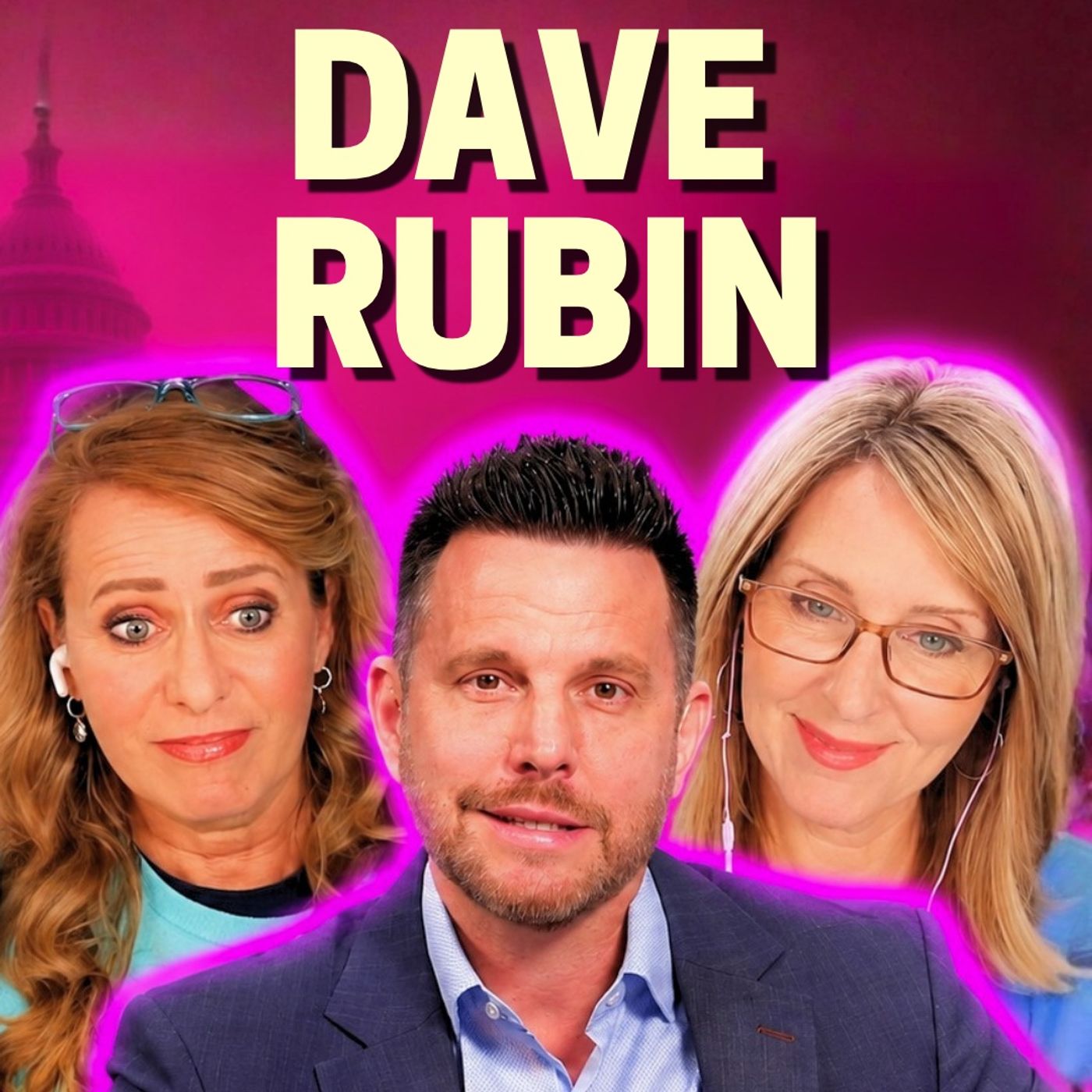
Is the Republican Party heading for a major reckoning in 2028? Dave Rubin joins The Chicks on the Right for a brutally honest conversation about Trump's final two years, the future of the GOP, and the growing divisions threatening conservatives. Dave weighs in on the Republican Party's recent election losses, whether JD Vance, Marco Rubio, or Ron DeSantis can carry Trump's agenda forward, and why he's increasingly concerned about the political direction of America. The conversation heats up as Dave takes on Nick Fuentes, the rise of extremist voices on the right, and the socialist movement gaining influence within the Democratic Party. He also discusses radical Islamism, antisemitism, the dangers of online outrage, and why he believes Western civilization faces serious challenges. Plus, with cyberattacks, banking disruptions, and nationwide outages raising concerns, Dave shares his thoughts on whether Americans should be preparing for more chaos. And don't miss the lighter side of Dave
A wave of major technology outages is raising troubling questions about America's cybersecurity, aging infrastructure, and readiness for a new era of artificial intelligence. Are these isolated technical failures, or warning signs of a much larger national security problem? John Solomon and Amanda Head welcome Ohio Congressman and former Army Ranger Warren Davidson, who discusses recent disruptions involving the FAA, Microsoft, and other critical systems. Davidson calls for greater transparency from government agencies and technology companies, questions whether America's infrastructure is adequately protected against emerging cyber threats, and examines how artificial intelligence could be used both to strengthen defenses and exploit vulnerabilities. The conversation also turns to immigration and national security, with Davidson raising concerns about individuals who entered the country illegally, potential gaps in government screening systems, and the surveillance powers used to moni
At the trilateral meeting of the leaders of the United States, Russia and China, in Shenzhen this week, Donald Trump was keen to emphasise that they were making history. While wars continue to roil Ukraine and the Middle East, the three leaders sat down to discuss nuclear weapons, boosting petroleum production, reform of the United Nations and their dislike of the International Criminal Court. So was this a Yalta 2.0 as some parts of the media have suggested, or will this meeting soon be forgotten as just another wild moment from final years of Trump's presidency? Guest: Margaret MacMillan, emeritus professor of international history at Oxford University and the University of Toronto
Overnight world leaders have walked away from the COP31 summit without a deal. After the longest negotiation in COP history, several countries - including the 27-nation European Union - declared they couldn't accept a draft from the joint Turkish-Australian leadership that didn't mention fossil fuels. Then, Defence Minister Richard Marles has criticised the US Congressional Budget Office over a report that says the AUKUS pact will decrease the number of attack submarines available to the US navy. We hear from the report's author.
In a lengthy press conference, President Trump touted his recent trip to Asia and defended his relationship with Chinese President Xi Jinping and Russian President Vladimir Putin. White House correspondent Liz Landers was in the briefing room as the president took questions from reporters. Hosted on Acast. See acast.com/privacy
In our news wrap Friday, stocks tumbled to end the week as worries about AI rattled the market, a second federal judge is blocking President Trump's triumphal arch in Washington and a federal appeals court is blocking the Army from detonating several tons of bomb-making chemicals amid concerns over environmental and health risks. Hosted on Acast. See acast.com/privacy
President Trump has replaced the nation's top cybersecurity official following a string of seemingly unrelated technology outages over the last couple of weeks. Officials have repeatedly stressed that these outages were not the result of intentional attacks, but given the growth of AI, there's growing concern that attacks are on the horizon. William Brangham discussed more with Chris Krebs. Hosted on Acast. See acast.com/privacy
An institutional apology should include a concrete plan to prevent repetition.
Share your view, then see how readers voted. No sign-in required. This poll is shared across stories.
Do you agree or disagree?
Common Quandary
A Common Quandary to discuss
Another conversation to explore, separate from this news story.
Your adorable child could pay for college by becoming an influencer. Do you start filming?
Parents post cheerful videos of their young child and earn enough to fund the child's education. The child enjoys filming now but cannot understand what it means for strangers to watch those moments years later.
Can parents consent to a permanent public identity on a child's behalf?