For review: 1. Iraq has reached a compromise with the powerful Iran-backed militia Kataeb Hezbollah, three senior security officials said, after Prime Minister Ali al-Zaidi readied security forces to move against the group. Reflecting the gravity of the situation, Iraqi Shiite political sources said Esmail Qaani, commander of Iran’s elite Revolutionary Guards’ Quds Force, arrived in Baghdad late on Monday to help defuse tensions with Kataeb Hezbollah, Tehran’s most powerful militia ally in Iraq. 2. Lebanese President Joseph Aoun launched a lengthy rebuke of Iran in an Independence Day address, arguing that the Islamic Republic does not have the right to interfere in Lebanon’s internal affairs, as it long has via support for its local terror proxy, Hezbollah. 3. Yemen’s Houthis launched strikes on the Saudi capital Riyadh on Saturday, after vowing reprisals for a “special operation” by the Saudi-led coalition fighting them. The coalition later said it had “intercepted and destroyed” thr
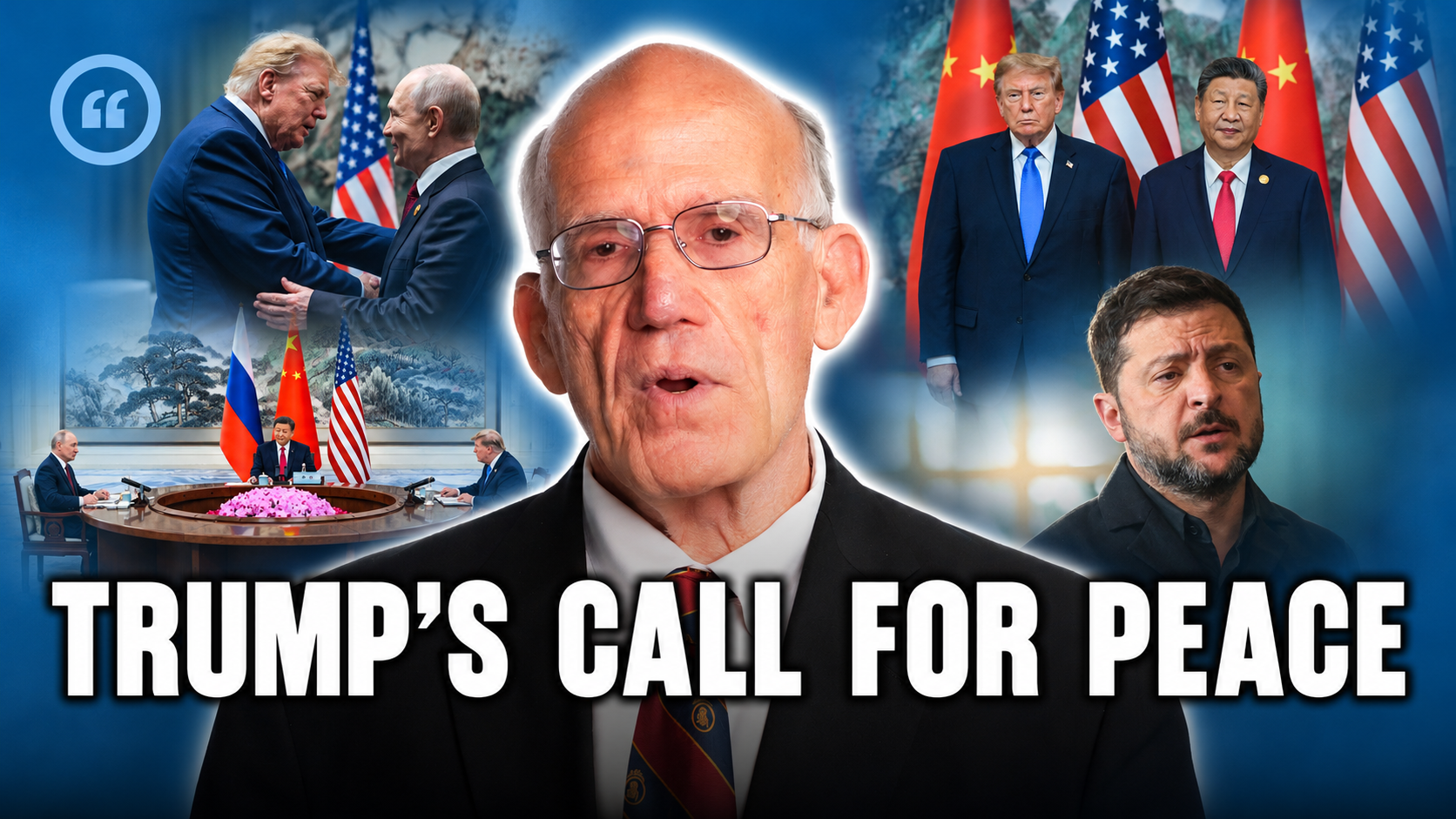
President Donald Trump's first ever trilateral summit with Vladimir Putin and Xi Jinping raises questions about the future of the war in Ukraine and whether a peace agreement could finally be within reach. Victor Davis Hanson and Sami Winc examine the summit on today’s edition of “Victor Davis Hanson: In His Own Words,” discussing Russia's declining influence, potential territorial concessions in Ukraine, and Europe's frustration over Trump's peace negotiations. Hanson criticizes Hillary Clinton's attacks on Trump's diplomacy; he also argues that European leaders have weakened their influence by neglecting defense spending and relying on American military protection. They discuss Elon Musk's shifting political allegiances, and Hanson warns that distancing himself from MAGA may not protect him from Democrat investigations. They also discuss the potential economic benefits of artificial intelligence and the challenges facing Hakeem Jeffries as Democrats prepare to take control of the Hou
From The Daily Wolf with Scott Melker, live weekdays at 12pm ET on Yahoo Finance. Scott Melker says the Anthropic IPO is getting blamed for a broad sell-off, but crypto's pre-IPO markets nailed the opening price, and tech has fallen harder than Bitcoin from the highs. CoreWeave, Oracle, Intel, and Robinhood are down as much as or more than Bitcoin, yet the "Bitcoin is dead" talk does not get applied to those stocks, or to silver, which he notes fell 36% in a day near the top and is now down 65% from its high versus about 51% for Bitcoin. Galaxy Research says institutional holdings in US spot Bitcoin ETPs hit a record $29.8 billion in Q3, with investment managers adding a net 49,229 Bitcoin equivalent and Wells Fargo the largest reported holder. The Treasury also auctioned a $15 billion 9-day cash management bill, the first of that tenor since the financial crisis, which he frames as cash plumbing rather than a crisis. CFTC chairman Michael Selig told a Washington forum that platforms s
On this week’s edition of “Happy Hour,” Emily Jashinsky tackles whether America’s political system is irreparably broken, the growing distrust of political institutions, and why voters are increasingly fed up with corruption and self-serving politicians. She discusses Thomas Massie’s political future, the possibility of breaking up the two-party system, why she generally distrusts ProPublica’s reporting, and the ethics of the Supreme Court. She also weighs in on the dangers of authoritarian communism, foreign influence in Washington, and why maintaining faith in elections is so important. Emily addresses the political risks of embracing artificial intelligence, which careers might survive the technological revolution, and why she struggles to unplug from work. Finally, she shares her favorite time to visit Washington, D.C., her thoughts on Robert Pattinson as the next James Bond, and more… Hosted by Simplecast, an AdsWizz company.
Iran says it shot down a U.S. drone over the Strait of Hormuz as CBS News reports the U.S. and Israel are weighing a new assault on Iran. MIKE DROP NEWSROOM | 21 NOVEMBER 2026 Iranian state TV claimed Saturday that Iran downed a U.S. drone near Qeshm Island; the U.S. has not confirmed it. CBS News reported, citing sources, that the U.S. and Israel are considering a new assault in the short term, driven by Israeli concern over how fast Iran is rebuilding its missile production and moving sites underground. President Trump told Israel's Channel 12 he is not rushing any decision. At the same time, the New York Times reported Israeli warnings that Iran has made progress on chemical and biological weapons and could use them against U.S. officials, though some U.S. officials doubt those warnings. Mike Ritland breaks down why a single intelligence source shouldn't drive a decision this big, how corroboration works when lives are on the line, and what would actually change his mind. Also cover
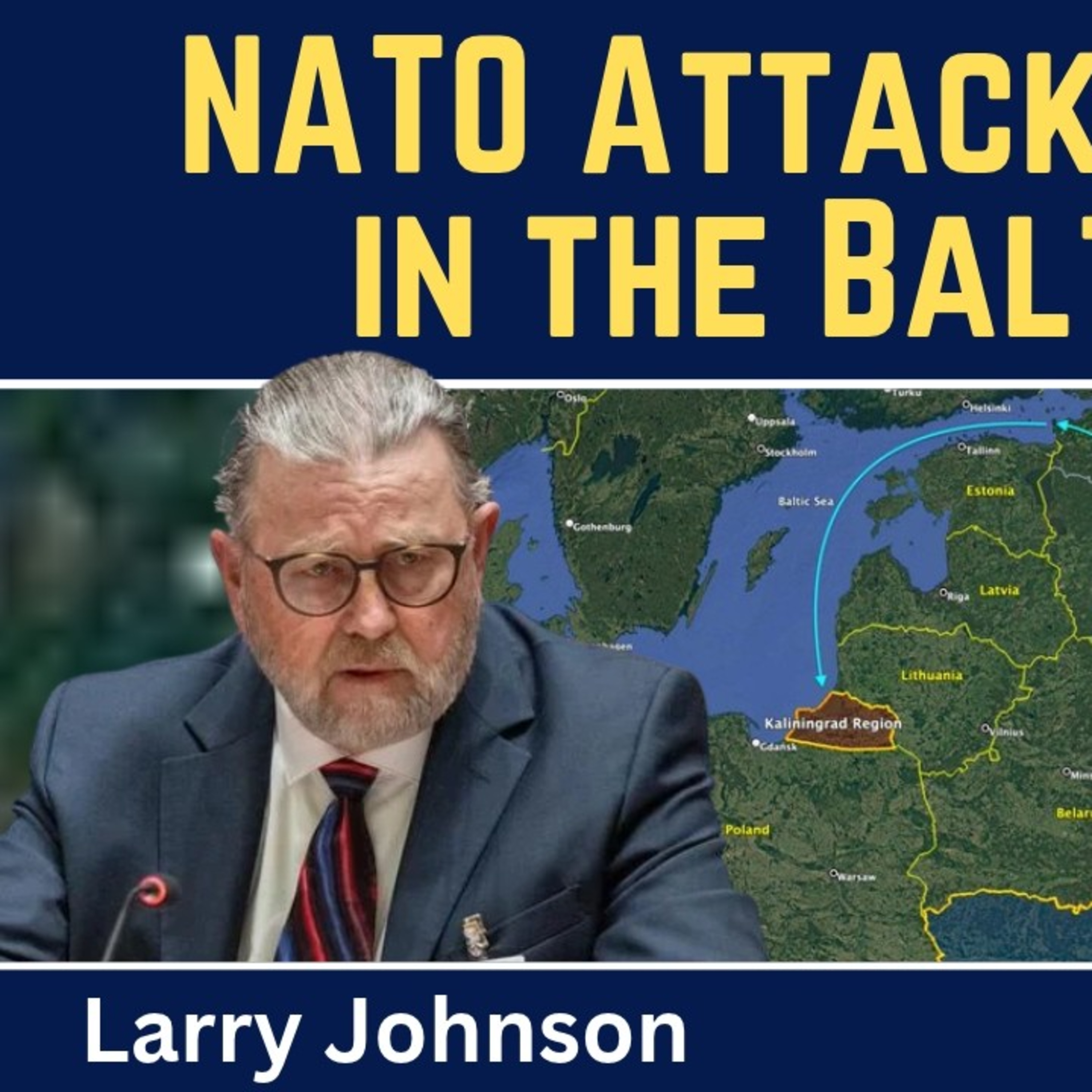
Larry Johnson is a former CIA intelligence analyst who also worked at the U.S. State Department's Office of Counterterrorism. Johnson discusses the attack on a Russian cargo ship in the Baltic Sea, and the air alarms going off in Kaliningrad. Read Larry Johnson's Sonar21: https://sonar21.com/Follow Prof. Glenn Diesen: PayPal: https://www.paypal.com/paypalme/glenndiesenBuy me a Coffee: buymeacoffee.com/gdiesengGo Fund Me: https://gofund.me/09ea012fBuy Diesen merchandise: https://diesen-shop.fourthwall.com/en-nokBooks by Prof. Glenn Diesen: https://www.amazon.com/stores/author/B09FPQ4MDL 00:00 Escalating Tensions in the Baltic Sea02:45 NATO's Role and Russia's Response05:52 The Shift in European Attitudes Towards Russia09:11 Cultural Influences on Perceptions of Russia11:44 The Consequences of Military Escalation15:06 The Irrelevance of Europe in Global Politics25:49 Reassessing Global Power Dynamics32:44 The Role of Europe in a Changing World39:19 The Impact of Economic Interests on Pol
This week’s EU-UK reset has been long in the making. After the final squeeze by negotiators, will the summit pave the way for a closer relationship and maybe even lead to Britain rejoining the bloc – or are the strains of the Brexit divorce still too raw to overcome? As British Prime Minister Andy Burnham arrives in Brussels to sign off on a deal covering agri-food, energy and youth mobility, Anne McElvoy asks how Europe sees Britain’s desire to move closer to the fold and what might come next. She's joined by Sandro Gozi MEP, who chairs the EU delegation to the EU-UK Parliamentary Partnership Assembly and is a member of the centrist Renew Europe Group. Gozi previously sat in Italy’s parliament and was Secretary of State for European Affairs in the Renzi and Gentiloni governments from 2014 to 2018. Later in the podcast, she'll talk to Nick Thomas-Symonds, who until a few months ago led the UK’s negotiations on the reset deal. He made way for the current EU Relations Minister Hamish Fal
European leaders gather in Berlin for a high-stakes meeting on Ukraine, just as Donald Trump, Vladimir Putin and Xi Jinping hold talks in China. With Washington and Moscow sending conflicting signals about Europe's role in peace negotiations, can the Coalition of the Willing secure a seat at the table — and find the money to keep Ukraine fighting? Also on the podcast: Host Zoya Sheftalovich and Kathryn Carlson discuss the upcoming EU–UK summit in Brussels, where British Prime Minister Andy Burnham is promising a fresh start after Brexit. And mysterious cyber incidents disrupt the European Commission's internal systems. Questions? Comments? Message us on WhatsApp here (https://api.whatsapp.com/send/?app_absent=0&phone=32491050629&text=Hey+Zoya+and+crew%21+&type=phone_number) or at +32 491 05 06 29.
Kaja Kallas may be the EU’s top diplomat, but her role in key diplomatic discussions —whether on Ukraine or Israel — remains murky. Today on the show, Zoya Sheftalovich and Ian Wishart examine the increasingly overlapping job descriptions of Kaja Kallas and the EU’s Commissioner for the Mediterranean, Dubravka Šuica, and unpack what that says about EU diplomacy. Also on the podcast: Is Russian President Vladimir Putin serious about peace? Lithuania’s Foreign Minister Kęstutis Budrys doesn’t think so. And finally, nobody seems to want to live in Luxembourg — which is problematic for the institutions based there looking to recruit more people. How would you feel about moving to Luxembourg? Let us know by messaging us on WhatsApp here (https://api.whatsapp.com/send/?app_absent=0&phone=32491050629&text=Hey+Zoya+and+crew%21+&type=phone_number) or at +32 491 05 06 29. Articles mentioned in this episode: Faking it: Europe thinks Putin isn’t serious about peace. (https://www.politico.eu/articl
Communities losing a major industry deserve transition support before jobs disappear.
Share your view, then see how readers voted. No sign-in required. This poll is shared across stories.
Do you agree or disagree?
Common Quandary
A Common Quandary to discuss
Another conversation to explore, separate from this news story.
A donor's family wants to hear their loved one's heart beating in you. Do you meet them?
A transplant recipient receives a letter from the donor's family asking to meet. The recipient feels profound gratitude but also discomfort and wants their recovery to remain private and separate from another family's grief.
Can receiving an extraordinary gift create a personal obligation to strangers?