Listen through the publisher, then discuss the episode here or arrange an in-person Roundtable. Your city determines where to meet.
Roundtables are designed for groups of four, with a shared subject and room for everyone to speak. Come for discussion, with no dating expectation.
Lorenzo is a dental student with big dreams—of becoming a rock star. Lorenzo plays a mean guitar at open mic night, but there’s one thing holding him back: He doesn’t know how to write his own songs. In this episode of How To!, we bring in master songwriter Ben Folds, former frontman of Ben Folds Five, and author of A Dream About Lightning Bugs: A Life of Music and Cheap Lessons. Many of those lessons are about how anyone can unlock their creativity. Ben breaks down his own music, and tinkers with Lorenzo’s attempt at writing a break-up song. He tells him to embrace cliché, then slip in something unexpected. Also, switch the first lyric with the second. Will it work? Hosted by Simplecast, an AdsWizz company. See https://pcm.adswizz.com advertising.
Episode information is provided by the publisher. Listening takes place on the publisher’s service.
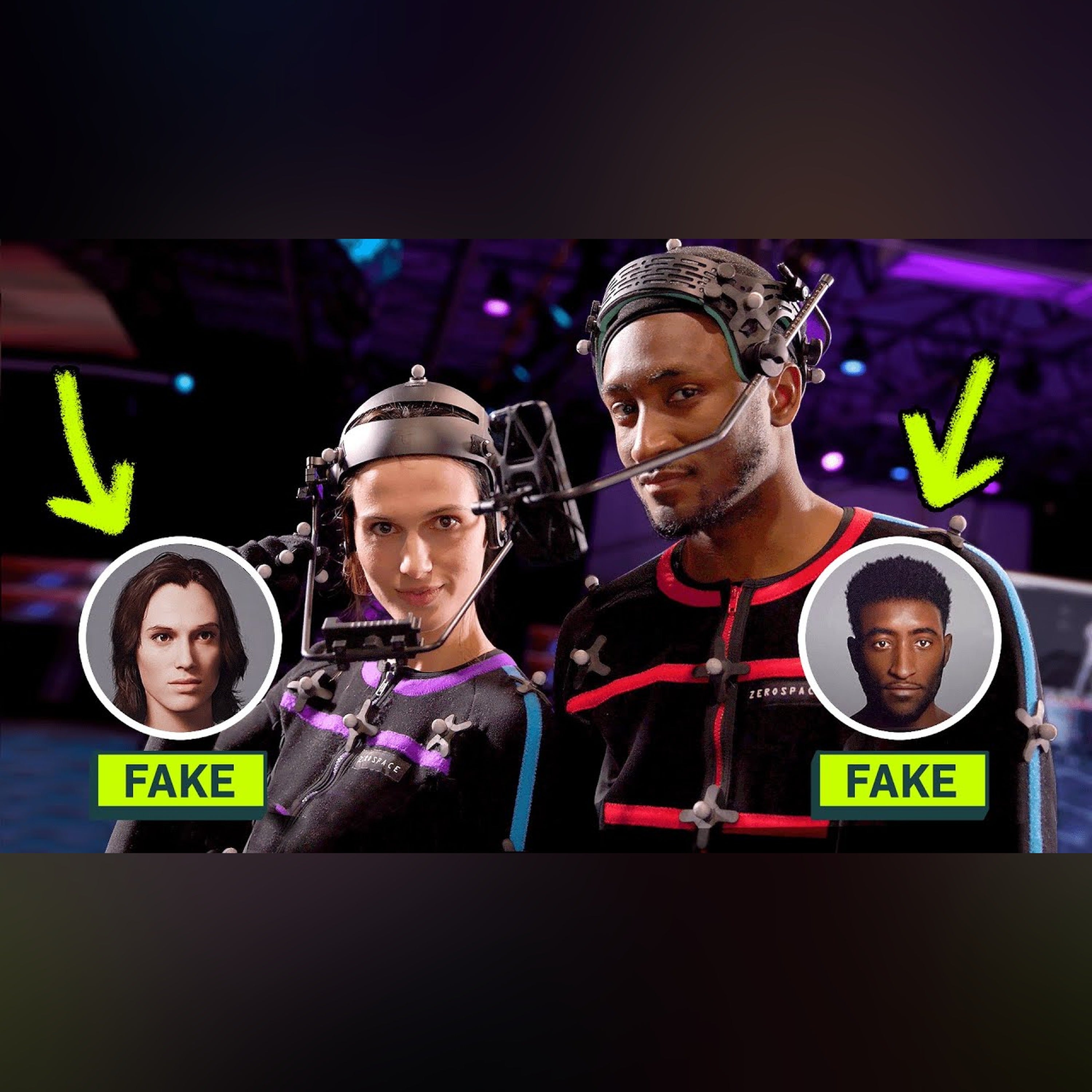
This new tech is changing how movies get made. So @mkbhd and I tested it out... Watch MKBHD's video: https://youtu.be/RM7SobH8ZO0 I’ve been obsessed with sci-fi movies since I was a kid. I love being transported to another world. But lately, I’ve been wondering: How do those worlds look so… REAL? The tech behind movies has exploded in complexity and realism, changing how stories come to life on screen. Luckily, at the same time, those tools are becoming more and more available to more people telling stories. It’s not just blockbusters like Avatar 2 or Avengers or Dune. It’s also smaller budget films like Everything Everywhere All at Once or even… YouTube creators? In this video, Marques Brownlee and I test out 3 movie-making tools that are changing how movies, shows, and maybe even YouTube videos (??) get made. We’re at ZeroSpace Studios in New York to show you how each of these crazy technologies work - and how you might be able to use them. Along the way, we hit big questions like: W
Giouli thought alcohol was the one thing that let her stop being perfect. Hear how a 30-day break she expected to end in January led her to write the first quit lit book in Greece and help change how her country talks about drinking. What happens when a question you ask yourself one January refuses to go away? For Giouli, alcohol started as freedom from perfectionism at university. It followed her through a demanding events career and into motherhood, when wine came home every night and blackouts began to scare her. Rules and moderation only left her feeling guilty. Then, holding a glass of red wine on her balcony, she asked herself who she was without it. That question led her to write two books, become a coach, and help shift the drinking culture in Greece. Why alcohol felt like freedom from perfectionism, not a way to numb The common belief about drinking at home that kept her from questioning alcohol What moderation rules did to her guilt and her sense of control The balcony moment
Your car is a computer on wheels, and someone across the country could hack its brakes. Check out the full episode: https://lewishowes.com/legacy/marc-goodman/ Marc Goodman, author of Future Crimes and a teacher at Singularity University, told Lewis that cybersecurity is now everyone's problem, because there has never been a computer system that couldn't be hacked. A Samsung TV can listen to everything you say in your bedroom. Tens of thousands of conference room video systems have been hacked, so a spy no longer needs to hide a bug under the table. Then Marc told the story of Cassidy Wolf, Miss Teen America, who opened an email that said “I've seen you naked.” A classmate had bought spyware online and was secretly running her webcam. She went to the FBI, and he went to prison for years. A Post-it Note over your webcam does the job. Marc: “just 'cause you don't see the light doesn't mean the camera's not on. Hosted by Simplecast, an AdsWizz company.
Happy Pot Luck Saturday! We talk Cary Grant, David Niven, Loretta Young, an angel with questionable intentions, and a Christmas movie that takes four nights to finish. We cover the 1947 classic The Bishop’s Wife and try to figure out how a film with five Oscar nominations earns only one and a half candy canes. We talk Cary Grant’s charm, David Niven’s stiff bishop, a wealthy widow who just wants to build a cathedral, and an angel who seems more interested in the bishop’s wife than saving Christmas. We talk Hollywood casting mistakes, Billy Wilder’s rewrites, and on-set tensions. We talk endless ice skating, glowing cathedrals, magically refilling bottles, self-decorating Christmas trees, and familiar faces from It’s a Wonderful Life. We talk Siskel and Ebert, critics who loved the wrong movies, and Kev rewriting the entire story into something we might actually want to watch. Plus, Whitney Houston and Denzel Washington in The Preacher’s Wife, Alastair Sim versus George C. Scott as Scro
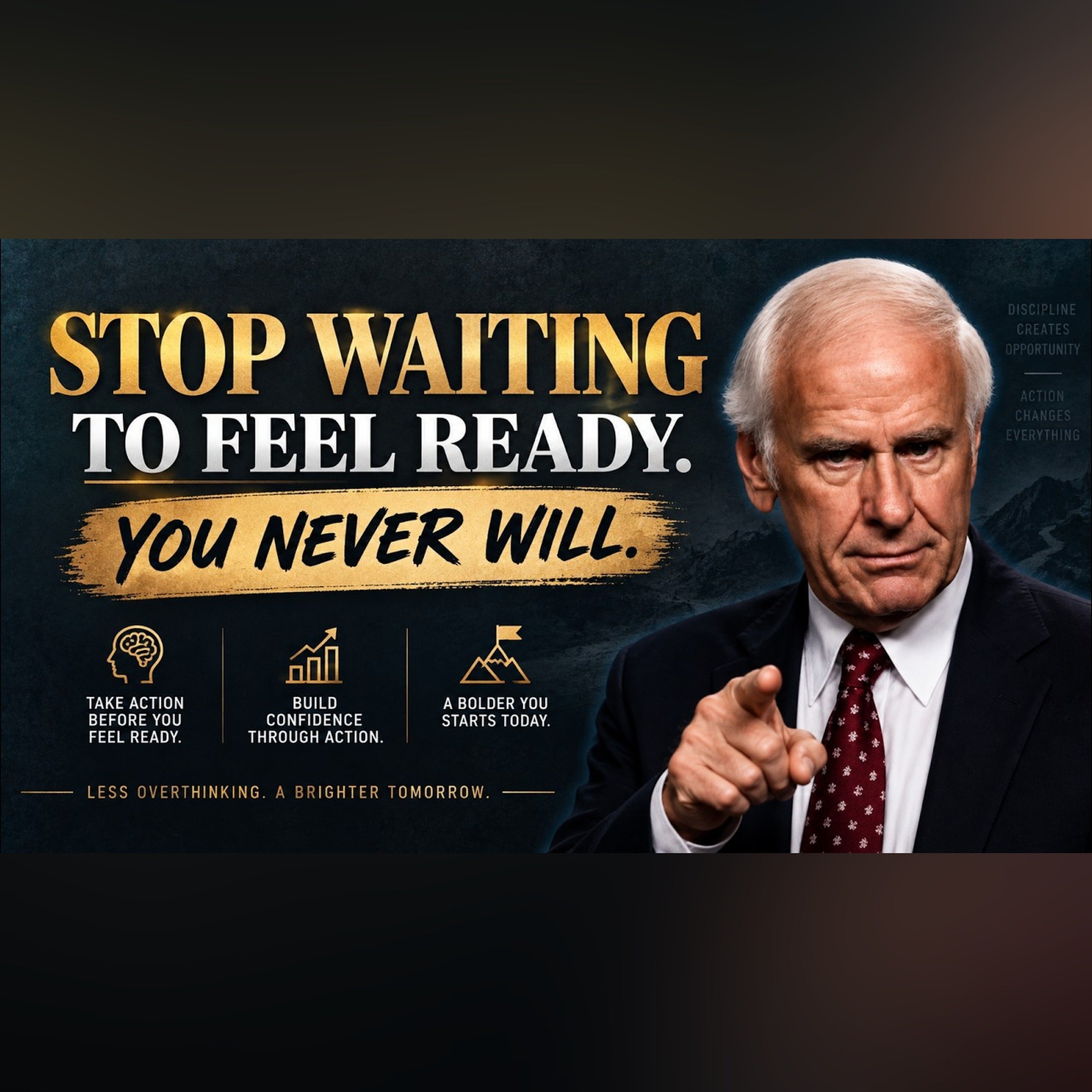
The gate doesn't have a lock. It doesn't have a key. There's nobody standing on the other side waiting to wave you through. Uploaded 09-09-26 The gate was open the whole time. You just couldn't see it, because you were staring at the ground, waiting for your feet to feel light. You've been standing there for years, warming up for a race you never run. Here is the truth: readiness is not a feeling you receive. It is a decision you make. The people who built the things you wish you'd built didn't feel more ready than you do — they just stopped waiting to feel it. This seminar unpacks the single mechanic behind why you never feel ready — and why willingness, not readiness, is what actually builds a life. CHAPTERS 0:00 Intro — The gate was open the whole time 2:04 The classroom lie: prepare, then perform 4:24 Fear wearing the mask of wisdom 6:36 Readiness is a quality you bring, not a state you arrive at 8:24 The glass never fills — skill comes from use 11:36 The cruel arithmetic of the wa
To check the transcript: https://www.buzzsprout.com/2379282 Imagine someone who has lived abroad for many years. One evening, they're talking to a friend about their hometown. They mention the streets they used to walk down, the familiar voices, and the little things they never thought they'd miss. Their friend asks: “Why do you get so emotional whenever you talk about your hometown? Do you want to move back?” They reply: “It's not that simple. It goes deeper than that. I miss a version of my life that doesn't exist there anymore.” Hello everyone, and welcome to Daily English. Today's expression is “It goes deeper than that.” We use this expression when something is more complicated, meaningful, or emotionally significant than it first appears. In other words, there's something beneath the surface that people might not immediately recognize. In our opening example, the person isn't necessarily longing to return to their hometown. What they miss might be their childhood, the people they
Sharon is 38 and never been kissed. This, as she acknowledges, is “a bit weird.” As a nurse who loves ballroom dancing, Sharon is smart, funny, and attractive. At the same time, she’s deeply religious and has been waiting so long for the perfect man she worries that she’ll never find “The One.” In this episode of How To!, we bring in one of New York City’s finest matchmakers, Lisa Clampitt, for some tough love. Lisa believes Sharon has a lot going for her, but in order to find her first kiss she needs to go on a lot more second dates. This is no fairytale, but sometimes you have to kiss a few frogs before you find your prince. Hosted by Simplecast, an AdsWizz company. See https://pcm.adswizz.com advertising.
Jessica is only 26, but says her memory is 'worse than my mother's.' She forgets friends' birthdays, important details at work and worries that life is passing her by. In this episode of How To!, we bring in Joshua Foer, a former U.S.A. Memory Champion who wrote Moonwalking with Einstein: The Art and Science of Remembering Everything, to help Jessica train her brain. Josh says you don't have to be a memory champion to have a superhuman ability to remember — you just have to pay attention and let your imagination run wild (the raunchier the better). Hosted by Simplecast, an AdsWizz company. See https://pcm.adswizz.com advertising.
Art should be available in ordinary community spaces, not only specialist venues.
Share your view, then see how readers voted. No sign-in required. This poll is shared across stories.
Do you agree or disagree?
Common Quandary
A Common Quandary to discuss
Another conversation to explore, separate from this news story.
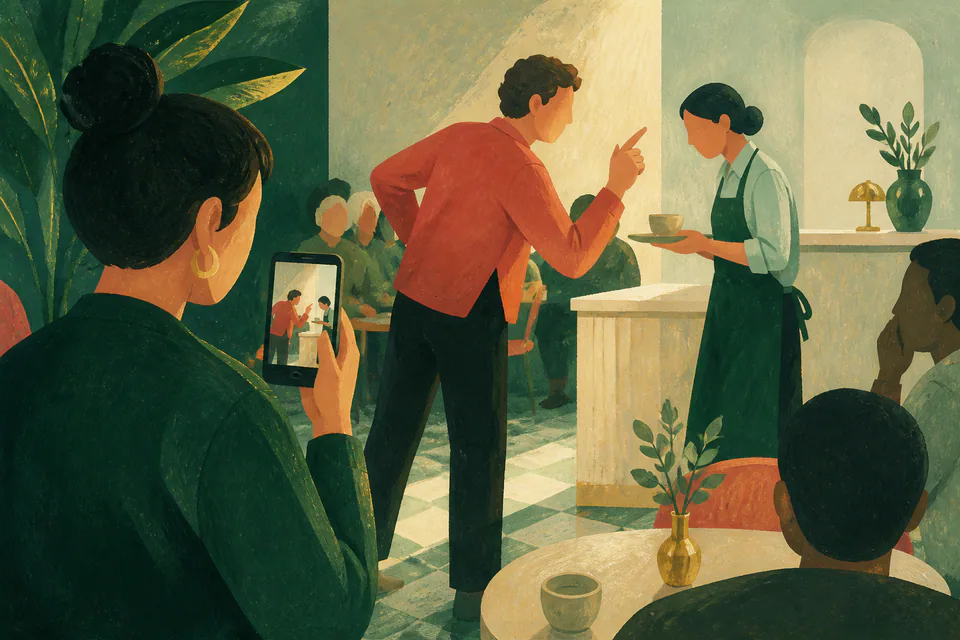
A stranger is behaving horribly in public. Do you record them?
You witness a stranger berating a service worker in public. Recording could create accountability and protect the worker, but posting the video could expose everyone involved to a permanent online audience.
Who gets to decide when public behavior becomes public content?