English-language podcasts

ZOE Science & Nutrition

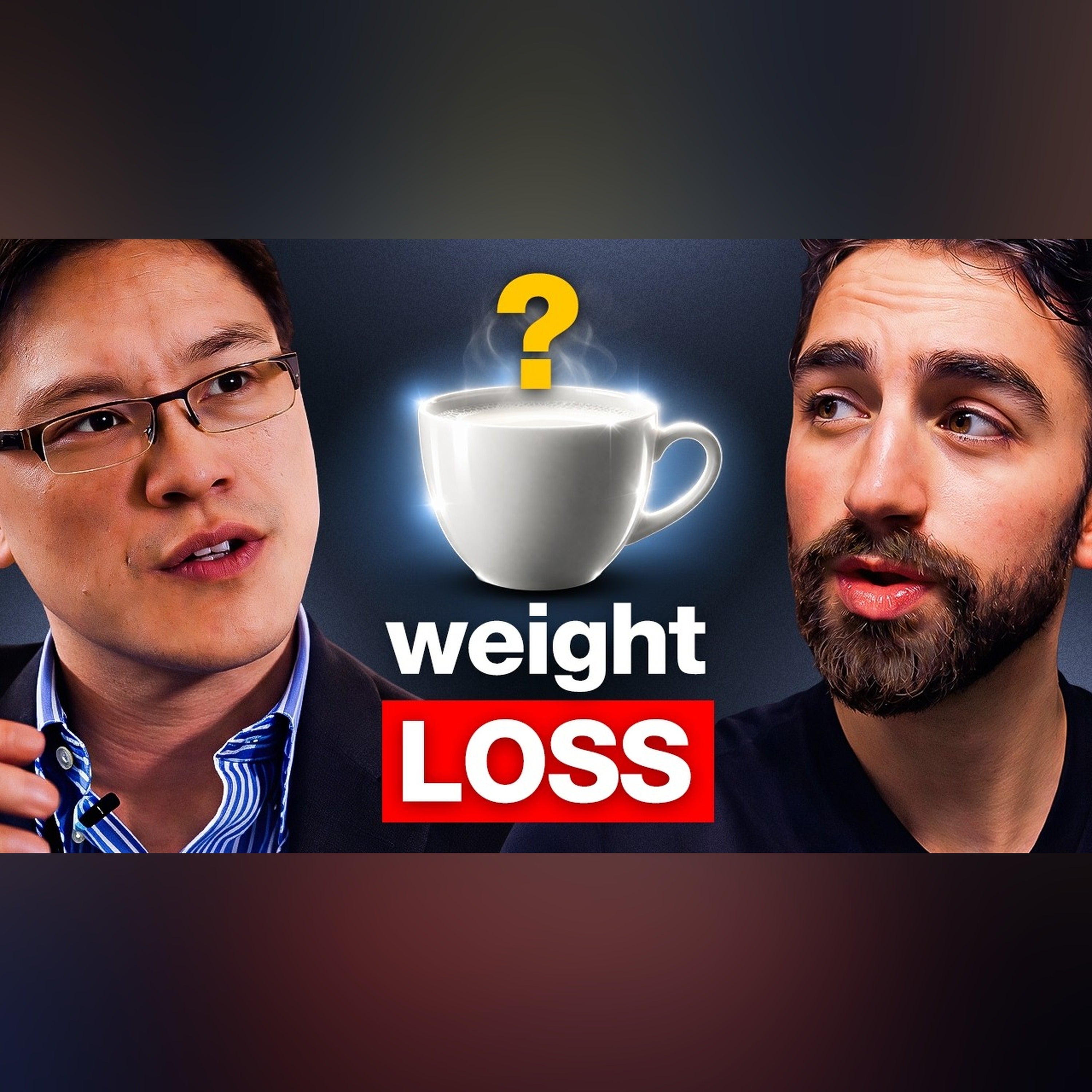
How to lose weight without feeling hungry - the best method for fat loss without dieting and counting calories | Prof Giles Yeo & Dr Federica Amati

61 min

Listen through the publisher, then discuss the episode here or arrange an in-person Roundtable. Your city determines where to meet.

Roundtables are designed for groups of four, with a shared subject and room for everyone to speak. Come for discussion, with no dating expectation.

Why are you not losing weight? Many of us ask this, and the advice on how to lose weight often leaves you feeling hungry. We’ve been told weight loss means eating less, moving more, but for lasting fat loss dieting, calorie counting, and willpower may not be the answer. In today’s episode, Professor Giles Yeo, who has spent his career decoding the biology of appetite and body weight. and Dr Federica Amati explain how to lose weight in a healthier way, and why it’s harder for some people than others. You’ll learn how more than 1,000 genes shape the way your brain responds to food, and whether there’s really an ‘obesity gene’. We also explain why a calorie deficit stops working over time and how your gut microbiome affects your weight. We also ask: Can you lose weight without exercise, and are weight loss drugs an easy fix? The episode provides simple steps for healthy weight loss that lasts. And, by the end, you’ll know which foods to reach for to help keep you fuller for longer. If you can’t stop snacking, even when you want to diet, this episode will help you lose weight while eating MORE. Build healthy habits. Download the ZOE app today Join ZOE (https://zoe.com/buymembership) Follow ZOE onInstagram (https://www.instagram.com/zoe/). Timecodes 00:00 Intro 01:46 Is losing weight just about willpower? 04:04 Why you can’t stop thinking about food 11:22 Real hunger or just cravings? The 2 types of hunger 13:05 Why does obesity carry so much shame? 18:14 How much of your weight is down to your genes? 19:29 Is there one obesity gene? 21:43 Why fast food "shouts" at some brains 23:25 Why obesity rates have doubled 25:45 Are your genes stopping you from losing weight? 28:14 Gut health and weight loss: the microbes that "eat" 100 calories a day 31:55 Is celery actually a negative calorie food? 33:18 Same calories, more weight loss? 35:29 Why counting calories is NOT the answer 38:27 How you can start losing weight by eating more food 40:02 The simple belly fat test anyone can do 42:26 How fibre boosts your natural GLP-1 and keeps you full 44:47 Does exercise actually work for weight loss? 46:30 Ozempic for weight loss: the easy option? 47:29 How to lose weight: start by looking at your parents 49:05 The breakfast rule behind sustainable weight loss 50:31 Is obesity really a choice? 52:05 Why one meal won’t ruin your week (or your weight loss) 54:05 How fast should you lose weight? 55:47 One-word tip for lasting weight loss Books by our ZOE Scientists The Food For Life Cookbook (https://amzn.to/4amfIMX) Food For Life by Prof. Tim Spector (https://amzn.to/4amZinu) Ferment by Prof. Tim Spector (https://amzn.to/4hU1Df5) Good Mood Food by Prof. Tim Spector (https://amzn.to/4l9oXat) Free resources from ZOE Better Breakfast Guide (https://zoe.com/breakfastguide) Mentioned in today's episode A Matter of Fat with Rose Stokes & Professor Giles Yeo (https://open.spotify.com/show/469s4SFr3DNivfx1dQVyXR?si=019cf2477d274332) Gemini Study (https://www.geministudy.co.uk/) Host-diet-gut microbiome interactions influence human energy balance, Nature Communications (https://www.nature.com/articles/s41467-023-38778-x) (2023) Can ZOE help people lose weight? (https://zoe.com/learn/can-zoe-help-people-lose-weight-new-study?lead_id=63ebc69b-7249-498a-b2d4-4c0809a74932)

Episode information is provided by the publisher. Listening takes place on the publisher’s service.

Listen at the source ↗

Featured places to meet in Palo Alto, CA

Explore these places and arrange a conversation through ThinkMatch.

City guide for Palo Alto, CA

More from ZOE Science & Nutrition

ZOE Science & Nutrition

Most replayed moment: The morning habits of people who live to 100 | Dan Buettner & Prof Sarah Berry

13 min

Across a handful of regions around the world, living to 100 isn't an extraordinary achievement, it's actually surprisingly common. From the mountains of Sardinia to the islands of Japan and Greece, these communities, known as Blue Zones, have captured the attention of scientists for one simple reason: they seem to have cracked the code for healthy ageing. So what can we learn from these communities begin their day? I’m joined by longevity expert Dan Buettner and Professor Sarah Berry to explore the morning habits of the world’s healthiest people, and share easy breakfast tweaks that will have a lasting impact on your health. And who knows? Maybe you’ll celebrate your 100th birthday too. Build healthy habits. Download the ZOE app today and start your trial for just £2.30 for your first week. Join ZOE (https://zoe.com/buymembership) Follow ZOE onInstagram (https://www.instagram.com/zoe/). Books by our ZOE Scientists The Food For Life Cookbook (https://amzn.to/4amfIMX) Food For Life by Pr

Discuss this episode

ZOE Science & Nutrition

Most replayed moment: The five fundamental pillars of longevity | Kayla Barnes-Lentz & Dr Federica Amati

14 min

Kayla Barnes-Lentz follows an intensive, highly structured daily protocol designed by a team of scientists to optimise every aspect of her health. She believes this carefully curated lifestyle could help her live to 150 years or more. While her routine may not be realistic for everyone, the insights behind it could benefit us all. Today, Kayla joins Dr Federica Amati to break longevity down into five fundamental pillars. Together, they explore the science behind each one, how Kayla puts them into practice, and how you can start strengthening your own pillars today. Get our brand-new app and Gut Health Test designed by world-leading gut health and nutrition scientists to build healthy eating habits Join ZOE (https://zoe.com/buymembership) Follow ZOE onInstagram (https://www.instagram.com/zoe/). Books by our ZOE Scientists The Food For Life Cookbook (https://amzn.to/4amfIMX) Food For Life by Prof. Tim Spector (https://amzn.to/4amZinu) Ferment by Prof. Tim Spector (https://amzn.to/4hU1Df5

Discuss this episode

ZOE Science & Nutrition

How to NOT get sick this winter - 3 foods to fight colds, beat flu season and protect your immune system | Prof Daniel Davis & Prof Tim Spector

61 min

Why do you catch every cold going, while others rarely get sick? Many of the cold and flu tips you grew up with are myths, but in today’s episode, world-leading immunity expert Professor Daniel Davis and Professor Tim Spector explain the five everyday habits that can protect your immune system. You’ll learn why some people get sick more often than others and test common beliefs about how to boost immunity and beat flu season: does getting cold and wet really give you a cold, and can vitamin C or immune-boosting supplements actually help? We explore the five habits that the science links to immune health and share three food tips, so you can learn how to stay well this winter. If you get sick more often than your friends, this episode will break down why that might be, and give you the tools to help. Build healthy habits. Download the ZOE app today Join ZOE (https://zoe.com/buymembership) Follow ZOE onInstagram (https://www.instagram.com/zoe/). Timecodes 00:00 Intro 05:57 Can you really

Discuss this episode

Community Poll

Preserving historic places can justify limiting redevelopment.

Share your view, then see how readers voted. No sign-in required. This poll is shared across stories.

Do you agree or disagree?

Choose one answer

Common Quandary

A Common Quandary to discuss

Another conversation to explore, separate from this news story.

A disgraced billionaire's name is on the beloved campus library. Does it come down?

A major donor funded a beloved public building decades ago. New evidence shows they also caused serious harm that was legal and accepted by many peers at the time. Removing the name may jeopardize future donations.

What does an institution owe the truth when its history funded the present?

Explore this quandary