English-language podcasts

GD POLITICS

How To Poll A Wave, With Nate Cohn
26 min

Listen through the publisher, then discuss the episode here or arrange an in-person Roundtable. Your city determines where to meet.

Roundtables are designed for groups of four, with a shared subject and room for everyone to speak. Come for discussion, with no dating expectation.

This is a free preview of a paid episode. The full episode is available to paid subscribers. If you listened to GD Politics this election season, you heard plenty about the data coming from The New York Times. We followed its national and state polls before Election Day, watched the Needle as returns came in, and used its voter data to make sense of where Democrats gained ground. On today’s episode, I invited Nate Cohn, the Times’ chief political analyst, to take us behind the scenes. We talked through what his team was seeing before the votes were counted and what they’ve learned since. The Times’ pre-election polling picked up the biggest story of the midterms. Its final national poll gave Democrats an 11-point lead on the generic congressional ballot, close to their roughly 13.5-point margin in the House vote. Their state polls also showed that Democrats had a real shot at winning Senate races in places like Texas and Kansas, which they won. I asked Cohn how the Times decides who’s likely to vote and what he learned from the handful of races where the margins were off. A listener brought up a wrinkle that could matter in the 2028 Democratic primaries. What happens if progressive voters are more likely than other Democrats to answer a poll? Then we took up a question both parties will be wrestling with heading into 2028. How much of the Democratic wave came from voters changing their minds, and how much came from a different set of people showing up? Cohn’s early read is that changing preferences drove most of the national swing, with turnout playing a bigger role in some states than in others. And if you spent election night refreshing the Needle, Cohn explains what has to happen before the Times can turn it on and why it goes dark while ballots are still being counted. It was a wonky and fun one!

Episode information is provided by the publisher. Listening takes place on the publisher’s service.

Listen at the source ↗

Featured places to meet in Palo Alto, CA

Explore these places and arrange a conversation through ThinkMatch.

City guide for Palo Alto, CA

More from GD POLITICS

GD POLITICS

How The Merely Rich Wield Power In The Age Of Billionaires

20 min

This is a free preview of a paid episode. The full episode is available to paid subscribers. Anthropic’s IPO on Thursday — the largest ever — put the paper wealth of the company’s seven co-founders at about $20 billion apiece and minted thousands of new millionaires. It’s the kind of eye-popping wealth creation that makes Silicon Valley the center of conversations about who gets rich in America and how much power comes with it. There’s a growing sense, particularly on the left, that the mega-rich are at the root of what’s wrong with politics and the economy. Think of billionaires like Elon Musk, Jeff Bezos and Mark Zuckerberg lined up behind Trump on Inauguration Day. For those frustrated with the status quo, they offer an easy-to-imagine adversary. And that framing is shaping some of the debate over what Democrats should do with their newfound power. But according to economists Owen Zidar (https://substack.com/profile/7193369-owen-zidar) and Eric Zwick (https://substack.com/profile/46

Discuss this episode

GD POLITICS

Democrats Won Congress. What Will They Do With It?

61 min

This is a free preview of a paid episode. Big change is afoot in Washington. Democrats will start the new Congress with at least 55 Senate seats, likely 56 with Alaska still counting, and at least 256 House seats. That gives them control of the agenda: They can investigate the Trump administration, pass party-line bills through reconciliation, and force Republicans into tough votes. But Trump still has his veto, and most bills will still need some Republican votes to clear the Senate filibuster. On today’s episode, Gabe Fleisher (https://substack.com/profile/697125-gabe-fleisher), author of Wake Up To Politics, joins me to explain how these power dynamics are likely to play out. Historically, divided government hasn’t necessarily meant gridlock. With 56 seats, Democrats would need just four Republicans to break a filibuster, which could potentially open the door to bipartisan deals on AI, Social Security or a congressional stock-trading ban. Democrats will have their own fights too, st

Discuss this episode

GD POLITICS

Eight Years Of Gains, Undone In One Night

56 min

This is a free preview of a paid episode. From 2016 to 2024, Latino voters shifted roughly 32 points toward Republicans. According to early estimates, that entire rightward shift was undone in a single election last Tuesday. On today’s podcast, I sit down with longtime friend of the pod Carlos Odio, co-founder of Equis Research, to unpack one of the biggest stories of the 2026 midterms. Even Carlos, who expected Democrats to recover some ground, was surprised by the magnitude. Of course, a 32-point swing doesn’t mean the same voters moved right and then back left. The Latino electorate is growing and changing, and who turns out matters alongside who switches sides. One striking finding from early voter-file data: In Georgia and Texas, young Latina women voted at higher rates than young white women, reversing the usual turnout gap. We dig into how those forces reinforced each other, why the economy and immigration contributed to Republicans’ losses, and why Democrats’ recovery looks dif

Discuss this episode

Community Poll

Food labels should explain environmental and ethical claims in verifiable terms.

Share your view, then see how readers voted. No sign-in required. This poll is shared across stories.

Do you agree or disagree?

Choose one answer

Common Quandary

A Common Quandary to discuss

Another conversation to explore, separate from this news story.

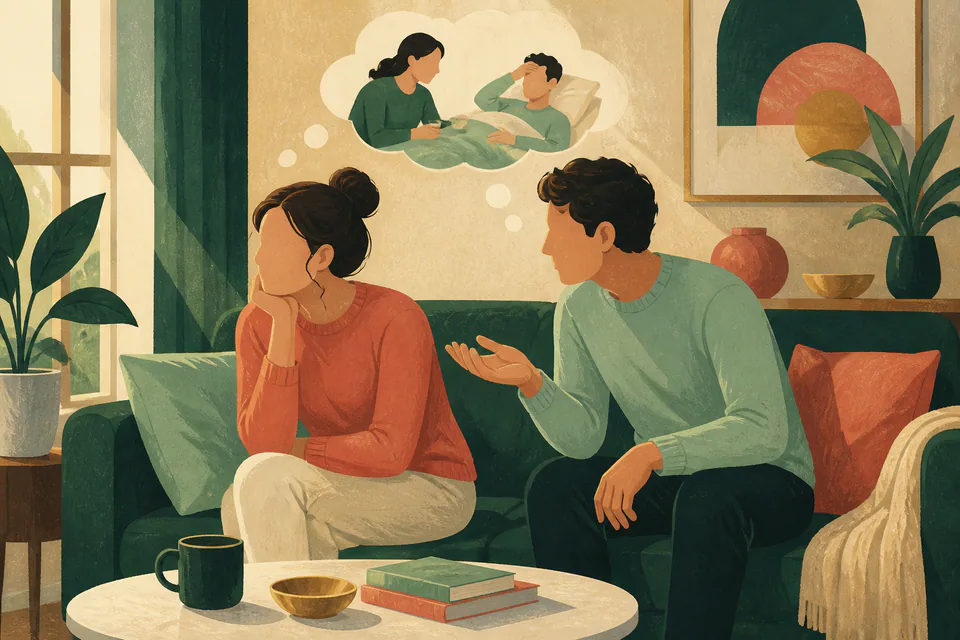
You both hate the invitation. Which partner has to become the excuse?

A couple receives an invitation neither wants to accept. One suggests claiming the other is ill, reasoning that friends will question a vague excuse but respect sickness. The proposed patient dislikes lying but also wants to stay home.

Is a shared lie fair when only one person's reputation carries it?

Explore this quandary