How to Support Your Child with OCD Without Losing the Rest of Your Family
43 min
Listen through the publisher, then discuss the episode here or arrange an in-person Roundtable. Your city determines where to meet.
Roundtables are designed for groups of four, with a shared subject and room for everyone to speak. Come for discussion, with no dating expectation.
When your child is struggling with OCD, it can start to shape the routines, decisions, and emotional energy of the whole family. You want to help your child, but you also want your family to have room for connection, joy, and the ordinary parts of life. In this episode, I’m talking about how parents can begin to make that room again while still supporting a child with OCD. You don’t have to change everything at once. Finding one manageable place to start can help your family move forward. If you’re looking for support with that first step, register for my free AT Parenting Survival Series. I’ll teach you how to create a therapeutic home environment. Register at ATParentingSurvivalSeries.com (http://atparentingsurvivalseries.com/) Resources mentioned in episode: When a Loved One Won’t Seek Mental Health Treatment by Alec Pollard (https://www.amazon.com/When-Loved-Mental-Health-Treatment/dp/1648483135) Space Study Guide Course (http://www.natashadaniels.com/space) AT Parenting Survival Series (http://www.atparentingsurvivalseries.com/) This podcast episode is sponsored by NOCD. Parents, do you need more support? Here’s are resources I offer parents ️ Take one of my FREE webinars: Check out my books: Other social places I hang out: Hosted on Acast.
Episode information is provided by the publisher. Listening takes place on the publisher’s service.
One of the greatest ways to honor your parents is to build upon what they gave you and become even better. Seth Troutt, author of Authentic Masculinity: Leaving Behind the Counterfeits for God's Design, (https://link.amazon/B0hlyX1J2) joins Ginny Yurich for an encouraging conversation about raising boys, becoming better parents, and building a family legacy worth carrying forward. Seth offers a refreshing, faith-filled vision of masculinity that begins with humility, embraces mistakes as opportunities for growth, and recognizes that strength and gentleness belong together. He shares an ingenious bedtime storytelling tradition that helps his children prepare for peer pressure, explains why lasting discipline has more to do with what we love than willpower, and recounts the surprisingly freeing parenting advice he received from his own father. Woven throughout is a hopeful reminder that we can build on the good we inherited, change the patterns we didn't want to repeat, and give our chil
What if the behavior that frustrates you most about your child is actually connected to one of their greatest God-given strengths? In this special Q&A episode of the Celebrate Kids Podcast, Dr. Kathy Koch and Wayne Stender answer real questions from parents and leaders they recently met in San Antonio. They explore how to help children develop genuine belonging, why the 8 Great Smarts can change how we understand misbehavior, and how Christian families can navigate difficult relationships during the holidays with biblical conviction, unconditional love, and thoughtful hospitality. Dr. Kathy explains why knowing how God made our children changes the way we correct them, encourage them, and prepare them for healthy relationships. Wayne also shares how understanding his own children's strengths has helped him become a father whose kids know they are seen, understood, and loved. As Celebrate Kids prepares to expand its ministry in 2027, we're also exploring new ways to bring Dr. Kathy's te
Hello Beautiful, I'm so grateful you're here with me Before you fall asleep, take a moment to notice how you're really feeling beneath everything that happened today. This gentle nighttime meditation offers space for emotional reflection, self-compassion, and calming relaxation without needing to change or fix anything. Whatever today brought, you deserve a peaceful place to land. Love, Katie TAKE THE FREE QUIZ! ♀️What kind of meditator are you? Take the free quiz & discover your meditation style now! Want an ad-free meditation experience?
Let your body feel supported, release the tension of the day, and gently drift into peaceful sleep with this soothing somatic sleep meditation. If your mind feels restless, your body is holding tension, or you find it difficult to unwind at bedtime, this calming guided meditation invites you to slow down and reconnect with the present moment through gentle body awareness. Rather than forcing yourself to relax, you'll be guided through simple somatic techniques that encourage a sense of comfort, grounding, and safety. We begin by slowly noticing the room around you, allowing your attention to settle on familiar surroundings and the surfaces supporting your body. Through longer, softer exhales, gentle sighs, quiet humming, and comforting touch, you'll explore small moments of ease as your body gradually prepares for rest. This peaceful somatic meditation includes: • Gentle orienting exercises to reconnect with your surroundings • Grounding techniques to help you feel supported • Slow bre
In this meditation, I invite you to reflect on the changing light of autumn as we move towards the darker days of winter. As the daylight hours grow shorter, we can sometimes feel that we are losing something. Yet the contemplative life invites us to receive each season as it is, discovering beauty and sacredness in the present moment. Beginning with the breath, we explore the difference between the changing light around us and the unchanging light of divine presence within. From the gentle light of morning to the lamps that illuminate our evenings, every expression of light becomes an invitation to awareness. As we breathe, we allow ourselves to be filled with divine light, offering compassion, peace and prayer to those in need. Chapters: 00:00 – Introduction: Autumn light 01:10 – Entering meditation with intention 01:58 – Relaxing the body and following the breath 02:48 – Returning to the present moment 03:12 – Becoming aware of the light within 03:40 – The gift of divine light 04:10
If your partner is withdrawing, getting grumpier, feeling depressed or refusing to talk about what’s really going on, relationship expert Professor Denise Turner is here to help. She explains what’s going on with midlife men right now & how to help without sacrificing your own health and happiness. Denise tells Lorraine & Trish how to talk to a man who won’t - or can’t - express his emotions, the external & social factors that may be contributing to his behaviour & the red flags that indicate it’s time to get professional help. Plus the two questions to ask yourself when working out what to do if you feel your relationship is in trouble. Also in this episode: an update on Margo the elderly podcat & Lorraine discovers why she’s been tripping over so often (& it’s not to do with her big Crocs!) If you or a partner are struggling, please speak to your GP or contact Samaritans on 116 123 (free, 24/7). New episodes of Postcards from Midlife are released weekly. Join our Facebook Group to sh
Obviously we don’t want our kids to feel alone with their OCD, but there is an even bigger, therapeutic reason to ensure they know they aren’t alone. In this episode I explore how feeling isolated contributes to poor communication, treatment resistance, hopelessness and long-term struggles. I’ll also talk about the power of connection and validation. Resources discussed in episode: Join the AT Parenting Community (http://www.atparentingcommunity.com/) with kid and teen support groups IOCDF Young Adult Support Group (https://iocdf.org/special-interest-groups/young-adults/) *** This podcast episode is sponsored by NOCD. Parents, do you need more support? Here’s are resources I offer parents ️ Take one of my FREE webinars: Check out my books: Other social places I hang out: Hosted on Acast.
When our kids start struggling with OCD it is normal to want to get them into therapy as soon as possible, especially Exposure Response Prevention (ERP) therapy, the first line treatment for OCD. But going into therapy when a child isn’t ready can be a costly mistake and can sabotage the success of future therapy sessions. In this episode I outline four key components needed to make therapy a success. Often therapy is a middle step, not the first step. Want to know exactly where YOU should start? In my free series, Survival Tools for Parents Raising Kids with OCD (https://www.atparentingsurvivalseries.com/), I teach you how to assess your particular situation and learn where to focus your energy to get the most long term success. Register for FREE at www.atparentingsurvivalseries.com (http://www.atparentingsurvivalseries.com/) Podcasts discussed during episode: How to Build Trust and Communication (https://childocdtherapist.com/trust-and-communication/) How to Create an Effective Incen
Conservation policies should include practical support for affected local livelihoods.
Share your view, then see how readers voted. No sign-in required. This poll is shared across stories.
Do you agree or disagree?
Common Quandary
A Common Quandary to discuss
Another conversation to explore, separate from this news story.
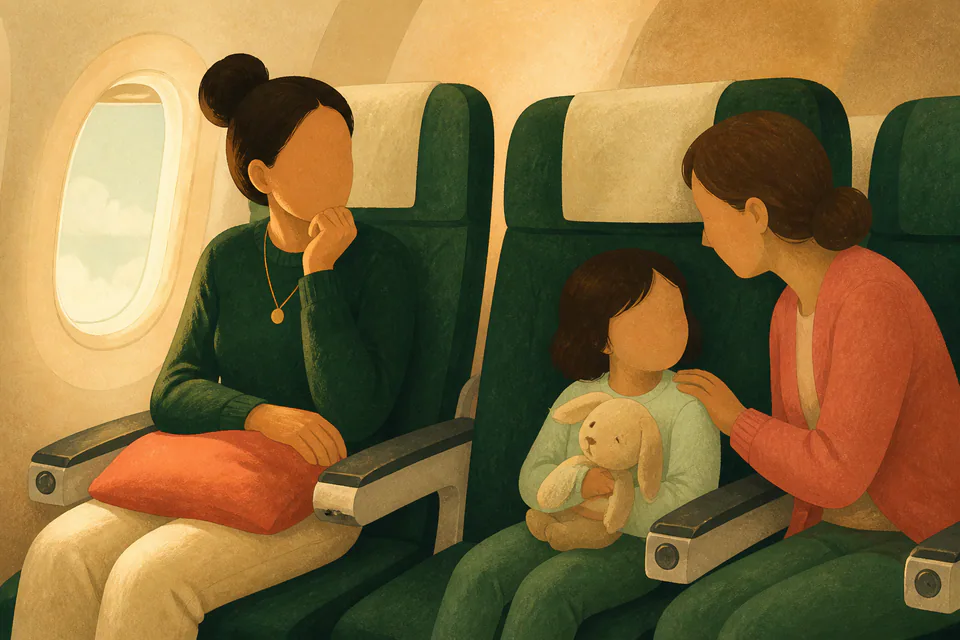
You paid extra for the aisle seat. Must you trade with a parent?
You reserved and paid extra for an aisle seat on a long flight. A parent asks you to trade for a middle seat so they can sit beside their young child after the airline separated them.
When does another person's predicament become your responsibility?