Listen through the publisher, then discuss the episode here or arrange an in-person Roundtable. Your city determines where to meet.
Roundtables are designed for groups of four, with a shared subject and room for everyone to speak. Come for discussion, with no dating expectation.
Obviously we don’t want our kids to feel alone with their OCD, but there is an even bigger, therapeutic reason to ensure they know they aren’t alone. In this episode I explore how feeling isolated contributes to poor communication, treatment resistance, hopelessness and long-term struggles. I’ll also talk about the power of connection and validation. Resources discussed in episode: Join the AT Parenting Community (http://www.atparentingcommunity.com/) with kid and teen support groups IOCDF Young Adult Support Group (https://iocdf.org/special-interest-groups/young-adults/) *** This podcast episode is sponsored by NOCD. Parents, do you need more support? Here’s are resources I offer parents ️ Take one of my FREE webinars: Check out my books: Other social places I hang out: Hosted on Acast.
Episode information is provided by the publisher. Listening takes place on the publisher’s service.
Your child can pass the eye chart and still miss what’s right in front of them. Here’s why. Optometrist Dr. Meenal Agarwal explains why 20/20 eyesight doesn’t tell the whole story. Vision is a brain-driven process, and when the brain stops prioritizing the periphery, kids can look at a scene without perceiving it. She also shares the milestone delays she was seeing in her clinic long before Covid. LIKE this video if you found the conversation helpful. COMMENT below with your biggest question or concern about your child’s screen time and vision. Follow Dr. Meenal Agarwal: Website: https://www.drmeenal.com/ Instagram: https://www.instagram.com/dr.meenalagarwal/ YouTube: https://www.youtube.com/@UncoverYourEyeswithDr.Meenal LinkedIn: https://www.linkedin.com/in/dr-meenal-agarwal-9732a260 Resources : Stuck in a Flat World (book): https://www.drmeenal.com/stuck-in-a-flat-world/ Uncover Your Eyes podcast: https://podcasts.apple.com/us/podcast/uncover-your-eyes-the-truth-about-health-and-well
For the days you got through and nobody saw what it took. A quiet place this evening where it counts. About 12 minutes with Steven Webb's calm voice and music underneath. Perfect for the evening. We let the body soften, from the jaw and the eyes down to the belly, because it's been on alert all day. Then we look at what today really cost. Getting up when your body said no. Being kind to someone while you were falling apart inside. Saying "yeah, fine" because where would you even start? There's an old Zen idea I keep coming back to: a thing doesn't need to be seen to be real. The rain falls on an empty field, nobody watches, and it still soaks in. We put the day down for a minute, not away, just down, and finish with three gentle wishes. May the hard days I got through be counted. I've been paralysed a long time, and I know what it can take just to get through the day. You're not doing this on your own. Treat me to a coffee, keep the podcast free, and get my Weekly Calm every Sunday. It
I Ate 1000 Sardines in a Month, Video: https://youtu.be/_Th54GWd8WY How Sardines Supercharged my Metabolism, Letter: https://staycuriousmetabolism.substack.com/p/the-weird-anti-insulin-hormone-that?r=40ekz2 Omega-6/3 Ratio Can Be Misleading, Letter: https://staycuriousmetabolism.substack.com/p/how-we-got-omega-fat-wrong-this-will?r=40ekz2 Best Omega-3 for the Brain, Letter: https://staycuriousmetabolism.substack.com/p/why-omega-3-supplements-dont-work?r=40ekz2 If you want to get your Omega-3 via Omega Quant, click on this link: https://omegaquant.com/ref/864 Fatty Acid Research Institute: https://www.faresinst.org (https://www.faresinst.org/) Description: In this conversation, I sit down with Professor William Harris, one of the world’s leading experts on omega-3 and omega-6 fatty acids, to cut through confusion around fish oil, seed oils, cardiovascular health, and brain health. We break down what omega-3 and omega-6 fats actually are, why their chemistry matters, and how they’re conv
Should you try the viral egg fast? What's WRONG with it? -------------- The Workbook: https://on.bozmd.com/BozWorkbook --------------------- Thanks for checking out the Dr. Boz Channel. See links below resources and recommendations. Tune in Tuesday nights, 4PM Eastern/3PM Central to watch me Live! We improve health - One ketone at a time. --------------------- FREE STUFF 50 Keto Fat-Facts: http://on.bozmd.com/50fat Dr. Boz Ratio Spreadsheet: http://on.bozmd.com/DBR Documentary Playlist: https://on.bozmd.com/AT --------------------- Dr. Boz’s Online Courses: Consistently Keto: http://on.bozmd.com/CK BRAINS: https://on.bozmd.com/BrainsT2R --------------------- WAYS TO SUPPORT THIS CHANNEL: Share Dr. Boz content with people you love. Everyone wins when you share. Buy Dr. Boz Products: Dr. Boz Food Guide: http://on.bozmd.com/FoodGuide Walmart: https://on.bozmd.com/WalmartKetoMap Amazon: https://on.bozmd.com/AmazonAttKetoMap Beginners love this! Dr. Boz K2+D3: https://on.bozmd.com/K2D3 Walm
Connection is key! Todays special guest is all about connection, and there is an opportunity to meet Andy Ramage, and myself AND get a copy hot of the new Soberis Sexy calendar hot off the shelf! Been thinking of turning your sobriety to a new purpose? Join our next free webinar Tuesday 3 November at 7.30pm Register here https://www.thesoberclub.com/explore/ Ditched the Booze and want to inspire others? Janeyoffers holistic sober coach training, our next course starts last weekend of Jan 27 email Janey for a chat to see if its right for you – janey at janeyleegrace.com ALCOHOL FREE ADVENT CALENDAR SPECIAL OFFER I've teamed up with Wise Bartender this week to bring you a little early Christmas treat! Their brilliant alcohol-free Advent Calendars feature 24 hand-picked drinks, with twooptions to choose from: Beer Advent– 24 alcohol-free beers. Mixed Drinks Advent – beers, wines, ciders and cocktails, all 100% vegan! Use my exclusive code SOBERCLUB10 to get £10 off, making your calendar j
Today, Mel is doing something she's never done before on The Mel Robbins Podcast. She's bringing members of her team into the studio for live coaching with world-renowned communications expert Vinh Giang. Vinh is known for teaching millions of people online how to stop sounding insecure, speak more clearly, and get people to listen when you talk. And when you hear him coaching today, it will be like he’s coaching you. One person freezes when they're put on the spot. Another can't stop interrupting people. Someone else has great ideas but stays quiet because they're afraid of being judged. Does any of that sound familiar? And Vinh isn't just giving advice. He's coaching real people through practical exercises, right there in the studio, so you can hear the difference and start making those same changes in your own life. As Mel says, put yourself in their shoes. As Vinh works with each person, you'll recognize things you struggle with, too. You'll learn: -What to do when your mind goes b
When your child is struggling with OCD, it can start to shape the routines, decisions, and emotional energy of the whole family. You want to help your child, but you also want your family to have room for connection, joy, and the ordinary parts of life. In this episode, I’m talking about how parents can begin to make that room again while still supporting a child with OCD. You don’t have to change everything at once. Finding one manageable place to start can help your family move forward. If you’re looking for support with that first step, register for my free AT Parenting Survival Series. I’ll teach you how to create a therapeutic home environment. Register at ATParentingSurvivalSeries.com (http://atparentingsurvivalseries.com/) Resources mentioned in episode: When a Loved One Won’t Seek Mental Health Treatment by Alec Pollard (https://www.amazon.com/When-Loved-Mental-Health-Treatment/dp/1648483135) Space Study Guide Course (http://www.natashadaniels.com/space) AT Parenting Survival S
When our kids start struggling with OCD it is normal to want to get them into therapy as soon as possible, especially Exposure Response Prevention (ERP) therapy, the first line treatment for OCD. But going into therapy when a child isn’t ready can be a costly mistake and can sabotage the success of future therapy sessions. In this episode I outline four key components needed to make therapy a success. Often therapy is a middle step, not the first step. Want to know exactly where YOU should start? In my free series, Survival Tools for Parents Raising Kids with OCD (https://www.atparentingsurvivalseries.com/), I teach you how to assess your particular situation and learn where to focus your energy to get the most long term success. Register for FREE at www.atparentingsurvivalseries.com (http://www.atparentingsurvivalseries.com/) Podcasts discussed during episode: How to Build Trust and Communication (https://childocdtherapist.com/trust-and-communication/) How to Create an Effective Incen
Elected representatives should serve people who voted against them as seriously as their supporters.
Share your view, then see how readers voted. No sign-in required. This poll is shared across stories.
Do you agree or disagree?
Common Quandary
A Common Quandary to discuss
Another conversation to explore, separate from this news story.
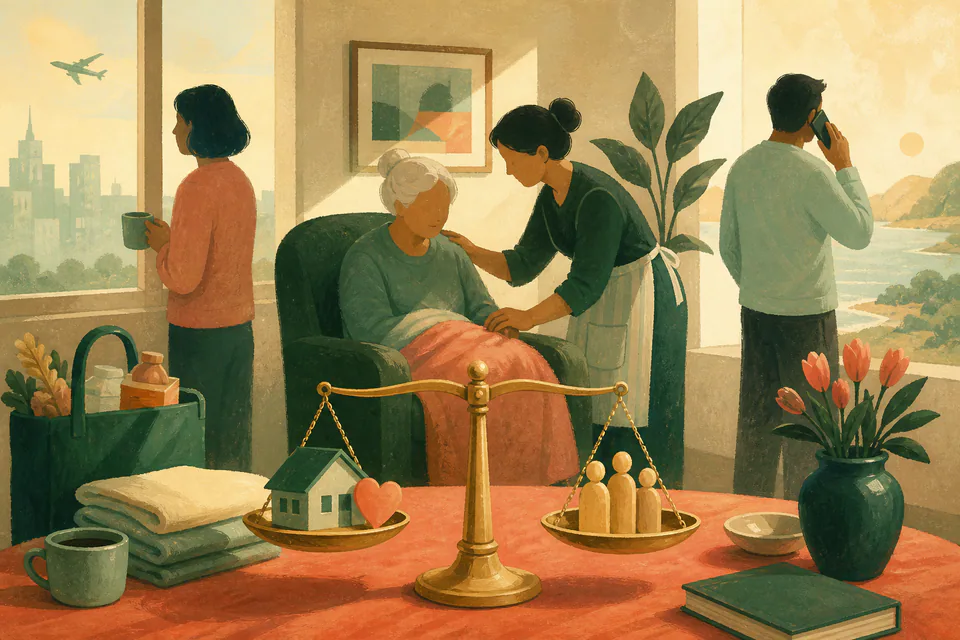
One sibling did years of caregiving. Should they get more of the inheritance?
One sibling lives near an aging parent and handles appointments, errands, and emergencies. The others live far away, call regularly, and assume the nearby sibling will receive the same inheritance despite years of unpaid work.
When does family care become labor that should be repaid?