How to Talk About Advantages and Disadvantages in English | 15 Useful Phrases [616]
28 min
Listen through the publisher, then discuss the episode here or arrange an in-person Roundtable. Your city determines where to meet.
Roundtables are designed for groups of four, with a shared subject and room for everyone to speak. Come for discussion, with no dating expectation.
Improve your English with structured online lessons. Book here ️ https://www.englishlessonviaskype.com/trial How do you explain in English why you’d choose one flat over another or pay more for a flexible train ticket? You’ll learn 15 English expressions for comparing options, discussing advantages and disadvantages, and explaining what matters most to you. You’ll hear how to use them in everyday English conversations and at work, whether you’re comparing prices with a colleague or telling a friend why you accepted a job. You’ll build your spoken English vocabulary with British English examples and practise the grammar that goes with each expression. If you’re learning English at B2 or C1 level, you’ll get listening and speaking practice you can also use when preparing for IELTS Speaking or Cambridge C1 Advanced, especially when you need to compare two possibilities and give reasons for your choice.
Episode information is provided by the publisher. Listening takes place on the publisher’s service.
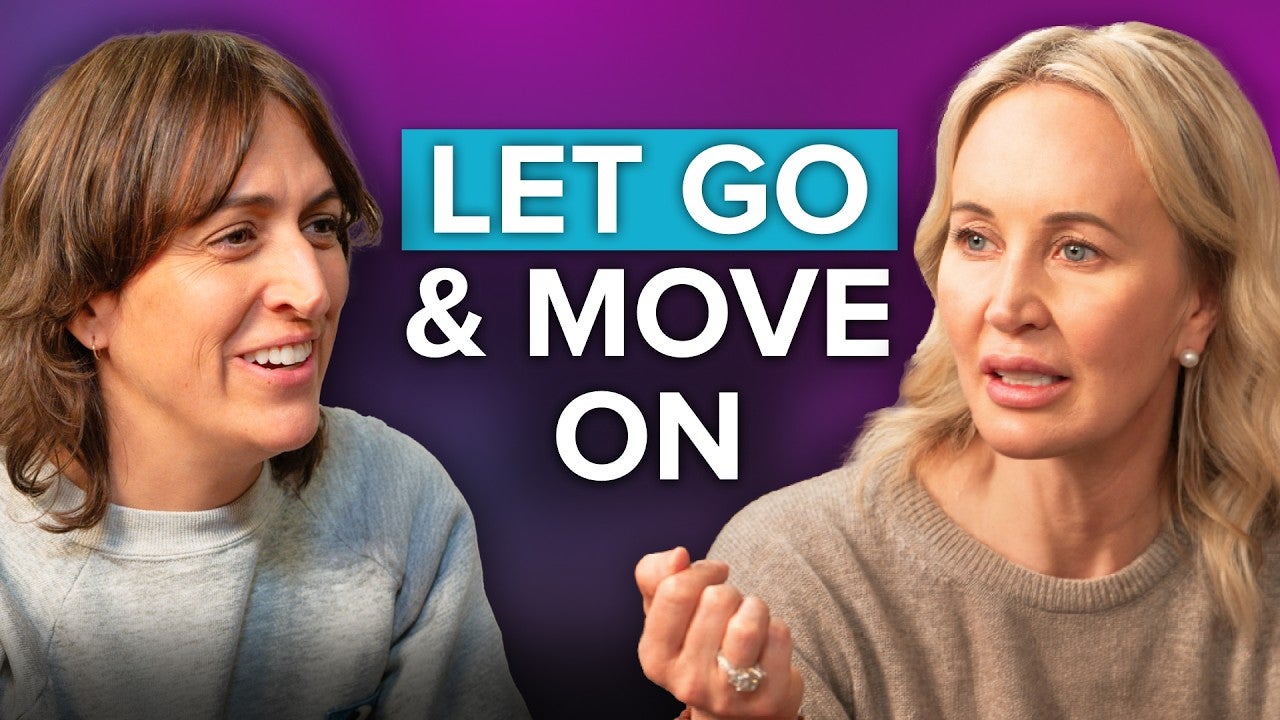
In Part 2 of this heartfelt series, Sage Robbins and her dear friend, podcast host turned surrogate, Mary B., dive intimately into the essence of forgiveness, exploring its profound impact on mental health and personal well-being. Sage shares how forgiveness has unlocked her inner freedom and helped her align with her true nature, while Mary offers a fresh perspective on transforming even everyday frustrations into opportunities for growth. Uploaded 16-08-24 - Links Mentioned - Inner Circle — Join to submit questions for future podcasts! https://tr.tonyrobbins.com/tric-now Ho'oponopono: The Hawaiian Ritual of Forgiveness by Ulrich E. Duprée Baby Reindeer dominates this year's TCA Awards nominations The Book of Forgiving: The Fourfold Path for Healing Ourselves and Our World by Desmond Tutu and Mpho Tutu This conversation addresses modern phenomena like cancel culture, encouraging listeners to look beyond actions and recognize the inherent innocence in each person. As Tony Robbins often
Imagine a friend telling you about something that has been bothering them. As you listen, you realize that if you were in their situation, with their experiences and circumstances, you might feel exactly the same way. Instead of telling them not to worry or trying to make them feel better immediately, you simply say: “You have every reason to feel the way you do.” Hello everyone, and welcome to Daily English. Today's expression is “have every reason to.” When we say someone has every reason to do or feel something, we mean that there are very good reasons for their feelings, beliefs, or actions. Given the circumstances, their response is completely understandable. Let's look at a few examples. Imagine a friend who has finally accomplished something after years of effort, setbacks, and moments of self-doubt. Yet they seem reluctant to celebrate their achievement. You could remind them: “You have every reason to be proud of yourself.” Or imagine someone who has been disappointed several
Come and see what I bought. Let's go and get some coffee. I'll try and finish it tonight. Wait and see what happens. Go ahead and sit down. Have you noticed something interesting about these sentences? They all use two verbs connected by the word and - Like, come and see. Or go and get. Now, you probably learned that we use and to connect things, like coffee and tea, or actions, like cooking and cleaning. But in everyday English, we also use and in some very common expressions where the two verbs work together. And sometimes, the meaning might surprise you. So today, we're going to look at five practical expressions with and that you can use naturally in everyday conversation. The Happy English Podcast Helping people speak English better since 2014 Over 1,000 episodes • 8 million downloads Learn more about my English lessons and courses https://www.myhappyenglish.com (https://www.myhappyenglish.com/)
Learn Spanish through today’s real news. In this episode: Congo's Ebola outbreak has passed 12,000 cases, with nearly half of confirmed patients dead. Fighting is disrupting efforts to contain the disease. Also: Elon Musk plans to give every US child two SpaceX shares, one from SpaceX and one from him. The gift is worth about $18 billion. Hoy: El brote de ébola en Congo · Dos acciones de SpaceX para niños. Today’s Spanish focus: recibe = receives. Vocabulary: la vacuna (vaccine), la sangre (blood), el tratamiento (treatment). Learn more from today’s episode with the full podcast transcript, English translation, vocabulary explanations, and extra learning materials: https://linguawire.com/episodes/spanish-a1-2026-11-27 Hosted on Acast.
The Single Greatest Skill In Today's World. The Art of Communication. Jim Rohn discusses the power of language and how it can change your life. A timeless message from Jim Rohn® Uploaded 12-02-26 Discover the simple, four-steps to mastering the art of communication. In this video, you will learn: - The Power of Communication - The 4 Steps to Mastering The Art of Communication - Why Preparation is so important - The challenge and rewards of getting different types of people to work together - The importance of using wit and humor when dealing with people This timeless message will challenge your thinking, reshape your habits, and show you how real change begins from within. _____________ Speaker: Jim Rohn Jim Rohn (1930–2009) was a world-renowned motivational speaker, author, and personal development expert. He inspired millions with his lessons on discipline, mindset, and taking consistent action to achieve success. Known as the 'mentor to the mentors,' Rohn directly influenced some of
PBS Member Stations rely on viewers like you. To support your local station, go to: http://to.pbs.org/DonateSPACE ↓ More info below ↓ Uploaded 10-04-19 We live in a universe with 3 dimensions of space and one of time. Up, down, left, right, forward, back, past, future. 3+1 dimensions. Or so our primitive Pleistocene-evolved brains find it useful to believe. And we cling to this intuition, even as physics shows us that this view of reality may be only a very narrow perception. One of the most startling possibilities is that our 3+1 dimensional universe may better described as resulting from a spacetime one dimension lower – like a hologram projected from a surface infinitely far away. Check out the new Space Time Merch Store! Support Space Time on Patreon Need a Refresher to Fully Understand the Holographic Principle? #holographicuniverse #holographicprinciple #spacetime Hosted by Matt O'Dowd Written by Matt O'Dowd Graphics by Aaron Halevy Directing by Andrew Kornhaber The holographic p
Improve your English with structured online lessons. Book here ️ https://www.englishlessonviaskype.com/trial Learn the difference between spoken and written English so you can understand fast English on work calls and write clear, professional emails afterwards. Practise six common informal forms used in everyday speech, understand their meaning and learn which spellings to use in business emails. Improve your English listening skills, grammar and workplace vocabulary with practical examples of requests, delivery dates and deadlines. If you’re an intermediate or upper-intermediate English learner, this Business English lesson helps you recognise connected speech, use contractions correctly and choose language that suits the situation. Develop your professional English speaking and writing skills, practise email English and check that your follow-up messages accurately reflect what was agreed on a call.
Improve your English with structured online lessons. Book here ️ https://www.englishlessonviaskype.com/trial Learn how to follow up in English when a colleague, client or supplier hasn’t replied. You'll learn how to give updates on unanswered emails and phone calls, ask politely for a response and explain when you need an answer. Improve your Business English vocabulary with practical examples, useful grammar and clear explanations for everyday workplace conversations. This English lesson is for intermediate and upper-intermediate learners who use English at work. Practise professional English for follow-up emails, telephone conversations, progress updates and deadlines. Build your English listening and speaking skills, understand common workplace expressions and learn how to reply when you need more time to check information.
Improve your English with structured online lessons. Book here ️ https://www.englishlessonviaskype.com/trial Learn how to describe your strengths in English with 15 useful expressions for talking about your skills, abilities and personal qualities. In this advanced Business English vocabulary lesson, Harry teaches natural English adjectives, collocations and fixed phrases used in real workplace conversations. You'll learn their meanings, correct prepositions, natural sentence patterns and the differences between similar expressions, with practical examples to help you improve your English vocabulary and speaking skills. This Business English lesson is ideal for B2–C1 English learners and non-native professionals who want to speak more naturally about their work, professional skills and experience. Improve your spoken English for job interviews, performance reviews, everyday workplace conversations and discussions with international colleagues. It's also useful English listening and voc
New local ventures should actively contribute to the surrounding community.
Share your view, then see how readers voted. No sign-in required. This poll is shared across stories.
Do you agree or disagree?
Common Quandary
A Common Quandary to discuss
Another conversation to explore, separate from this news story.
Your adorable child could pay for college by becoming an influencer. Do you start filming?
Parents post cheerful videos of their young child and earn enough to fund the child's education. The child enjoys filming now but cannot understand what it means for strangers to watch those moments years later.
Can parents consent to a permanent public identity on a child's behalf?