What happens when two booking sites sell the same hotel room? In this solo episode of the Australian Investors Podcast, Owen Rask uses SiteMinder (ASX: SDR) to explore the unglamorous software that keeps hotel availability and prices in sync. It is the finale of the Business Stack of the Future series brought to you by Stripe. The series closes with a practical challenge for builders and investors: follow a customer request from discovery to a completed transaction, then ask who supplies the essential data, who gets paid and who bears the risk when something goes wrong. This is a business case study, not a recommendation to buy SiteMinder shares. Episode resources – Speak with the Rask Advice team (https://rask.com.au/advice) Show partner resources – ETF investor? Rask resources – All services (https://bit.ly/R-services) – Financial Planning (https://bit.ly/R-plan) – Invest with us (https://bit.ly/R-invest) – Access Show Notes (https://bit.ly/R-notes) – Ask a question (https://bit.ly/R
Alasdair Macleod (https://www.macleodfinance.com/) is back, and this time he tells me that 100% of his personal financial portfolio is in physical gold and silver (https://thepuregoldcompany.co.uk/dominic-frisby/). No ETFs. Just the real thing. The last time we spoke, Alasdair warned that the fiat currency system might have as little as 18 months left. Two months later, I found myself opposite his stand at the New Orleans Investment Conference, so naturally I asked whether he’d changed his mind. If anything, he thinks the danger could be even closer. We also discuss whether Britain could ever return to a gold standard (https://amzn.to/4vt10i9). Alasdair is excellent company, as per usual, and he’s certainly given me plenty to think about. As always you can watch the video above, or listen as a podcast via Spotify (https://open.spotify.com/show/3JUwEWETY6dlq1y71XbT2b), Apple podcasts (https://podcasts.apple.com/gb/podcast/the-flying-frisby-money-markets-and-more/id292403684) et al. This
Like the predictability of cold winter storms that show up year after year, market corrections and crashes will continue to rear their ugly heads. We’ve all suffered losses, or know someone who has; maybe it was when the tech bubble burst in the late 1990s, when the stock market plunged in 2001, or when the housing market crashed in 2008. Those kinds of losses can shake you to your core. So just how does one achieve financial security and peace of mind in this new era of volatility? Uploaded 22-08-19 In the first episode of The Unshakeable Podcast, the world’s leading life and business strategist Tony Robbins and his co-author Peter Mallouk (ranked #1 financial advisor by Barron’s for three years in a row) remove the anxiety of an upcoming economic winter. They discuss the facts and myths surrounding bear markets, why they make us so fearful, and how to not only prepare but even profit when the market dips — all of which are key concepts straight out of their new book, Unshakeable. Wri
Home prices are falling, but Australia's housing affordability problem could take a generation to fix. Why is the gap between house prices and incomes so hard to close? NAB Group Chief Economist Sally Auld joins Ally to explain why productivity is central to the solution. She unpacks what is holding back housing supply and where NAB predicts property prices might bottom. Plus, the RBA's next move, the potential impact of AI and how advisers can position portfolios for 2027. Chapters: 00:00 Introduction 01:27 Australia's Housing Affordability Crisis 04:33 Why Housing Supply Falls Short 09:15 Have Millennials Been Left Behind? 13:17 When Will Property Prices Bottom? 15:22 Rate Cuts and Recession Risks 20:29 Australia's Productivity and Inflation Problem 22:09 Can AI Solve Productivity? 24:24 Australia's Future Economic Opportunities 27:10 The Fixed Income Outlook 30:00 Equity Opportunities and Portfolio Diversification 33:04 Key Takeaways for Financial Advisers Complete the quiz here (ht
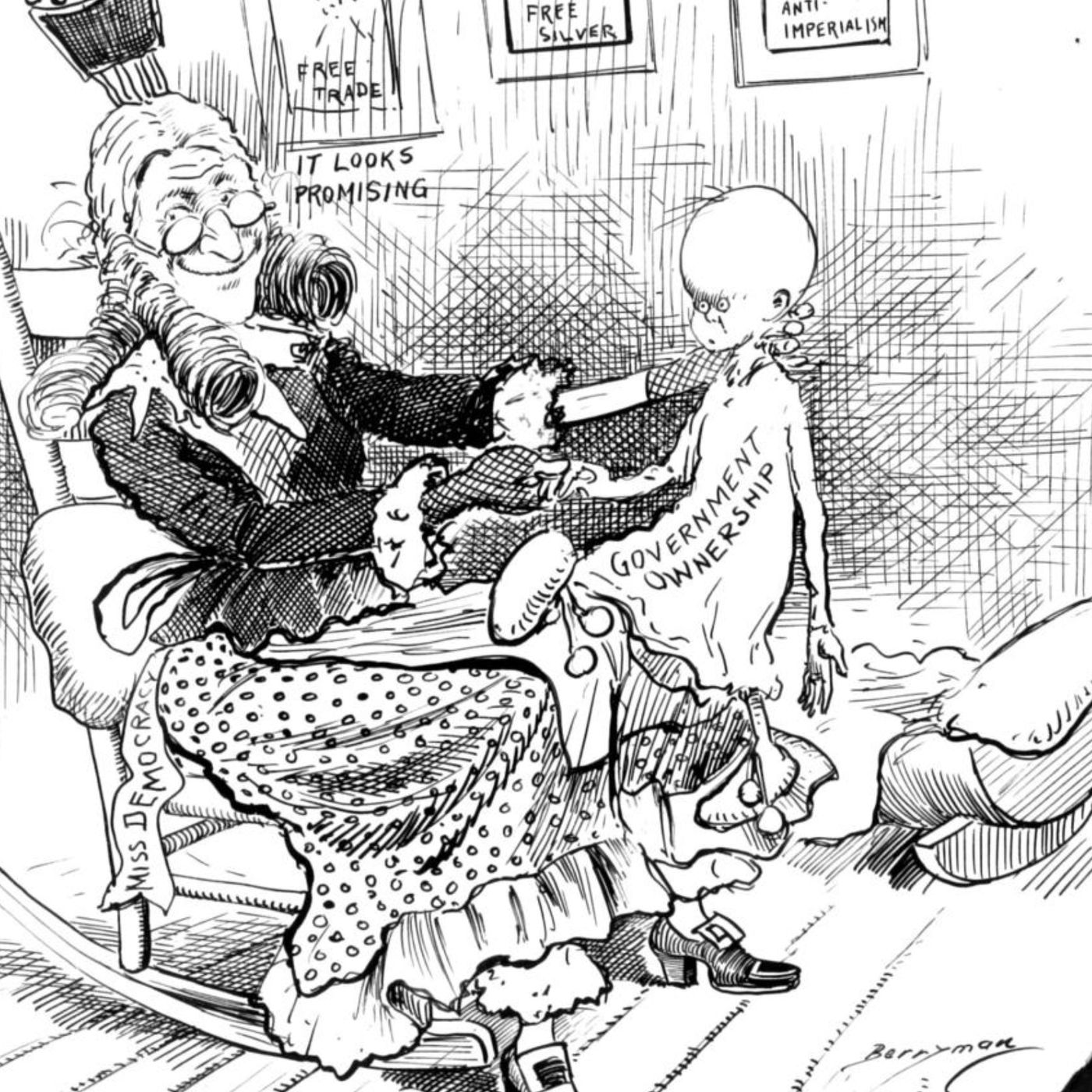
APRIL 26, 1905 WASHINGTON POST Episode Overview: The conversations explore multiple global and domestic intersections, focusing heavily on international conflicts such as the recent Ukrainian drone strikes against Russian vessels off the coast of Libya. They also examine the lingering historical legacies of European colonialism and independence movements across Asia during World War II, alongside the geopolitical implications of Russia's expanding influence in North Africa. Domestically, the conversation analyzes the aftermath of a recent wave election that severely impacted the Republican Party, drawing strategic parallels to past midterm upsets. Finally, the discussions tackle the volatile technology sector, highlighting the dramatic reinstatement of Nvidia CEO Jensen Huang, the mounting political and environmental opposition to sprawling data centers, and the intricate intersection of government intervention and the artificial intelligence market.I changed "Jensen Wong" to Jensen Hu
BREAKING RIGHT NOW: Turmoil on the UK patriot right, as Tommy Robinson admits he has been suffering from a breakdown since his conviction against Daily Mail journalists which will see him potentially spend YEARS in solitary confinement in jail when he is sentenced next month. BUT the Unite the Kingdom leader is fighting back today, announcing he WILL appeal his conviction and receive an apology for an unsafe and unfair conviction… Meanwhile, the right of British politics melts down as Nigel Farage publicly rejects his allies who have been negotiating a possible deal with Restore Britain’s Rupert Lowe. This time he blames Steve Laws, who is not even in the party, and Father Calvin Robinson, who is not even in the country, as he even attacks his own MP Suella Braverman for talking about her own ethnicity. It comes as UKIP leader Nick Tenconi attacks both Reform and Restore for rejecting nationalist street action, as he launches his own dramatic fightback against the communists. He's with
Bond yields are much higher today than they were in the era of zero interest rates. The income is drawing interest from investors wanting to benefit from the juicier payouts, and the money is flowing in. Multisector bond ETFs attracted $25 billion over the first 10 months of the year. High-yield bond ETFs had less, but still collected $6.7 billion. What are the risks of these ETFs, and how do they fit in your portfolio? Dan Sotiroff (https://www.morningstar.com/people/daniel-sotiroff) is the associate director for US passive strategies for Morningstar. It’s Been a Long Time Since Bonds Looked This Good (https://www.morningstar.com/funds/its-been-long-time-since-bonds-looked-this-good) On this episode: 00:00:00 Welcome 00:01:16 Multisector Bond ETFs: What They Are and What They Own 00:02:51 High-Yield vs. Multisector Bond ETFs: Similarities and Differences 00:03:39 Risks of Higher-Yield Bond ETFs and Where They Stand Now 00:06:16 How Multisector and High-Yield Bond ETFs Performed in 202
Anthropic’s days as a private company are ticking down. The artificial intelligence frontier lab was founded in 2021 and is reportedly expected to price in mid-November. Many market watchers are predicting the company’s IPO will be one of the biggest of the year. Anthropic recently updated its S-1 to disclose how much revenue it generated in Q3 2026. A key figure left blank in the Claude chatbot maker’s original filing with the SEC. What would the private company’s arrival to the public market mean for investors and what should they watch for? Harrison Rolfes (https://www.morningstar.com/people/harrison-rolfes) is a senior research analyst for Morningstar’s PitchBook, and he’s been tracking Anthropic’s rise. Anthropic’s IPO to Cast Long Shadow Over Private AI Stocks (https://www.morningstar.com/stocks/anthropics-wall-street-debut-cast-long-shadow-over-private-ai-stocks) Follow and listen to The Long View podcast (https://podcasts.apple.com/us/podcast/the-long-view/id1462214964). On thi
Tourism revenue should help cover the costs visitors create for local residents.
Share your view, then see how readers voted. No sign-in required. This poll is shared across stories.
Do you agree or disagree?
Common Quandary
A Common Quandary to discuss
Another conversation to explore, separate from this news story.
The touchscreen asks for a 25% tip while the cashier watches. What do you press?
At a counter-service shop, you place your own order, collect it, and clear the table. The payment screen suggests a twenty-five percent tip while an employee watches you choose.
When does a voluntary custom become an unfair social demand?