How We Learned to Speak: Babies, Survival, and Human Connection
64 min
Listen through the publisher, then discuss the episode here or arrange an in-person Roundtable. Your city determines where to meet.
Roundtables are designed for groups of four, with a shared subject and room for everyone to speak. Come for discussion, with no dating expectation.
Have you ever wondered why human babies are born so helpless compared to other animals? That single vulnerability may have given us the gift of speech. Today, I sit down with evolutionary biologist Madeleine Beekman, the author of The Origin of Language, to explore the science behind speech and child development. Looking at parenting through an evolutionary perspective was an eye-opening reminder that our brains are built for community and human connection. We discuss: Why language originally evolved from our babies’ extreme helplessness How walking upright and large brains created the “fourth trimester” Why infant “manipulation” through cries is an evolutionary survival skill How raising kids without a village directly drives parental burnout The important of screen-free family meal times and early peer socialization Why physical cuddling and intentional connection are the ultimate antidotes to overwhelm To connect with Madeleine Beekman follow her on Substack: https://substack.com/@madeleinebeekman. Buy her book The Origin of Language https://link.amazon/B032BeWkB (paid link) Our podcasts are also now on YouTube. Shop Dr. We love the sponsors that make this show possible!
Episode information is provided by the publisher. Listening takes place on the publisher’s service.
Does your relationship feel like home, or does it feel like standing on the edge of something you might lose? In Part 3 of our Relationship Anxiety series, clinical hypnotherapist and former paramedic Martin Hewlett guides you through the process of teaching your nervous system that love doesn't have to hurt to be real. We explore the physical manifestations of anxiety—the tight chest, the 2:00 AM racing mind, and the "stomach drop" when a text takes too long—and provide the tools to "turn down the alarm" of your internal survival response. If you are ready to stop "cherry-picking" evidence of disaster and start building a foundation of trust, this session is for you. In This Episode, We Cover: The Science of Safety: Understanding how your nervous system confuses love with danger. Guided Visualization: A journey into your own "safe room" where you are already enough. Rewiring the Brain: Moving from worst-case disaster reels to the reality of small, daily kindnesses. Breaking the Cycle:
This week Kiley and I discuss Carb Cycling while Pregnant. Is it safe to Carb Cycle and break Ketosis during Pregnancy? I also talk about my experience at a conferences were I learned about Carb Cycling and explain the interesting research done on Carb Cycling. I also talk about Ketones for Brain development and more specifically, Ketones for Brain development as an Infant. It’s incredible to know how much significance Ketones for Brain development has as an Infant. Thanks for tuning into my channel. Find more stories and information at my website: www.BozMD.com BOOK-LINK - ANYWAY YOU CAN. AUDIBLE: https://adbl.co/2SLLfS1 PAPERBACK= (Affilate link) https://amzn.to/2Cq1IVC The two most common questions I get ... 1) "Doc, what BLOOD METER do you recommend?" ANSWER: FORACARE: http://bit.ly/2QKGmKG For years my diabetics told me this system was great. I tried several others before I bought this one. I can't count the number of times I have tested my blood only to get an ERROR message from
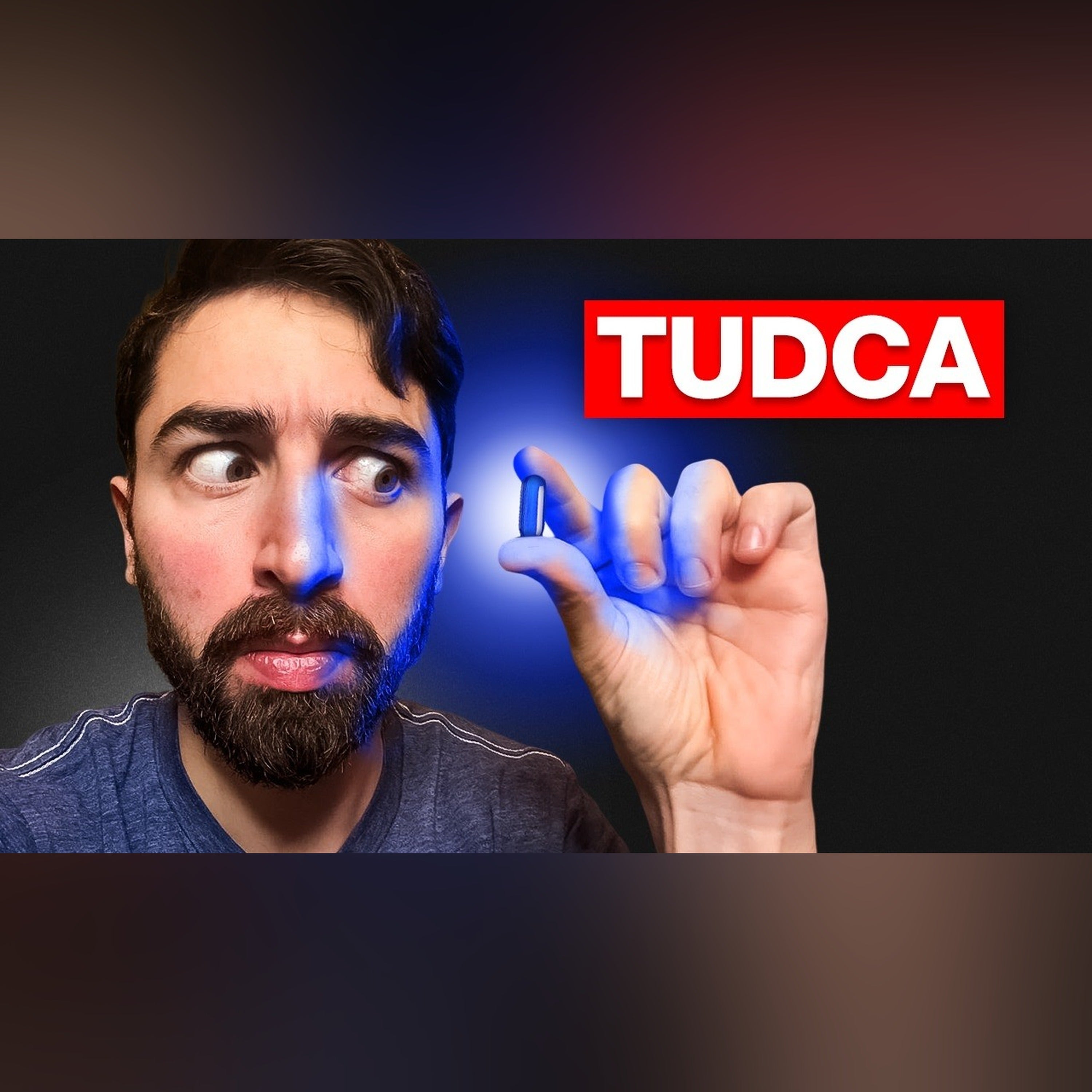
For added nuance and all the references, see the letter: https://staycuriousmetabolism.substack.com/p/can-tudca-protect-from-atherosclerosis?r=40ekz2 Description: A gut-made hormone (and trending supplement) called TUDCA may reduce plaque formation in atherosclerosis—not by lowering cholesterol, but by changing the inflammatory biology that drives plaque growth in the first place. In this video, we walk through the data step-by-step: the key molecular players (ER stress → ATF4 → inflammasome), how a Western-style diet can trigger this cascade, and why TUDCA appears to interrupt it—quieting inflammatory signaling and improving macrophage “cholesterol efflux” (the ability to clear cholesterol out of artery walls). Important caveat: the main plaque findings are preclinical (animal), and we do not yet have large human RCTs showing TUDCA slows or reverses atherosclerosis. Still, the mechanism is compelling, and it connects to a fascinating thread: statins, gut bile acids (UDCA/TUDCA), and G
A kiss can be wonderful. It can create an instant connection, spark romance, or make you feel closer to someone. But a kiss can also have the opposite effect — and sometimes ruin everything. So what makes kissing so powerful, and why can one kiss make such a difference? There's some fascinating science behind it. https://www.scientificamerican.com/article/why-we-kiss/ We spend an enormous amount of time worrying about what's going to change. What's next? What's coming? How do we prepare? But what if we're paying attention to the wrong things? Some of the most important forces shaping our lives never change, and understanding them may be far more valuable than trying to predict the future — something humans are notoriously bad at. Morgan Housel, partner at The Collaborative Fund and author of Same as Ever: A Guide to What Never Changes (https://amzn.to/3SwWn6u) (https://amzn.to/3SwWn6u)), joins me to explain why the things that stay the same may be the most important things to understan
Have you ever noticed how quiet grown-ups are on a crowded bus or train? It's like everyone has an invisible forcefield around them! People just stare at their shoes, read a book, or scroll on their phones in total silence. But why do we ignore each other? In 2014, scientists Nicholas Epley and Juliana Schroeder at the University of Chicago decided to find out! They set up an amazing experiment on a morning commuter train. They asked one group of tired people to sit in quiet solitude, and another group to actually strike up a conversation with a total stranger! The results were shocking. Even though people predicted that talking to a stranger would be super awkward and annoying, the group who said "hello" ended up having a much happier trip! It turns out, humans are naturally built to connect. Ancient Greek philosophers like Aristotle called us "social animals," and the Stoics believed we are all part of one big human family. Join Mira and Finn as they explore why a simple, safe "hello
Get the 200+ Page Optimal Living Daily Workbook (PDF) - Free. Want to turn today's episode into an actionable plan? Episode 4232: Chris Guillebeau shares a candid, funny account of his lack of qualifications, from a short-lived dishwashing job to failing his way through statistics and shrink-wrapping pallets. He argues that formal credentials matter far less than people think, and that anyone who builds a good life without them should treat that work with gratitude and diligence. It is an encouraging take on personal development for anyone who has ever felt like an imposter. Read along with the original article(s) here: https://chrisguillebeau.com/qualifications/ Quotes to ponder: "First, forget about what you're actually qualified to do. It's irrelevant and no one cares." "Fourth, when you do find something that works for you, you should be very grateful, every day." "Regardless of your actual qualifications, there's one thing that no one can give you and no one can take away: the wil
If you feel like you’re working harder than ever yet constantly falling short at home and in your career, the issue isn’t your ambition…it’s the math. In this episode, economist and author Corinne Low breaks down “the squeeze,” revealing how modern working mothers spend more time parenting than 1960s stay-at-home moms while juggling peak career demands. She unpacks the myths of the “rugrat race,” offers strategies to redistribute the mental load and explains why building durable human capital matters more than over-scheduling your kids. We discuss: How working parents today spend record time with children That the “rugrat race” creates immense pressure to overschedule How to survive “the squeeze” when time and finaces peak Why boundaries beat workplace flexibility for working parents That splitting the invisible mental load with a partner is important and necessary Promoting partners to household co-CEOs can reduce family resentment To connect with Corinne Low follow her on Instagram @
In this Follow-Up episode, Dr. Mona is joined by registered dietitian Jennifer Anderson of Kids Eat in Color to discuss navigating sugar, sweets and treats with your kids. They explore how using candy as a bribe, hyping up desserts and forbidding sweets can unintentionally place treats on a pedestal. Jennifer recommends approaching food without good-or-bad labels and to help kids learn moderation. They discuss: - How overhyping treats places them on an unhealthy emotional pedestal - That rigid good-or-bad food labels confuse children about eating habits - Bribing with candy reduces kids' intrinsic motivation for vegetables - How finishing plates for dessert disrupts children's natural hunger cues - That parents can promote balanced nutrition without creating food guilt Get Jennifer Anderson's new book, Feed Them Well (https://link.amazon/B0eSbe98q) (paid link) Want more? Listen to the full, original episode. (https://pedsdoctalk.com/podcast/why-we-shouldnt-put-sweets-and-treats-on-a-pe
When your kid says “I hate my body,” every part of you wants to rush in and fix it. I get it. In this episode, I sit down with Zoe Bisbing, a licensed psychotherapist, to talk about why that rush to reassure can backfire and what to say instead. The goal isn’t for our kids to love their bodies all the time and this one changed how I think about my own body too. We discuss: What body positivity actually means How I learned postpartum that I didn’t have to love my body to take care of it Why saying “Don’t say that, you’re beautiful” can shut down a child who is hurting That some kids notice their bodies as young a sage three How even kind compliments about looks can make kids more focused on their appearance How getting help for yourself is one of the best things you can do for your kid To connect with Zoe Bisbing follow her on Instagram @mybodypositivehome and read her Substack: https://substack.com/@bodypositivehome?r=hlot0&utm_medium=ios Our podcasts are also now on YouTube. Shop Dr.
Research announcements should give uncertainty as much attention as promising findings.
Share your view, then see how readers voted. No sign-in required. This poll is shared across stories.
Do you agree or disagree?
Common Quandary
A Common Quandary to discuss
Another conversation to explore, separate from this news story.
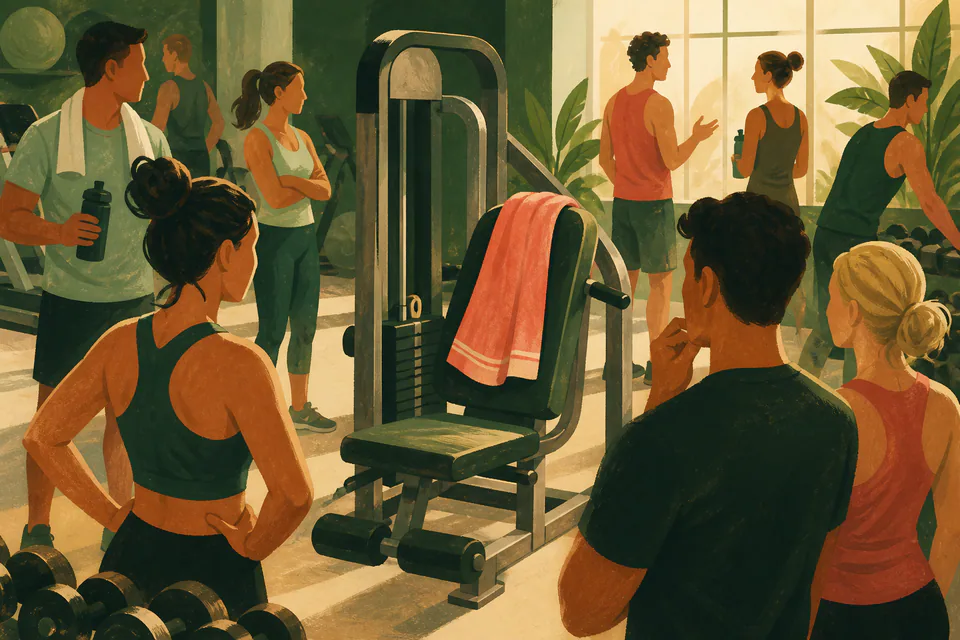
Someone reserves the best gym machine with a towel. When may you move it?
At a crowded gym, a towel has occupied the most popular machine for fifteen minutes while its owner chats across the room. Gym rules prohibit reserving equipment, but everyone occasionally steps away between sets.
How long may convenience masquerade as continued use?