How Will the Quebec Election Shape Canadian Politics?
44 min
Listen through the publisher, then discuss the episode here or arrange an in-person Roundtable. Your city determines where to meet.
Roundtables are designed for groups of four, with a shared subject and room for everyone to speak. Come for discussion, with no dating expectation.
StrategyCorp hosted on October 22th a webinar on what the results of the Québec election mean for Canadian politics. The 31st Premier of Québec, Dr. Philippe Couillard, shared his thoughts on how the election of a new PQ government will shape Canadian politics. He also discussed potential implications for Canada's trade strategy vis-à-vis the U.S., the relationship between Ottawa and Québec, and national unity.
Episode information is provided by the publisher. Listening takes place on the publisher’s service.
One week after the U.S. midterm elections, join Valérie Beaudoin, one of Canada's most respected commentators on U.S. politics, for a discussion on how Canadian policymakers and officials are digesting the results in Washington. From the new balance of power in Congress to the potential implications for Canada-U.S. relations, trade economic growth, and cross-border policy priorities, we'll explore what the election outcome could mean for Canada in the months ahead. Recorded on November 10, 2026. -- Optique canadienne sur les élections américaines de mi-mandat – Valérie Beaudoin Pour une version avec des sous-titres français, veuillez consulter Une semaine après les élections de mi-mandat aux États-Unis, Valérie Beaudoin, l’une des commentatrices de la politique américaine les plus respectées du Canada, discute des façons dont les décideurs canadiens et Ottawa ont réagi aux résultats à Washington. Du nouvel équilibre des pouvoirs au Congrès aux répercussions possibles sur les relations
After some life updates (which is all the people really want to hear anyway), Jonah Goldberg turns his hand to ruminating on Trump’s villainous stupidity, the trilateral summit with Vladimir Putin and Xi Jinping, nuclear policy, New York City’s supermarkets, socialist contempt for the middle class, GDP, Ro Khanna, the Bulwark squabble, recent tech failures, the National Popular Vote Interstate Compact, and magical thinking about politics. Show Notes: —LFG AO Pod (https://thedispatch.com/podcast/advisoryopinions/should-lame-ducks-hibernate/) —Special Event: Advisory Opinions: Live! (https://www.capcitycomedy.com/shows/393484) —Mamdani on supermarkets (https://x.com/MorePerfectUS/status/2123188786926391338/video/1) —Irving Kristol in The Public Interest: “Rationalism in Economics” (https://www.nationalaffairs.com/public_interest/detail/rationalism-in-economics) —American Compass’ postelection survey (https://americancompass.org/post-midterm-survey/) —Dan Senor Remnant (https://thedispatc
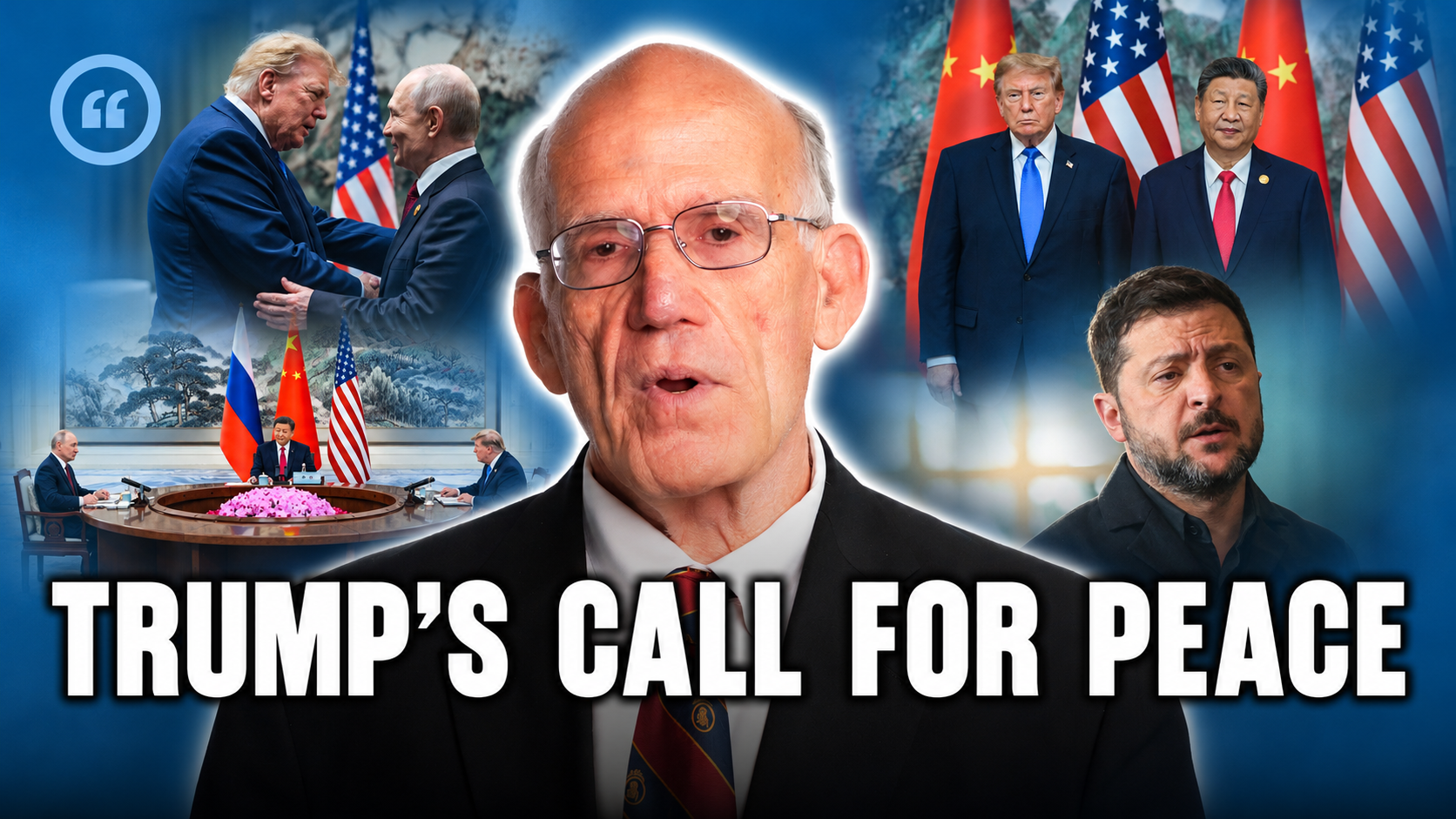
President Donald Trump's first ever trilateral summit with Vladimir Putin and Xi Jinping raises questions about the future of the war in Ukraine and whether a peace agreement could finally be within reach. Victor Davis Hanson and Sami Winc examine the summit on today’s edition of “Victor Davis Hanson: In His Own Words,” discussing Russia's declining influence, potential territorial concessions in Ukraine, and Europe's frustration over Trump's peace negotiations. Hanson criticizes Hillary Clinton's attacks on Trump's diplomacy; he also argues that European leaders have weakened their influence by neglecting defense spending and relying on American military protection. They discuss Elon Musk's shifting political allegiances, and Hanson warns that distancing himself from MAGA may not protect him from Democrat investigations. They also discuss the potential economic benefits of artificial intelligence and the challenges facing Hakeem Jeffries as Democrats prepare to take control of the Hou
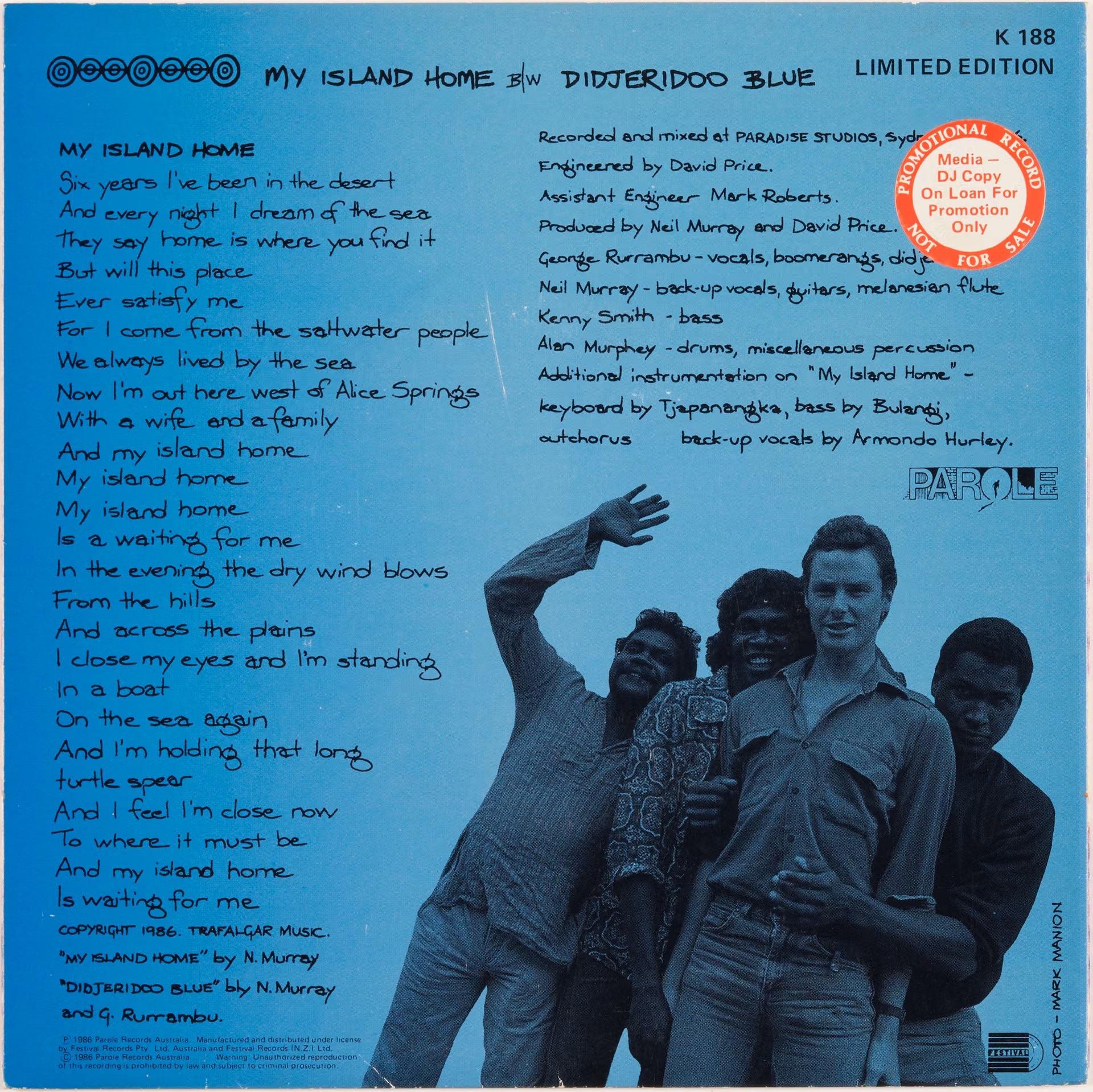
My Island Home came to Neil Murray on a bus, when he was thinking about Galiwin’ku, the island home of his Warumpi Band bandmate George Burarrwanga, and his own home country in western Victoria. This month, it was among the first 10 songs selected for the inaugural National Songbook (https://www.nfsa.gov.au/stories/deep-dives/national-songbook?gad_campaignid=24434697280&gad_source=1&gbraid=0AAAAAoyuqE8IloqWPu7EV-y2rDtcfF5WC&hsa_acc=4074694733&hsa_ad=830541886523&hsa_cam=24434697280&hsa_grp=202695137678&hsa_kw=nfsa+songbook&hsa_mt=p&hsa_net=adwords&hsa_src=g&hsa_tgt=kwd-2511061033177&hsa_ver=3), an annual collection “to honour songs that profoundly shape Australia's culture, identity and collective memory”. Neil speaks with Julian about the My Island Home story, Christine Anu's 1995 cover, and the songs he thinks should be included in the Songbook in the future. Neil will be playing (https://www.neilmurray.com.au/pages/itin.html) at The Presynct in Nambour on November 26, The Royal in N
Runaway government spending, rising costs, and a new wave of legal battles over constitutional rights. With Democrats preparing to take control of Congress and several state governments, Republicans are confronting a very different political landscape. John Solomon and Amanda Head welcome Montana Senator-elect Kurt Alme, who says Washington must get serious about reining in spending, lowering inflation, and making everyday life affordable again. Already preparing for his arrival in the Senate, Alme discusses his priorities for protecting Montana's way of life, keeping taxes low, creating good-paying jobs, and working across party lines when possible. He also addresses the challenges Republicans face in the minority, the remaining lame-duck session, and concerns about efforts to expand the Supreme Court and eliminate the filibuster. Then, Southeastern Legal Foundation President Kimberly Hermann joins the show with a warning about potential policy reversals in states where Democrats have
The Ninth Circuit hears Siren Retail, doing business as Starbucks, versus the National Labor Relations Board. The dispute grew out of a union organizing campaign. Managers met with employees to discuss what union representation would mean. Statements about losing benefits, access to temporary assignments, and obligations to join a union or participate in a strike led to unfair labor practice charges. The Board found several statements unlawful threats, not merely protected opinions. Separately, it overruled a precedent called Tri-Cast, which concerned statements about how unionization changes employees' relationship with management. That new standard applied only to future conduct; the Board did not use it to find those relationship statements unlawful in this case. Starbucks will challenge the threat findings and argue that federal labor law and the First Amendment protect its speech. It will also argue that the prospective rule chills what it can say in future organizing campaigns. T
The 2026 U.S. midterm elections saw the Democrats gain a majority in both the House of Representatives and the Senate. The Democratic Party made notable inroads across the United States, including in red states like Kansas, South Carolina, and Texas. With the war in Iran and affordability concerns top of mind, the midterms proved to be a referendum on the first two years of the Trump presidency. Two StrategyCorp experts with direct experience working on Democratic campaigns join the podcast to go beyond the results and analyze how we got here. Matthew Segal, Director, and Bruce Fisher, Senior Advisor, share what voters were telling the party at the door, whether Canada came up as an issue, and the approach the party took to expand the map. They also discuss what Democratic leadership will focus on when it takes control of Congress in January.
Leagues should limit financial advantages that make competition persistently unequal.
Share your view, then see how readers voted. No sign-in required. This poll is shared across stories.
Do you agree or disagree?
Common Quandary
A Common Quandary to discuss
Another conversation to explore, separate from this news story.
You lecture everyone about climate change—then get invited on a dream flight. Do you go?
A close friend living overseas invites you to an important celebration. Flying is affordable but carbon-intensive. Your individual decision will not determine whether the flight operates, yet it conflicts with commitments you publicly encourage others to make.
When is a small personal contribution to a large harm morally significant?