Listen through the publisher, then discuss the episode here or arrange an in-person Roundtable. Your city determines where to meet.
Roundtables are designed for groups of four, with a shared subject and room for everyone to speak. Come for discussion, with no dating expectation.
Here's a Thought… #2801 with Brooks Jensen Beware the Advice That Stifles One of my earliest examples of thinking outside the box involved five images matted in a single mat. I thought it was innovative and expressive. My well-meaning peers crushed this experiment and I never pursued it. Years later I tried black mat boards with the same discouragement. Feedback can be helpful, but it can also negatively influence your creative impulses.
Episode information is provided by the publisher. Listening takes place on the publisher’s service.
This is the very first episode of Beyond the Label, a bonus series on Behind the Design that steps outside the design and build world and into the wider creative one. Camilla sits down with Madalynne Clifton and Sara Spence, the Newcastle friends behind Kate & Kole, a female-led fine jewellery studio working exclusively with lab-grown diamonds and recycled gold. Eleven years ago they had a 3D-printed ring, an Instagram page and a few glasses of wine. They put in $750 each, reinvested 10% of every sale into marketing, and kept the business deliberately slow alongside their other work. Today they have a team of around 25, a gallery-like studio in Newcastle, residencies around the country and a home in SoHo, New York. They talk about holding the line on lab-grown diamonds from 2015, making 96 to 98% of their pieces in Australia, and why they always say no when a customer asks them to copy another brand's design. They also go back to the year everything happened at once: going full time, m
Anthony opens with a crash course on the Booker Prize before welcoming poet and novelist Luke Kennard to discuss his novel on the Booker Prize short list, ‘Black Bag,’ the story of a struggling actor hired to sit silently inside a leather bag during university lectures. The guys explore what it’s like to be short-listed for the Booker, the case for taking comedy seriously, and the real-life experiment that inspired the novel. They also discuss the history of the male loneliness epidemic, the indignities of acting, and whether men should try sitting in a bag before starting a podcast. (00:00) - Open: The Booker Prize 101 (09:23) - Introduction: Poetry, Prose, and Finding Success (18:55) - Chapter 1: Being Short-Listed for the Booker Prize (29:35) - Chapter 2: ‘Black Bag,’ the Mere-Exposure Effect, and Tasteful Comedy (54:03) - Chapter 3: Jeselnik Book Club Gauntlet (1:02:48) - Chapter 4: One Additional Question—Are Leather Pants Cool? (1:06:04) - Acknowledgments: Luke’s gift and book re
Reed Manly tells FBI Agent Ryan Powers exactly why he won’t hand over his company’s jump records. If Ryan reads them, he’ll have to arrest him. It’s the most honest thing anyone at Timelane has said all morning. Unfortunately for Ryan, he’s standing on the wrong side of Manly’s desk when he says it. Eighteen hours later, Ryan wakes strapped to a chair in a room barely big enough to hold it. His watch says he’s still in Pasadena. Manly’s voice comes through a speaker overhead, pleased with how well the first experiment went. For the next one, he intends to send Ryan two hundred years into the future. His colleagues have yet to work out how long they should leave him there. Ryan’s supervisor knows where he went. There’s a signed subpoena. Under ordinary circumstances, someone would already be looking for him. But Ryan makes his living investigating people with access to the past, and he understands exactly what that means for the last person who remembers seeing him alive. FEATURED STORY
Beauty remains more resilient than luxury fashion, but the latest earnings reveal an increasingly uneven industry. L'Oréal continues to outperform, Estée Lauder's recovery is being driven by the niche fragrance category, and Korean beauty brands are challenging established players. Meanwhile, consumers are resisting price increases on affordable products while continuing to splurge on premium beauty. This week on The Debrief, Priya Rao, executive editor at the Business of Beauty, joins Sheena Butler-Young to discuss the industry's winners and losers, changing consumer priorities and where brands should place their bets in 2027. Key Insights: While Estée Lauder's recovery is largely driven by luxury fragrance and Coty struggles to find a coherent positioning, L'Oréal is performing well across affordable skincare, professional haircare and prestige beauty. “When you think about that portfolio, it's not weighted in any one direction. It's not necessarily blowing by the winds of a single c
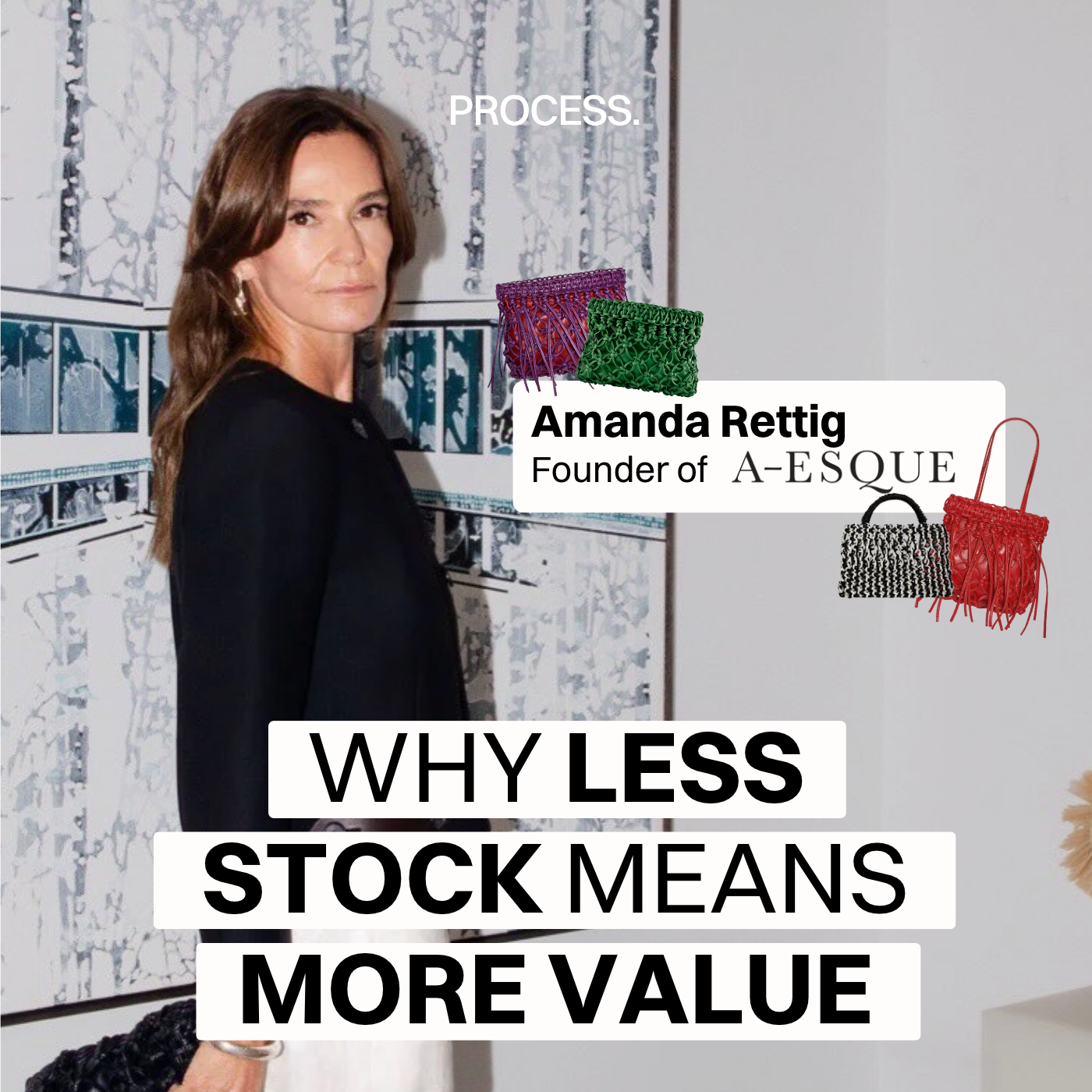
“The only time I would get scared is if I didn’t really believe in something.” - Amanda Rettig Australian designer and founder Amanda Briskin-Rettig has spent 30 years building fashion brands. She founded Mimco in 1996, sold it in 2007, and 13 years ago started A-esque, a self-funded leather goods brand handmade in small batches in Melbourne. Its philosophy is simple: build slowly, create intentionally, and make things that last. In this episode, Amanda shares how to start a fashion brand and grow it sustainably. She covers product development and product architecture, small-batch manufacturing inspired by Toyota’s lean model, and how to avoid excess inventory, deadstock and discounting. She also talks about local manufacturing, building a direct-to-consumer business, brand storytelling, collaborations, and what she learned from building and selling a business. If you want to start a handbag or accessories brand, build a sustainable fashion business, or grow a brand without compromisin
Merriam-Webster's Word of the Day for November 19, 2026 is: upbraid • \up-BRAYD\ • verb To upbraid someone is to speak to them in an angry or critical way in response to something they have done wrong—in other words, to scold them. // The teacher upbraided the class after discovering the chalkboard erasers had been clapped all over the walls. See the entry > (https://www.merriam-webster.com/dictionary/upbraid) Examples: “An industrious ant spends all summer gathering food for the cold months, while a lazy grasshopper dances and sings. Once winter hits, the grasshopper is cold and hungry, and goes begging for food from the ant, who refuses to share any of its bounty, upbraiding the grasshopper for failing to plan.” — David A. Graham, The Atlantic, 17 Apr. 2026 Did you know? First things first: do not confuse upbraid with topknot lest you be upbraided for it. Topknot is a noun referring to a hairstyle, while upbraid is a verb (and an ancient one at that) meaning “to criticize or scold se
Here's a Thought… #2811 with Brooks Jensen Disproportional Scaling Morphing an image through disproportional scaling has never occurred to me. Jeff Schewe opened my eyes about this a few years ago. When I resisted because this would make my images less real, Jeff reminded me that everything we do in photography is unreal. He was right.
Here's a Thought… #2810 with Brooks Jensen Where to Crop Sometimes we have irrational ideas that can barely be justified. Where to crop is an illustration of this for me. I always prefer cropping optically, with a zoom lens, in the field, with the subject before me. The alternative is cropping during processing, in the computer, where we throw away precious pixels. I almost never crop in processing. Am I being irrational about this?
Here's a Thought… #2809 with Brooks Jensen There Is No Try Yoda said it so succinctly: Do or do not; there is no try. I often feel like I want to say this to all those YouTube influencers. I want to see their finished work more than I want to see how they got there. Is there truth to that old canard "Those who can do; those who can't teach." I don't think so, but I do find myself more interested in their results than I see in their videos.
Local events should make a deliberate effort to welcome people attending alone.
Share your view, then see how readers voted. No sign-in required. This poll is shared across stories.
Do you agree or disagree?
Common Quandary
A Common Quandary to discuss
Another conversation to explore, separate from this news story.
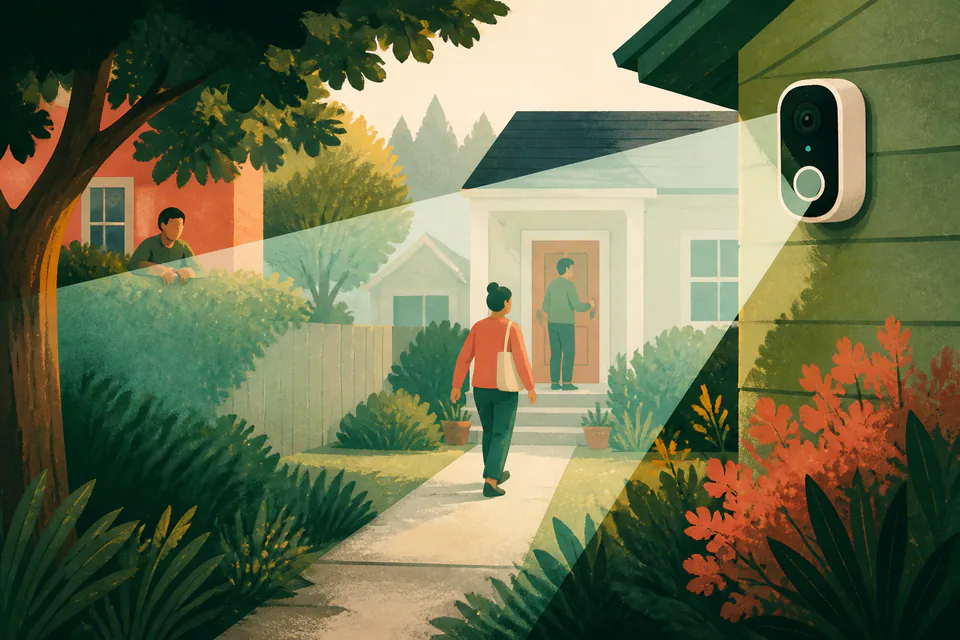
Your neighbor's doorbell camera watches everyone entering your home. Is that their business?
A neighbor installs a doorbell camera that records your front yard and every visitor entering your home. They say the wide angle is necessary to capture package theft and the footage is rarely reviewed.
Where should private security stop in a shared public view?