Hubris, Humility, and the AI Revolution (with Walter Isaacson)
54 min
Listen through the publisher, then discuss the episode here or arrange an in-person Roundtable. Your city determines where to meet.
Roundtables are designed for groups of four, with a shared subject and room for everyone to speak. Come for discussion, with no dating expectation.
The people building artificial intelligence worry there’s a real chance it could doom us all. So why do they keep building anyway? Walter Isaacson (https://www.simonandschuster.com/authors/Walter-Isaacson/697650), biographer extraordinaire, talks with EconTalk’s Russ Roberts (https://www.econlib.org/library/About.html) about why the AI innovators feel trapped in a race none of them can pause. Drawing on The Builders, a new podcast he’s launched, Isaacson explains why so many of these innovators see humility and empathy as handicaps rather than virtues, and why he worries they’re pouring their talent into autonomous agents that leave humans out of the loop. Isaacson traces today’s AI debate back to the rival visions of Alan Turing and Ada Lovelace, reveals why Elon Musk once told him his empathy was really vanity, and recalls Benjamin Franklin’s surprising lesson about faking humility. Plus: a Marie Curie story involving a secret affair and a second Nobel Prize.
Episode information is provided by the publisher. Listening takes place on the publisher’s service.
In this in-depth conversation with Dr. Nic Verhoeven, PhD. creator of Physionic, we explore the controversial world of seed oils and their impact on health. Together, we – “the Nicks” –delves into the science behind seed oils, separating fat from fiction. Importantly, we try to approach this topic with the nuance and humility we both feel is deserves. This isn’t about what we know for certain as much as it is about what the biomedical and scientific community should admit we don’t know but need to study further. Get ready for a thought-provoking discussion on nutrition science, the impact of seed oils on metabolic health, and practical insights to make more informed dietary choices. To Learn More about Seed Oils see my prior video on topic, as well as a recent Newsletter covering a key paper that Nic and I briefly discuss in this interview. Hint: It’s all about “Perspective.” Prior Seed Oil video https://youtu.be/3rwbL5HrRUc Newsletter on Omega-6/3 Ratio and “Perspectives” https://open
Human DNA editing is finally here. Check out the new WHOOP here! https://join.whoop.com/cleo There is a microscopic technology that now gives us the power to edit our own genes while we’re alive. To cure certain diseases, possibly prevent others, or boost what our bodies can do… or maybe, one day give our kids abilities no one has ever had before… effectively putting evolution into our hands. This is not some sci-fi future! We’re already using this technology in real medical treatments in plants to grow new crops and in animals to create new species! Just yesterday, news broke that a baby’s life was saved using personalized gene editing that fixed one tiny error in its DNA. This is truly “huge if true.” Deciding how we use this new superpower may be the biggest challenge we have ever faced - and the biggest opportunity to reduce human suffering. This tool is called CRISPR. Dr. Jennifer Doudna won the Nobel Prize for discovering it. So, in this third episode of Huge Conversations, Dr. D
In this video, Disability Attorney Walter Hnot of the Disability Resolution Law Firm goes over how SSA OIG CDI Units collect evidence on you to help with the adjudication as to whether you get to keep your benefits. America’s Most Viewed, Clicked On, Subscribed To Social Security Disability Attorney Like the content? Review us here: https://g.page/r/CcwyektC7nCPEAg/review . If the link does not work, Google: Disability Resolution, P.A. Need Medicare? I don’t do that…so call Chapter Medicare at 339 226 6287 or use askchapter.org/disability Great News!! Chapter is paying me to create this video. Need Long Term Disability Benefit Help? I don’t do that, so call Attorney Bill Coffman at 813-839-2000. PRIVATE 60/30 MIN SESSION PHONE CALL WITH ATTORNEY WALTER HNOT https://www.dropbox.com/scl/fi/h48yr0wagaizrvbype2vu/250-hourly-Attorney-Hnot-Contract-V.9.pdf?rlkey=ax5vf89x0v4qk43w8oqj6ynof&dl=0 (https://www.dropbox.com/scl/fi/h48yr0wagaizrvbype2vu/250-hourly-Attorney-Hnot-Contract-V.9.pdf?dl=0
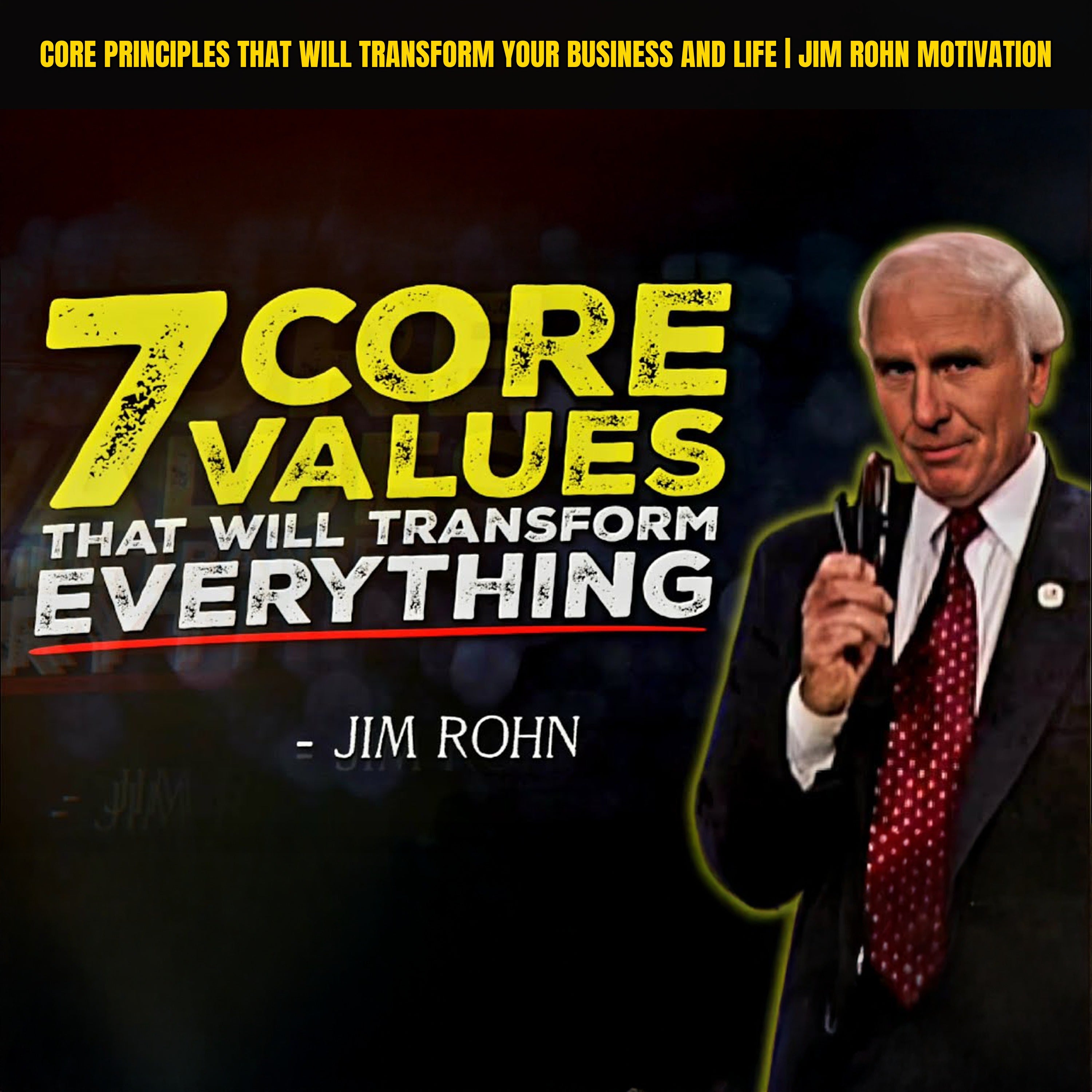
We dive deep into the 7 Core Values that transform not just leadership—but life. From integrity to courage, this message reminds us that success isn’t just about performance. It’s about principle. When your values lead, your results follow. Key Topics From This Motivational speech: Why integrity is the foundation for trust and influence How responsibility shifts you from blame to power Why discipline is the difference between vision and results How humility unlocks wisdom and real leadership Why adaptability is essential for growth in uncertain times How generosity builds impact, not just income Why courage is required to move before you're ready This Jim Rohn motivational speech isn’t about hype—it’s about the habits and values that hold you up when motivation fades. If your results feel unstable, start with your values. Because when those are clear, your actions have direction, your leadership has depth, and your business has backbone. These values don’t shift under pressure—they lea
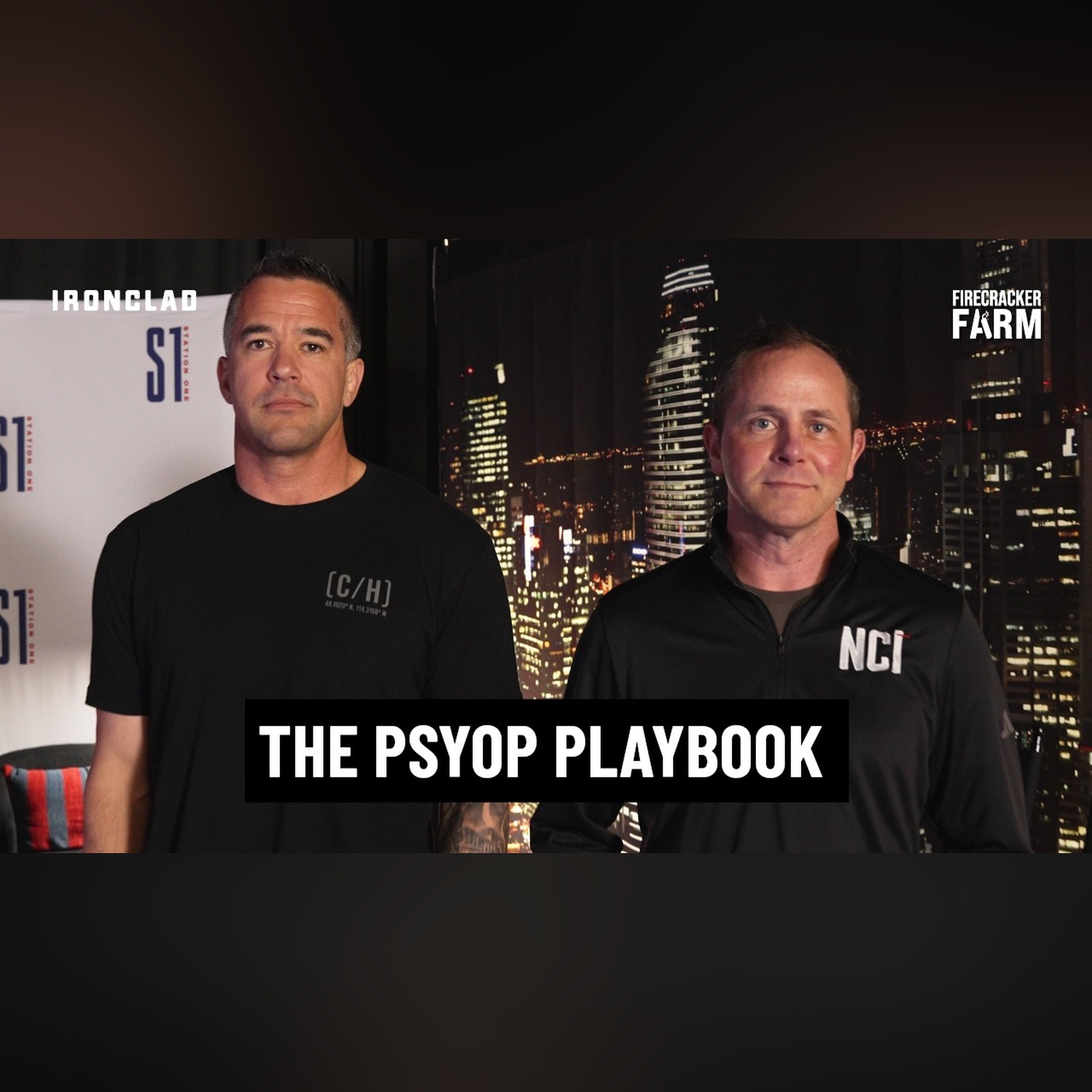
This is a PREVIEW of the upcoming episode of Change Agents. The full episode drops tomorrow at 5pm EST Uploaded 18-06-26 On this week's episode of Change Agents, Andy travels to Chase Hughes' new studio to break down how human behavior is manipulated at scale, from bot farms manufacturing fake consensus to the psychological framework Chase calls WOUND that explains why outrage, fear, and loneliness keep us glued to our phones. They dig into why Chase believes the algorithm is less a sinister mastermind and more an engine optimized purely for ad revenue, how think tanks may shape policy more than most people realize, and why Walter Cronkite and Julia Child both have far stranger backstories than anyone learned in school. Andy also gets a tour of Chase's new independent news studio, Station One, built to show audiences the psyops behind the headlines rather than just the headlines themselves. Change Agents is an IRONCLAD Original Firecracker Farm Norwood Sawmills: Learn more about Norwoo
Join Shaun Attwood LIVE with Fritz Springmeier, author and researcher known for his controversial investigations into MKUltra, mind control, the Illuminati, secret societies, and alleged covert intelligence operations. Fritz is the author of Bloodlines of the Illuminati and co-author of The Illuminati Formula Used to Create an Undetectable Total Mind Controlled person. His decades of research have explored alleged psychological programming, hidden power structures, and the influence of secrecy within governments and intelligence agencies. Tonight, Shaun and Fritz dive into the history of MKUltra, psychological warfare, government secrecy, and the escalating Iran conflict. They’ll explore propaganda, geopolitical tensions, international power struggles, and Fritz’s theories about how powerful institutions may influence world events. What is documented history, what remains hidden, and which claims deserve closer examination? Join us for an intriguing conversation examining both historic
Could a 16th-century Frenchman who spent two decades in a tower library be the first blogger? And could Tyler Cowen achieve immortality not through his books, but because AI has digested everything he’s ever said? Economist Tyler Cowen joins EconTalk’s Russ Roberts to explore the essays of Michel de Montaigne. They discuss what Montaigne got right about education (hire a tutor with a well-formed, not a well-filled, brain) and what he may have gotten wrong about material progress and growth. Along the way: Larry David, Torah study, kidney stones, Cowen’s odds of living to 120, why you should befriend people ten years younger, and Montaigne’s deceptively simple wisdom: when I dance, I dance.
What if the results of one of the most influential economics papers of the past 25 years are unreliable? The "China shock" narrative--that a surge of Chinese imports destroyed American manufacturing jobs and the communities that depended on them--became conventional wisdom in Washington and beyond. But economic historian Joseph Francis argues that the claim is much weaker than it looks. Listen as he tells EconTalk's Russ Roberts how a 2022 correction to the paper’s research design cut its estimate of lost jobs in half and erased its findings on wages and living standards. He and Russ then look at what this affair reveals about economics as a field, including the incentives that reward dramatic results, and the problems with peer review.
Vocational training should receive the same respect as university education.
Share your view, then see how readers voted. No sign-in required. This poll is shared across stories.
Do you agree or disagree?
Common Quandary
A Common Quandary to discuss
Another conversation to explore, separate from this news story.
Your neighbor's doorbell camera watches everyone entering your home. Is that their business?
A neighbor installs a doorbell camera that records your front yard and every visitor entering your home. They say the wide angle is necessary to capture package theft and the footage is rarely reviewed.
Where should private security stop in a shared public view?