Human Intention in a Retrocausal World with Richard Silberstein
43 min
Listen through the publisher, then discuss the episode here or arrange an in-person Roundtable. Your city determines where to meet.
Roundtables are designed for groups of four, with a shared subject and room for everyone to speak. Come for discussion, with no dating expectation.
Richard Silberstein is Emeritus Professor of Neuroscience at Swinburne University in Melbourne, Australia. He is author of Stranger and Stranger: The Neuroscience of How Mind and Cosmos Communicate. Richard presents a conceptual framework of nested hierarchies of consciousness and time that accounts for precognition and other psi phenomena through retrocausal loops, in which collective consciousness encodes information into the future matrix. He explores how near-death experiences transform ethical frameworks and personality by connecting people to a deeper compassionate reality, and discusses evidence that focused human intention—including collective meditation—can produce measurable real-world effects such as reduced crime rates. Drawing on his book, Stranger and Stranger: The Neuroscience of How Mind and Cosmos Communicate, Silberstein argues that the universe is conscious and responsive to human intent. 00:00:00 Introduction 00:04:00 Nested hierarchies of consciousness 00:08:00 Retrocausal precognition 00:12:00 Near death experiences 00:16:00 Ethical transformation 00:20:00 Suffering and purpose 00:24:00 Collective focused intent 00:28:00 Crime reduction study 00:32:00 Power of focused intent 00:38:00 Conclusion (Recorded on October 18, 2026) You can watch Richard Silberstein's previous video on The Borderland Between Psi and Neuroscience at https://youtu.be/FZM2NfVfBbo Check out New Thinking Allowed's AI chatbot. To order a copy of Charles T. To order Stranger and Stranger by Richard Silberstein, go to https://link.amazon/B0b7eTYLz
Episode information is provided by the publisher. Listening takes place on the publisher’s service.
Tis’ the season to assess the year gone by and reflect on our learnings and lessons. Want to take it a step further? This interview with Sister Shivani offers action steps and powerful incantations that go to work deep in our subconscious mind to help strengthen our emotional immune system, clear karmic accounts through forgiveness, and even help shift the collective consciousness. Uploaded 20-12-22 For over 25 years, BK Shivani has been a practitioner and a teacher of Rajyoga Meditation -- the heart of the teachings of Brahma Kumaris World Spiritual Organization. In 2019, Sister Shivani was awarded the highest civilian honor for women in India, the prestigious Nari Shakti Puraskaar, for her role in transforming human behaviors. To share in the power of Sister Shivani’s global message of love, healing, personal responsibility, and transformation, Sage and Tony Robbins would like to gift you this special moment shared from a 2022 private event with their Platinum Partners in Mexico. We
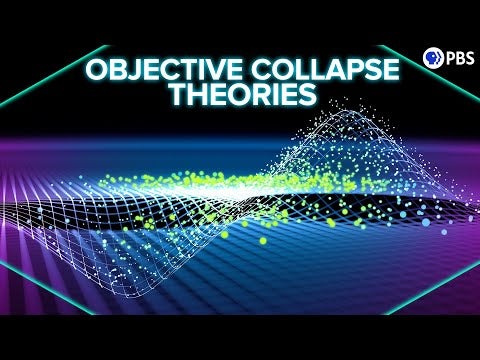
Thank you to Wren for supporting PBS. To learn more, go to https://wren.co/start/spacetime Uploaded 16-02-22 Take the Space Time Fan Survey Here: https://forms.gle/wS4bj9o3rvyhfKzUA PBS Member Stations rely on viewers like you. To support your local station, go to:http://to.pbs.org/DonateSPACE Sign Up on Patreon to get access to the Space Time Discord! Objective Collapse Theories offer a explanation of quantum mechanics that is at once brand new and based in classical mechanics. In the world of quantum mechanics, it’s no big deal for particles to be in multiple different states at the same time, or to teleport between locations, or to influence each other faster than light. But somehow, none of this strangeness makes its way to the familiar scale of human beings - even though our world is made entirely of quantum-weird building blocks. The explanations of this transition range from the mystical influence of the conscious mind to the grandiose proposition of multiple realities. But Obje
In this motivational message, Jim Rohn breaks down the fundamental principles that separate those who merely wish for a better life from those who actively create one. Learn how to develop the habits, mindset, and character needed to turn your goals into reality. Uploaded 28-05-26 A timeless message from Jim Rohn® This timeless message will challenge your thinking, reshape your habits, and show you how real change begins from within. _____________ Speaker: Jim Rohn Jim Rohn (1930–2009) was a world-renowned motivational speaker, author, and personal development expert. He inspired millions with his lessons on discipline, mindset, and taking consistent action to achieve success. Known as the 'mentor to the mentors,' Rohn directly influenced some of today's most popular speakers such as Tony Robbins and Brian Tracy. _____________ SUCCESS® presents: Jim Rohn®. To discover more powerful messages and timeless teachings from Jim Rohn, visit: https://www.success.com/subscriptions/ Licensed for
Master the skills that change lives — enroll in your free human behavior course today: https://nci.university/learn Uploaded 09-01-26 You were never reacting to chaos — you were responding to structure. Outcomes don’t appear suddenly; they’re assembled long before you notice them. Understanding how pressure is built changes how the world feels immediately. All influence follows patterns once you know where to look. Reality doesn’t break — it gets reshaped in layers. Every system depends on predictable human responses. Given the right conditions, behavior becomes almost automatic. Once you see the architecture, panic loses its leverage. Detection beats reaction — every time. Please note that the content provided in this broadcast is for informational and educational purposes only and should not be construed as legal, medical, financial, or professional advice. No material in this communication establishes any form of professional relationship that is privileged or confidential. The insi
🇺🇸 TWO NAVY SEALS. TWO INCREDIBLE JOURNEYS. ONE POWERFUL MISSION TO TRANSFORM YOUR FINANCIAL FUTURE! Michael Jaco welcomes fellow former Navy SEAL Larry Yatch, founder of TruPath Mastery, for an eye-opening conversation about success, leadership, financial trauma, and the hidden subconscious patterns that can keep even the most accomplished people from reaching their full potential. With 24 years as a Navy SEAL and 11 years as a CIA security operative, Michael shares the powerful lessons of mental discipline, intuition, and personal transformation that shaped his extraordinary journey. Larry brings 10 years of Navy SEAL service and an impressive career advising Fortune 50 executives. But despite achieving tremendous professional success, he discovered that the survival patterns that once made him successful were also keeping him trapped in his own business. THE BIG REVELATION: YOUR MONEY HABITS MAY HAVE VERY LITTLE TO DO WITH MONEY! From childhood programming and fear of scarcity to
In Part 2 of my conversation with manifestation researcher, coach and bestselling author Matt Cooke, we explore destiny, reincarnation and the nature of consciousness. Matt explains why the quality of our consciousness shapes how we experience life and why we do not manifest what we want - we manifest who we are being. We also discuss our relationship with money, becoming conscious of limiting beliefs and the importance of rehearsing who we are becoming by thinking, feeling, acting and behaving like the person already living the life we want to create. Matt also shares the practices he believes are non-negotiable for manifestation. Visit Matt's Instagram (https://www.instagram.com/mattcookecoach/) Matt's Website (https://www.mattcooke.me/) Beyond Wanting - Matt's Book (https://www.amazon.ie/Beyond-Wanting-Art-True-Manifestation/dp/059385330X) Follow The Beyond Podcast here (https://www.instagram.com/beyondpodcast333/). Join The Beyond Community here (https://the-beyond.mn.co/landing/).
Callum Cooper, PhD, is a lecturer in psychology at the University of Northampton in the United Kingdom. He is author of Telephone Calls From the Dead. He is coeditor, with Steven Parsons, of Paracoustics: Sound and the Paranormal. And, he is coauthor (with Alex Tanous) of Conversations With Ghosts. His website is www.callumecooper.com. This conversation, rebooted from 2022, introduces Cal as a new Guest Host for New Thinking Allowed. It focuses on parapsychology. Cal discusses his own work as an educator in the field and questions Jeff about his early work, including his book, Psi Development Systems. The discussion focuses on J. B. Rhine and the origins of modern parapsychology. Other topics includ remote viewing, skeptical hostility toward the field, and the various personalities with whom each has interacted. Check out New Thinking Allowed's AI chatbot. To order a copy of Charles T. To order Conversations with Ghosts, visit https://amzn.to/2zZZSJ8. To order Paracoustics: Sound and t
Oneika Mays, E-RYT, is a meditation teacher, yoga instructor, and author of Sit with Me: A No-BS Journey to Mindfulness and Meditation. Her website is oneikamays.com. Oneika shares that her transition from corporate management to becoming a professional yoga, meditation, and mindfulness teacher seemed spiritually led. She describes the impact she had as a mindfulness coach at Rikers Island Correctional Facility – New York’s main jail complex. She witnessed how holistic practices can be powerful tools for stress management, mental health, and life transformation, even in challenging environments like jails. However, through her own vicarious trauma, she emphasizes a need for systemic change in incarceration, mental health care, and community healing. 00:00:00 Introduction 00:02:30 Oneika’s transition into yoga and meditation 00:15:35 Rikers Island Correctional Facility 00:23:35 People who received the holistic services 00:31:10 Holistic services supported mental health 00:37:20 Mindfuln
Gregory E. Magee is the author of a new book, Dumb and Profound: A Memoir of Schizophrenia, Mysticism, Meditation, and the Discipline of Discernment. Gregory recounts his teenage diagnosis of schizophrenia amid grief, substance use, and vivid hallucinations that included interactive entities no one else could see. After years of relative stability, a heart attack at age 35 reawakened anomalous experiences and psychic abilities, drawing him into metaphysical work, profound synchronicities, and eventual crisis. Through volunteering at a Buddhist monastery, Magee developed the discipline of discernment that now allows him to hold both mental illness and the paranormal with greater clarity and balance. 00:00:00 Introduction 00:07:30 Early loss and onset of psychosis 00:14:45 First hallucinations and voices 00:21:30 Heart attack and renewed experiences 00:28:15 Psychic abilities emerge 00:35:40 Metaphysical community and ego inflation 00:43:00 Roommate synchronicity with the vomit guy 00:50
Users should have access to human review when a platform restricts their account.
Share your view, then see how readers voted. No sign-in required. This poll is shared across stories.
Do you agree or disagree?
Common Quandary
A Common Quandary to discuss
Another conversation to explore, separate from this news story.
A disgraced billionaire's name is on the beloved campus library. Does it come down?
A major donor funded a beloved public building decades ago. New evidence shows they also caused serious harm that was legal and accepted by many peers at the time. Removing the name may jeopardize future donations.
What does an institution owe the truth when its history funded the present?