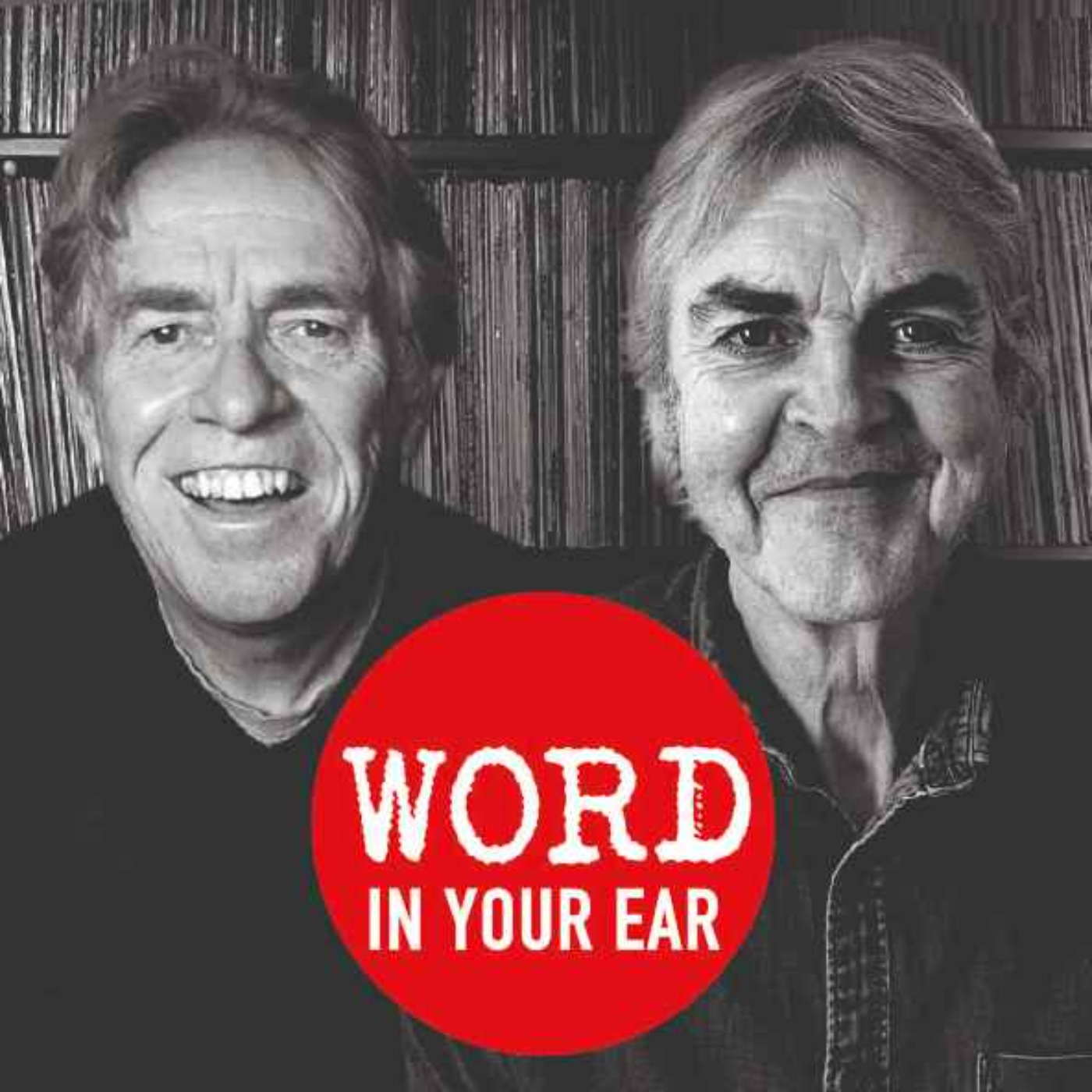
Ken Womack lectures and writes about the Beatles and his latest (with Scott Freiman) dismantles every track they released up to 1966 to work out the recording process and the instruments used. It’s a labour of love and, at times, detective work. He talks here from his guitar-stacked room in New Jersey about ‘The Beatles’ Touring Era’ and what he learnt from writing it. High in the mix … … the value of the ‘secret weapons’ George Martin, Ken Scott, Norman Smith and Mal Evans and the fact that EMI owned the building … the forces that had to be aligned to make those records work and why “the odds were off the chart” … how George Harrison transformed And I Love Her, She Loves You and Nowhere Man … Dylan’s reaction when they played him Tomorrow Never Knows and how “he changed their art forever” … what 18 year-olds see in the Beatles … ‘banger moments’ on Long Tall Sally, This Boy, Baby’s In Black and She Loves You … the celeste on Baby It’s You, the ‘harpsichord’ on In My Life and the glori
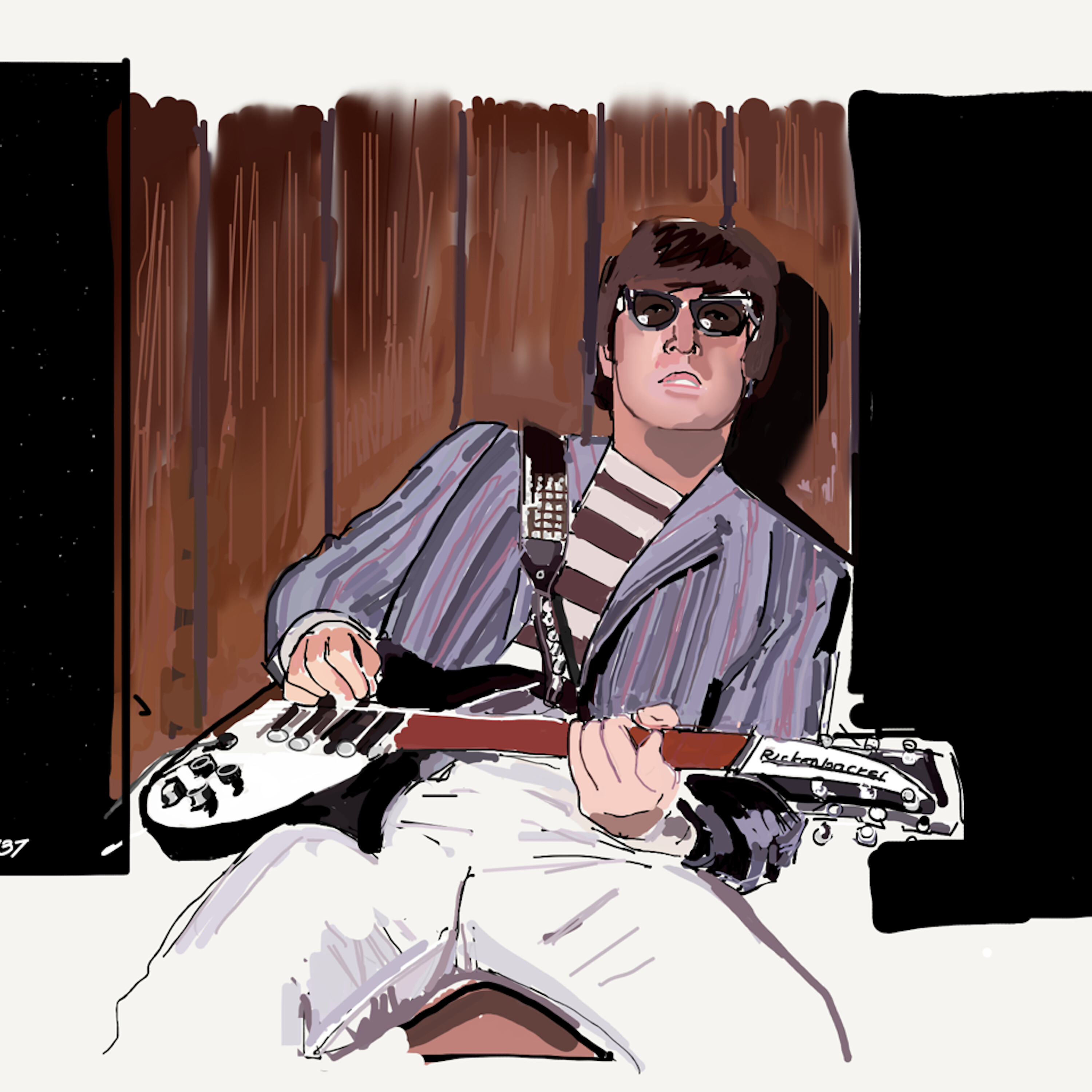
Is John Lennon the peace-loving saint in the white suit, or the villain some social media posts make him out to be? Biographer Jude Southerland Kessler says neither: "He's just a person." In Episode 336 of Something About The Beatles, host Robert Rodriguez talks with Jude about The John Lennon Series. She planned one book. It is now nine, probably ten, and she footnotes nearly every sentence. They cover why she tells John's life as narrative nonfiction, how she settles conflicting Beatles accounts, and what really happened with the Maureen Cleve interview in 1966. They also look at why John spun yarns about his own past, and how his tragedies turned into the songs that changed our lives. In this episode: • Why one planned book became nine, and the question that keeps it growing: "What day would you leave out?" • How John wrote I'm Only Sleeping on the back of an overdue car-phone bill • The ADT myth: why Jude left it out of her Tomorrow Never Knows chapter • Sweater or blanket? Even on
Mark Wills says he’d be less nervous singing naked at the Grand Ole Opry than he was on his daughter’s first elk hunt. On Episode 150 of God’s Country, he tells Dan and Reid Isbell what he yelled when the bull came in and why the two of them keep going back. Stick around for Mark’s in-studio performance of Keith Whitley’s “Don’t Close Your Eyes.” The voice behind “19 Somethin’” and “Don’t Laugh at Me” takes us inside ’90s country music, from what it took to build a career in Nashville to how he wound up opening for artists who got their start on TikTok. He also shares what it felt like to turn his back on 4,400 empty seats and sing a gospel record live with his band on the Grand Ole Opry stage. And somehow, we still found time for a spray tan gone to a Nashville publishing meeting, a 200-yard eagle at Augusta National, and the reason Mark’s grandkids call him “Dude.” What ’90s country song do you still turn up every single time? Drop your pick in the comments. Presented by Tactacam. #M
Steve Turner is back on the pod today, this time to talk about the latest version of his 'Hard Days Write', the book that tells the story of every Beatles song. Steve tells us the story of the book, and how his encounters with Lennon and McCartney influenced it.
Myf is joined by Dr Suzanne Belton, professor at the Menzies School of Health Research and founding member of the International Clitorati. Suzanne joins The Moment to talk about one of the most overlooked organs in medicine - the clitoris. They look at why the clitoris was left out of textbooks for so long, from patriarchy and religion to Freud’s myth of the “vaginal orgasm”, and how the clitoris was only mapped out in 2005 (and it's much bigger than we ever thought). They also dig into the gap in medical research, the orgasm gap, how vibrator design has changed now that women are finally leading it. Guest: Dr Suzanne Belton More Myf: Book - Middle Rage OUT NOW Follow Better at Home - @betterathome_podcast Instagram @myfwarhurst (https://www.instagram.com/myfwarhurst/) TikTok @myfwarhurst (https://www.tiktok.com/@myfwarhurst) Get In Touch Brands/ Partnerships: [email protected] Show Credits Host & Executive Producer: Myf Warhurst Executive Producer: Amelia Chappelow Producer: Roisin Yau E
2 - 1 = 3. Just like Yoko Ono, we here at The Untitled Beatles Podcast use numerology as a guide to navigating creative decisions, financial matters, and simple math. And since Part 2 of our Double Fantasy deep dish covers Side 1, that means this is a 3-parter. Yes, it’s a UBP Triple Fantasy!!! As T.J. and Tony frolic track by track through the album’s first half, the numbers and cards and dices provoke further ruminations, such as: Is the Cheap Trick version of ABBA’s “Fernando” worth buying this $900 solo Anni-Frid Lyngstad bootleg 45? Can a Sennheiser e 835 Cardioid microphone double as a vibratory massager for women’s health and zest in the joy of living? Could Larry David score a #1 on the European Hot Dance charts by adding a Roland 808 drum machine to S2E3 of “Curb Your Enthusiasm”? EPISODE LINKS Please support our scrappy show.
Crime writer and Shazam co-founder Ajay Chowdhury joins the show to talk about Here Comes the Sun, from Abbey Road. We discuss how George Harrison wrote it in Eric Clapton's garden while skiving off Apple business meetings, and the tricky middle section, which Dhani Harrison links to the Indian tihai and Ringo called "seven and a half time". Ajay's new book, The Patriot, is the sixth in his Kamil Rahman series of crime novels. Ajay's website: https://ajaychowdhury.com Ajay on X: https://x.com/ajaychow Ajay on Instagram: https://www.instagram.com/ajaychowdhury.author/ Follow My Favourite Beatles Song Bluesky: https://bsky.app/profile/myfavebeatles.bsky.social X (Twitter): https://twitter.com/myfavebeatles Facebook: https://www.facebook.com/MyFavouriteBeatlesSong Instagram: https://www.instagram.com/myfavouritebeatlessong Original music by Joe Kane Logo design by Mark Cunningham
Beatles musicologist Scott Freiman discusses Nowhere Man, from Rubber Soul, highlighting the 30 days The Beatles had to make the album, the treble-boosted twin guitar solo, and how John Lennon starts writing about himself. He also explains what he calls forensic musicology, and tells us about the Beatles tours of Liverpool, Hamburg and London he runs with Ken. The Beatles’ Touring Era: Inside the Fab Four's Musical Artistry, Song by Song, 1962–1966, by Scott Freiman and Kenneth Womack: beatleseras.com (https://www.beatleseras.com/) Scott's website (speaking calendar, TV and film): deconstructingthemusic.com (https://deconstructingthemusic.com/) Monthly class and the 2027 tour with Kenneth Womack: fabfourmasterclass.com (https://www.fabfourmasterclass.com/) Follow My Favourite Beatles Song Bluesky: https://bsky.app/profile/myfavebeatles.bsky.social X (Twitter): https://twitter.com/myfavebeatles Facebook: https://www.facebook.com/MyFavouriteBeatlesSong Instagram: https://www.instagram.co
Writer and author David Quantick discusses Silly Love Songs, from Wings at the Speed of Sound. He calls it Paul's 'manifesto' and argues for McCartney as 'the first adult in rock'. We also discuss the monster bass line, and the Paul and Linda vocal round that makes it 'the world's first baroque disco number’. Plus there's the story of his slightly awkward meeting with Paul on a train to Robertsbridge, and a Red Rose Speedway Frisbee. David's new novel, The Hyena, is out on 10 November from Stars and Sabers. It follows Deborah Parkinson, a surrealist painter from Plymouth whose life takes her to Paris, New York, and Mexico. Along the way, she crosses paths with Frida Kahlo, Picasso, and Gala Dalí. And rejoice! David's book on the Beatles' White Album, Revolution, will be back in print with Polygon in November 2027. David's website: https://davidquantick.com David Quantick on Bluesky: https://bsky.app/profile/quantick.bsky.social David Quantick on Substack: https://quantick.substack.com
Environmental commitments should be judged by measured outcomes rather than announced targets.
Share your view, then see how readers voted. No sign-in required. This poll is shared across stories.
Do you agree or disagree?
Common Quandary
A Common Quandary to discuss
Another conversation to explore, separate from this news story.
Your teenager locks you out of their phone. When is it okay to look?
Your usually outgoing sixteen-year-old has withdrawn and stopped seeing friends. They insist they are fine and refuse to talk. You know their phone passcode and could read their messages without being discovered.
How serious must a fear be before protection outranks privacy?