Listen through the publisher, then discuss the episode here or arrange an in-person Roundtable. Your city determines where to meet.
Roundtables are designed for groups of four, with a shared subject and room for everyone to speak. Come for discussion, with no dating expectation.
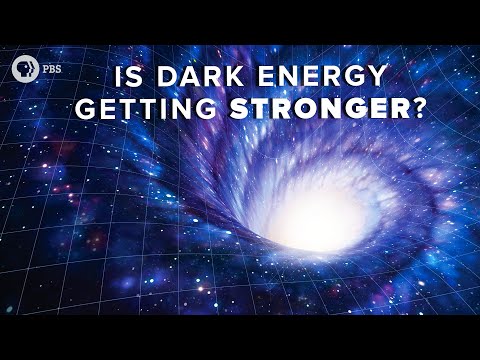
Learn More about The Great Courses Plus: http://ow.ly/wvWC30o0QYV Uploaded 20-03-19 PBS Member Stations rely on viewers like you. To support your local station, go to: http://to.pbs.org/DonateSPACE Check out the new Space Time Merch Store! Support Space Time on Patreon The power of Dark Energy may be increasing as the universe ages. Subtle clues are emerging that the accepted model for the nature of dark energy and dark matter may not be all that. We saw the first such clue recently in our recent episode on the Crisis in Cosmology. Today we’re doing a Space Time Journal Club to reveal another clue. We’re looking at a new paper in Nature Astronomy, “Cosmological constraints from the Hubble diagram of quasars at high redshifts” by Risaliti and Lusso. It hints that the cosmological constant may not be so constant after all. In fact it may be increasing. If this is true, then our prediction for the future of our universe looks VERY different, and may involve the entire universe tearing itself to shreds at the subatomic level in the Big Rip. On this edition of Space Time Journal Club we look at: Risaliti and Lusso (2019) "Cosmological Constraints from the Hubble Diagram of Quasars at High Redshifts" #darkenergy #darkmatter #spacetime More about The Great Courses Plus: The Great Courses Plus is currently available to watch through a web browser to almost anyone in the world and optimized for the US, UK, and Australian markets. The Great Courses Plus is currently working to both optimize the product globally and accept credit card payments globally. Learn More About Dark Energy Here: Hosted by Matt O'Dowd Written by Matt O'Dowd Graphics by Aaron Halevy Directing by Andrew Kornhaber Special thanks to our Patreon Big Bang, Quasar and Hypernova Supporters: Big Bang: Anton Lifshits coolascats David Nicklas Fabrice Eap Juan Benet Justin Lloyd Tim Davis Quasar: James Flowers Mark Rosenthal Tambe Barsbay Vinnie Falco Hypernova: chuck zegar Danton Spivey Donal Botkin Edmund Fokschaner Jens Theisen John Hofmann Jordan Young Joseph Salomone kkm Mark Heising Matthew O'Connor Thanks to our Patreon Gamma Ray Burst Supporters: Alexey Eromenko Antonio Ruiz Bradley Jenkins Brandon Labonte Buruk Aregawi Carlo Mogavero Daniel Lyons David Behtala David Crane David Schmidt Dustan Jones Geoffrey Short Greg Weiss Jack Frosch James Hughes James Quintero Jinal Doshi JJ Bagnell John Webber Jon Folks Jonah Joseph Emison Josh Thomas Kenneth F Leonard Kevin Warne Kyle Hofer Malte Ubl Mark Vasile Nathan Hitchings Nicholas Rose Nick Virtue Ratfeast Richard Broman Scott Gossett Sigurd Ruud Frivik Tim Crookham Tim Stephani Tommy Mogensen سلطان الخليفي
Episode information is provided by the publisher. Listening takes place on the publisher’s service.
Explore how the Hubble Space Telescope reveals the Universe, from iconic images to major discoveries, and how it complements the James Webb Space Telescope. "ASTROMAN: the Dark Sky Guardian" is a podcast channel that aims to explore popular science in multiple disciplines and research on interdisciplinary approaches, such as sustainability, dark-sky protection, astrophotography, space exploration, astronomy innovation, inclusive science communication, and STEAM Education by integrating science and arts. Exodus Chun-Long Sit, also known as the ASTROMAN, is a transmedia astronomy educator, popular science author, STEAM educator, and science communicator in Hong Kong. He is recently the National Astronomy Education Coordinator (Chair of Hong Kong, China) of the International Astronomical Union and President of Starrix. He was also an International Committee Member of the Dark Sky International, regularly organizing public lectures at the Hong Kong Space Museum and the Hong Kong Science Mu
We are living in a time of uncertainty – even a time of fear. But there is one thing that is never uncertain, one thing that can erase our fear once and for all: The RESILIENCE of humanity and our in-born power of FAITH. These are the beautiful, innate traits of being human. We are adaptable by our very nature. We find a way. And we always overcome. Uploaded 27-03-20 Life rarely gets easier. But uncertain times are a gift. They call us to become stronger and more resilient. They challenge us to quiet our minds and recognize the miracle of life within us. They encourage us to dig deeper. To examine our fears and draw on our faith to overcome them. This faith is not necessarily religious, although it can be. It is part of our true nature as humans. Faith allows us to drive in cars hurtling at 65 miles per hour and get on planes that fly through the sky even faster. It allows us to leave our homes each day believing that we will return. Faith is choosing to be certain in the face of uncer
Let them underestimate you. Let them doubt your potential. Let them believe you'll never achieve anything extraordinary. Their opinions do not determine your future. You don't need everyone's approval to chase your dreams. You don't need to explain your ambitions to people who refuse to see your vision. What you need is the discipline to keep working, the courage to believe in yourself, and the determination to succeed even when nobody supports you. This powerful motivational speech is a reminder to stop seeking validation, overcome rejection, develop mental toughness, and turn every setback into motivation to become stronger. People will doubt you. They will question your decisions, underestimate your abilities, and sometimes make you feel like your dreams are impossible. But their disbelief is not proof of your limitations. Instead of wasting your energy trying to prove yourself through words, focus on building a future that reflects your hard work and dedication. Work in silence. St
Support Stoicism Philosophy on Ko-fi Do you enjoy our content? Help us keep sharing Stoic wisdom by supporting us on Ko-fi. Click here to support us (https://ko-fi.com/stoicpodcast) Thank you for being a key part of Stoicism Philosophy. Your generosity keeps Stoic philosophy alive! HOW TO GET WHAT YOU WANT does not begin with wanting more, but with learning to master your mind, your impulses, and your actions. In this video, you will discover 8 Stoic secrets for pursuing your goals with discipline, calm, and clarity, without depending on luck or letting yourself be carried away by anxiety. Stoicism teaches that true power lies in controlling what depends on you: your decisions, your character, your focus, and your response to obstacles. Through principles inspired by the wisdom of Marcus Aurelius, Seneca, and Epictetus, you will learn how to turn desire into action, strengthen your self-control, maintain inner peace, and keep moving forward even when circumstances are not perfect. If y
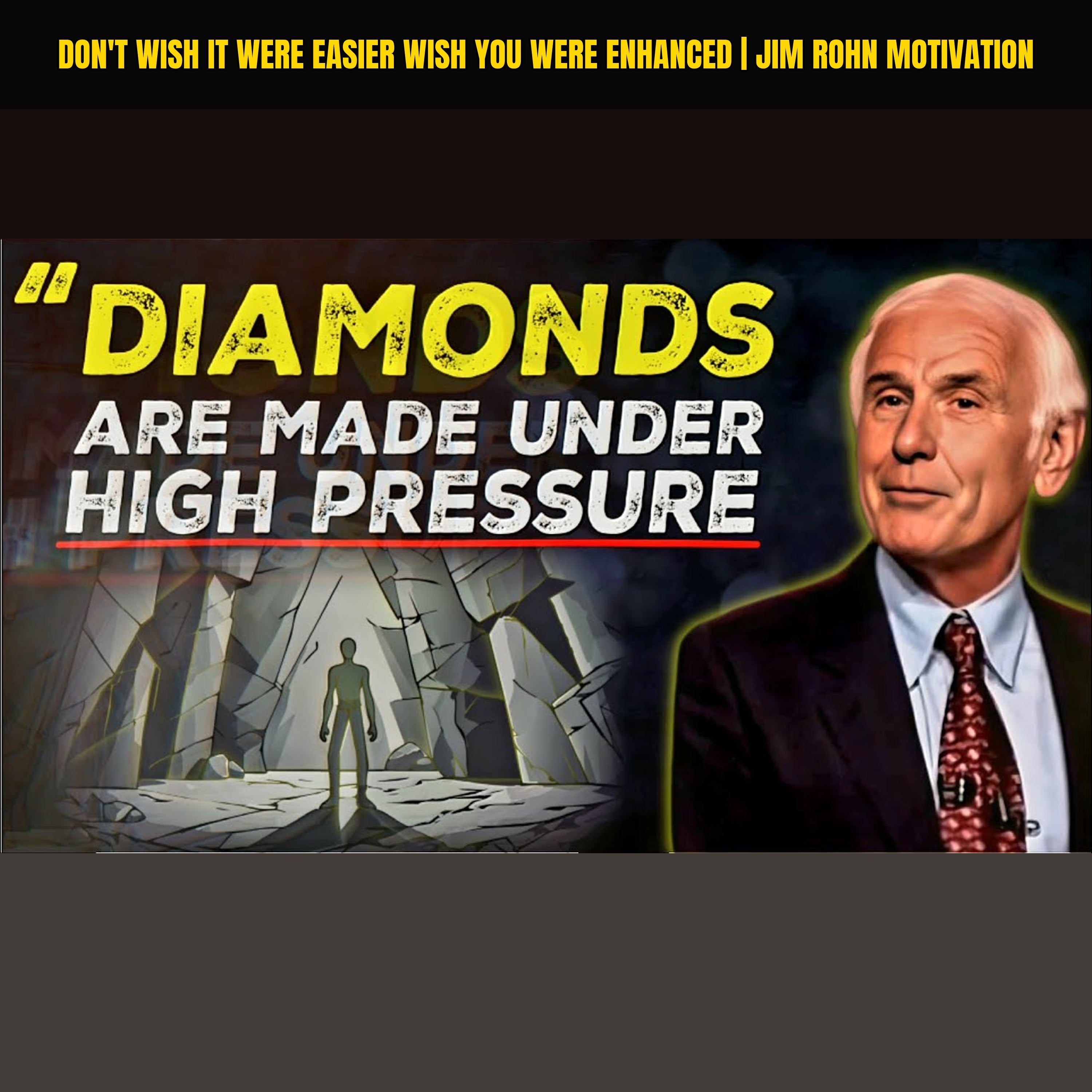
#JimRohnMotivation #JimRohn #JimRohnSpeech In this Jim Rohn Motivation video, Jim Rohn shares the truth about growth, resilience, and the mindset shift that transforms your life. Life doesn’t get easier—you get stronger. Stop waiting for circumstances to change. Start becoming the person who can lead, endure, and grow no matter what. Key Topics From This Motivational Video: Why waiting for ease keeps you stuck How mindset shapes resilience and success The role of consistency and execution in transformation Why discomfort is the training ground for greatness How to raise your standard and stop negotiating with weakness This Jim Rohn motivational video is about reclaiming your power—not by waiting for the pressure to pass, but by rising to meet it. It’s about becoming someone who doesn’t flinch, who doesn’t fold, who doesn’t break when things get hard—but instead grows stronger. Better isn’t a moment—it’s a standard. And this is your wake-up call to raise it. This Jim Rohn Motivational V
Master the skills that change lives — enroll in your free human behavior course today: https://nci.university/learn Uploaded 15-01-26 EXECUTIVE SUMMARY: Video: What It Feels Like to See Into People Purpose: Reframe how human behavior is actually driven and perceived Outcome: Permanent shift in how you experience people and conversations CORE IDEA: Human behavior is not driven by beliefs, opinions, or logic. Those are after-action reports. Behavior is driven by the nervous system’s constant assessment of: • safety • approval • power • avoidance of shame Decisions are made before conscious thought. Beliefs are constructed afterward to justify what already happened. WHY THIS MATTERS: Most people spend their lives interacting with: • beliefs • arguments • explanations • surface narratives As a result, they miss the layer where real decisions are made. This video focuses on that lower layer — the one that actually governs: • conflict • influence • attraction • resistance • leadership • trus
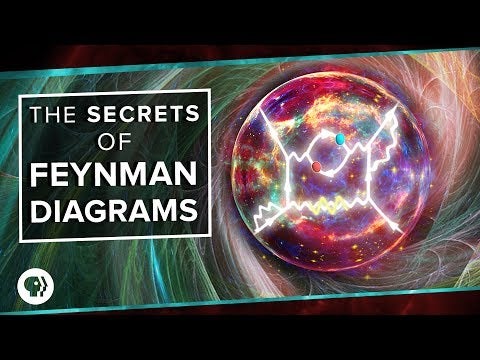
Viewers like you help make PBS (Thank you ) . Support your local PBS Member Station here: https://to.pbs.org/DonateSPACE Uploaded 26-07-17 Unlock the secrets of Feynman Diagrams. Part 5 in our Quantum Field Theory series. And if you're submitting an answer to our challenge question email your answer by August 2nd to pbsspacetime [AT] gmail.com with the subject line "Feynman Diagram Challenge." You can further support us on Patreon at https://www.patreon.com/pbsspacetime Get your own Space Time tshirt at http://bit.ly/1QlzoBi Tweet at us! @pbsspacetime Facebook: facebook.com/pbsspacetime Email us! pbsspacetime [at] gmail [dot] com Comment on Reddit: http://www.reddit.com/r/pbsspacetime Help translate our videos! https://www.youtube.com/timedtext_cs_... Previous Episode: The Real Star Wars Feynman’s path integral shows us that, to properly calculate the probability of a particle traveling from point A to point B, we need to add up the contributions from all conceivable paths between tho
Sign Up on Patreon to get access to the Space Time Discord! Uploaded 18-08-21 The universe is going to end. But of all the possible ends of the universe vacuum decay would have to be the most thorough - because it could totally rewrite the laws of physics. Today I hope to help you understand exactly how terrified you should be. Check out the Space Time Merch Store Sign up for the mailing list to get episode notifications and hear special announcements! Hosted by Matt O'Dowd Written by Matt O'Dowd Graphics by Leonardo Scholzer, Yago Ballarini, Pedro Osinski, Adriano Leal and Stephanie Faria GFX Visualizations: Ajay Manuel Directed by Andrew Kornhaber Assistant Producer: Setare Gholipour Executive Producers: Eric Brown and Andrew Kornhaber End Credits Music by J.R.S. Schattenberg: https://www.youtube.com/user/MultiDroideka Special thanks to Our Patreon Sponsors Big Bang Supporters Ari Paul Kyle Bulloch Charlie Mrs. Tiffany Poindexter Leo Koguan Sandy Wu Matthew Miller Scott Gray Ahmad Jo
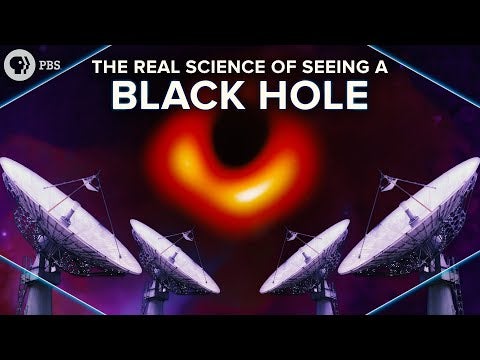
You can learn more about CuriosityStream at https://curiositystream.com/spacetime Uploaded 01-05-19 PBS Member Stations rely on viewers like you. To support your local station, go to: http://to.pbs.org/DonateSPACE How do you take a picture of a black hole and what can we learn from it? Our first ever actual bona fide photo of a black hole, made by the Event Horizon Telescope and revealed to the world in a press conference on April 10th. Since then it’s got plenty of coverage, because … I mean look at it. It’s a freaking black hole. It’s black, it’s holey, it’s everything we hoped it would be. Now that the giddiness has subsided and I personally have stopped spending hours on end staring at a black spot, we can take a breath and actually look at the real science here and discuss exactly how a picture like this could be taken and what we can learn from it. Check out the new Space Time Merch Store! Support Space Time on Patreon Need a Black Hole Refresher #Blackhole #astrophysics #spaceti
Extra learning support should avoid publicly labeling students as failures.
Share your view, then see how readers voted. No sign-in required. This poll is shared across stories.
Do you agree or disagree?
Common Quandary
A Common Quandary to discuss
Another conversation to explore, separate from this news story.
A stranger is behaving horribly in public. Do you record them?
You witness a stranger berating a service worker in public. Recording could create accountability and protect the worker, but posting the video could expose everyone involved to a permanent online audience.
Who gets to decide when public behavior becomes public content?