Listen through the publisher, then discuss the episode here or arrange an in-person Roundtable. Your city determines where to meet.
Roundtables are designed for groups of four, with a shared subject and room for everyone to speak. Come for discussion, with no dating expectation.
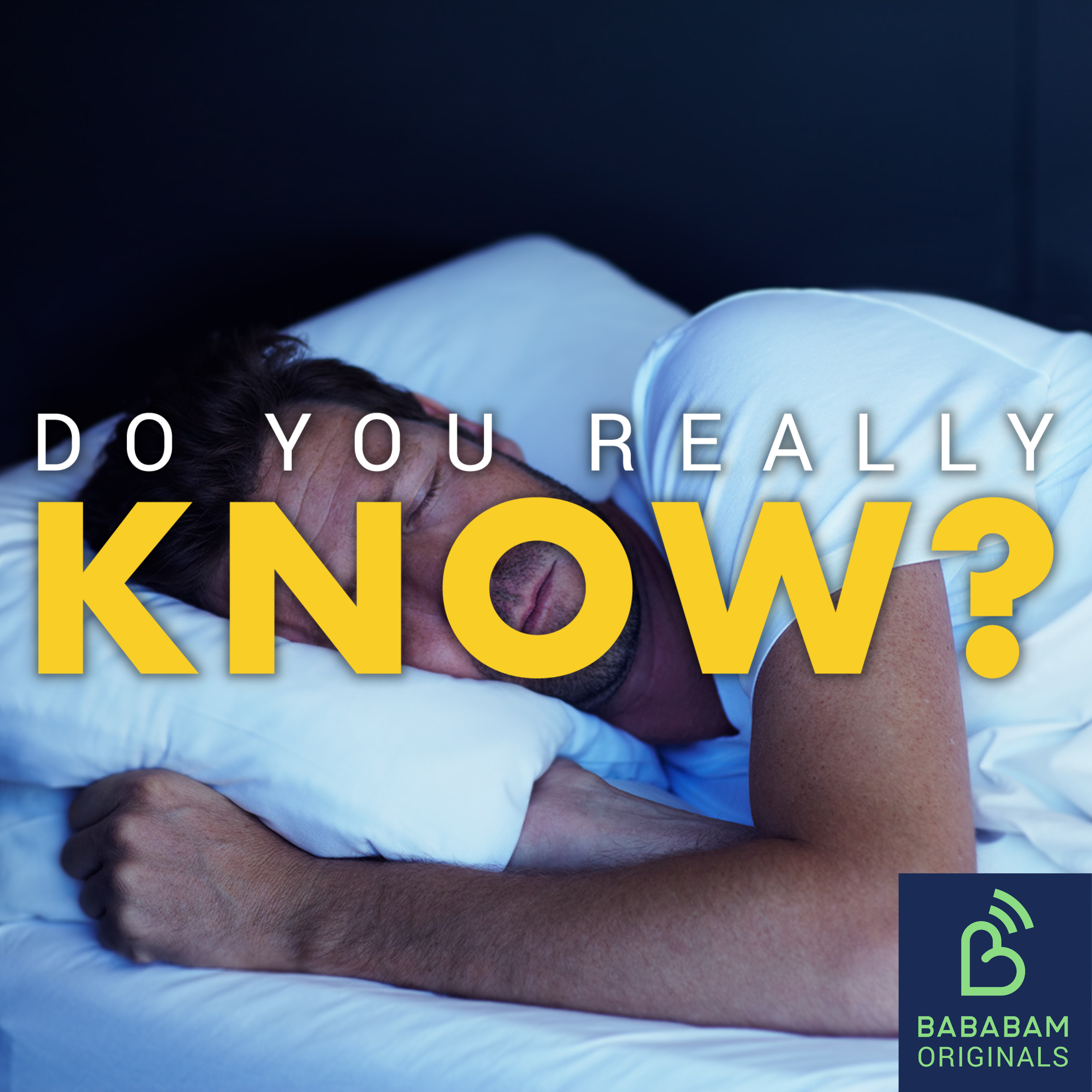
We don’t know about you, but some nights we just can’t fall asleep without turning onto our stomach. And when we do, we seem to drift off more easily when not using a pillow. But we do sometimes wonder whether doing that could have any negative health impact. Just like your mattress and bed base, the pillow plays a key role in sleep quality, but it’s often the most overlooked part of our bedding. You see, experts say that a pillow should help keep your spine properly aligned while you sleep, maintaining its natural curve, especially at the neck. That helps reduce pressure on the intervertebral discs, preventing tension in the cervical area. What are some of the other benefits? Are there any cases when it’s better not to use a pillow? What should you do if you keep waking up in pain? In under 3 minutes, we answer your questions! To listen to the last episodes, you can click here: How can I sleep well with a blocked nose? (https://originals.bababam.com/do-you-really-know/202410040259-how-can-i-sleep-well-blocked-nose) Is sleeping in bad for your health? (https://originals.bababam.com/do-you-really-know/202409250300-sleeping-bad-your-health) Can our bodies really catch up on lost sleep? (https://originals.bababam.com/do-you-really-know/202409060300-can-our-bodies-really-catch-lost-sleep) A podcast written and realised by Joseph Chance. First Broadcast: 7/10/2024
Episode information is provided by the publisher. Listening takes place on the publisher’s service.
A.I. for Building Better Habits: Making New Routines Actually Stick, a practical, beginner-friendly look at how artificial intelligence can help you make new routines actually stick this time. Building Better Habits? Press play on Episode 435 of A.I. for Beginners and learn exactly how artificial intelligence, especially ChatGPT, alongside Habitica, can help you make new routines actually stick this time. WHAT YOU WILL LEARN IN THIS EPISODE - Why building better habits is so hard to handle alone, and what is actually going on underneath it - A specific way to use Habitica to work through it, step by step - An example prompt you can copy word for word: "Help me attach this new habit to something I already do every day without thinking" - A second practical technique, with another ready-to-use prompt: "Give me the smallest possible version of this habit that I could realistically do today" WHO THIS EPISODE IS FOR - Anyone currently working on building better habits - Anyone curious about
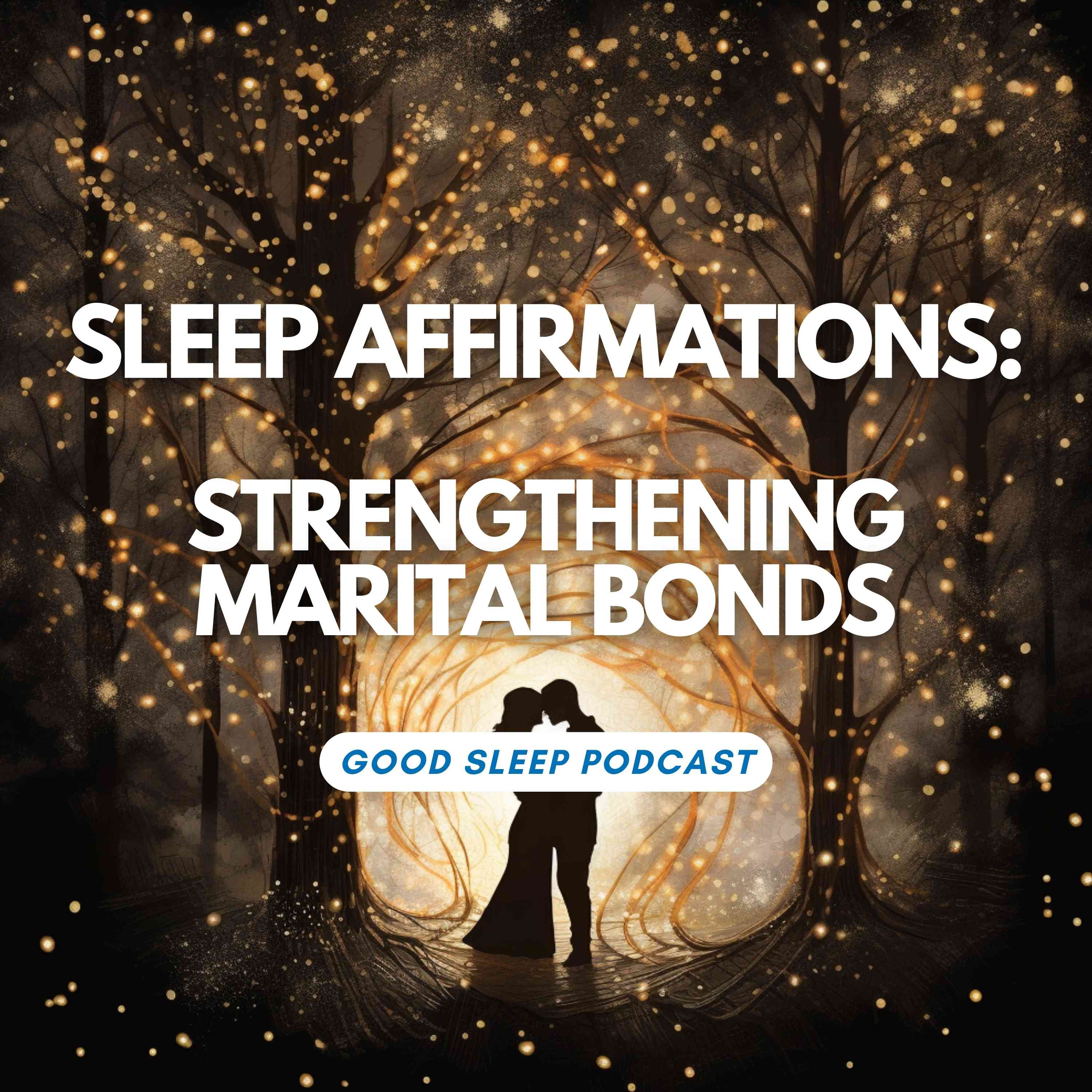
Two people can share a house and still go a week without really looking at each other. These affirmations put warmth back into the ordinary hours, where a marriage is actually kept. Unwind now with our positive sleep affirmations podcast. Hit play, and drift into Good Sleep... Spotify: https://open.spotify.com/show/3OuJvYoprqh7nPK44ZsdKE And start your morning with Optimal Living Daily!
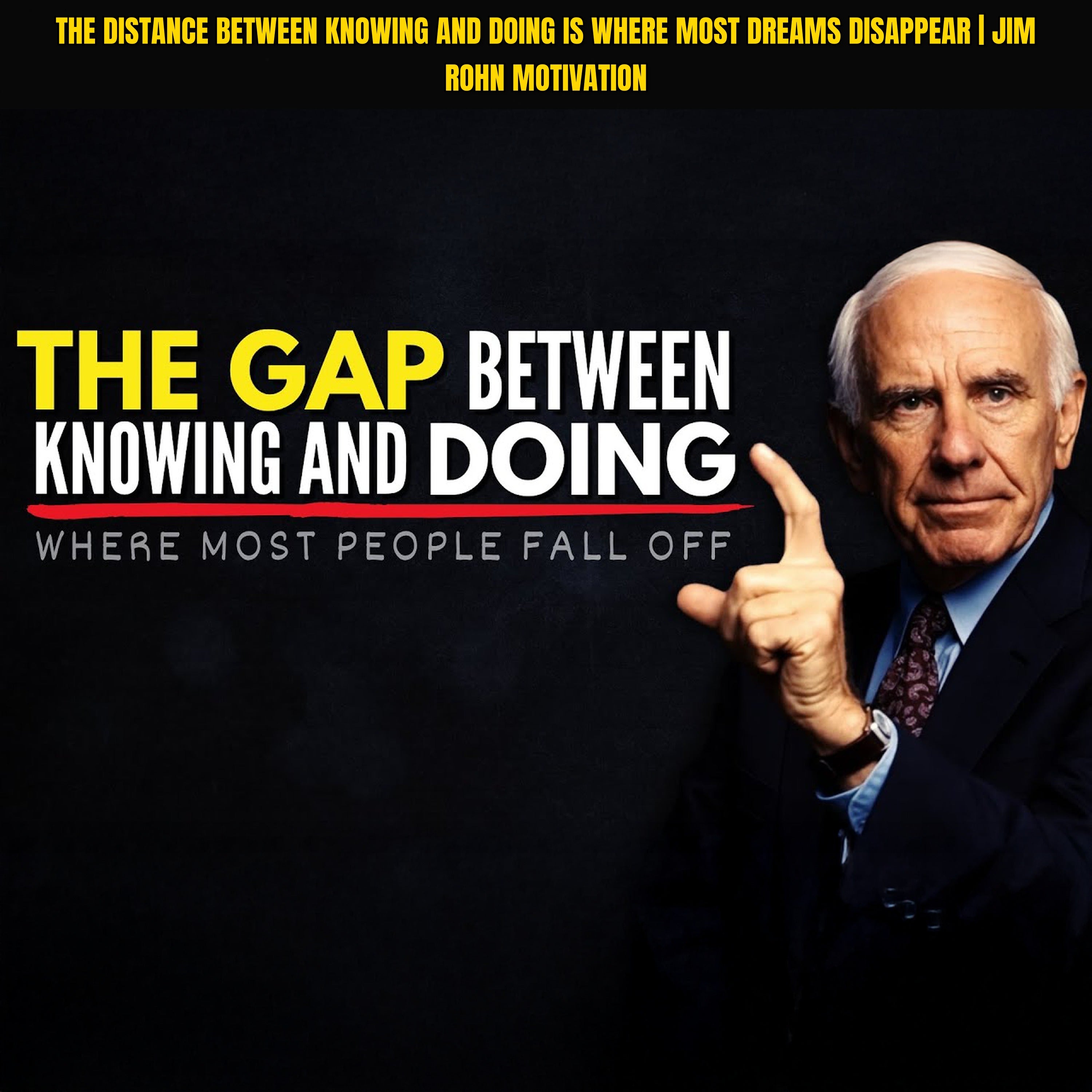
In this Jim Rohn Motivation video, discover the critical gap between knowing and doing—and why most dreams die there. Learn how fear, perfectionism, and procrastination keep people stuck in preparation mode, and how discipline, daily action, and starting before you feel ready can turn knowledge into real results. Key Topics From This Motivational Video: Why knowledge without action creates the illusion of progress How fear and comfort zones keep people from moving forward The trap of perfectionism and waiting for the “right time” Why discipline and consistency close the gap between knowing and doing How starting messy creates momentum and confidence Jim Rohn shows that the world doesn’t pay for what you know—it pays for what you do. The gap between knowing and doing is where potential is either wasted or turned into progress. You don’t need perfect conditions or flawless plans; you need a commitment to daily action, even when you’re tired, afraid, or unsure. Once doing becomes part of
Your free behavior course: https://nci.university/learn Uploaded 10-05-25 Exclusive NCI-4 (Grad School) Vault Release This is Behavioral Magnetics—the hidden force that draws you back to chaos, to patterns you swore you’d outgrow, to people who echo your oldest pain. It’s why peace feels boring. Why CALM makes you anxious. It’s not intuition—it’s your nervous system recycling what it knows. In this Grad School lecture, we uncover the 4 emotional magnets that shape who you trust, chase, or sabotage... even when it hurts. If you've ever said, “Why do I keep doing this?”—this is your answer. Why you're attracted to the wrong people The 4 types of emotional magnets How trauma rewires your compass Why peace can feel like withdrawal How to break free from recycled patterns Please note that the content provided in this broadcast is for informational and educational purposes only and should not be construed as legal, medical, financial, or professional advice. No material in this communication
Viewers like you help make PBS (Thank you ) . Support your local PBS Member Station here: https://to.pbs.org/DonateSPACE Uploaded 11-07-18 In simple terms a gauge theory is one that has mathematical parameters, or “degrees of freedom” that can be changed without affecting the predictions of the theory. You can further support us on Patreon at https://www.patreon.com/pbsspacetime Get your own Space Time t-shirt at http://bit.ly/1QlzoBi Tweet at us! @pbsspacetime Facebook: facebook.com/pbsspacetime Email us! pbsspacetime [at] gmail [dot] com Comment on Reddit: http://www.reddit.com/r/pbsspacetime Help translate our videos! Previous Episode: Will A New Neutrino Change The Standard Model? https://www.youtube.com/watch?v=0mXW1zPlxEE&t (https://www.youtube.com/watch?t=&v=0mXW1zPlxEE) As far as we can tell, mathematics is the language in which the universe is written. Our laws of physics are equations of motion, along with some associated constants. Previously we’ve talked a bit about the sy
Why is reading nonverbal behavior more practical in games like poker than in real-world, non-game situations? In this episode, originally recorded for the "No Way Out" podcast, I, Zach Elwood, talk about what my poker tells work has taught me about human behavior and decision-making. We discuss what makes some behavioral patterns surprisingly reliable, the importance of situational context, and what’s behind our intuitive reads of people. We also explore why the allure of reading people has spawned an industry of questionable and irresponsible “behavior experts,” how influential figures like Malcolm Gladwell and popular podcasters have helped spread faulty ideas about behavior, and the potential uses and limitations of AI for deception detection. We talk about the legacy of Paul Ekman, who is still perceived by many as an expert on human behavior, but who is the source of many bad ideas in this area. We also discuss what poker can teach us about navigating uncertainty, appreciating the
What fun it is to have an imaginary friend to blame when you get into mischief! If you have children, you may have experienced a rather amusing situation where your little one blames a friend from their imagination for the mess in their room or a broken object. At times like these, it’s hard to reprimand them, especially if they seem genuinely convinced of their innocence. The appearance of an imaginary friend may be disconcerting, but don’t worry, it’s actually quite common. Is it normal? Does this risk damaging their mental health? How should we react as parents? In under 3 minutes, we answer your questions! To listen to the last episodes, you can click here: Why are we having children later and later? (https://originals.bababam.com/do-you-really-know/202402270400-why-are-we-having-children-later-and-later) What does eating junk food do to our brains? (https://originals.bababam.com/do-you-really-know/202408280259-what-does-eating-junk-food-do-our-brains) Why are more and more childre
Most of us have to go through a painful breakup at some point in our life. Even if you thought you’d found your soulmate, started planning a grand future together and so on, sometimes things simply don’t work out. Maybe your partner ended it unexpectedly, or maybe you did so yourself. But one question that often rears its head is whether it’s a good idea to remain friends after the breakup. It might be tempting at the start in particular, to avoid completely cutting an important person out of your life, especially if the friendship is authentic. How can you tell if staying friends is really possible? Is it OK if I just don’t want to remain friends at all? In under 3 minutes, we answer your questions! To listen to the last episodes, you can click here: Why do children have imaginary friends? (https://originals.bababam.com/do-you-really-know/202410080300-why-do-children-have-imaginary-friends) Is sleeping naked good for you? (https://originals.bababam.com/do-you-really-know/202410080259-
Picture this: you’re lost in thought, your favourite song playing, and suddenly, you feel a wave of well-being that gives you goosebumps. Music doesn’t just touch our hearts; it has a tangible impact on our bodies. Certain musical passages can send shivers down our spines by releasing dopamine, the so-called pleasure molecule. In 2020, a french study found that listening to music causes variations in low-frequency electrical signals in our brains. How do we know this? What exactly causes these shivers? What about those goosebumps we get from unpleasant sounds? In under 3 minutes, we answer your questions! To listen to the last episodes, you can click here: Is it a good idea to fall asleep to music? (https://originals.bababam.com/do-you-really-know/202405090300-it-good-idea-fall-asleep-music) Am I listening to music too loud? (https://originals.bababam.com/do-you-really-know/202312310359-am-i-listening-music-too-loud) Does sex help us to sleep better? (https://originals.bababam.com/do-y
Schools should evaluate new teaching approaches by actual improvements in learning.
Share your view, then see how readers voted. No sign-in required. This poll is shared across stories.
Do you agree or disagree?
Common Quandary
A Common Quandary to discuss
Another conversation to explore, separate from this news story.
Your teenager locks you out of their phone. When is it okay to look?
Your usually outgoing sixteen-year-old has withdrawn and stopped seeing friends. They insist they are fine and refuse to talk. You know their phone passcode and could read their messages without being discovered.
How serious must a fear be before protection outranks privacy?