Listen through the publisher, then discuss the episode here or arrange an in-person Roundtable. Your city determines where to meet.
Roundtables are designed for groups of four, with a shared subject and room for everyone to speak. Come for discussion, with no dating expectation.
Phillips O’Brien is Professor of Strategic Studies at St Andrews. He is the author of The Strategists, How the War Was Won and The Second Most Powerful Man in the World. He has written for The Atlantic, The Spectator and Foreign Affairs. Substack: https://substack.com/@UCpFYfImma_1URlxsC0t9CPQ X: https://x.com/PhillipsPOBrien?lang=en Professor O’Brien joins Noam Dworman, Dan Naturman and Periel Aschenbrand for a conversation about the end of American global dominance and what it means for the future of the United States.They discuss America's military capabilities, the war with Iran, nuclear proliferation, Ukraine, China and Taiwan, and whether American alliances can be restored. 01:15 Is the American Age Over? 03:49 America's Military Strength and the Iran War 10:29 The Bipartisan Roots of American Decline 16:31 Ukraine, Russia and Nuclear Escalation 19:10 America's Economic Strengths and Weaknesses 25:09 Iran's Nuclear Program and the Limits of American Power 45:04 China, Taiwan and the Future of American Alliances 55:12 Iran, Nuclear Deterrence and America's Future
Episode information is provided by the publisher. Listening takes place on the publisher’s service.
Hey everybody, Tom Bilyeu here. On today’s episode of Impact Theory, we’re taking on a topic that’s got the whole world holding its breath: the escalating crisis between the United States and Iran. As tensions ratchet up, we’re asking the tough questions—how did we get stuck in this “escalation trap,” and what does it mean for America’s global leverage, our economy, and our very sense of security? The conversation focused on why the traditional idea of “strategy” might be failing policymakers, using powerful analogies—like chess versus roulette—to show how doubling down in conflict can spiral out of control. We’ll break down the risks of tactical “wins” that create even bigger crises, the real leverage Iran holds with control of the Strait of Hormuz, and the mounting pressure on President Trump as political support erodes and legacy hangs in the balance. A key theme that emerged is what happens when military might runs into decentralized opposition, and why high-stakes gambles—like the
This week on The Necessary Conversation, it's Chad, Haley, and Mary Lou. Bob is still recovering but sent in a video message about Trump calling Putin his friend that we watch together. 🇷🇺 Trump held the first-ever three-way talks with Putin and Xi, called it a "12 out of 10," and produced nothing. Then at a press conference he called Putin his friend — and when asked if Putin is a friend to America, the president of the United States said, "I can't speak to America." That same day, Trump's friend Putin launched massive strikes into Ukraine, hit Poland with two missiles — an act of war against a NATO ally — then struck near a Ukrainian restaurant and drone-bombed the first responders, killing a 7-year-old child and a 20-year-old paramedic. We watch Bob's video and ask Mary Lou: is Russia our friend? 🇨🇳 The House Foreign Affairs Committee revealed Trump's Commerce Department approved nearly 880,000 advanced AI chips for Chinese military-linked companies including Alibaba, Tencent, a
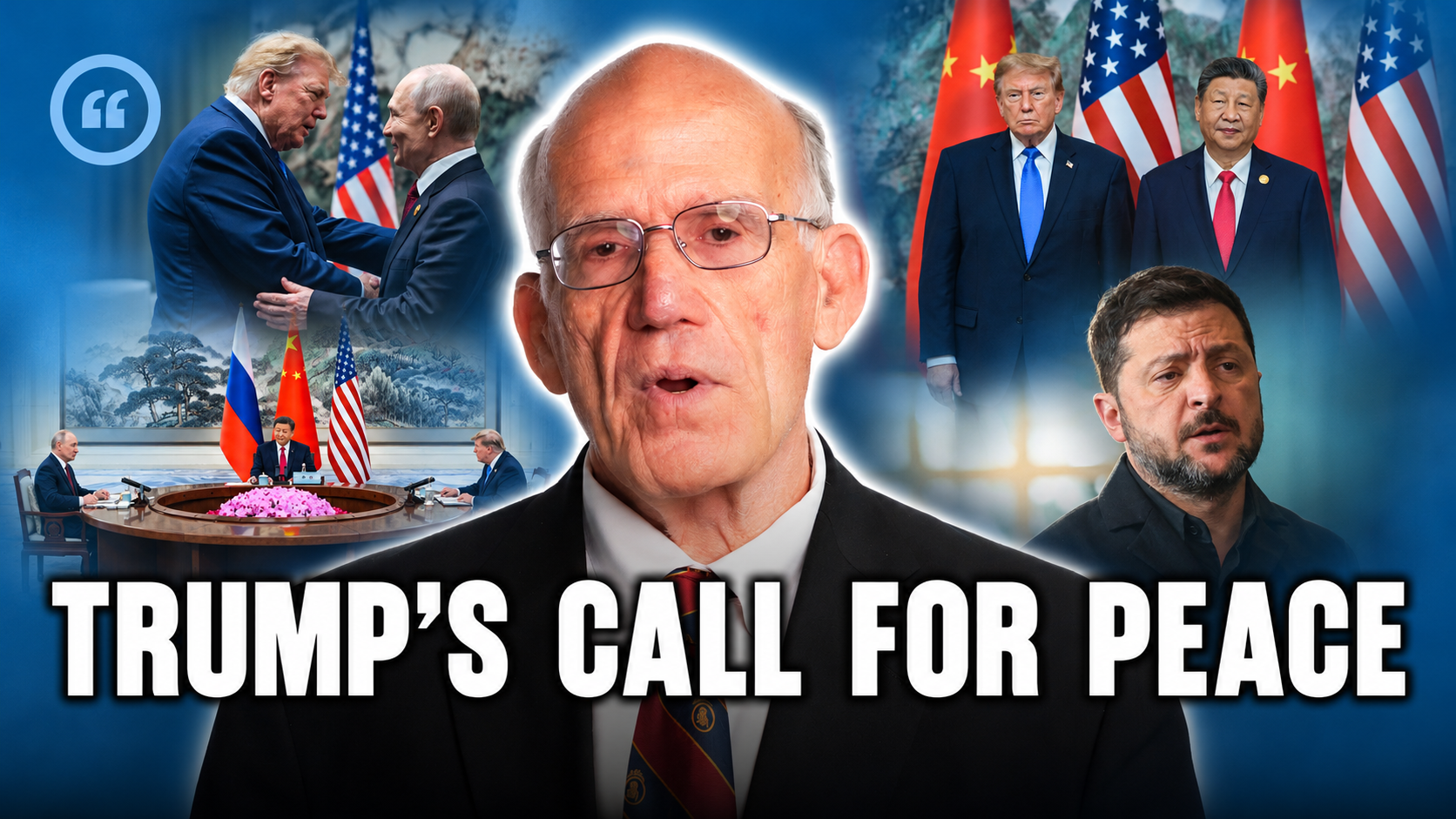
President Donald Trump's first ever trilateral summit with Vladimir Putin and Xi Jinping raises questions about the future of the war in Ukraine and whether a peace agreement could finally be within reach. Victor Davis Hanson and Sami Winc examine the summit on today’s edition of “Victor Davis Hanson: In His Own Words,” discussing Russia's declining influence, potential territorial concessions in Ukraine, and Europe's frustration over Trump's peace negotiations. Hanson criticizes Hillary Clinton's attacks on Trump's diplomacy; he also argues that European leaders have weakened their influence by neglecting defense spending and relying on American military protection. They discuss Elon Musk's shifting political allegiances, and Hanson warns that distancing himself from MAGA may not protect him from Democrat investigations. They also discuss the potential economic benefits of artificial intelligence and the challenges facing Hakeem Jeffries as Democrats prepare to take control of the Hou
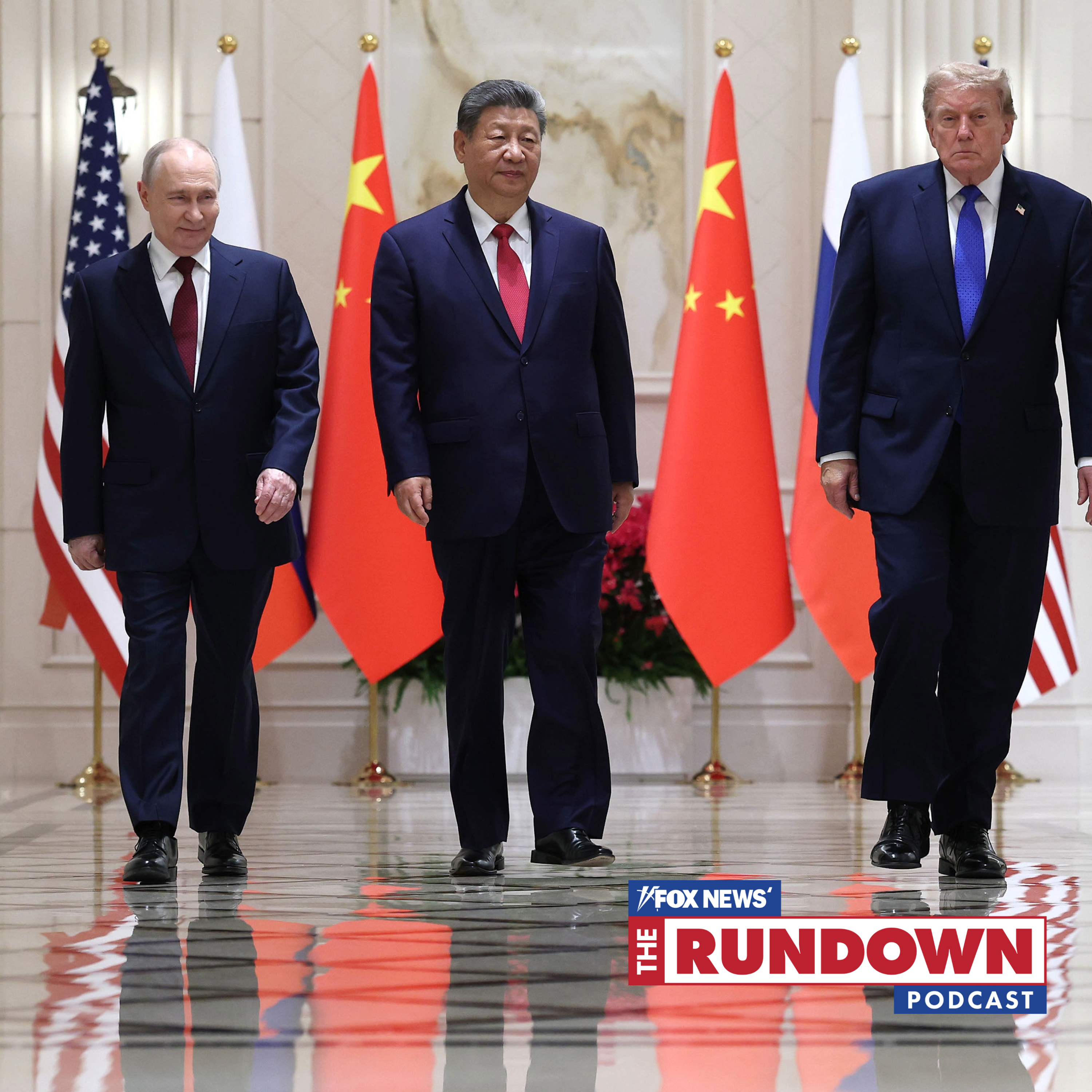
Following President Trump’s trip to Asia and a first-ever trilateral meeting with the leaders of China and Russia, foreign policy experts are weighing what was accomplished on the world stage. Former national security advisor to Vice President Dick Cheney and Heritage Foundation senior research fellow Stephen Yates joins The Rundown to analyze the summit’s outcomes on Taiwan, Ukraine, Iran, and strategic arms talks. Yates also explains how new rare-earth agreements with U.S. allies and export controls on AI chips balance Trump’s warmer rhetoric toward Beijing. Later, widespread tech outages across major platforms and government systems raise urgent questions about whether U.S. digital infrastructure is prepared for the artificial intelligence era. Former Cybersecurity and Infrastructure Security Agency (CISA) director Bridget Bean breaks down how rapid software patching can trigger cascading system failures, the growing cyber threats posed by China and Iran, and how organizations can d
At the trilateral meeting of the leaders of the United States, Russia and China, in Shenzhen this week, Donald Trump was keen to emphasise that they were making history. While wars continue to roil Ukraine and the Middle East, the three leaders sat down to discuss nuclear weapons, boosting petroleum production, reform of the United Nations and their dislike of the International Criminal Court. So was this a Yalta 2.0 as some parts of the media have suggested, or will this meeting soon be forgotten as just another wild moment from final years of Trump's presidency? Guest: Margaret MacMillan, emeritus professor of international history at Oxford University and the University of Toronto
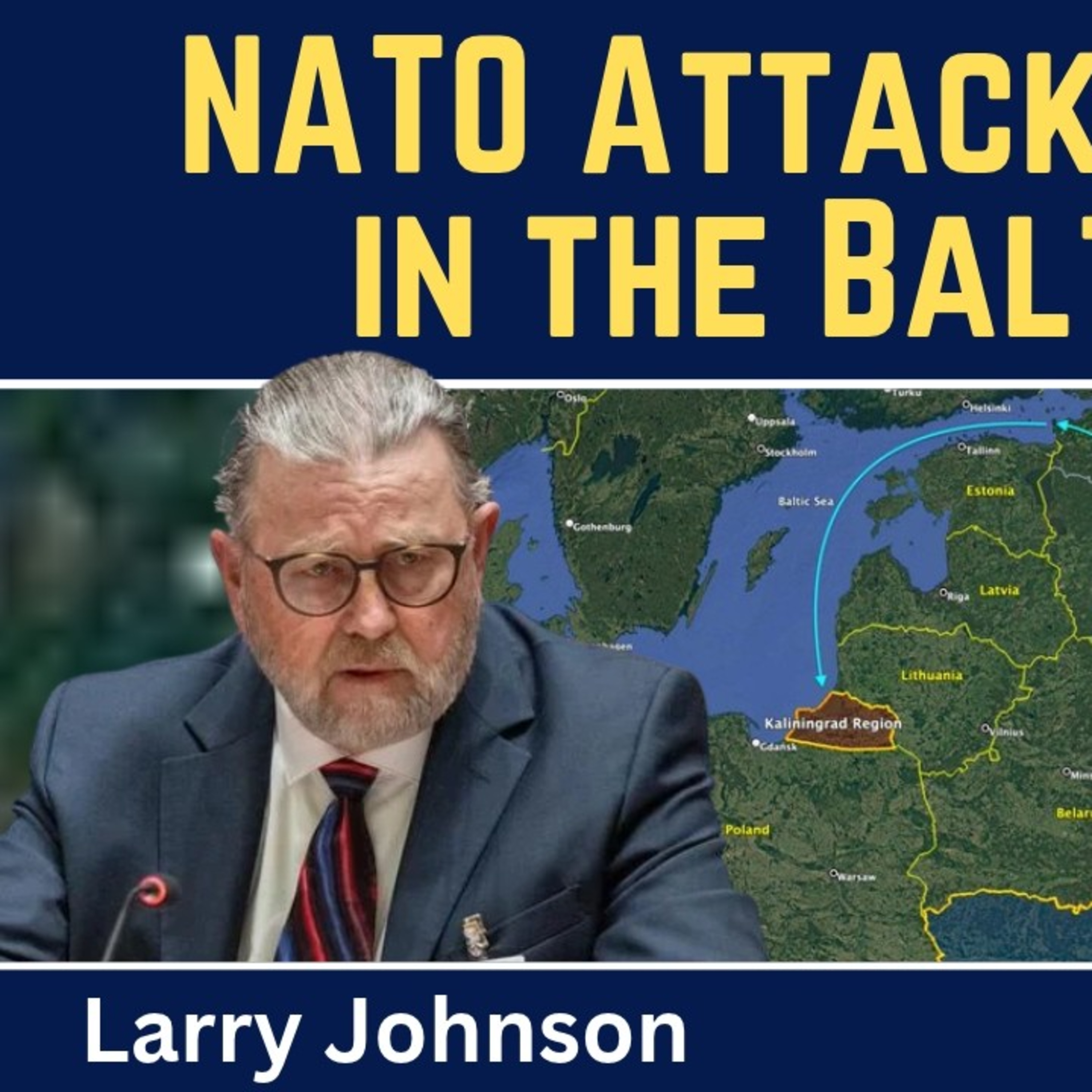
Larry Johnson is a former CIA intelligence analyst who also worked at the U.S. State Department's Office of Counterterrorism. Johnson discusses the attack on a Russian cargo ship in the Baltic Sea, and the air alarms going off in Kaliningrad. Read Larry Johnson's Sonar21: https://sonar21.com/Follow Prof. Glenn Diesen: PayPal: https://www.paypal.com/paypalme/glenndiesenBuy me a Coffee: buymeacoffee.com/gdiesengGo Fund Me: https://gofund.me/09ea012fBuy Diesen merchandise: https://diesen-shop.fourthwall.com/en-nokBooks by Prof. Glenn Diesen: https://www.amazon.com/stores/author/B09FPQ4MDL 00:00 Escalating Tensions in the Baltic Sea02:45 NATO's Role and Russia's Response05:52 The Shift in European Attitudes Towards Russia09:11 Cultural Influences on Perceptions of Russia11:44 The Consequences of Military Escalation15:06 The Irrelevance of Europe in Global Politics25:49 Reassessing Global Power Dynamics32:44 The Role of Europe in a Changing World39:19 The Impact of Economic Interests on Pol
00:00 Introduction and the media's Israel coverage 7:56 Macklemore, Ed Sheeran and Robert Kraft 19:14 Are Jewish artists being excluded from museums? 25:42 Targeting Jewish businesses in Philadelphia 33:17 Trump, college campuses and antisemitism 44:15 The future of American Judaism and Israel 53:03 Grok takes on the ADL: Greenblatt answers its critics 1:14:02 Is anti-Zionism antisemitism? 1:28:32 How antisemitism has evolved through history Jonathan Greenblatt joins Noam Dworman, Dan Naturman and Periel Aschenbrand for a discussion about rising antisemitism, anti-Zionism, Israel, and the treatment of Jewish artists and institutions following October 7. The conversation covers media accountability, the Macklemore controversy, Jewish businesses targeted over their connections to Israel, antisemitism on college campuses, Trump's response, and the debate over the ADL's credibility and methodology. Greenblatt also responds to the major criticisms of the ADL, as presented by Grok. Jonathan
"The theory of victory is just a fancy phrase for: why do you think this is going to work?" Eliot Cohen says Trump's answer on Iran was Venezuela. Cohen, author of The Strategist, runs his seven questions of strategy against the Iran war with Noam Dworman, Dan Naturman and Periel Aschenbrand. Did Washington go in with a plan for the Strait of Hormuz, or back into one? Once Israel exposed Iran in 2024, did anyone have a choice? Will Tehran buckle under the blockade, or is this a regime that looks at the rubble and says "we're winning"? Where they agree: everything else had been tried on Iran's nuclear program, and the blockade should stay on. Also: Benjamin Moser's Anti-Zionism, Norman Finkelstein, Phillips O'Brien, JD Vance, Pete Hegseth, Witkoff and Kushner, Ukraine, Hezbollah's fiber-optic drones, Butch Cassidy, and TACO vs. NACHO. The Strategist: How to Think About War and Politics by Eliot A. Cohen (Princeton University Press) is out now. Cohen co-hosts the Shield of the Republic p
03:00 – Hamas, October 7 & Moral Responsibility 06:45 – The Asymmetry Trap: Hamas's Strategy Against Israel 14:40 – Civilian Casualties & Israel's Military Strategy 20:25 – Did Michael Walzer Change His Mind About Israel? 22:45 – When Should Israel Have Ended the War? 28:05 – Netanyahu, Gaza & Israel's Strategic Mistakes 32:45 – Iran, Hezbollah & Israel's Security 35:00 – Palestinian Self-Determination & Democracy 39:45 – The Future of Zionism & a Palestinian State 43:40 – Walzer's Final Message: Israel Must Survive 48:13 – Did The New Yorker Misrepresent Michael Walzer? 51:00 – Why Noam Does This Podcast: Access to Great Minds 1:01:00 – Bari Weiss, 60 Minutes & What Makes a Good Interview 1:02:00 – Omar Bartov, Hamas & Intellectual Accountability 1:05:40 – Do Intellectuals Change Their Beliefs to Be Accepted? 1:08:40 – The Psychology of Belonging & Political Conformity 1:10:30 – Why Interviewing Anti-Israel Intellectuals Matters 1:14:00 – Noam Chomsky, Intellectual Integrity & Controv
Sports eligibility rules should be based on transparent evidence and allow meaningful appeal.
Share your view, then see how readers voted. No sign-in required. This poll is shared across stories.
Do you agree or disagree?
Common Quandary
A Common Quandary to discuss
Another conversation to explore, separate from this news story.
Your anonymous gift could inspire millions more if you reveal your name. Do you?
A donor wants to make a transformative gift without recognition. The charity believes announcing the gift and the donor's identity would encourage matching contributions and help far more people.
Can the opportunity to create more good outweigh a preference for privacy?